
Segment VIII – Occupation Of The Sky (Chapter 30 – Anecdotes Of The Auxiliaries)
For the entirety of the Series, please see – https://chroniclesinzealotry.com/fugitives-of-the-peninsula/
In this chapter various auxiliary figures in AQAP are discussed. As are tangential figures of other networks, specifically those who factor on Saudi wanted List E. Several are subjected to the now increased US air supremacy over militant strongholds. We resume as AQAP militants acknowledged some of these recent US strikes against their positions, but dismissed the efforts as failures. Yet the organization, struggling with finances was forced to turn to unique sources for facilitation. We then examine those lesser known from the outfit who did actually perish, and those added to the American targeting list. All the while, AQAP continued to lash out against those deemed as enemies. Finally, we update the status of some minor List E miliants abroad, including one with a convoluted history spanning multiple jihadist branches.
The Funding of Martyrdom
AQAP attempts at striking the Kingdom were failing, yet the American ventures to destroy the group were also not coming to fruition. Said al-Shehri announced, via audio recording in early February 2010, that the leadership cadre of AQAP had all survived the recent bombings, while promising more efforts against the West [1]. Shehri continued the effusive praises of the Nigerian attempted suicide assailant Omar Faruq Abdulmutallab within the tape [1]. Shehri’s frequent recordings were attempts to reach out to potential recruits and to show confidence while under fire. If the leadership could continue to communicate and make releases, then they must indeed head a strong organization. Furthermore to show strength, the group claimed that they had dozens of devices that could be used to destroy a plane in mid-flight [2]. This is despite a video released only months earlier featuring Shehri and Mohamed Abdulkarim al-Ghazali, the Yemeni double agent who coordinated the Prince Mohamed bin Naif assassination attempt, pleading with the public for assistance in funding the AQAP holy war [3].
Financing remained crucial for the group, and Shehri had one female Saudi fundraiser of vast importance. The previously mentioned Haila al-Qusayir had been involved in an AQAP plot involving a number of suicide bombers, and had been the contact for Yusef al-Shehri and Rayed al-Harbi on their ill-fated mission into the Kingdom [4,5]. The two had not only intended on delivering suicide vests and supplies to her for distribution, but also planned on aiding her travel to Yemen in order to marry into the AQAP hierarchy [5,6]. Her intent to marry AQAP second in command Said al-Shehri clearly displayed her motives as militant [6]. She had even helped to smuggle Shehri’s wife Wafa and her children to Yemen [7]. In addition to this, Qusayir used her prowess to raise funds for the organization via false charities [4]. With this method, she funneled hundreds of thousands of dollars to the militants [4]. Qusayir also had some authority as it was claimed that she oversaw as many as 60 individuals within her part of the network [5,7]. Eventually a March 2010 series of raids by Saudi security forces took as many as 113 suspects, the most high profile of which was Qusayir [4]. Known as Madam or Lady al-Qaida, she was arrested while at a safe house in Buraidah, Qassim Province [5,7]. As for Shehri, he was enraged upon the realization that his potential wife and long-time financier had finally been captured [4]. He sounded off, exclaiming that AQAP would abduct Christians, tourists and even Saudi Princes in order to trade for Qusayir [4]. Her trial began in August of 2011 and by the end of October of the same year she was sentenced to 15 years [5,7]. Her detention continued to be a point of contention for AQAP, in addition to being a loss that they immediately felt.
The month of March also saw AQAP lose two more members of importance, although up until this point they were men who had received no media attention. On March 14, AQAP released an announcement commemorating the life and death of Ibrahim Saleh Mujahid al-Khalifa (Abu Jandal al-Qassimi) [8,9,10]. Khalifa was a Saudi from al-Ras in al-Qasim province and had been responsible for gathering money from Saudi donors and funneling it to AQAP leadership in Yemen [10]. Money and supplies were not the only things that Khalifa smuggled across the border as according to the statement, he also helped wanted Saudis cross to their southern neighbor [10]. The date of Khalifa’s death was not revealed, however it was stated that he was killed while attacking a security force checkpoint in a southern province [10]. This was most likely Hadramout as the statement also linked him to the murders of three security officials in that province on November 3, 2009 [8,9]. Khalifa was also reported to have been alive after the January airstrikes, so his death probably occurred fairly close to the statement’s release [9,10]. Brig. General Mansur al-Turki stated that evidence linking Khalifa directly to the jihadist threat was not obtained until after the publication of List E and thus explained why his name was absent [11]. Khalifa had been a primary school science teacher after graduating from college [11]. However, he gave up this life when he took an emergency leave from work and became Abu Jandal al-Qassimi in order to wage jihad in Yemen, over a year prior to his death [11]. Khalifa’s family learned of his death from Walid Jarbou al-Harbi, another Saudi militant residing in Yemen, who called and apprised them of their relative’s demise [12]. Harbi had directly influenced Khalifa into quitting his job and joining him on a jihadist journey into Yemen for training and operations [12]. Although Khalifa had an unassuming past prior to becoming an adept militant, the opposite was true of Harbi [11,12]. He was also from al-Ras and had grown up beside of Khalifa; yet while Khalifa worked on his schooling, Harbi became involved with AQSA militants [11,12]. In the aftermath of the fabled 2005 battle of al-Ras, Harbi was arrested, most likely for providing logistics, demonstrating his association with AQSA leaders [12]. After a year spent in prison, Harbi entered Saudi society even more radicalized than before, and within a few years gathered up his friend and fled to Yemen [12].
Even though Harbi called Khalifa’s family to report his death, AQAP took steps to properly eulogize the militant, further exemplifying his apparent importance to fundraising [8,13]. Abu Jandal al-Qassimi was the jihadist profiled in the first issue of AQAP’s “Martyrs of the Peninsula” series of releases that would in the future profile several important men who had died in militant actions across the Arabian Peninsula. The eulogy of Khalifa was written by his friend Walid Jarbou al-Harbi and profiled his failed efforts to fight in Iraq, followed by his successes in fundraising for jihadists in multiple theatres including Yemen [13]. He was also confirmed to have fought in many engagements, including the aforementioned Battle of Marib, and to have been a member of the Abdullah Batis Battalion (named for a prominent AQAP fighter killed alongside Hamza al-Quayti [14]) within Hadramout province [13]. The “Martyrs of the Peninsula” series continued: the second issue profiled Guantanamo recidivist Hani Abdah Shaalan and the third profiled Nasir Awadh Nasir al-Kindi (Abu Khuthayma al-Hadhrami), the former Yemeni army lieutenant who had broken with his ranks, joined Nashiri and became a part of the suicide team that struck the M/V Limburg along with Jamal al-Badawi’s brother Hussein [15,16].
In addition to Khalifa, Wuhayshi lost a trusted Yemeni figure within AQAP named Jamil Nasir Abdullah al-Anbari [17,18]. He was killed in a Joint Special Operations Command (JSOC) strike on the Modia district of Abyan province [17,18]. As such, Anbari was believed to the chief AQAP militant within that province [17,19]. He was close to Nasir al-Wuhaishi and had just prior to his death, requested of his leader permission to carry out suicide attacks [19]. According to the fifth issue of “Martyrs of the Peninsula,” Anbari was intent on perpetrating these operations and was on the verge of readiness [19]. This explains why JSOC conducted the late night raid which killed Anbari, known to his fellow jihadists as Abu Sabir al-Abyani. The militant had fought for Al-Qaida in Iraq, within Anbar province appropriately enough [19]. He was wounded and returned to Yemen for care [19]. Upon the prison escape of Wuhaishi, Anbari abandoned plans of waging jihad elsewhere and went to join with the escapees [19]. Of course, the Yemenis claimed the strike that killed Anbari was their own, as well as a follow up the next day within the same area [17]. This follow up hit Anbari’s training grounds [17]. Locals claimed that many civilians were killed in the initial strike but these statements were unfounded [20]. The Yemenis touted the success of the strike as well as a raid earlier that month in Sanaa which netted an eleven man cell linked to AQAP [20]. Anbari’s death was confirmed via DNA analysis as was the death of one of his lieutenants, Amin al-Maqaleh (Samir al-Sanaani) [17,21,22]. A lesser AQAP militant named Ahmed Amzarba was also announced as having been killed after the DNA analyses in Sanaa [21,23]. The importance of Anbari and Maqaleh were confirmed in an audio tape eulogy released by Qasim al-Rimi on May 17, 2010 [22]. Rimi also announced the death of another important AQAP militant [22]. This individual would factor into List E and will be discussed thoroughly in the next chapter.
The March strikes meanwhile, were met with outrage from AQAP. By March 29, 2010, top ideologue Abu Zubair Adel al-Abab released an audio tape in which he upbraided the US for its use of force, and its use of surveillance drones in the skies over Yemen [24]. This “occupation of the sky”, as he called it, was detrimental to the people of Yemen and he asserted again that the US was at war with Muslims [24]. The ideologue praised the Christmas Day bomber and stated that the US had given Yemeni counter-terrorist operations some $70 million in 2009 [24]. Oddly, Abab was correct in the numbers as a leaked US diplomatic cable showed that the Americans had given $67 million in security aid in Yemen in 2009, which was increased to $150 million in 2010 [25]. According to Abab, the fight against his organization was an extension of the Israeli occupation of Palestine and of the wars in Iraq and Afghanistan [24].
Of Those Who Are Targets
With the US military ramping up their strikes in Yemen, as evidenced by the Anbari assassination, the legality of killing the American Anwar al-Awlaki began to be discussed in earnest. The US government knew of Awlaki’s direct involvement in the Christmas day attack, due to the interrogation of Abdulmutallab, the would-be suicide bomber [26]. Finally, on April 6 the Obama administration added the ideologue’s name to a list of individuals who could be targeted for death by the CIA and US military [27]. The legality of that potential killing would remain in question, however there would now be no hesitance by operators on the ground or in the air in attempting the assassination. Strangely, Awlaki was not officially designated a terrorist until July 16, 2010 even though he had already been cleared to be killed [28]. All AQAP leaders were now fair game, and a US citizen, much the same as Kamal Derwish in 2002, was now being targeted for an extrajudicial execution.
As the Americans searched for AQAP leadership, the organization had its eyes on striking against US allies. It has already been mentioned that Wuhaishi had intended to bomb the British Embassy, but although that plan was foiled, he found a way to strike at the Embassy’s heart nonetheless. On April 26, 2010 as the British Ambassador to Yemen, Tim Tarlot, was being driven through an impoverished Sanaa district, an AQAP suicide bomber approached the convoy and detonated [29,30,31]. Othman Noman al-Salawi, the 22 year old bomber, was the only person killed in the attack as he timed the explosion slightly late [30,31,32]. AQAP claimed responsibility for the bombing, which shook the confidence of the British mission in Yemen, and forced them to close their Embassy for a short time [29-32]. Tarlot, who was on his way to work, was unharmed and within sight of the Embassy, when Salawi, dressed in a school uniform, struck the convoy as it passed by Berlin Park [29,30,31]. Salawi was from Taiz in Yemen and had been trained by AQAP elements in Marib [30]. Salawi was radicalized in prison while incarcerated years before with Wuhaishi [33]. Upon release from prison he rejoined with the man he so admired, in order to become a suicide operative. Interestingly, in April 2010, it was also revealed that the Yemenis had released the imprisoned Arif Mujali, a man who had plotted against the British Embassy less than a year before [34]. The report came amid denials from AQAP that they were being forced to regroup and develop within Somalia [34]. What need did they have to do such a thing when men like Arif Mujali were not forced to remain incarcerated? Despite escaping from prison, being recaptured in the December 2009 counter terrorism raids, and being wanted for his role in the Nashiri Nexus, Mujali was yet again a free man.
A Saga Across Three Networks

None of those militants slain in Yemen featured on the Saudi wanted List E. Yet another List E member did in fact fall into the hands of Saudi authorities shortly after the AQAP attempt on the British ambassador. Okail Omaish Okail al-Mutairi (E-57) had been an employee of the Saudi Electricity Company but was also an associate of AQSA leader Saleh al-Awfi during his tenure as the organization’s chief [35]. Mutairi was detained and incarcerated for this connection but was eventually liberated [35]. Upon his release in 2007, and most likely fearing continual harassment within the Kingdom, Mutairi took his jihadist desires elsewhere and fled to Iraq, offering his experience and services therein [35]. Then with the abandonment of his employment and his joining of militants in Iraq, Mutairi found himself on the Kingdom’s List E [35].
On April 28, 2010, after Mutairi negotiated his surrender with Saudi authorities, he returned to the Kingdom and was placed into custody [35,36]. The 36 year old from al-Qassim province was allowed to spend a few days with his family before his surrender was announced on May 2[35,36]. Many speculated that the decapitation of the al-Qaida in Iraq leadership earlier in April had precipitated Mutairi’s decision to surrender [35]. On April 18, US Special Forces killed the emir of AQI, Abu Ayub al-Masri (Abdulmunim Izzaldin al-Balawi [37]) and the primary Iraqi figurehead of that organization, Abu Omar al-Qurashi al-Baghdadi (Hamid Daoud Mohamed Khalil al-Zawi) [38,39]. Balawi had been a member of the Egyptian Islamic Jihad and was the successor to Abu Musab al-Zarqawi in Iraq [37,38]. He had also operated in Yemen for a time alongside of Egyptian AQAP lieutenant Ibrahim al-Bannah [37]. Zawi was the ostensible leader of the Islamic State of Iraq, which comprised several groups opposing American forces within the nation [38]. The Islamic State of Iraq had evolved from the Mujahideen Shura Council, which itself had evolved from Al-Qaida in Iraq, but was still the same brutal Al-Qaida franchise throughout. With the name change they were trying to incorporate other Sunni extremist groups and salvage their reputation from Zarqawi’s savagery against the Iraqi population. As such, Zawi’s role was essentially to appeal to the nationalism of Iraqis by having one of their own lead the insurgency, and thus the persona of Baghdadi was believed to have been initially fabricated so that AQI, being led by foreign elements, could provide an Iraqi leader to galvanize the native population [38]. Eventually, when the ruse was exposed, the group placed Zawi in the position of being the actual Abu Omar al-Baghdadi [38]. That being said, the deaths of these two leaders were a significant blow to the organization in Iraq, and ostensible left the entity in a precarious standing. Thus, it can be seen that the event would potentially leave their subordinates in a state of hopelessness and disarray. Mutairi may well have felt this sense of despair when he engaged in negotiations with the Saudis for his surrender. Despite his militant past, he could avoid being targeted for death, rejoin with his family, and be treated as a guest by the nation which had been hunting him. His family showed great relief at his return and expressed an outpouring of public gratitude for Prince Naif bin Abdulaziz and the Interior Ministry [40]. In cases like that of Mutairi, the Interior Ministry was proving that militants could find a better solution than running and hiding or fighting to their deaths. The Ministry was continuing to accept these surrenders despite the AQAP creative exploitation of the protocols.
Yet this system was plagued with recidivism, examples of which were readily apparent in the former Guantanamo detainees. Those captured by or surrendering to Saudi authorities also remained susceptible to regression into fanaticism. As a very brief foray into the future, in 2015 the Saudis found themselves embroiled in battle with the rising global terror network the Islamic State of Iraq and the Levant (ISIL, known also in the West as ISIS, Daesh, and the Islamic State), the successor of al-Qaida’s Iraq branch. Thus, on September 28, 2015, the Saudis launched coordinated and simultaneous raids through the Kingdom. One Riyadh location yielded a surprising discovery. An entrapped militant inside a residence fought to the death instead of allowing himself to be captured. His identity was revealed as Okail Omaish Okail al-Mutairi (E-57) [41]. Mutairi’s rich jihadist history in the Peninsula, led him to his tomb. Despite the good gesture of the Saudis in facilitating his surrender and return home, Mutairi’s detention ended only with another failed Care Rehabilitation session. Mutairi left Saudi custody still with the desire to wage jihad. This time he crossed south instead of north, arriving in Yemen [41]. It is unknown if he joined with AQAP at any point, but it appears that he was ripe for ISIL recruitment. He was deployed by this new terror threat back into the Kingdom, as part of the cell that carried out a devastating suicide attack and that was planning further violence. The Saudis did not offer compassion this time around, and Mutairi showed an unwillingness to again be imprisoned. This is the first case study in which a List member surrendered, was detained, released, becames a recidivist and then perished while fighting yet again. A legacy soldier for AQSA, Mutairi having fought for AQI as well demonstrated the ease in which these fighters could cross boundaries into parallel organizations, and be persuaded into the even more extreme realm of ISIL.
Update on the Wanted in the Khorasan

The US predator drone assassination campaign in Pakistan had already killed one List E member (Mujab Atiyah al-Zahrani, E-78 [42]), and it continued to make significant gains thereafter as well. Saudis entering the Khorasan to wage jihad, found themselves based out of North and South Waziristan, or other Tribal Agencies, and thus as targets to the increasingly efficient Obama Administration drone strikes. One such Saudi, Abdulmuhsin al-Sharikh (Sanafi al-Nasr – E-49), maintained an online presence which has yielded a wealth of knowledge on the foreign fighters in this region [43]. Two of his associated militant peers with were known as Qahir al-Salib and Abu Bashir al-Najdi [43]. The former was actually Mohamed Ali Mohamed al-Mutlaq (E-74), and was also a well known online jihadist [43,44]. His internet persona, Qahir al-Salib, is listed as his alias on the Saudi Interior Ministry website, confirming his identity as the List E member [44]. He along with Sanafi al-Nasr had travled to Bahrain in April, 2007 before being smuggled into Iran [43]. From Iran they made their way to Pakistan into the theatre of battle, but not before first meeting with Saif al-Adel [43].

Abu Bashir al-Najdi’s identity meanwhile can be estimated. His real name was announced as Abdullah al-Qahtani, which may very well match with Abdullah Salim Duhaim al-Qahtani (E-41) [43,44]. His picture on the Saudi Interior Ministry website indicates that he had been in Saudi custody at least once before [44]. Writings attributed to Abu Bashir al-Najdi indicate that he was a dedicated, subservient, Al-Qaida member, including a missive directly to bin Laden composed in April 2009 [45]. Najdi only maintained his steadfastness for a few months longer, as he was reported killed in a drone strike in North Waziristan during November 2009 [43]. This most likely removed the List E Abdullah al-Qahtani from the battlefield, pending further confirmation. A drone strike did occur on November 5, 2009 in Mir Ali, North Waziristan, prior to the November 13 announcement, which resulted in multiple militant deaths [43,46]. As for Mutlaq, he was reported killed in a North Waziristan drone strike on January 29, 2010 [43]. A drone strike occurred this day in Mohamed Khel, North Waziristan and it was later confirmed that two foreign nationals perished as a result [47,48].
Next, on June 3, 2010 a known jihadist website, the Al-Fajr Media Center announced the death of Osama Abdullah Ali Damjan al-Dosari (E-12) [49,50]. The militant was vital in the funneling of funds from Saudi Arabia to the Taliban and Al-Qaida leadership and their fighters [51]. He was born and raised in Riyadh and apparently had made many important connections in his time as a money handler for the militants [50,51].
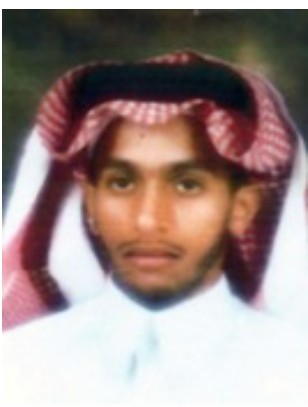
One of his most important connections was to that of South Waziristan militant commander Mullah Nazir [50,51]. Nazir was supported by the Pakistani government, detested Central Asian fighters in his territories, and had an extensive organization of his own based in Wana, South Waziristan [50,51,52,53]. The commander was definitely considered an enemy and as a dangerous Pakistani Taliban leader by US forces [53]. More importantly, Nazir had strong connections to Al-Qaida [53]. Dosari was an individual who acted as a liaison between Nazir, his forces, and foreign fighters allied with Al-Qaida’s central leadership [50]. Dosari was also said to have helped in the logistics of operations occurring across the border in Afghanistan [50]. On May 28, 2010, missiles fired by a Predator drone reportedly killed Dosari while he was meeting with a close associate of Mullah Naziri’s named Omar Khataib in Nezai Narai, South Waziristan [49,50]. Khataib was also reported as deceased, thus eliminating important elements within the Mullah Nazir network [49]. The strike occurred amidst a year where the Predators continued to decimate al-Qaida leadership and their affiliates in the Khorasan [49,54]. With so many of the List E members operating the in the Khorasan it made sense that some of them to fall to the relentless US drone strikes in the FATA of Pakistan. Suspiciously, Dosari’s demise was not reported in the media releases of As-Sahab or by the reliable Sanafi al-Nasr, therefore there remained room for doubt.

Yet six years later on October 4, 2016, Dosari was revealed to be alive and surrendered to Saudi authorities from abroad [55]. He spent the previous seven years in the Khorasan on behalf of al-Qaida, before recanting and contacting the Saudis [55]. He would have been about 23 years old when he departed the Kingdom [44,55], and despite reports, managed to survive the brunt of the CIA drone campaign and increased US military operations in the Khorasan. Upon return he was taken into custody and allowed to meet with his parents [55]. Oddly, he was misrepresented in a parallel Saudi press report which declared that he was a graduate of al-Faruq camp in Afghanistan prior to the 9/11 attacks [56]. He was then conflated with a figure known as Abu Jawahir and said to have been hiding in Iran before joining Abu Musab al-Zarqawi in Iraq and assuming command of the outpost of Qaim [56]. In this version he was believed to have died in ISIL captivity in Raqqa, Syria, before the revelation of the his surrender to Saudi authorities [56]. Dosari would have been very young in the training camps in 2001 [44], and the less fanciful initial origin story is believed to be the correct telling.
Five years after its release, Saudi wanted List D, the first such issuance to demonstrate militants abroad, still featured viable and operational al-Qaida militants. On September 25, 2010 an aerial operation was conducted against suspected al-Qaida militants converging at a remote compound in the Korengal Valley of Kunar province, Afghanistan [57]. In this airstrike several Arab militant officers were slain, including one List D member [57,58]. By October 4, the List D casualty of the strike was confirmed as Saad Mohamed Mubarak al-Jubeiri al-Shehri (D-19) [59,60]. Shehri, as has been detailed, was the older brother of the now deceased Guantanamo recidivist Yusef Mohamed al-Shehri (E-85) [58]. With many of Saad’s brothers and kin involved in militancy, the extremist was seen as a pioneer within his family, paving the way for his siblings and nephews (E-38) [61]. His father Mohamed, a former Colonel in the Saudi army, was repulsed by his son’s actions and stated that he believed Saad was mentally ill [59]. The family received confirmation of Saad’s death in the form of a phone call from trusted jihadist allies of their son, and in an online al-Qaida statement [59,60]. Intelligence services soon seconded the confirmation [59].
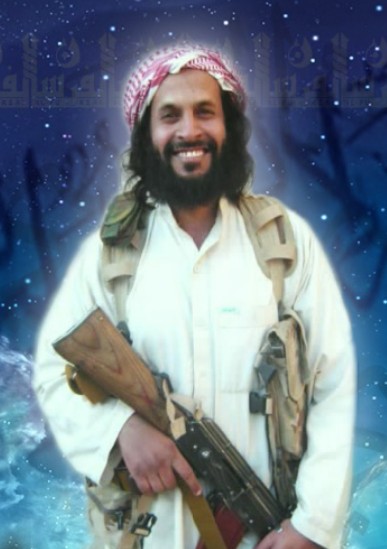

Finally, a double drone strike in Datta Khel, North Waziristan, on October 2, 2010, destroyed a compound killing several, including foreign elements [62,63]. When other militants arrived to assist and observe on scene, they too were later subjected to missile fire from the circling drones [62,63]. Among the dead who came to surveil the aftermath of the first strike was Abdulkarim al-Najdi [62]. This was the alias of one Mukad al-Otaibi [62], whose name and picture seem to match with Mukad Qaed Mukad al-Maqati (E-79) [44]. The description of the strike in the eulogy of Mukad al-Otaibi best matches the details of the October 2 attack. The militant was a known instructor at the camps in the FATA, an administrator in North Waziristan, a combatant in Zabul against the coalition, and an officer who stood against the Pakistani military forays into the FATA in 2009 [62]. Of the most importance, he was a trusted lieutenant to al-Qaida internal manager Sheikh Said al-Masri [62]. In the end he was just another obscure figure from List E, felled in the drone strikes of the Khorasan.
Having detoured to peripheral combatants in various jihadist theatres, we next adjust again to specific occurances in Arabia in order to chronicle the situations surrounding the primary AQAP propagandists and the startling innovation in their media endeavors. We also observe the results of another botched American airstrike.
CITATIONS:
- [1] Yemen: al-Qaia ‘alive and well’ claims defiant audio message, Adnkronos, February 8, 2010, http://www.adnkronos.com/AKI/English/Security/?id=3.0.4288020749
- [2] Terrorism: Al-Qaida warns of ‘dozens’ of in-flight bombs, Adnkronos, February 18, 2010, http://www.adnkronos.com/AKI/English/Security/?id=3.1.30563146
- [3] Jizan 3rd man a Saudi with ‘very close ties to al-Qaida,’ by Abdullah al-Oraifij, The Saudi Gazette, http://www.saudigazette.com.sa/index.cfm?method=home.PrintContent&action=Print&contentID=0000000052062
- [4] AQAP’s growing security threat to Saudi Arabia, by Caryle Murphy, Combating Terrorism Center at West Point, CTC Sentinel, June 3, 2010, http://www.ctc.usma.edu/posts/aqap%E2%80%99s-growing-security-threat-to-saudi-arabia
- [5] ‘First lady of al-Qaida’ jailed for 15 years, by Richard Spencer, The Telegraph, October 30, 2011, http://www.telegraph.co.uk/news/worldnews/middleeast/saudiarabia/8858301/First-Lady-of-al-Qaeda-jailed-for-15-years.html
- [6] Saudi women played a marginal role in deviant group’s activities, by Muhammad al-Sulami, The Arab News, December 1, 2010, http://www.arabnews.com/node/361957
- [7] Two relatives to defend ‘Madam al-Qaida’ in court, by Muhammad al-Sulami, The Arab News, August 1, 2011, http://www.arabnews.com/node/386128
- [8] Yemen sources confirm al-Qaida man’s death, by Abdullah al-Oraifij, The Saudi Gazette, March 15, 2010, http://www.saudigazette.com.sa/index.cfm?method=home.regcon&contentid=2010031566375
- [9] Al-Qaida mourns Saudi member killed in Yemeni gun battle, Middle East News from Monsters and Critics, March 14, 2010, http://news.monstersandcritics.com/middleeast/news/article_1540834.php/Al-Qaeda-mourns-Saudi-member-killed-in-Yemeni-gun-battle
- [10] Al-Qaida says its fundraiser in Yemen killed, by Ahmed Charabli, Agence France-Presse, March 14, 2010, http://en.rian.ru/world/20100314/158189310.html
- [11] Dead al-Qaida man was primary school teacher in al-Ras, The Saudi Gazette, March 16, 2010, http://www.sauress.com/en/saudigazette/66494
- [12] Al-Khalifa and al-Harbi were ‘childhood friends,’ by Abdullah al-Oraifij, The Saudi Gazette, http://www.saudigazette.com.sa/index.cfm?method=home.regcon&contentid=2010031866699
- [13] “Martyrs of the Peninsula no. 1, Abu Jandal al-Qassimi (Ibrahim Saleh Mujahid al-Khalifa)”, http://azelin.files.wordpress.com/2010/08/english-translation-of-al-malahims-release-in-the-series-of-the-martyrs-of-the-peninsula-1-abu-jandal-al-qasimi.pdf
- [14] Testimony of Gregory Johnsen before the Senate Foreign Relations Committee, January 20, 2010, http://www.foreign.senate.gov/imo/media/doc/JohnsenTestimony100120a1.pdf
- [15] “Martyrs of the Peninsula no. 2, Abu Salman al-Sanaani (Hani Abdah Muslih Shaalan)”, http://azelin.files.wordpress.com/2010/09/martyrs-of-the-arabian-peninsula-2-hc481nc4ab-abdah-mae1b9a3lah-shaalc481n-salmc481n-al-e1b9a3anac481nc4ab-english.pdf
- [16] “Martyrs of the Peninsula no. 3, Nasir Awad Nasir Faraj al-Kindi,”, Translated by Flashpoint Partners, https://flashpoint-intel.com/inteldocument/flashpoint_limburgbio1110.pdf
- [17] Yemen kills Qaida chief in fresh air strikes, by Hammoud Mounassar, Agence France-Presse, March 15, 2010, http://www.google.com/hostednews/afp/article/ALeqM5gKO80joriiu_DgM3JyPCY_ndtUkA
- [18] Secret assault on terrorism widens on two continents, by Scott Shane, Mark Mazzetti and Robert F. Worth, The New York Times, August 15, 2010, http://www.nytimes.com/2010/08/15/world/15shadowwar.html?pagewanted=3&_r=3&
- [19] Martyrs of the Peninsula no. 5, Abu Saber al-Abyani (Jamil Nasir Abdullah al-Anbari), translated by Flashpoint Partners, April 4, 2011, http://azelin.files.wordpress.com/2011/04/al-qc481_idah-in-the-arabian-peninsula-e2809cmartyrs-of-the-arabian-peninsula-5-e28093-abc5ab-e1b9a3c481br-al-abc4abnc4ab-jamc4abl-bin-nc481e1b9a3ir-al-anbarc4ab1.pdf
- [20] Yemen says al-Qaida targets hit, Al-Jazeera News, March 15, 2010, http://www.aljazeera.com/news/middleeast/2010/03/201031522226607811.html
- [21] Abyan security confirms killing of terrorists al-Anbari, al-Sanaani and Amzarba, Al-Motamar.net, March 17, 2010, http://www.almotamar.net/en/7370.htm
- [22] Al-Malahim: Qassem al-Rimi eulogy to fallen fighters-Audio, The Middle East Observatory, May 17, 2010, http://www.meobservatory.com/auvideo/Al-Malahim.shtml
- [23] Yemen says militants died in raid, BBC News, March 16, 2010, http://news.bbc.co.uk/2/hi/middle_east/8569903.stm
- [24] AQAP’s media arm releases audio recording of Sheikh Abu Zubair Adel a-Abab: “The Crusader attack on Yemen,” translated by Flashpoint Partners, March 29, 2010, https://flashpoint-intel.com/inteldocument/flashpoint_aqap032910.pdf
- [25] US leaked diplomatic cable 09SANAA1430, GENERAL PETRAEUS’ MEETING WITH SALEH ON SECURITY ASSISTANCE, AQAP STRIKES, US Embassy in Sanaa, January 4, 2010, http://www.cablegatesearch.net/cable.php?id=10SANAA4&q=petraeus%20saleh
- [26] Government Sentencing Memorandum for Umar Farouk Abdulmutallab, United States District Court Eastern District of Michigan Southern Division, February 10, 2012, http://www.emptywheel.net/wp-content/uploads/2012/02/120210-abdulmutallab-sentencing-memorandum.pdf
- [27] US approves targeted killing of American cleric, by Scott Shane, The New York Times, April 6, 2010, http://www.nytimes.com/2010/04/07/world/middleeast/07yemen.html
- [28] US adds Anwar al-Awlaki to list of designated terrorists, by Bill Roggio, The Long War Journal, July 16, 2010, http://www.longwarjournal.org/archives/2010/07/us_designates_anwar.php
- [29] Suicide attacker misses British Ambassador’s convoy travelling in Yemeni capital, by Robert F. Worth, They New York Times, April 26, 2010, http://www.nytimes.com/2010/04/27/world/middleeast/27yemen.html
- [30] Al-Qaida blamed for suicide attack on British ambassador, by Richard Spencer and Mohammed al-Shorabi, The Telegraph, April 26, 2010, http://www.telegraph.co.uk/news/worldnews/middleeast/yemen/7635226/Al-Qaeda-blamed-for-suicide-attack-on-British-ambassador.html
- [31] Suicide attack on British Ambassador to Yemen, by Jerome Taylor, The Independent, April 27, 2010, http://www.independent.co.uk/news/world/middle-east/suicide-attack-on-british-ambassador-to-yemen-1955121.html
- [32] Al-Qaida in the Arabian Peninsula claims responsibility for suicide attack on British Ambassador in Yemen, translated by Flashpoint Partners, May 11, 2010, https://flashpoint-intel.com/inteldocument/flashpoint_aqapbritishambassador.pdf
- [33] The Last Refuge: Yemen, Al-Qaeda, and America’s War in Arabia. By Gregory Johnsen. W. W. Norton & Company, New York, 2012, p. 134-135
- [34] AQAP denies relocation to Somalia, The Yemen Post, April 14, 2010, http://www.yemenpost.net/Detail123456789.aspx?ID=3&SubID=2080
- [35] Al-Mutairi arranged his return from Iraq, by Abdullah al-Oraifij, The Saudi Gazette, http://www.saudigazette.com.sa/index.cfm?method=home.regcon&contentID=2010050471298
- [36] Wanted Saudi militant turns in, Saudi Press Agency via The Saudi Gazette, May 3, 2010, http://www.sauress.com/en/saudigazette/71177
- [37] The Role of Egyptian Militants in Developing Al-Qaida in the Arabian Peninsula, by Hani Nasira, The Jamestown Foundation, Terrorism Monitor, Volume 9, Issue 1, http://www.jamestown.org/single/?no_cache=1&tx_ttnews%5Btt_news%5D=37328
- [38] US and Iraqi forces kill al-Masri and Baghdadi, al-Qaida in Iraq’s top two leaders, by Bill Roggio, The Long War Journal, April 19, 2010, http://www.longwarjournal.org/archives/2010/04/al_qaeda_in_iraqs_to.php
- [39] Al-Qaida’s top two Iraq leaders killed in raid, by Waleed Ibrahim, Reuters, April 19, 2010, http://www.reuters.com/article/2010/04/19/us-iraq-violence-alqaeda-idUSTRE63I3CL20100419
- [40] Militant’s mother says son is in ‘safe hands,’ by Abdullah al-Oraifij, The Saudi Gazette, May 4, 2010, http://www.saudigazette.com.sa/index.cfm?method=home.regcon&contentid=2010050471282
- [41] Terror cell busted: 2 killed, 3 held, by Mishal al-Otaibi, Saudi Gazette, September 28, 2015, http://english.alarabiya.net/en/News/middle-east/2015/06/03/Saudi-lists-16-suspects-from-mosque-attacks-.html
- [42] Mujab al-Zahrani: Dead and Wanted, a jihadist internet release, translated by the SITE Intelligence Group
- [43] From Khorasan to the Levant: A Profile of Sanafi al-Nasir, by Kevin Jackson, CTC Sentinel, September 2015, Volume 8, Issue 9, https://ctc.usma.edu/from-khorasan-to-the-levant-a-profile-of-sanafi-al-nasr/
- [44] Wanted List-85, General Directorate of Investigation, Saudi Interior Ministry, accessed 2012, http://www.moi.gov.sa/wps/portal/investigationdepartment/!ut/p/b1/jY_NbsIwEISfhSfwrH9IcnQMZH1wghXVLb6gHBCKBOFS9fkJbdobbfc20jefdkQWBymLNQEg8SbyNHyM5-F9vE3D5ZHz-ti0qVcNK-qC2sJHNqpNhI7VDBxmoAa2VU0WJQfAc0zyJSRZSPpfH0_O4q9-f5rEq8ifmHF758ugqHHawWtK6J1R1ugF-PGgomL2kNdsa9VFWgB0MmwoOrtDZL0xFX9_sgC_Df0yPF_S8u16Etd82ZW9H_fn1eoOIqnt8A!!/dl4/d5/L0lDU0lKSWdrbUEhIS9JRFJBQUlpQ2dBek15cXchLzRKQ2lEb01OdEJqdEJIZmxDRUEhL1o3X0dOVlMzR0gzMU9NM0UwSVFINTNOVjEwTzk3LzA!/?WCM_PORTLET=PC_Z7_GNVS3GH31OM3E0IQH53NV10O97n18756_WCM&WCM_GLOBAL_CONTEXT=/wps/wcm/connect/investigation+office/investigation+department+ar/the+wanted/list+85/inv_list85_ar
- [45] Verbally released document for Abid Naseer trial, Letter to bin Laden from various fighters Abu Bashir al-Najdi, Abu Qattal al-Jadawi, and Abu Dumdum al-Qurashi, https://www.dni.gov/files/documents/ubl/english/Verbally%20Released%20doc%20for%20Naseer%20trial.pdf
- [46] Pakistan: Suspected drone strike kills 4, by Ivan Watson, Umer Aziz Khan, and Naser Dawa, CNN, November 5, 2009, http://edition.cnn.com/2009/WORLD/asiapcf/11/05/pakistan.strike/index.html
- [47] Missile strikes kill 15 in Pakistani Tribal Region, Officials Say, by Pir Zubair Shah, The New York Times, January 30, 2010, https://www.nytimes.com/2010/01/31/world/asia/31pstan.html?ref=world
- [48] Leaked Pakistani Government document on the Detail of Attacks By NATO Forces / Predators in the FATA, The Bureau of Investigative Journalism, January 29, 2014, https://www.thebureauinvestigates.com/stories/2014-01-29/get-the-data-pakistani-governments-secret-report-on-drone-strikes
- [49] Top al-Qaida leader killed in drone strike, Dawn News, June 3, 2010, http://archives.dawn.com/archives/43677
- [50] Al-Qaida operative killed in South Waziristan strike, by Bill Roggio, The Long War Journal, June 3, 2010, http://www.longwarjournal.org/archives/2010/06/al_qaeda_operative_k.php
- [51] (Another) top al-Qaida leader killed, Free Republic forum, June 3, 2010, http://www.freerepublic.com/focus/news/2526968/posts
- [52] South Waziristan’s Maulvi Nazir: The new face of the Taliban, by Hassan Abbas, The Jamestown Foundation, Terrorism Monitor, Volume 5, Issue 9, May 14, 2007, http://www.jamestown.org/single/?no_cache=1&tx_ttnews%5Btt_news%5D=4147#.UqFiE8RDuuI
- [53] Taliban and al-Qaida: Friends in arms, by Syed Saleem Shahzad, The Asia Times, May 5, 2011, http://www.atimes.com/atimes/South_Asia/ME05Df02.html
- [54] Al-Qaida’s new leadership: Mustafa Abu Yazid, by Craig Whitlock and Munir Ladaa, The Washington Post, 2006, http://www.washingtonpost.com/wp-srv/world/specials/terror/yazid.html
- [55] Saudi Arabia: Explosives Expert Surrenders after 7 Years of Qaeda Service, Asharq al-Awsat, October 26, 2010, https://eng-archive.aawsat.com/theaawsat/news-middle-east/saudi-arabia/saudi-arabia-explosives-expert-surrenders-7-years-qaeda-service
- [56] Exclusive: ex-wanted Saudi was Qaeda commander, returned from Iran, by Huda al-Saleh, al-Arabiya, October 25, 2010, https://english.alarabiya.net/News/middle-east/2016/10/25/Exclusive-ex-wanted-Saudi-was-Qaeda-commander-returned-from-Iran
- [57] ISAF kills senior al-Qaida leader and an IED expert in Kunar strike, by Bill Roggio, The Long War Journal, September 29, 2010, http://www.longwarjournal.org/archives/2010/09/isaf_kills_senior_al.php
- [58] Guantanamo Assessment File, Yusef Mohamed Mubarak al-Shehri, ISN 114, http://wikileaks.org/gitmo/prisoner/114.html
- [59] Wanted Saudi killed in Afghan air strike, by Abdul Nabi Shaheen, The Gulf News, October 5, 2010, http://gulfnews.com/news/gulf/saudi-arabia/wanted-saudi-killed-in-afghan-air-strike-1.691885
- [60] Wanted Saudi killed in Afghanistan strike, says report, Daily News Egypt, October 4, 2010, http://www.highbeam.com/doc/1G1-238598845.html
- [61] Al-Qaida lied about funds, seeks recruitment of foreigners in Kingdom, The Saudi Gazette, http://64.65.60.109/index.cfm?method=home.PrintContent&fa=regcon&action=Print&contentid=2009102352344&simplelayout=1
- [62] al-Qaida Publication, The Martyrs of the Khorasan, Part 3, Mukad al-Otaibi – “Abdulkarim al-Najdi,” A Knight of the Arabian Peninsula
- [63] Pakistan drone attacks kill nine suspected militants, BBC News, October 2, 2010, https://www.bbc.com/news/world-south-asia-11458921
© Copyright 2025 Nolan R Beasley
 Chronicles in Zealotry