
RED SEA FRAY: A series discussing facts around the current American experiences and friction with the Houthi rebels (known as Ansarallah) in Yemen and the Red Sea, in order to protect the shipping lanes through the Bab al-Mandeb strait. In Chapter One we discuss a very brief history of the belligerents, then focus in depth on recent happenings in this nascent yet consequential conflict.
ZAIDISM AND THE HOUTHIS
The current flurry of retaliatory strikes, attempted piracy, and disruption of international shipping in the Gulf of Aden, Red Sea, and Bab al-Mandeb strait is the responsibility of the rebellious, Iranian funded militant faction in Yemen known as the Houthis. In reality, the Houthis refer to themselves as Ansarallah, which literally translates to helpers or supporters of Allah (God). The Ansar were the residents of Medina who sheltered and assisted the Prophet Mohamed after his hijra, or flight, from Mecca in 622 CE. It is a phrase utilized by Muslim factions to represent those who provide assistance to an ostensibly religiously sound organization or group to this day. In an example related to extremists, Osama bin Laden and his al-Qaida managerial deputy, the Libyan Atiyah Abdulrahman (also known as Shaikh Mahmud al-Libi) referred to the tribal Pashtun residents of Pakistan’s Federally Administered Tribal Areas, as Ansar due to their sheltering of foreign extremists, (See for example a letter from Atiyah to bin Laden dated October 6, 2010). The appellation “Houthis” originates with the founding family that helms the movement of Ansarallah. As a religious identity, Ansarallah is composed of a sect of Shia Islam known as the Zaidis (sometimes referred to as the Fivers).
Without delving too far into the historical accounts of Islam, the Zaidis descend from imam Zaid ibn Ali, known also as Zaid al-Shahid (the martyr). As Shia Muslims trace the leaders of their religion beginning with the Prophet Mohamed’s son-in-law Ali ibn Abi Talib, his various successors were strict descendants or appointees of his line. From Ali, the next two imams were his sons Hassan ibn Ali and Hussain ibn Ali. Zaid was the son of the fourth imam, Ali ibn Abi Talib’s grandson Ali ibn Hussain. Zaid was also known as Zayn al-Abidin and according to the Zaidis was the fifth official imam. Therefore, Zaidi Shiites are sometimes referred to as Fivers, as they follow the leadership of their sect from the fifth recognized imam. The majority of Shiites follow the doctrine of the Twelvers, which bestows leadership of the Shia denomination on a series of twelve imams also beginning with Mohamed’s son in law Ali ibn Abi Talib. However, for the Twelver sect, the fifth recognized imam was actually Zaid’s brother Mohamed ibn Ali, known also as Mohamed al-Baqir (a title attributed due to his wealth of knowledge). The Zaidis revere Zaid for his rebellion against the Sunni Umayyad Caliphate in 740 AD. Zaid earned his moniker of the martyr, as he was betrayed and killed by the Sunnis in Kufa, in modern day Iraq. His brother Mohamed did not participate in the insurgency. That Zaid viewed the Sunni caliphate as morally and politically compromised is an important tenet of Zaidi belief, as those who stand against such corruption are venerated. Thus, the Zaidi sect follow leadership descending from Zaid. The faction flourished in Yemen for multiple centuries and were a part of governance for some time in the form of an imamate, under the rule of these descendants [1].
The Zaidi imams’ rule in the region ensured that religious doctrine was observed in this governance. Their reign came to an abrupt cessation in 1962, when theocratic rule was replaced by a new founded republic [1]. Civil war followed, which unfortunately became a familiar scene of destruction in turbulent Yemen during the decades to follow. In the later 1990s civil war, the northern government was faced with a threat from the southern secessionists, to which a Zaidi extremist named Hussain al-Houthi aligned [1]. Houthi, a member of Yemen’s parliament within a traditionalist Zaidi political party, was forced to flee when Yemeni President Ali Saleh consolidated power and defeated the south [1]. Hussain only returned later in the 1990s to form an aggressive and religiously virulent movement of Zaidi youth [1]. Scholars and researchers herein acknowledge that the Zaidis are not all incorporated in Houthi’s movement, and in fact there are some factions who are ideologically peaceful, while still others are supportive of the government [1]. Houthi’s movement though, believed that undue American influence and a corrupt Yemeni government were a hindrance to Zaidi culture and a threat due to the ever-expanding presence of the Sunni Salafist sect within the nation [1]. Thus, harkening back to Zaid ibn Ali, Hussain al-Houthi aimed to stand against this apostate government. Critics decry Houthi for compromising himself though in order to receive the needed financial and military assistance from Iran to conduct his operations [1]. While there are significant differences between the Twelver Shiites in Iran and the Fiver Zaidis of Yemen, the militant extremism and ambitions of the Houthis bridged this gap, aligning the Houthis closely with Iranian politics [1].
Introduced by his father Badruddin to the Iranians, the two trained under them, and began to send their own students in droves for religious, political, and even paramilitary lessons under the IRGC-Quds Force [2]. For his purposes, Hussain al-Houthi was supposedly attempting to reinvigorate his religious sect, while establishing illegal religious institutions to “enlighten” and radicalize followers towards his militancy [3]. Otherwise, the Zaidis were viewed internationally as relatively moderate and calm [3]. Specifically, the Houthis adhered to the Jarudi subsect of Zaidism, whose doctrine resembled more of the Twelver philosophy, further aligning them with the Iranians and inherently making them susceptible to their instigation and influence [2]. The implementation of complex indoctrination to this form of Zaidism among the youth, by Badruddin and Hussain, assisted them in vastly growing their numbers and diminishing the protests of any rivals [2]. These followers, often known in English as the Believing Youth, a translation from the Arabic al-Shabaab al-Mumin, were held responsible for violent demonstrations and anti-government actions, which caused backlash against the entirety of the Zaidi population [4]. Friction with the government was acceptable, as it was the hope of Badruddin and Hussain to reinstitute Zaidi leadership, descended from the imams, in order to reign over Yemen yet again [2]. Badruddin was apparently obsessed with the Yemeni religious caste system and saw himself and his sons to be well entrenched in the upper echelon of such social systems [2]. This put the Houthis at the forefront of who would lead and rule any Zaidi reconstitution of the imamate.
THE HOUTHI CONFLICTS IN YEMEN 2004 – 2010
The slogan of these Believing Youth developed by Badruddin and Hussain, fantastical and incendiary, was “God is Great! Death to America! Death to Israel! A Curse upon the Jews! Victory to Islam!” which did not endear them to the authoritarian President of Yemen, Ali Abdullah Saleh, especially during the early aughts, when he was attempting to align Yemen with American ambitions during the Global War on Terror [4]. During a January 2003 visit to the northern Yemeni province of Saada, wherein the Houthis were based, Saleh was greeted by this slogan, and responded with force against the protestors, thereby establishing the basis for the next decade of conflict [4]. Protests and demonstrations spread, especially in 2003 as the Americans invaded Iraq. By 2004, their followers in the new and rising Ansarallah (having evolved from the Believing Youth) were fighting with President Saleh’s forces and the Yemeni government offered significant bounties for the revolutionary [3]. A June 18, 2004 protest in the Yemeni capital Sanaa precipitated the initial skirmishes, as hundreds were arrested, and a warrant was proclaimed for Hussain al-Houthi’s arrest [4]. After the deaths of three soldiers in Saada attempting to apprehend Houthi, a threshold appeared to have been crossed, and despite efforts by Houthi to deescalate, the conflict widened [4]. The Houthis took with them into the conflict a confederation of loyal tribesmen, numerous Iranian trained paramilitary forces, and an estimated 10,000 youth indoctrinated over the years at Houthi facilitated institutions and programs [2].
The first iteration of a Houthi rebellion was a primitive affair but set the stage for future conflicts. As for the fate of Hussain al-Houthi, he was killed by the Yemeni government in September 2004, ten weeks after evading an arrest attempt in June and commencing a series of skirmishes in northern Yemen [5]. When the Yemenis finally eliminated Hussain al-Houthi, via heavy bombing of his fortified mountain and cave positions, he fell with 20 of his men [5]. Yet his father and his command structure remained intact [2]. He perished in Marran district of Saada province, well to the north of Sanaa, seemingly relegating the conflict therein [5]. His father Badruddin consolidated power and the loyalty of their followers [2]. Returning to Saada after a failed attempt at negotiations, during which he never actually met with President Saleh, Badruddin prepared his men for the second conflict [4]. However, it was his youthful son Abdulmalik that assumed power over the movement, supported by Badruddin, a position that he holds to this day, and commenced increasing aggression against the government [2,4]. More than just donating their name to the religious and political movement, the family was intent on retaining power, ensuring that al-Houthi family seniors inherited leadership roles [2]. As discussed, believing the Iranians to be a tangible and realistic version of the revolutionary ideology strived for by the Zaidis, the Houthis related better with this nation and studied voraciously under them [2]. In addition to Husain and his father Badruddin, Abdulmalik was a frequent and devoted student of Iranian influence [2]. Abdulmalik amassed significant time with the Iranian instructors, thus, he earned his father’s trust and preference for becoming leader, a position vied for and ensured by Badruddin [2]. Originally relegated to northern Yemeni provinces, particularly Saada, the Houthis became provocative in their actions, fomented dissent, and with Hussain’s 2004 combat as the initial, forced six minor wars with the Yemeni government in the late aughts [6]. Except for the 2004 iteration, the remaining five wars were led by Abdulmalik, occurring from March through June 2005, then randomly through March 2006, January through June 2007, April through July 2008, and finally August 2009 through February 2010 [6]. The latter engagement saw significant Houthi escalation, attacking and drawing in the Saudis to the conflict [6]. Almost every small war ended with some sort of ceasefire or peace agreement with Saleh, and each was destined to fail [6].
Other enemies offered animosity to the Houthis within Yemen, including al-Qaida in the Arabian Peninsula, an entity that commenced attacks on the Shiite militants in late 2010 [7]. In their first recorded attack on the militants, AQAP utilized a suicide bomber in a vehicle to target a Houthi gathering in Jawf province on November 24, 2010 [7]. Rather suspiciously the Houthis announced the death of spiritual leader and father of their two commanders, Badruddin al-Houthi the next day [7]. While AQAP claimed the assassination of Badruddin, the Houthis themselves were adamant that he perished due to asthma and advanced age, as he was 86 years old [7]. AQAP sent a second vehicle borne suicide bomber to attack Badruddin’s funeral procession, killing an additional two Shiites [7]. In not so subtle an accusation, the Houthis insinuated that the Israelis and Americans were behind both AQAP and their attacks [7]. The loss of Abdulmalik’s father and the Houthis’ spiritual guide was a burden to the militants, but they retained a plethora of competent leaders from the various wars and earlier indoctrination camps. By the last war, Abdulmalik built a sizeable and still youthful following and paramilitary force and surrounded himself with trustworthy advisors and generals [2]. These included his own younger brother Abdulkhaliq, and a first cousin of importance, Mohamed Ali al-Houthi [2]. His primary lieutenant was Abdullah Yahya al-Hakim, who gained infamy in both military and political realms throughout the series of confrontations [2]. Others included Hussain al-Houthi’s own son in law, Yusef al-Madani (and his brother Taha), known as efficient paramilitary commanders [2].
THE HOUTHI CONQUEST OF SANAA, WAR WITH THE SAUDIS, AND IRANIAN INVOLVEMENT
The Houthis obtained control of Sanaa and a sizable portion of western Yemen beginning in 2014. We will not examine this in depth just yet. However, we must remark at the astounding irony that by mid 2015, the now former President Saleh sided with the Houthis in their efforts against a Saudi led Arab coalition [8]. The Houthis displayed a penchant for absorbing other belligerents to their cause, including those combatants formerly loyal to President Saleh, thus ensuring a proper and effective military leadership [2]. This included their eventual Minister of Defense, Major General Mohamed Nasir al-Atifi [2]. Others in this new Yemeni government were Houthi original factors, such as eventual Chief of Staff for the Ministry of Defense, Lieutenant General Mohamed Abdulkarim al-Ghammari [2]. Only 33 years of age at the time of the 2014 takeover, Ghammari was a representative of the Houthi generation raised with Abdulmalik and was a veteran of the Believing Youth indoctrination programs [2]. He was also a recipient of Iranian paramilitary training and provided this expertise in the form of improvised explosive devices for Houthi forces [2]. After the takeover, he was responsible for not just IED attacks, but missile and drone strikes as well [2].
The Saudis, meanwhile, wished to install the former government, one which had essentially ousted Saleh in 2012. The Saudi coalition of Arab states led a steady and advanced campaign against the Houthis, but despite their efforts, the Zaidi extremists continued to spread their influence and control [6]. Ceasefires and peace attempts continued to fail [6]. The US sold Saudi Arabia over $64 billion in armaments and weapons in order to prosecute the mostly failing war, across both the Obama and Trump Administrations between 2015 and 2020 [9]. In the end, Yemen was transformed into an internationally recognized humanitarian disaster, with an estimated 250,000 killed, and civilians suffering the brunt of the fighting [9]. Trump Administration officials supported the war as a way to provide a defeat against the Iranian regime, essentially a proxy war between the two nations, with the Arab coalition and Houthis representing either side [9]. For their part in the fray, the Iranians began supporting the Houthis increasingly beginning in the 2009-10 mini-war in which Saudi Arabia was involved [10]. They began a complex network of smuggling supplies, weapons transfers, and providing military instruction to the fledgling Houthis [10]. From there, the movement of Ansarallah gained a foothold and eventually became the leadership of a nation, providing basic government services in the territories they ruled [10]. They also absorbed elements of the former Yemeni military and Republican Guard, keeping armaments and individuals that they were able to utilize in their wars and discarding and dismantling the remainder of potentially disloyal elements [10].
The Iranians provided the Houthis with ballistic missile capabilities with which they have struck targets internal to Saudi Arabia, further displaying the difficulty in quashing the movement [10]. In fact, between 2015 and the end of 2021, the Houthis are estimated to have launched 430 such missiles and 851 attack drones against Saudi Arabia [11]. The Saudis sanctioned five primary Houthis for the aerial assaults [12]. These were Mansur Ahmed al-Saadi, accused of leading efforts against international shipping in the Red Sea; Ahmed Ali al-Hamzi, suspected of helming the aerial programs; the aforementioned Mohamed Abdulkarim al-Ghammari, for his role in ballistic missile launches; and two others believed to be integral to drone and missile operations, Zakaria Abdullah Yahya Hajjar and Ahmed Mohamed Ali al-Juhari [12]. The Americans designated several officers of the Houthis as well. From above, both Saadi and Hamzi were sanctioned as the chiefs of staff of the Houthi Naval forces and Air forces respectively, after receiving intensive training from the Iranians [13]. Ghammari was sanctioned for his position as commander of a devastating offensive against Yemen’s Marib province, displacing over one million already previously displaced Yemeni refugees [14]. Yusef al-Madani, the son in law of Hussain al-Houthi, and one time rival to Abdulmalik [2], now a loyal Houthi combatant, was sanctioned similarly for the Marib offensive and terroristic actions across Yemen [14]. Major General Saleh Mesfer al-Shaer, was assigned to oversee militant logistics and coordinate the illegal confiscation of property and funds from rivals and citizens in Yemen, assimilating the new assets into the Houthi regime [15]. He was a deputy to Ghammari, and in addition, helmed the massive Houthi weapons smuggling enterprise, along with one of his men, Major General Mohamed Ahmed al-Talibi [2].
As for Iranian personnel, the IRGC-Quds force was pivotal in the Houthi offensive capabilities. The clearest confirmation of Iranian interference came in the aftermath of the Trump Administration’s assassination of IRGC-Quds Force leader General Qassem Soleimani on January 2, 2020 in Iraq, when US officials admitted that they also targeted another primary Quds Force commander, Brigadier General Abdulreza Shahlai while in Yemen with the Houthis [16]. Shahlai escaped death and the attempt was only revealed two weeks later in American media [16]. Quietly, Shahlai had acquired a $15 million bounty from the US State Department and was considered a financier of terrorism [16]. He was accused of providing training and weaponry to the Houthis [16]. Born in 1957, the experienced Shahlai was considered a dangerous adversary by American intelligence [16]. He was suspected of direct involvement in a January 2007 Shiite militia raid on US forces in Karbala, Iraq, resulting in the deaths of five service members, was instrumental in providing training and coordination with Hezbollah for various Iraqi Shiite militants, and even conspired to kill the Saudi ambassador in Washington, DC [17]. Shahlai was previously designated and sanctioned by the US Treasury in 2008 for his involvement in Iraq and again in 2011 for the plot against the ambassador [18]. Assessments postulate that a triumvirate of prominent commanders of Iranian influence consult upon the Houthi paramilitary and military mechanisms, comprised of Abdulmalik, a jihadi assistant (in the form of a senior commander of the IRGC-Quds Force), and a Lebanese Hezbollah representative [2]. The IRGC component, in this case Brigadier General Shahlai, and the Hezbollah component, act in an advisory role to Abdulmalik, but may have direct influence on militant operations [2]. In order to avoid the further degradation of this supposedly succinct introduction, let us turn now to 2023 and the current conflict between the Houthis and Americans.
Simply stated, the Houthis evolved from an inferior paramilitary, religious extremist force, relegated to northern Yemen, to suddenly conquering significant Yemeni cities and maintaining their hold on power. They did so with Iranian approval and support. The US, drawn into a brutal and expensive regional conflict, was forced to acknowledge that the humanitarian crisis was unacceptable. Faced with millions of civilians displaced and starving, incoming US President Joe Biden in February 2021 declared an end to American support of the Saudi war in Yemen [19,20]. While the declaration allowed a margin for assistance in Saudi self-defense and continued military action against al-Qaida in the Arabian Peninsula, it was the first step in ending US support of the disastrous conflict [20]. In addition, Biden named a US special envoy dedicated to the issue of Yemen [20]. At the urging of the UN, Biden reversed a Trump era terrorist designation of the Houthis on February 16, 2021 [20,21]. The UN and aid groups feared that the previous designation would exacerbate the already dire humanitarian crisis in Yemen, with 16 million people at risk of starvation, rampant inflation, COVID-19 outbreaks, unemployment, and violence ravaging the nation [22]. The revocation of the designation was announced in order to prevent further restrictions of necessary aid and supplies to the suffering Yemeni people [21]. Praise was given by the UN for the action and the narrow avoidance of further logistical constraints on aid shipments [22]. In January 2021, just the month prior, the US State Department levied the designation of terrorist entity against Ansarallah in a controversial maneuver due to the adverse effects on assistance to the Yemeni populace [23]. Abdulmalik, his brother Abdulkhaliq (the military commander in and around Sanaa [2]), and vital Houthi deputy Abdullah Yahya al-Hakim were also sanctioned by the US Department of Treasury for their culpability in the disastrous war [24]. Even with the February revocation though, Abdulmalik and the other Houthi leaders remained designated for their previous actions, and the concerns of further attacks on Saudi soil, or the interference with Red Sea shipping were mentioned in the same announcement [21].

ORIGINS OF THE RED SEA CRISIS IN 2023
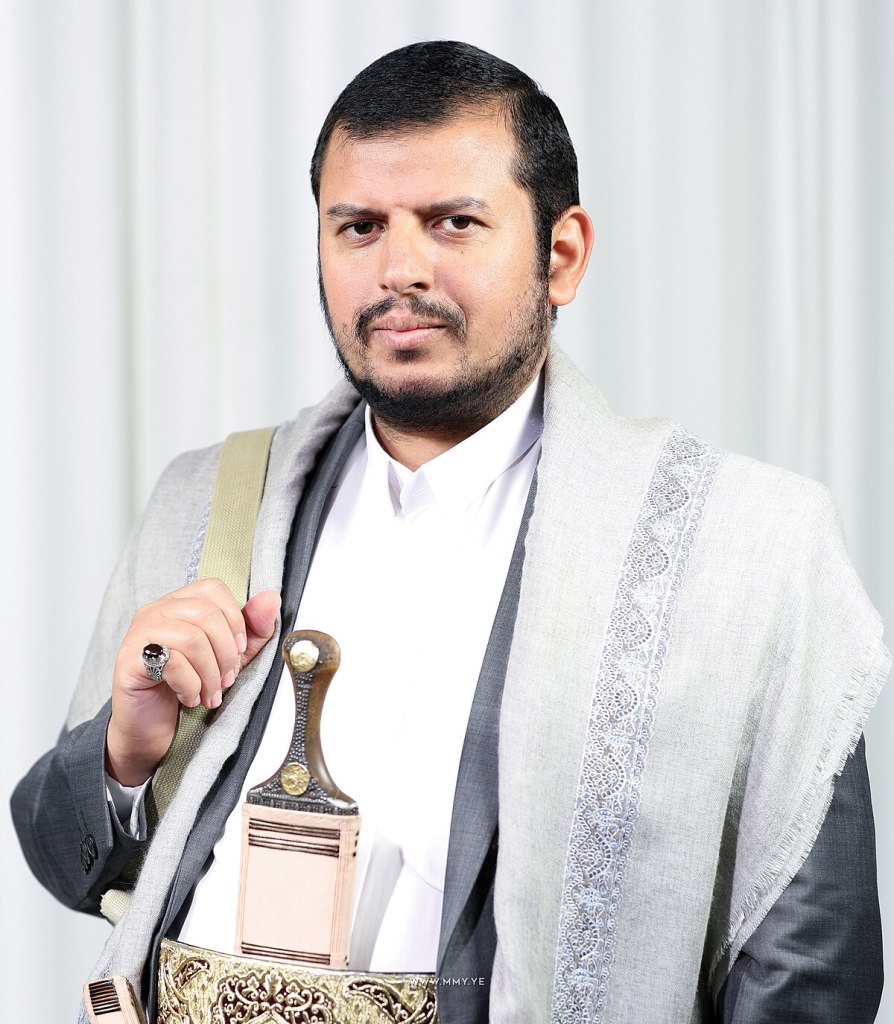
Abdulmalik al-Houthi cemented the ties with Iran, successfully defended against the Arab coalition, and expanded his power, all in the name of resisting corruption and re-establishing the previous Zaidi influenced government [25]. Yet none of this would have occurred without the indispensable aid from Iran, allowing these tribal mountain dwelling militants the luxury of technologically advanced weapons included the aforementioned ballistic missiles and combatant drones [25]. This allowed Abdulmalik to reach Saudi and Emirati targets, a goal he proclaimed during the war with the Arab coalition, and then promptly achieved [25]. Though he coalesced power around him in Sanaa, he did not operate openly, instead meeting emissaries after stringent security protocols were enforced, and even then, only via teleconference, even from within his own capitol [25]. If anything, Abdulmalik and his men were survivors, and by 2021 they seemed to have withstood the pressure and immense financial contributions from the US against them.
Even with this massive change in American support there were those that accused the Biden Administration of dallying and delaying the final cessation of the war, citing his disruption of the Yemen War Powers Resolution as put forth by Senator Bernie Sanders in 2022 [26]. As the war intensified into the 2020s, the legislation was aimed at curbing US support for the Saudi Air Force, effectively grounding them and preventing further airstrikes on a Yemen stricken with hunger, disease, and displacement [26]. This stemming from the fear of another busted ceasefire [26]. But the Biden Administration felt that the legislation would only serve to reduce effective diplomacy in the tormented nation [26].
Thus, 2023 saw the situation in Yemen as precarious as ever. Yes, the US revoked the terrorist designation of Ansarallah, but the Saudis and Emiratis continued to enable cataclysmic conditions in Yemen with the enforcement of hostilities. While Iran counted Ansarallah among its “Axis of Resistance,” independent entities manifesting Iran’s strength and ambitions through the region [27], it was unknown just how far the Houthis would go to repay their Iranian benefactors in a time of need. The hellscape of the 2023 Gaza war provided such an opportunity.
In supposed solidarity with the Palestinian people, but assuredly at the direction of Iran, the Houthis began their campaign to disrupt Red Sea commerce, shipping, and stability, opening the door to direct conflict with America, Europe, and other entities.
It began on October 19, 2023, less than two weeks after the dreadful Hamas assault and raid into southern Israel resulted in mass carnage. Perhaps the Houthis were attempting to draw attention away from the inevitable IDF ground incursion into Gaza, or merely following guidance from Iran to act in concert with Hezbollah in Lebanon in taking opportunistic cross border forays into Israel. For the Houthis of course, the distance for them to reach southern Israel was much greater. Thus, drones and ballistic missiles were employed by the faction. CNN first reported the action, revealing the sobering news that the destroyer USS CARNEY DDG-64 was utilizing its weapons systems to down projectiles over the Red Sea [28]. At the time it was unknown if the missiles were directed towards the guided missile destroyer or at a separate target [28]. Later US officials clarified, crediting CARNEY with downing four land attack cruise missiles and up to 19 drones in an exhausting period of nine hours [29]. The projectiles were believed to have been fired towards targets in southern Israel [29]. Other reports claim that three land attack cruise missiles and 15 drones were destroyed by CARNEY [30].
The next Houthi attempt was also a failure, with two drones launched upwards over the Red Sea towards Israel, but both impacting in Egypt on October 27. The first actually detonated against a structure beside of a medical center in the Red Sea town of Taba, Egypt, resulting in the wounding of six civilians [31]. The facility hit housed ambulances and hospital administration [32]. The Israeli military apparently intercepted the second drone before it could reach Israel, its remnants raining down over the desert Egyptian town of Nuwaiba [31,32]. The IDF rapidly blamed the Houthis and the Egyptians vowed to protect their airspace from Red Sea threats [31]. The target appeared to be Eilat, which is Israel’s most southern city, and thus most probable target in terms of what the Houthis may be able to reach. The Israelis waited only until October 31 to unveil further defenses, utilizing their Arrow defense system for the first time in combat against a ballistic missile, to shoot down one long range version [33]. Israeli fighter jets, meanwhile, cleaned up the remainder of the attack, downing two cruise missiles [33]. All of the projectiles were destroyed over the Red Sea outside of Israeli territory after being successfully discovered and monitored by warning systems [33]. Later that same night the Israelis eliminated yet another Houthi fired threat, and the next day deployed missile defense capable corvettes off the coast of Eilat [34]. According to Forbes, the Israelis disposed of this cruise missile with missiles fired from an IDF F-35 fighter jet [35]. The Houthis acknowledged the three series of strikes, vowing to support the Palestinians in achieving victory [34].
Escalation became apparent when on November 8, the Houthis downed an American MQ-9 Reaper drone off the coast of Yemen [36]. Although they attempted to recover the debris, the Pentagon believed that there would be no significant parts salvageable [37]. The Houthis later released a video of the downing. This merged into an attack the next day in which two firsts occurred: the first was that the someone carried out a successful drone attack and detonation in Eilat, while the second was the Israelis downing another ballistic missile over the Red Sea using an Arrow 3 missile from their Arrow defense system [38]. The previous usage of the system employed an Arrow 2 missile, while the former more advanced version could be used to eliminate a threat outside of the atmosphere [38]. The Eilat explosion occurred first, striking and damaging an elementary school in the city. Fortunately, the students were sheltering in the basement of the facility when the drone approached [38]. Either side was displaying their means and will. Houthi spokesman Yahya Saree claimed the attack and insinuated that there were other successful strikes being hidden by the Israelis [38]. Later reports however, indicate that the drone strike in Eilat actually originated in Syria [39]. Undoubtedly Saree was spouting propaganda and lies, but the Houthis were proving that they could at least touch and distract Israel. With that, the serious threat of missiles was being efficiently thwarted by the Arrow air defense system, and again the equipment defended against a missile on November 14, destroying it on its way to Eilat, before it could reach Israeli airspace [40].
The US Naval response subsequently resumed, as the USS THOMAS HUDNER DDG-116 engaged and destroyed a Houthi drone in self-defense on November 15 over the Red Sea after it appeared to be transiting in the direction of the destroyer [41]. Just days later on November 22, THOMAS HUDNER neutralized a series of attack drones launched by the Houthis from Yemen [42]. A part of the GERALD R FORD Strike Group, THOMAS HUDNER was now the second US Naval vessel to engage with the Houthis [41].
Resorting to piracy, the Houthis on November 19 raided the Bahamian-flagged and Japanese operated cargo vessel MV Galaxy Leader in the Red Sea, repelling forces via helicopter to the deck of the ship to commence the hijacking [43]. The international crew of 25 and the commandeered vessel were steered next into port in Hudaidah, now a trophy for the Houthis’ pride [43]. This was not an unsuspected crime, as the Houthis on November 14 issued an ominous warning via graphic, displaying a burning Israeli cargo vessel with the phrase “We will sink your ships,” promising to disrupt the flow of cargo traffic [44]. As a car carrier, or roll-on, roll-off vessel, MV Galaxy Leader was not obviously related to Israeli commerce. Some reports highlight that the vessel was associated with an Israeli car transport business, but the tenuous ties only demonstrated the willingness of the Houthis to attack a broad range of shipping targets [45]. Within weeks the ship in the Houthi controlled port evolved into an attraction for tourists, even while the crew members remained trapped onboard with only limited contact to the outside world and their families [46]. Members of the adoring Zaidi militant community were boated out to the hijacked car carrier for the tours [46]. These visitors included the sanctioned Major General Mohamed al-Atifi, naval chief of staff Brigadier General Mansur al-Saadi, as well as commander of Houthi Naval forces, Major General Mohamed Fadhil Abd al-Nabi [47,48]. Nabi informed the hostages that they were indeed “guests,” and would be cared for, while warning and vowing that strikes on Israeli shipping would persist [48].
While the Houthis displayed their prize, they remained intent on further acts of aggression in the Red Sea. Thus, a new phase in the fast-evolving conflict was born, giving rise to worldwide concerns over shipping and security through this corridor. If the Houthis desired to draw attention to their political statement concerning Gaza, then they were succeeding. The Houthis with military helicopters, uniforms, efficient weaponry, and resolve via training had proven that they could successfully overtake the relatively defenseless cargo ships, of which there was no dearth of targets in the chokepoint of Bab al-Mandeb.
In the next portion of the series, we will follow the Houthis, once bellicose and threatening against international shipping, now acting upon these intimidations. Further, we will see the forced response from American units in the region, in order to provide stabilization to a sea on fire.
CITATIONS:
- [1] Profile: Who Are Yemen’s Houthis?, by Manuel Almeida, October 8, 2014, Al-Arabiya News (English), https://english.alarabiya.net/perspective/profiles/2014/10/08/Profile-Who-are-Yemen-s-Houthis-
- [2] The Houthi Jihad Council: Command and Control in “the other Hezbollah,” by Michael Knights, Adnan al-Gabarni, and Casey Coombs, CTC Sentinel, October 2022, Vol 15, Issue 10, https://ctc.westpoint.edu/the-houthi-jihad-council-command-and-control-in-the-other-hezbollah/
- [3] Yemen Continues Anti-Cleric Drive, August 9, 2004, BBC News, http://news.bbc.co.uk/2/hi/middle_east/3547906.stm
- [4] Conflict in Yemen: Simple People, Complicated Circumstances, by Lucas Winter, Middle East Policy, Spring 2011, Vol XVIII, No 1
- [5] Yemeni Army Kills Houthi, by Khalid al-Mahdi, The Arab News, September 11, 2004, https://www.arabnews.com/node/255115
- [6] A Timeline of the Yemen Crisis, from the 1990s to the Present, by Marcus Montgomery, Arab Center Washington DC, February 19, 2021, https://arabcenterdc.org/resource/a-timeline-of-the-yemen-crisis-from-the-1990s-to-the-present/
- [7] Al-Qaeda in the Arabian Peninsula’s Growing War with North Yemen’s Houthist Movement, by Rafid Fadhil Ali, Jamestown Foundation, Terrorism Monitor Vol 9, Issue 2, January 14, 2011, https://jamestown.org/program/al-qaeda-in-the-arabian-peninsulas-growing-war-with-north-yemens-houthist-movement/
- [8] Yemen’s Saleh declares alliance with Houthis, Al-Jazeera, May 11, 2015, https://www.aljazeera.com/news/2015/5/11/yemens-saleh-declares-alliance-with-houthis
- [9] It’s time to stop US arms sales to Saudi Arabia, by Bruce Riedel, Brookings, February 4, 2021, https://www.brookings.edu/articles/its-time-to-stop-us-arms-sales-to-saudi-arabia/
- [10] The Houthi War Machine: From Guerrilla War to State Capture, by Michael Knights, CTC Sentinel, Vol 11, Issue 8, September 2018, https://ctc.westpoint.edu/houthi-war-machine-guerrilla-war-state-capture/
- [11] Houthis have fired 430 missiles, 851 drones at Saudi Arabia since 2015 – Saudi-led coalition, Reuters, December 26, 2011, https://www.reuters.com/world/middle-east/houthis-have-fired-430-missiles-851-drones-saudi-arabia-since-2015-saudi-led-2021-12-26/
- [12] Saudi Arabia Designates Five Individuals for Their Support of Houthi Militia, Saudi Press Agency, August 31, 2022, https://www.spa.gov.sa/2380571
- [13] Treasury Sanctions Key Military Leaders of the Ansarallah Militia in Yemen, US Department of the Treasury, March 2, 2021, https://home.treasury.gov/news/press-releases/jy0043
- [14] The United States Designates Houthi Militants, US Department of State Press Release, May 20, 2021, https://www.state.gov/the-united-states-designates-houthi-militants/#:~:text=The%20United%20States%20is%20therefore,13224.
- [15] Treasury Sanctions Senior Houthi Military Officer Overseeing Group’s Seizure of Opposition Property, US Department of the Treasury Press Release, November 18, 2021, https://home.treasury.gov/news/press-releases/jy0495
- [16] On the day U.S. forces killed Soleimani, they targeted a senior Iranian official in Yemen, by John Hudson, Missy Ryan, and Josh Dawsey, The Washington Post, January 10, 2020, https://www.washingtonpost.com/world/national-security/on-the-day-us-forces-killed-soleimani-they-launched-another-secret-operation-targeting-a-senior-iranian-official-in-yemen/2020/01/10/60f86dbc-3245-11ea-898f-eb846b7e9feb_story.html
- [17] Iran’s Man in Yemen and the Al Houthis, by Katherine Zimmerman, American Enterprise Institute, AEIdeas, January 16, 2020, https://www.aei.org/foreign-and-defense-policy/irans-man-in-yemen-and-the-al-houthis/
- [18] Abdul Reza Shahlai, US State Department, Rewards for Justice, https://rewardsforjustice.net/rewards/abdul-reza-shahlai/
- [19] Yemen war: Joe Biden ends support for operations in foreign policy reset, BBC News, February 5, 2021, https://www.bbc.com/news/world-middle-east-55941588
- [20] Biden ends U.S. support for Saudi Arabia in Yemen, says war ‘has to end,’ by Jonathan Landay and Jarrett Renshaw, Reuters, February 4, 2021, https://www.reuters.com/article/idUSKBN2A4267/
- [21] Revocation of the Terrorist Designations of Ansarallah, Antony Blinken, US Department of State Press Statement, February 12, 2021, https://www.state.gov/revocation-of-the-terrorist-designations-of-ansarallah/
- [22] Biden admin ends Trump-era Houthi ‘terrorist’ designation, by Joseph Stepansky, Al-Jazeera, February 16, 2021, https://www.aljazeera.com/news/2021/2/16/biden-admin-ends-trump-era-houthi-terrorist-designation
- [23] Terrorist Designation of Ansarallah in Yemen, Mike Pompeo, US Department of State Press Statement, January 10, 2021, https://2017-2021.state.gov/terrorist-designation-of-ansarallah-in-yemen/
- [24] Who are the three Houthis the US has designated ‘Global Terrorists’?, by Nada al-Taher, The National News, January 13, 2021, https://www.thenationalnews.com/world/mena/who-are-the-three-houthis-the-us-has-designated-global-terrorists-1.1145505
- [25] Yemen’s enigmatic Houthi leader is fierce battlefield commander, by Michael Georgy and Aziz El Yaakoubi, Reuters, January 12, 2024, https://www.reuters.com/world/middle-east/yemens-houthi-leader-whose-mountain-fighters-are-taking-global-powers-2024-01-12/#:~:text=DUBAI%2FRIYADH%2C%20Jan%2012%20(,a%20ragtag%20militia%20in%20sandals.
- [26] So Much for Biden’s Promise to End U.S. Support for the War in Yemen, by Gunar Olsen, The New Republic, December 23, 2022, https://newrepublic.com/article/169699/biden-pledge-yemen-hostilities-saudi
- [27] Iran’s Axis of Resistance is a potent coalition but a risky strategy, by Jason Burke, The Guardian, January 14, 2024, https://www.theguardian.com/world/2024/jan/14/irans-axis-of-resistance-is-a-potent-coalition-but-a-risky-strategy
- [28] First on CNN: US Navy warship near Yemen intercepts multiple missiles, US officials say, by Jim Sciutto, Oren Liebermann, and Natasha Bertrand, CNN, October 19, 2023, https://www.cnn.com/2023/10/19/politics/us-navy-intercept-missiles-yemen/index.html
- [29] USS Carney Shot Down More Missiles, Drones Over Longer Period, by Howard Altman, The War Zone, October 20, 2023, https://www.twz.com/uss-carney-shot-down-more-missiles-drones-over-longer-period
- [30] Incident involving US warship intercepting missiles near Yemen lasted 9 hours, by Oren Liebermann, CNN, October 20, 2023, https://www.cnn.com/2023/10/20/politics/us-warship-intercept-missiles-near-yemen/index.html
- [31] Drone blasts hit two Egyptian Red Sea towns, Israel points to Houthi, by Ahmed Mohamed Hassan and Dan Williams, Reuters, October 27, 2023, https://www.reuters.com/world/middle-east/explosion-heard-egyptian-red-sea-town-near-israeli-border-witness-2023-10-27/
- [32] IAF fighter jet intercepts ‘aerial threat’ over Red Sea, hours after Egypt strike, by Emanuel Fabian, October 27, 2023, Times of Israel, https://www.timesofisrael.com/idf-says-apparent-drone-strike-on-egypt-town-near-israel-launched-from-red-sea-area/
- [33] Israel says it thwarted missile attack by Yemen’s Houthi rebels, by Barak Ravid, Axios, October 31, 2023, https://www.axios.com/2023/10/31/israel-intercepts-ballistic-missile-houthis-yemen
- [34] Israel deploys missile boats in Red Sea as Houthis attack from Yemen, Reuters, November 1, 2023, https://www.reuters.com/world/middle-east/israel-deploys-missile-boats-red-sea-regional-tensions-surge-2023-11-01/
- [35] What Are the Missiles the Houthis Have Fired at Israel?, by Eric Tegler, Forbes, November 10, 2023, https://www.forbes.com/sites/erictegler/2023/11/10/what-are-the-missiles-the-houthis-have-fired-at-israel/?sh=27945be93c07
- [36] Iran-backed Yemeni rebels shoot down US drone, by Oliver Slow, BBC News, November 8, 2023, https://www.bbc.com/news/world-middle-east-67364441
- [37] Houthis tried to recover U.S. drone they shot down, Pentagon says, by Idrees Ali, Reuters, November 9, 2023, https://www.reuters.com/world/middle-east/houthis-tried-recover-us-drone-they-shot-down-pentagon-says-2023-11-09/
- [38] Arrow intercepts missile headed to Eilat; drone of unclear origin hits school in city, by Times of Israel Staff, Times of Israel, November 10, 2023, https://www.timesofisrael.com/drone-hits-eilat-school-causing-damage-authorities-probing-origin/
- [39] Eilat school was hit by drone fired from Syria, IDF says as it strikes back, by Emanuel Fabian, Times of Israel, November 10, 2023, https://www.timesofisrael.com/idf-strikes-syria-in-response-to-drone-attack-on-eilat-school/#:~:text=A%20drone%20that%20crashed%20into,in%20response%20to%20the%20attack.
- [40] Surface-to-surface missile said launched from Yemen toward Eilat intercepted over Red Sea, by Emanuel Fabian, Times of Israel, November 14, 2023, https://www.timesofisrael.com/liveblog_entry/surface-to-surface-missile-said-launched-from-yemen-toward-eilat-intercepted-over-red-sea/
- [41] Navy warship Thomas Hudner shoots down drone in Red Sea, by Diana Stancy, Navy Times, November 15, 2023, https://www.navytimes.com/news/your-navy/2023/11/15/navy-warship-thomas-hudner-shoots-down-drone-in-red-sea/
- [42] USS Thomas Hudner shoots down ‘one-way attack drones’ in the Red Sea, by Geoff Ziezulewicz, Navy Times, November 23, 2023, https://www.navytimes.com/news/your-navy/2023/11/23/uss-thomas-hudner-shoots-down-one-way-attack-drones-in-the-red-sea/
- [43] Seized Galaxy Leader ship in Yemen’s Hodeidah port area -owner, by Jonathan Saul, Reuters, November 20, 2023, https://www.reuters.com/world/middle-east/seized-galaxy-leader-ship-yemens-hodeidah-port-area-owner-2023-11-20/
- [44] International Maritime Security Construct issues warning as Houthis threaten commercial shipping, by Bradley Bowman and Bill Roggio, The Long War Journal, November 17, 2023, https://www.longwarjournal.org/archives/2023/11/international-maritime-security-construct-issues-warning-as-houthis-threaten-commercial-shipping.php
- [45] Tehran’s terror proxy in Yemen targets Israel and international shipping, by Bradley Bowman and Ryan Brobst, The Long War Journal, November 22, 2023, https://www.longwarjournal.org/archives/2023/11/tehrans-terror-proxy-in-yemen-targets-israel-and-international-shipping.php
- [46] Hijacked cargo ship becomes ‘tourist attraction’: Groups of men seen taking tours of the Galaxy Leader after Iran-back Houthi rebels sieged the vessel in the Red Sea, by Eirian Jane Prosser, The Daily Mail, December 6, 2023, https://www.dailymail.co.uk/news/article-12834113/Hijacked-cargo-ship-tourist-attraction-Groups-men-seen-taking-tours-Galaxy-Leader-Iran-Houthi-rebels-sieged-vessel-Red-Sea.html
- [47] U.S. and UK Target Houthi Military Officials for Supporting Acts of Terrorism, US Department of the Treasury Press Release, January 25, 2024, https://home.treasury.gov/news/press-releases/jy2048
- [48] Navy Commander checks on Galaxy ship’s crew anchored off Yemeni coast, Yemen News Agency SABA, November 22, 2023, https://www.saba.ye/en/news3282797.htm
© Copyright 2024 Nolan R Beasley
 Chronicles in Zealotry
Excellent insight on a topic that has been placed on the back burner for such a long time now. Thank you for giving such detailed accounts on how this conflict originated. You’ve captured the importance of understanding why current conflicts are more than just acute occurrences, but rather decades in the making. I look forward to reading more about how these past encounters have shaped our current political turmoil and reading more about your perspective on al-Qaida and how radical beliefs continue to influence the future of our peace.
LikeLike