
Segment X – Chaos Sans Conclusion (Chapter 40 – Ascertaining The Fates)
Amidst the intense battle, chaos, and US intervention that the nation of Yemen was going through because of the actions of AQAP, the Saudis were pursuing their fervent search for their Most Wanted. Members of Lists D, E, and F still roamed the world waging jihad. There were still many militants and terrorists remaining at large, in addition to the ones that have already been discussed. It must not be forgotten that a significant portion of the Saudi most wanted list members were actually fighting in Afghanistan, Pakistan, and Iraq against US and allied forces therein.
For the entirety of the Series, please see – https://chroniclesinzealotry.com/fugitives-of-the-peninsula/
Khorasan Prey

Kunar province of Afghanistan was considered a stronghold for Al-Qaida and militant fighters for some time [1]. In fact, Kunar was known as the most dangerous area of operation for US forces in any theatre of the “War on Terror” [1]. In the restive Afghan province, US forces were still working to undermine al-Qaida’s influence and as a part of that mission, actively seeking to destroy its leadership therein. As such, Abu Hafs al-Najdi (Saleh Naif Eid al-Makhlafi, E-35) had become the supreme al-Qaida leader in the province, maintaining strongholds in Kunar and across the border in Pakistan from where he could direct operations [2,3,4]. He had fled Saudi Arabia some seven years before in order to join al-Qaida in Afghanistan [4]. Once there, he was successful and rose through the ranks. He was a top priority target for US forces and had a hand in everything from recruiting, financing, planning and execution of high profile attacks, acquisition of supplies, and the organization of camps [2,3,4]. On April 13, 2011, the International Security Assistance Force, led by the US, conducted an airstrike in the Dangam area of Kunar, which resulted in the death of Makhlafi and several Afghan and Pakistani militants he was meeting with [2,4].
Makhlafi was described by ISAF as being the number 2 most wanted man in the country [2,3]. This distinction seemed strange at the time, however it is entirely possible that he held such a high position on a US wanted list for Afghan based insurgents. ISAF had been actively searching for the 29 year old Riyadh born Saudi for almost four years prior to finally killing him [4]. The Saudis requested physical evidence to confirm the death of this militant who had important ties to the upper echelons of al-Qaida [4]. Even though they did not receive such confirmation, the ISAF release stated that Makhlafi had indubitably perished in the US bombing raid [2,3]. Lastly and importantly, Makhlafi’s death exemplified that al-Qaida leadership was represented on the Saudi most wanted lists.

Another revelation occurred on July 29, 2011, when a communique claiming a fighter’s death was posted on an Al-Qaida linked forum, Al-Fida, which had been used by militants to announce deaths in the past [5]. However, this announcement was not one for just a simple fighter. The statement announced the death of Mohamed Abdullah Hassan Abul Khair (E-72) [5]. Khair was a former bin Laden bodyguard called Abu Abdullah al-Madani and Abdullah al-Halabi [6]. Abdullah al-Halabi had come to Afghanistan in 1997 along with Aws al-Madani (Believed to be Mohamed Salim al-Buraikhan, F-39) and the two quickly became trusted guards to the emir of al-Qaida [6,7]. As Buraikhan was married to bin Laden’s daughter Fatima, Halabi was married to his eleven year old daughter Khadijah, daughter of Umm Khalid [7]. Halabi and Buraikhan, after this double marriage in the late 1990s, went on to become important in different ways to the organization. Buraikhan’s fate has already been discussed, but they both became constant guards for bin Laden [8]. Halabi graduated onward from his position as bodyguard and eventually became an important lieutenant to upper echelon al-Qaida [5].

In the post-9/11 form of al-Qaida, Halabi was believed to be in Pakistan with senior al-Qaida leadership and has also been suspected of traveling to and from Iran [5]. The bin Laden son in law has been assessed to be a major player in the finances of the organization as well as having an importance within its media and propaganda division [6]. Due to his financial credentials, he was targeted by the US via a designation as a terrorist [6]. While the July 29, 2011 forum announcement did not clearly state that the man killed was the same as Abdullah al-Halabi, pictures posted of the deceased when compared to a passport picture of the wanted Saudi (E-72), displayed a striking resemblance [5]. In the end, the posting was inconclusive and also vague as it did not give any details on how Mohamed Abul Khair died [5].
The proper evidence came from analysis of the letters obtained from the 2011 Abottabad raid. Halabi was confirmed to have been a major factor in al-Qaida, in communication directly with bin Laden and his family, and to have been killed in a US drone strike [9-13]. He was confirmed to be known to Osama bin Laden as Abdullah al-Halabi and Abdullatif within his messages, and resided in the FATA of Pakistan.
Halabi’s fate was finally revealed in a letter to Umm Khalid from her friend Umm Sa’d [11]. The letter describes the scenario as Halabi left his residence at dawn on September 18, 2010 and was killed by a US drone strike on his vehicle, along with another jihadist later in the day right before sunset prayer 11]. Senior al-Qaida leadership confirmed Halabi’s death in North Waziristan directly to bin Laden via written correspondence [12]. Halabi had become a victim of the same drone war he apparently intensely feared [13], and thus fell away from the Saudi most wanted List E [11].
The tenth anniversary of the 9/11 attacks saw List E shrink slightly again, and was marked by the CIA in Pakistan with a drone strike aimed at a significant al-Qaida militant [14,15]. Abu Hafs al-Shehri was an operational chief for the organization in Pakistan [14]. He was Osama Hamud Gharwan al-Shehri (E-11), a cousin of the infamous brothers Saad and Yusef al-Shehri (D-19, E-85) [15]. Osama al-Shehri traveled to Afghanistan from Saudi Arabia via Syria prior to the 9/11 attacks and trained in al-Qaida camps before rising through the ranks [14]. He eventually became a bodyguard for bin Laden as so many operators had done before, and also acted as an instructor at an al-Qaida camp, possibly al-Faruq [14].

The strike itself occurred on a vehicle in the Haisokhel region of North Waziristan and led to the death of four militants [15,16]. A few days later, American intelligence revealed that Shehri had indeed been killed [15]. The man acted as a coordinator between Al-Qaida and their allied Pakistani Taliban movements and related groups such as the Haqqanis [15]. It seems Osama al-Shehri had inherited control of all operations in Pakistan upon the demise of his cousin Saad a year prior [15,17].
The Saudis meanwhile asserted that Shehri had intended to return to the Arabian Peninsula to assist militants in their war therein [15]. To further confirm his demise, Shehri’s mother received a phone call from her son’s wife’s family informing her of Osama’s death [15]. The scenario brought down yet another member of the intriguing family of Saad al-Shehri.
Abdullah Azzam Brigades 10
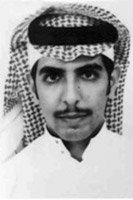
Another of the most important listed militants remaining, was born of but not necessarily a part of al-Qaida. He helmed the Abdullah Azzam Brigades, whose adherents featured in the Saudi Most Wanted Lists as well. The most prominent member of this movement to be sought after was Saleh Abdullah al-Qarawi (E-34) [18,19,20]. Qarawi was of original interest, as at some points he was named in the media to be the leader of al-Qaida forces in the Arabian Peninsula during the post-Saudi insurgency era, prior to the merger [21]. While this is not true, Qarawi seems to have been a contributor to Sawt al-Jihad during the zenith of AQSA, perhaps providing the reasoning for this claim [20]. The actuality is that Qarawi formed an entirely new militant outfit [18,20]. The primary focus of the Abdullah Azzam Brigades was within the Levant, including Syria, Israel, Palestine, and specifically Lebanon [19,20,22]. The group also spared a portion of its resources to focus on Saudi Arabia and the overthrow of its government [22]. Qarawi left his home of Buraidah after becoming radicalized young in 2003, implanting his ideals in war-torn Iraq [20]. Qarawi fought in the battles of Fallujah in 2004, and was a member of AQI, fighting alongside Abu Musab al-Zarqawi [18,20]. In fact, Qarawi was designated by Zarqawi to form the Abdullah Azzam Brigades in order to stage attacks in the Levant [18,20]. This definitively links Qarawi to al-Qaida although his group operated independently of the organization. While in Syria he was apprehended and returned to Saudi authorities who imprisoned him for a mere two months [20]. He fled the Kingdom afterwards with a fake passport and was believed to have set up camp in Iran [20]. Another revealed link of Qarawi to al-Qaida was the fact that he was the son in law of al-Qaida senior propagandist and operator Mohamed Hassan Khalil al-Hakimi (Abu Jihad al-Masri) [20]. Qarawi was accused of operating from Iran when his name was published on List E, and at one point was said to be a major player in al-Qaida’s network within [21]. However, as seen by the creation of the AAB, Qarawi’s network may be al-Qaida affiliated but it was uncertain as to whether it took direct orders from that organization’s central leadership.
The Abdullah Azzam Brigades was designated by the State Department as a terrorist group on May 24, 2012 [19]. The group’s two major factions were reported to be the Ziad Jarrah Battalion (named for the Flight 93 pilot/hijacker of the 9/11 attacks) which operated in Lebanon and the Levant, and the Yusef al-Ayiri Battalion (named for the original AQSA leader), which operated in the Arabian Peninsula [19]. Prior to this, others were designated as terrorists for their roles within the AAB. Qarawi himself was designated on December 15, 2011 for his role in commanding and establishing the organization [18]. An explosives expert for the group was designated by the US on November 22, 2011 named Ibrahim Sulaiman Hamad al-Hablain (E-2), who was also listed by the Saudis for his activities [23]. With its actions it must be noted that the network was exhibiting indications that it was an Al-Qaida franchise, one exclusively focused on the Levant. However, with the AQAP preoccupation with their war in Yemen, the AAB shifted focus to other Arabian operations for the time in order to fill a void.
On July 27, 2010 the Japanese tanker ship MV M Star was attacked by an explosives laden boat that rammed its side and caused a large dent [24,25]. The attack in the Strait of Hormuz did not result in any significant damage or death [24,25]. Initially an intense wave was deemed responsible, but eventually enough evidence was gathered to blame terrorists [19,24,25]. By August 10, the Yusef al-Ayiri Brigade of the AAB claimed responsibility stating that the Omani suicide bomber was one Ayub al-Taishan [24,25]. A picture of Taishan was released pointing to a computer image of a tanker [25]. Qarawi’s organization had shown the beginnings of what was feared to be another upcoming campaign in the Peninsula. However, nothing else occurred and the focus of the group as a whole seems to have remained in the Levant. Qarawi remained an important jihadist figure, capable of causing chaos in the Levant, the Peninsula, and the Khorasan where he was based.
ROGUE…And Wounded
First responders rushed to the scene of an explosion in Hisokhel, North Waziristan on June 4, 2012 site of yet another American drone strike targeting al-Qaida [26,27]. These responders included militants themselves, eager to assist, and to witness within the debris a wounded notorious Saudi militant. Missiles destroyed the small house, its mud construction offering no defense against the drones [26]. Vehicles lay damaged in the periphery as flames lit the 4 am sky [26]. The responders worked diligently to retrieve the casualties. Among the overseers was Al-Qaida’s overall second in command, Mohammed Hassan Qaid, known better as Abu Yahya al-Libi [26,27,28]. He was there that day to observe the recovery efforts for the wanted Saudi Saleh al-Qarawi (E-34), laying horrendously maimed in the rubble, a broken al-Qaida fixture too proud to have been of vital usage to the organization [29,30,31].
Qarawi oversaw the AAB from afar, and the progeny of an affluent Saudi family had no desire to follow strict rules, guidelines, and chain of command protocol within al-Qaida [30,31,32]. Casually exclaiming to comrades that he was a follower of bin Laden and Mullah Mohamed Omar, but not necessarily their lieutenants, he styled himself an al-Qaida commander nominally, but fell outside of their stipulations and orders [31]. He did not feel the need to be limited to one organization, under the authority of another, and his insouciant demeaner reflected this. An individualist in jihad, within a land where the jihadists had no need of individualists. He was exhausted with the leadership he fell under, and had been passed over too many times by their decrees. Al-Qaida did not view his proclaimed leadership of the Abdullah Azzam Brigades well, but rather as spurious [31]. He was seen as a sponsor to them, not as their founder. With a broken link of communication to al-Qaida senior leadership, Qarawi had filled the void and provided for them a sense of leadership and financial security [31]. Al-Qaida dismissed the group as a minor factor that had once or twice fired rockets into Israel [31]. Qarawi though used the AAB as his pathway to fame within the jihadist ranks. On the ground he trusted his subordinate Majid al-Majid (E-69) to run the daily operations of the organization from the Levant, basing out of Lebanon [33]. For al-Qaida, Qarawi became a nuisance. Instead of falling in line and following proper authority he gained a reputation as yet another foreigner, particularly of the Arab variety, who had taken off on his own tangent [31]. But in doing so Qarawi’s actions had been undisciplined according to al-Qaida leadership, drawing attention to movements, putting others at risk, and creating a divisive atmosphere ripe for quarrels among the ranks [31]. In interviews with al-Fajr media, he dodged around questions on his role with both AQAP and the al-Qaida organization as a whole [31]. His superiors viewed him as an ailment. However, just a few years earlier he was dependable in his tasking, acting on behalf of both bin Laden and his lieutenants with zeal [34]. His eventual recalcitrant ways then flourished.
Qarawi advanced far from his days as a loyal lieutenant to Abu Musab al-Zarqawi in Iraq, allowing himself to dream of enhanced extremist responsibilities [35]. The dream was brief and ended in North Waziristan. Martyrdom was seemingly at hand for this jihadist, but it was not to come to fruition. Lacking his lower extremities, his right hand and eye, he was rushed from the scene in a state of shock and criticality [29,30]. The rogue was now wounded and now useless to his cause. Qarawi survived to reflect on his mistakes in dealing with al-Qaida leadership, but did so in horrific pain. Yet his status did offer him a reprieve. His people, within days were able to negotiate a solution with the Saudi government [30,35]. Qarawi was to surrender to the Saudi authorities in secret, in order to improve his prognosis and be treated in his homeland; eventually to be released [30]. Much like his al-Qaida ambitions, the hopes of leaving Saudi Arabia were dashed. Qarawi in his ghastly condition was in no state to leave the Kingdom, and they were not about to let the individual depart [30]. He was taken into Saudi custody on June 9, 2012, forever removed from global jihad [35].
Taken with him that day was his young son, who had survived the perils of North Waziristan with Qarawi. DNA analysis revealed that this child was actually Abu Musab al-Zarqawi’s son, nurtured by Qarawi ever since the AQI leader’s death in 2006 [35]. Zarqawi’s family met with Qarawi a month later to ensure that the boy could remain in the Kingdom with the wounded man’s own family [35]. These were some of the only choices allotted to the now captive Qarawi. Within the month on June 19th, the Abdullah Azzam Brigades officially named their new emir, Majid Mohamed Abdullah al-Majid (E-69), in a release declaring solidarity between themselves and the Syrian resistance fighters [33]. Majid had also been profiled by Al-Fajr Media Center, the entity to which Qarawi had given his interview, and a known distributor of al-Qaida propaganda [33]. In his appearance therein Majid spoke of jihad within Saudi Arabia [33]. Now with the removal of Qarawi, leadership of the Abdullah Azzam Brigades switched to a local and arguably more efficient capacity. In August 2015, it was revealed that Qarawi was sentenced to 20 years of imprisonment in the Kingdom [36].
Revisiting List D


One might assume that in the severe conflict that had embroiled Yemen in 2011 and 2012, the Saudis would be able to cross a few or several names off of their Most Wanted Lists. However, this assumption did not come to fruition. There is the possibility though that some were killed and that AQAP has just neglected to acknowledge it as of yet. Also, there is the chance that some have been killed or captured and the Saudis have yet to acknowledge the cases themselves. This perhaps is the best assumption, yet evidence suggesting this was not seen until the summer of 2014 on the Saudi Ministry of the Interior’s website [37]. It was then, in a rare encompassing restructuring, that they updated List D to reflect that Manoor Mohamed Yusef (D-2), Othman Mohamed Hassan Korati (D-3), Faris Abdullah al-Dhahiri al-Harbi, and Mohamed Abdulrahman al-Dhait (D-11) had indeed died fighting in Iraq [37]. This was not a surprise, as convincing evidence for these men’s deaths was previously discussed in Segments V and VI. The updates also provided confirmation of the death of Noor Mohamed Musa (D-1) in Iraq. Furthermore, they provided the first evidence concerning the deaths of Fahd Saleh Rezqallah al-Mahyani (D-7) and Marzuq Faisal Marzuq al-Otaibi (D-9) while operating in Iraq [37]. It must be surmised that the Saudis reviewed years of evidence in order to conclude that these men perished. Thus, it must be assumed that they died somewhere from 2005-2010, this being the most significant time of AQI’s war in Iraq, after the issuance of List D. No evidence was provided as to exactly how these men met their demises. While accepting the idea that the Saudis were delayed in announcing deaths of militants abroad, the same Ministry of the Interior webpage update revealed that both Khalid Mohamed Abbas al-Harbi (D-15) and Adel Abdullatif Ibrahim al-Sanie (D-10) had been killed fighting in Lebanon [37]. In fact, during the summer of 2007, at least 20 Saudi jihadists were killed battling for the radical group Fatah al-Islam against Lebanese forces in the Nahr al-Bared Palestinian refugee camp [38]. Thus, these two can finally be counted among the dead, yet their story and how exactly they perished in Lebanon remains mystery. Within a short period of time, the Saudis reverted the Ministry of the Interior website to display all of the List D members discussed above as wanted. A change in policy must have resulted in reversing the decision to accept the reported deaths as accurate without conclusive physical evidence.
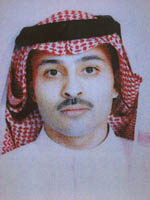
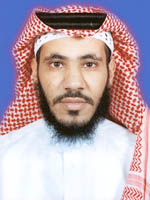

A more certain fate was observed for the Mauritanian fugitive from List D (D-5). Abdullah Walad Mohammed Sayyed [39], as it turned out, had in fact been arrested, in January 2008, by Mauritanian authorities after tracking him across four countries [40]. He was reported as Abdullahi Ould Mohamed Sidiya, the Mauritanian on Saudi Arabia’s most wanted list [40]. There were fears that Mauritanian extremists could turn their native land into a safe haven for extremists [40]. By 2010, Sidiya was still imprisoned in his homeland, and led a group of jihadists supporting negotiations with their government in a state sponsored debate against another group of inmates in opposition to the idea [41]. Islamic scholars debated both groups in what was seen as a groundbreaking experiment for the Mauritanians in their battle against extremists [41].
Afghanistan 2012
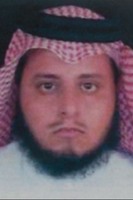
Less certain removals from the lists arose also. For an example of such, we must analyze another Saudi eliminated in the restless province of Kunar on July 1, 2012, who was only identified as Hanzallah [42]. The Saudi Interior Ministry website version of List E reveals that Ahmed Ali Barakat al-Shadawi al-Zahrani (E-8) commonly refers to himself as Hanzallah [43]. Armed with this information we can reasonably assume that Shadawi was in fact the Hanzallah killed and thus this author will list him as such. This militant was targeted by a US airstrike due to his occupation as a military advisor to insurgents in Kunar province [42]. Shadawi departed the Kingdom in 2008 for his jihad, but the Saudis went as far as to imply that Shadawi was part of an integral al-Qaida network in Iran, before concentrating his efforts in Afghanistan [44]. This seems to be more of a way to amplify their rivalry with that nation, than to offer evidence of Iranian support of terrorism. That being said, reports state that Shadawi was close to senior al-Qaida official Abdullah Ahmed Abdullah (Abu Mohamed al-Masri), who at the time was held in Iran, providing some plausibility to the assertion that Shadawi operated within the Shiite theocracy [44]. It is more applicable to state that a jihadist in this area was working in the Khorasan, encompassing Afghanistan, Pakistan and Iran, and would therefore at times have been operating in coordination with an actual established network of al-Qaida officials in Iran. Much like Qarawi, who was claimed to be operating solely in Iran, but was captured in Pakistan, Shadawi was said to be in Iran before being killed in Afghanistan [44]. Press reports stated that he was not on any of the Saudi wanted lists, but this is probably due to media searches of the list not revealing anyone whose actual name was Hanzallah [42]. When taking into account that the name was merely a kunya, Shadawi then fits as the best suspect for the fallen jihadist’s identity. Assuming no further evidence is obtained, we will mark Shadawi as possibly killed on List E.

Next, it was reported in the Saudi press on May 21, 2012 that in the Suwaidi district of Riyadh the family of Abdulrahman Fayad al-Ruwais al-Otaibi (F-21) received condolences for their son’s martyrdom in Afghanistan [45]. They had earlier received a telephone call informing them of the occurrence [45]. The visitation of mourners to the family provides better evidence that there was actually a death [45]. It is unknown what role Ruwais held in al-Qaida or even what his kunya was. He may well have been a foot soldier or a mid-level commander only.

Another reported removal came in the form of a suicide attack against Forward Operating Base Salerno in Khost, Afghanistan. On June 1, 2012 a truck bomb detonated against the base, creating an entry point for an assault team following in a white van [46,47,48]. The perpetrators were able to video the incident and the prepatory training, displaying the men in camouflage uniforms, black bandanas, and vests, filing out of the van and towards their prey, after what was a massive explosion [48]. The dining facility and postal exchange were extensively damaged in the blast, and the assailants penetrated roughly 60 meters before responding forces were able to vanquish them [46,47,48]. One American soldier and at least 11 attackers, including the suicide bomber perished [47,49]. In November 2012, an al-Qaida ideologue revealed Saudi Fawaz Ayed Juman al-Masudi al-Otaibi (F-34) as one of the deceased belligerents, giving his alias as Azzam al-Najdi [50].
Surrendered Recidivist
While Hanzallah, Ruwais, and Masudi were not officially confirmed removals from List E and F, the Saudis were able to actually take custody of another member of the wanted 85 by the end of the month. Prince Mohamed bin Naif meanwhile oversaw the surrender on July 30, 2012 of former Guantanamo detainee Adnan Mohamed Ali al-Sayegh (E-55) [51,52]. The former Brigade 55 member had been seduced into rejoining al-Qaida by his brother in law, Othman al-Ghamdi (E-53) [53]. As has been mentioned, Ghamdi was promoted to a commanding rank within the structure of AQAP [54]. Sayegh’s family stated their surprise that the man was willing to throw away the opportunities given to him by having graduated the rehabilitation program [53].

Sayegh had gone to Afghanistan, trained, and fought along the front lines around Kunduz against the Northern Alliance [55]. When those positions fell under heavy US bombardment and a Northern Alliance push, Sayegh and the surviving members of this Brigade 55 unit retreated to Mizar I Sharif [55,56]. They were captured by General Abdulrashid Dostum of the Northern Alliance and placed in the Qala I Jangi Fortress as a prison [55,56]. The brutality has been previously described, and Sayegh survived the uprising and decimation of the fortress [29]. Hundreds of Taliban and Brigade 55 members perished, but several, including Sayegh, Yusef al-Shehri, and American Taliban John Walker Lindh survived in the basement and were taken into US custody [52,55,56]. He was held in Guantanamo, released, and graduated Saudi rehabilitation [51,52]. Lindh fingered Sayegh as a Lashkar e Taiba (LeT) representative as well along the Taliban front lines [52,55]. LeT is a strong network of Pakistani militants embedded within the fabric of Pakistani society and supported in part by the nation’s intelligence service [57]. It is doubtful however there was much to the accusation, as Sayegh was assessed while at Guantanamo as being merely a foot soldier [55]. His reintroduction into militancy was encouraged by a stronger willed family member, and apparently at a decent opportunity the man chose to surrender to the Saudis with compunction for his actions [53]. These stories of surrender and supposed rehabilitation coupled with the deaths of even more dangerous jihadists are the legacy that Prince Naif wanted for himself and his Ministry. In other words, the Saudi methodology was having tangible effects. However, it may be surmised that Sayegh, having survived the Qala I Jangi slaughter, the harsh conditions of Guantanamo, and the battling in Abyan, was just exhausted after years of fighting.
Having addressed the status of militants spread through jihadist theatres, we return to Yemen to the US drone strikes, AQAP exploits, and the Yemeni objective of retaking Abyan and all hostile held territory.
CITATIONS and SUBSTANTIVE NOTES:
- [1] Afghanistan’s Heart of Darkness: Fighting the Taliban in Kunar Province, Brian Glyn Williams, Combating Terrorism Center at West Point, CTC Sentinel, November 15, 2008, http://www.ctc.usma.edu/posts/afghanistan%E2%80%99s-heart-of-darkness-fighting-the-taliban-in-kunar-province
- [2] NATO kills al-Qaida no. 2 target, by Veronica Lorraine, The Sun News, April 26, 2011, http://www.thesun.co.uk/sol/homepage/news/3548516/NATO-kills-al-Qaeda-No2-target.html
- [3] NATO kills ‘No. 2 most wanted’ in Afghanistan, Agence France-Presse, April 26, 2011, http://www.hurriyetdailynews.com/default.aspx?pageid=438&n=nato-kills-number-two-most-wanted-in-afghanistan-2011-04-26
- [4] Kingdom seeks proof of al-Makhafi’s death in Afghanistan, by Muhammad al-Sulami, The Arab News, April 28, 2011, http://www.arabnews.com/node/375769
- [5] Jihadist with same name as Zawahiri’s deputy reported killed, by Bill Roggio, July 29, 2011, http://www.longwarjournal.org/archives/2011/07/jihadist_with_same_n.php
- [6] Treasury designates al-Qaida finance sector leader, US Department of the Treasury Press Center, August 24, 2010, http://www.treasury.gov/press-center/press-releases/Pages/tg838.aspx
- [7] New wanted list from Saudi, by Gregory Johnsen, Waq al-waq blog, January 9, 2011, http://bigthink.com/waq-al-waq/new-wanted-list-from-saudi
- [8] Guantanamo Assessment File, Salim Ahmed Hamdan, ISN 149, http://wikileaks.org/gitmo/prisoner/149.html
- [9] Letter from Abu Abdullah al-Halabi (to Osama bin Laden), likely dated February 12, 2010
- [10] Letter providing direction (to al-Qaida subordinates), unknown date
- [11] Letter to Aunt Umm Khalid (from Umm Sa’d), dated December 21, 2010
- [12] Letter from Atiyah Abdulrahman to Osama bin Laden, dated October 6, 2010
- [13] Ramadan Greetings from Abu Abdullah al-Halabi to Khalid (bin Laden), unknown date
- [14] Al-Qaida operations chief in Pakistan killed, US says, NBC News, September 15, 2011, http://www.nbcnews.com/id/44536085/ns/world_news-south_and_central_asia/t/al-qaida-operations-chief-pakistan-killed-us-says/#.Uw1XqPldWuI
- [15] Abu Hafs al-Shehri confirmed killed in Predator strike in Pakistan, by Bill Roggio, The Long War Journal, September 17, 2011, http://www.longwarjournal.org/archives/2011/09/abu_hafs_al_shahri_c.php
- [16] US Predators kill 4 ‘militants’ in North Waziristan strike, by Bill Roggio, The Long War Journal, September 11, 2011, http://www.longwarjournal.org/archives/2011/09/us_predators_kill_4_9.php
- [17] Letter from Atiyah Abdulrahman to Osama bin Laden, dated November 24, 2010, https://www.dni.gov/files/documents/ubl/english/Letter%20dtd%20November%2024%202010.pdf
- [18] Terrorist Designation of Saleh al-Qarawi, Office of the Spokesman, US Department of State, December 15, 2011, https://2009-2017.state.gov/r/pa/prs/ps/2011/12/178882.htm
- [19] Terrorist Designations of the Abdallah Azzam Brigades, Office of the Spokesman, US Department of State, May 24, 2012, https://2009-2017.state.gov/r/pa/prs/ps/2012/05/190810.htm
- [20] In the Shadow of al-Zarqawi: A Profile of the Saudi Militant Saleh al-Qarawi, by Murad Batal al-Shishani, The Jamestown Foundation, Terrorism Leadership Monitor, Volume 1, Issue 4, April 29, 2010, http://mlm.jamestown.org/single/?tx_ttnews%5Btt_news%5D=36334&tx_ttnews%5BbackPid%5D=568&no_cache=1
- [21] 85 on Saudi wanted list of militants, The Saudi Gazette, February 3, 2009
- [22] The Abdullah Azzam Brigades: Behind the Terrorist group that bombed Iran’s Beirut Embassy, by Aryn Baker, Time Magazine, November 20, 2013, https://world.time.com/2013/11/20/the-abdullah-azzam-brigades-behind-the-group-that-bombed-irans-beirut-embassy/
- [23] Terrorist Designation of Ibrahim Suleiman Hamad al-Hablain, Office of the Spokesman, US Department of State, November 22, 2011, https://2009-2017.state.gov/r/pa/prs/ps/2011/11/177624.htm
- [24] UAE says terrorist in motorboat attacked oil tanker, by Margaret Coker, The Wall Street Journal, August 7, 2010, https://www.wsj.com/articles/SB10001424052748703988304575412640592719412 /UAE: Al-Qaeda responsible for Japanese tanker attack, by Khaled Wassef, CBS News, August 6, 2010, https://www.cbsnews.com/news/uae-al-qaeda-responsible-for-japanese-tanker-attack/
- [25] Tanker Damage caused by attack, inquiry finds, by Robert F. Worth, The New York Times, August 6, 2010, https://www.nytimes.com/2010/08/07/world/middleeast/07tanker.html
- [26] Get the Data: The Return of Double Tap Drone Strikes, The Bureau of Investigative Journalism, January 8, 2013, https://www.thebureauinvestigates.com/stories/2013-08-01/get-the-data-the-return-of-double-tap-drone-strikes
- [27] Drone Strike Killed No. 2 in Al Qaeda, U.S. Officials Say, by Declan Walsh and Eric Schmitt, The New York Times, June 5, 2012, https://www.nytimes.com/2012/06/06/world/asia/qaeda-deputy-killed-in-drone-strike-in-pakistan.html
- [28] Treasury targets three senior Al-Qaida leaders, US Department of the Treasury Press Center, September 7, 2011, https://www.treasury.gov/press-center/press-releases/Pages/tg1289.aspx
- [29] Expert: About 600 Saudi fighters are in Syria, Al-Arabiya News, November 16, 2013, https://english.alarabiya.net/News/middle-east/2013/11/16/Expert-about-600-Saudi-fighters-in-Syria
- [30] Online jihadists discuss fate of al Qaeda operative held by Saudi Arabia, by Thomas Joscelyn, The Long War Journal, June 27, 2013,https://www.longwarjournal.org/archives/2013/06/online_jihadists_dis.php
- [31] Summary on Situation in Afghanistan and Pakistan (Letter in bin Laden library), dated approximately April 2010, https://www.dni.gov/files/documents/ubl/english/Summary%20on%20situation%20in%20Afghanistan%20and%20Pakistan.pdf
- [32] Pakistan: Reported US Strikes 2012, The Bureau of Investigative Journalism, https://www.thebureauinvestigates.com/drone-war/data/obama-2012-pakistan-strikes
- [33] Abdullah Azzam Brigades names leader, advises against attacks in Syria’s cities, by Bill Roggio, The Long War Journal, June 27, 2012, https://www.longwarjournal.org/archives/2012/06/abdullah_azzam_briga.php
- [34] Letter from Hajji Othman (Sheikh Said al-Masri) to Zamrai (Osama bin Laden), dated May 15, 2007
- [35] Asharq al-Awsat Exclusive: The Untold Story of Al-Zarqawi’s Wife, Key al-Qaeda operative killed in US strike in North Waziristan, Asharq al-Awsat, May 11, 2013, http://www.aawsat.net/2013/05/article55301339
- [36] Saudi sentences chief of terrorist organisation to 20 years in prison, Middle East Monitor, August 24, 2015, https://www.middleeastmonitor.com/20150824-saudi-sentences-chief-of-terrorist-organisation-to-20-years-in-prison/
- [37] Wanted List-36, General Directorate of Investigation, Saudi Interior Ministry, https://www.moi.gov.sa/wps/portal/Home/sectors/dp-sectors/!ut/p/z1/tZJdb4IwFIb_CrvwkvRA-aiXaCLodJsQUHpjQOrsIh9qo3O_fkVdFrcoWbY16UVP3rft-5yDKJoiWiQ7_pwIXhbJSp5jas2gbxieZuj3QHwMjuP7o6gzwtDT0eQo6LqOZ9hDADJ0Teg7Xui3x1hKMaIXfof0pB9HnmeP9Ueinf1wZTnQ5I8QRbSa8wzFCUnamJFUtTNTVw3D0NUUElPVTQ3aJLPxoq3X6nkhKrFEMS92bCvOWZVyseBz1oLLasaqZCNyVogWiCVT9kkhWKZUrKxWUrziW6Fg6-ia1QdszVjxEeo6NXo781f_t9T09vWDJmqyrfxlvaaOpFHKRK8CTf8AR03hVKpKJisnFvT4m1sj0sSDNuWJJTD7U-DiqCYSwdMoAA26NprsONujsCg3uZzq4IdD40HDC4HxyxcGTS39p45dGeBA7ioPw5zgA1dpavneW-dBdbspOeC9c_cOLO0cFQ!!/dz/d5/L2dBISEvZ0FBIS9nQSEh/
- [38] 10 Saudi Islamists killed in Lebanon unrest, Asharq al-Awsat, July 9, 2007, http://www.aawsat.net/2007/07/article55262170
- [39] Kingdom issues new list of terrorists, by Raid Qusti and Samir al-Saadi, The Arab News, June 29, 2005, http://www.arabnews.com/node/269192
- [40] Mauritania killings may be new al-Qaida chapter, by Daniel Flynn, Reuters, February 11, 2008, http://www.reuters.com/article/2008/02/12/us-mauritania-security-idUSL1111681920080212
- [41] Mauritania debate pits scholars against jailed Salafists, by Mohamed Yahya Ould Abdel Wadoud, Maghrebia, January 21, 2010, http://magharebia.com/en_GB/articles/awi/features/2010/01/21/feature-01
- [42] Saudi al Qaeda commander confirmed killed in Kunar airstrike, by Bill Roggio, The Long War Journal, July 3, 2012, https://www.longwarjournal.org/archives/2012/07/saudi_al_qaeda_comma_1.php
- [43] Wanted List-85, General Directorate of Investigation, Saudi Interior Ministry, https://www.moi.gov.sa/wps/portal/Home/sectors/dp-sectors/!ut/p/z1/tZJfT8IwFMW_ynzgcWlLO1YeBwkbCCpbNqAvpGOd1LA_QAPip7cDjEEDi1Gb9KE357Q9v3sBA1PAcr6Tz1zJIucrfZ6x1hz2CfEQad5D6mPoOL4_ijojDHtNMDkKuq7jEXsIIR26Fuw7Xui3x1hLMWAXfof2tB9HnmePm48Unf3wynJgnT8CDLByIRMwwxZKIU-ImXKCTdLi2IxROzYFTQVCxEakjSr1IlelWoKZzHdiq85ZjSJN5UI04GU1ESXfqEzkqgHVUhh7niuRGKUoypUWr-RWGdQ6uubVgVpzkX-Euk6N3c781f8tNbt9_aCOmm6rfFmvmaNpFDrRqwLTP8BRUTiVykLoyokFO_7m1ojU8WB1eWYamP0pcHFUEYng0yiACHZtMNlJsQdhXmwyPdXBD4fGgzUvBOSXLwzqWvpPHbsywIHeZRaGGcUHabK45XtvnQfT7cb0gPfO3TuK4uEO/dz/d5/L2dBISEvZ0FBIS9nQSEh/
- [44] The Al Qaeda-Iran connection, by Turki al-Saheil, Asharq al-Awsat, June 8, 2011, http://www.asharq-e.com/news.asp?section=3&id=25464
- [45] Wanted Saudi terrorist dies in Afghanistan, by M.D. Al-Sulami, The Arab News, May 21, 2012, https://www.arabnews.com/wanted-saudi-terrorist-dies-afghanistan
- [46] Attack on US outpost in Afghanistan worse that originally reported, by Joshua Partlow and Craig Whitlock, The Washington Post, June 16, 2012
- [47] New Details Emerge about complex attack on FOB Salerno, by Bill Ardolino and Bill Roggio, The Long War Journal, June 10, 2012
- [48] Massive suicide attack at FOB Salerno, VIDEO from jihadists, Military.com, July 24, 2012, as retrieved from: Taliban Release Video of Haqqani Network Suicide Assault on FOB Salerno, by Bill Ardolino and Bill Roggio, The Long War Journal, July 23, 2012, https://www.longwarjournal.org/archives/2012/07/taliban_release_vide_2.php
- [49] Omani jihadist participated in Haqqani Network raid on FOB Salerno, by Bill Ardolino and Bill Roggio, The Long War Journal, August 13, 2012
- [50] The Death of Ayman al-Zawahiri: Succession Challenges, Tradeoffs, and Other Implications, CTC Sentinel, Volume 15, Issue 8, August 2022, https://ctc.westpoint.edu/the-death-of-ayman-al-zawahiri-succession-challenges-tradeoffs-and-other-implications/
- [51] Militant who had a relapse surrenders, The Arab News, July 31, 2012,
- https://www.arabnews.com/militant-who-had-relapse-surrenders
- [52] Ex-Guantanamo detainee surrenders to Saudis, by Thomas Joscelyn, The Long War Journal, July 30, 2012, https://www.longwarjournal.org/archives/2012/07/ex-guantanamo_detain.php
- [53] Names keep climbing on infamous terror list, by Mansour Al-Shihri and Khaled al-Shalahi, The Saudi Gazette, February 4, 2009, https://www.webcitation.org/query?url=http%3A%2F%2Fwww.saudigazette.com.sa%2Findex.cfm%3Fmethod%3Dhome.regcon%26contentID%3D2009020428379&date=2009-02-07
- [54] America and the Final Trap, AQAP video translated and transcribed by Flashpoint Partners, May 26, 2010, https://flashpoint-intel.com/inteldocument/flashpoint_aqapfinaltrap.pdf
- [55] Guantanamo Assessment File, Adnan Mohamed Ali al-Sayegh, ISN 105, http://wikileaks.org/gitmo/prisoner/105.html
- [56] Guantanamo Assessment File, Yusef Mohamed Mubarak al-Shehri, ISN 114, http://wikileaks.org/gitmo/prisoner/114.html
- [57] Lashkar-e-Taiba, Mumbai, and the ISI, by Stephen Tankel, Foreign Policy, May 20, 2011, https://foreignpolicy.com/2011/05/20/lashkar-e-taiba-mumbai-and-the-isi/
© Copyright 2025 Nolan R Beasley
 Chronicles in Zealotry