
Segment VIII – Occupation Of The Sky (Chapter 29 – A Disconcerting Breach)
For the entirety of the Series, please see – https://chroniclesinzealotry.com/fugitives-of-the-peninsula/
This chapter further explores the expanding international reach of AQAP, and juxtaposes this with the continual enmeshing of the network with tribal and local militias, elders, and political influencers. We begin immediately after the first overt American airstrikes and intervention in Yemen against AQAP. The network was poised to respond via a deployed suicide bomber equipped with an ingenious explosive device. We next discuss the concerning trend of the Yemenis providing false damage assessments derived from American airstrikes and their own offensives, undoubtedly designed to gain American praise and support. We finish with an observation of the AQAP growth from and assimilation of local combatant elements, and the interesting identify of a militant again stationed within the Saudi Kingdom.
The Underwear Bomber of Detroit
The airstrikes against AQAP were followed by the organization’s most ambitious attempt yet to attack US interests. The following day, on Christmas Day 2009, AQAP put an operative on a airplane in Amsterdam bound for Detroit [1,2,3,4]. The 24 year old Nigerian Omar Faruq Abdulmutallab would attempt to become the first Al-Qaida operative to successfully perpetrate a major operation on US soil since 2001 [1]. Abdulmutallab did not fit the profile of the regular AQAP suicide bomber. In fact, the young man was quite the opposite. He was the son of a prestigious and wealthy Nigerian banker [1]. He was also afforded many luxuries and opportunities and was incredibly well educated [1]. It is often the uneducated and impoverished that conduct suicide operations, however it has been shown that when the educated make such an attempt, the results are often devastating. Abdulmutallab attended the British School in Lome, Togo before receiving a degree in mechanical engineering from University College of London [1]. It was claimed that his radicalization began in these schools although the British vehemently deny it [1]. He wished to attend graduate school in an Arab country, so his parents sent him to Dubai after his 2008 graduation from UCL [1]. However, he soon abandoned these business studies and fled to Yemen where his malleable mind fell heavily under extremist influences [1,2]. His family attempted to reason with him but nothing could be done [1]. His last contacts with his relatives were cryptic and concerning which led his kin to believe he had been radicalized [1]. His father attempted to bring his son home from Yemen and even contacted American and Nigerian authorities about his concerns [1]. The Americans placed him on a large list of suspected terrorists but did not place him on the more concentrated “No Fly” list [5].

Abdulmutallab’s last contact with family came in October 2009 after his father was unsuccessful in locating the young jihadist [1]. Meanwhile, Abdulmutallab trained in Yemen, meeting with a young American named Samir Khan, who was rising in the ranks of AQAP as an ardent student of radical Islam and efficient propagandist [2,6,7]. Khan had been a radical blogger and influential in jihadist circles while still in the US, even going as far as procuring the services of a lawyer to ensure he could continue his hateful enterprise under the 1st Amendment [7]. Once in Yemen though, the young Khan had found safety in his niche of nudging young jihadists like Abdulmutallab towards proclivity for greater violence. Prior to his training, the Nigerian traveled through remote Yemeni tribal areas in order to stay at the home of Anwar al-Awlaki [2,6]. In fact, Abdulmutallab had actively sought out guidance from the American Awlaki, asking others how he could locate his potential future mentor [6]. Abdulmutallab even had to write an essay about jihad, to be read by Awlaki, before being allowed to meet the ideologue [6]. At this point, Awlaki had seemingly moved beyond the point of being an associate of AQAP, who merely sheltered militants. Awlaki was directly linked to members of the group and was apparently assisting in decision making processes [2,6]. With Abdulmutallab actively seeking Awlaki for religious advice, the cleric and AQAP saw an opportunity to use the educated young man in a strategic attack on America. Thus, during his stay with Awlaki, Abdulmutallab also discussed his desire for martyrdom [2,6]. After this meeting, the young Nigerian was taken to meet with Ibrahim al-Assiri who had designed a bomb composed of PETN explosives similar to the one used by his younger brother in the attempt to assassinate Prince Mohamed bin Naif [1,5,6]. This time however, the bomb was sewn into the underwear, instead of being inserted into the rectum of the suicide bomber, in order to keep the body from absorbing the blast [8]. The bomb contained no metal parts but would be activated when injected with a syringe full of acid [2,6,9]. The young Nigerian was in possession of 80 grams of PETN contained within his underwear explosive, which was more than enough to penetrate the plane’s fuselage [9]. With such a device, Assiri needed a competent individual to conduct the mission and Abdulmutallab made perfect sense. Assiri discussed the plans with Awlaki and, without a doubt Wuhayshi and the other AQAP senior leaders [3,6]. After Awlaki and the others gave the go ahead, Assiri sent Abdulmutallab to obtain his martyrdom [6]. Assiri’s device eluded airport screening procedures as Abdulmutallab traveled from Yemen to Ethiopia [1,6]. From there he next traveled to Ghana and then home to Nigeria [1,6]. He eventually flew to Amsterdam and boarded Northwest Flight 253 for Detroit [1,6]. On Christmas day, Abdulmutallab prepared for his martyrdom.
Before the final descent of the plane, the Nigerian operative went to the lavatory to prepare and purify himself [2]. He then sat down, covered himself with a blanket, and began to inject the acid into his underwear bomb [1,2]. He faked an illness to account for the blanket yet his attempts at subtlety were to no avail [2]. The bomb was a failure and merely caught ablaze instead of detonating [2,8]. The young man had been given freedom in choosing what plane he would bomb, the date he would conduct his mission, and over what American city he would strike [6]. Christmas day seemed like an opportunity in which a strike would take a significant mental toll on Americans, and the flight to Detroit was chosen for its minimal cost [10]. However, due to the failure of the bomb, Abdulmutallab was badly burned and subdued by fellow passengers before he could cause any real damage [2,8,11]. He was subsequently arrested, charged, pled guilty, and was sentenced to life in prison by February 2012 [8,12]. Most importantly he outlined the roles of Assiri and Awlaki in the plot [2,6]. This would account for why these two men would become primary targets of the Obama administration’s upcoming campaign within Yemen [13,14]. It is inconceivable however to think that the plan went forward with just Awlaki as the mastermind, without the consent of Qasim al-Rimi or Nasir al-Wuhaishi. In fact, Abdulmutallab was said to have also interacted with Fahd al-Quso, who was growing ever more important to AQAP and Wuhaishi’s inner circle, in order to discuss the bombing prior to the Nigerian’s departure from Yemen [10]. That being said, Awlaki had now graduated from ideologue to being directly involved in AQAP operations. Awlaki had lectured to 9/11 hijackers and was suspected of inspiring the Fort Hood and Little Rock attackers, but now it was proven that an American citizen was actively targeting his own homeland [2,15].
By December 28, the Americans confirmed the culprits to be AQAP, as the group directly claimed responsibility for Abdulmutallab and his attempt [4]. This corresponded with a release from the day before in which AQAP used the al-Majalah airstrike as propaganda for their cause and swore vengeance for the incident [16]. Despite this, the strikes against AQAP, in the aftermath of the Christmas day bombing attempt, only intensified. On January 2, 2010, General David Petraeus, commander of US Central Command (USCENTCOM) visited with Yemeni President Ali Saleh in order to ensure that American intervention would continue [17]. Saleh was promised financial assistance with his counterterrorism forces, specifically within the realm of aviation [17]. Furthermore, while Saleh supposedly expressed optimism with the recent strikes, he also expressed doubt and concern over the civilian deaths at al-Majalah [17]. Disturbingly, Petraeus claimed that only target Mohamed Saleh al-Kazemi’s wife and children were unnecessarily killed as collateral damage [17]. Petraeus was either speaking blatantly false comments or had poor intelligence to reference. Saleh disagreed with the casualty assessment yet agreed to allow American intervention and strikes to continue in return for the financial aid [17]. Amid reports of al-Qaida veterans from Afghanistan and elsewhere entering Yemen’s provinces in growing number, the US and Britain closed their Embassies in January as the tension escalated [18,19].
False Airstrike Assessments
On January 15, 2010 the Yemeni air force claimed a significant strike against AQAP leadership near the village of Yatama [20]. At least two utility vehicles had been travelling between the northern provinces of Saada and al-Jawf when they were hit by missiles [20]. Although the Yemenis claimed credit for the attack, it was revealed as a fraudulent, covering for the fact that the US Joint Special Operations Command (JSOC) had carried out yet another airstrike [20,21,22]. Eight militants were reported in the two vehicles and six supposedly died [23]. The list of dead militants was deemed a great success for the two nations and contained some names of significance: Ibrahim Mohamed Saleh al-Bannah (Abu Ayman al-Masri), the Egyptian Islamic Jihad member who acted as an intelligence captain for AQAP, Ammar Abadah al-Waeli (H-6) an important arms dealer for the group, Ayedh al-Shabwani, the AQAP commander for the lawless, vital Marib province, and two lesser known jihadists named as Saleh al-Tais and Abdullah Hadi al-Tais [23,24,25]. The sixth killed militant was reported to be the AQAP military chieftain Qasim al-Rimi (G-3) [20,21]. Rimi the influential former al-Faruq camp instructor known as Abu Hurayrah al-Sanaani, who had assisted Wuhaishi in announcing the merger of Yemeni and Saudi al-Qaida branches, and who had been instrumental in planning and executing AQAP operations, would be a monumental loss to the organization [26,27]. The deaths of Shabwani, Ammar al-Waeli and Bannah would be nothing to scoff at either. As for the others, Saleh and Abdullah al-Tais were brothers from the Waeli tribe, and Abdullah had fought against US forces in Iraq prior to joining AQAP in order to assist in the movement of Saudis into their new theatre [28].
These claims of a successful airstrike were proven baseless. The Yemenis failed to produce any bodies and AQAP released a statement announcing that none of the six men were killed [29]. The January 18 release explicitly said that “The Yemeni government has been making many false claims … against the Mujahidin leaders in the Arabian Peninsula [29].” The statement continued by assuring its readers that Rimi, Bannah, and the others were alive, “We assure our Muslim nation that none of the Mujahideen were killed in that strike, but some have suffered mild injuries [29].” It is not known if all of the men sustained varying wounds, however, Qasim al-Rimi was slightly injured by shrapnel in the strike [22]. The men were reportedly lounging outside of their vehicles when the bombardment occurred and thus survived [22]. Rimi’s injury was light and Ayedh al-Shabwani was supposedly seen dining with family members after his purported assassination [30]. JSOC had failed to neutralize their targets. Another initial clue to the men having survived was the fact that a follow up strike was conducted less than a week later.
The Yemeni claims were hard to digest and essentially too good to be true. They would develop a history of such issues. For instance, on the very same week that the Yemenis announced the death of Rimi, they also boasted of the capture of Said al-Shehri [31]. Thus, in a period of three days the Yemenis claimed to have captured the number two man in AQAP and killed the number three [20,31]. Shehri and an accomplice were said to have been captured when they overturned their car at a checkpoint in Shabwa province [31]. The Yemenis subsequently backed down and retracted the report the very next day [32]. One might think that the Yemenis would hold off on any further ridiculous claims, yet they next announced the actual identity of the captured militant to be that of Shehri’s brother in law, Yusef al-Shehri [32]. This Shehri, as seen in Segment VII (Chapter 27), was killed by Saudi security forces in October 2009. The Yemenis continued to embarrass themselves on their intelligence announcements. They were eager to please the Americans in order to assure themselves of their support, yet they were seemingly not willing to check the veracity of their sources, their reporting, or actually efficiently target the militants as the US requested [32]. The fact that Qasim al-Rimi escaped fate that January was not the essence of the problem, but rather it was the Yemenis’ willingness to lie about his death in order to tout achievements, as well as their eagerness to fabricate stories such as the Shehri arrest.
Local Combatants Absorbed into the Ranks
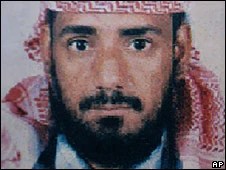
In another case, the Yemenis announced the death of a leading AQAP militant named Abdullah al-Mihdhar at a safe house in Shabwa province [33,34,35]. The militant was described as the senior commander of the organization for the province [33,34,35,36]. The local militant, Mihdhar was in fact killed with an accomplice in a gun battle with Yemeni security forces, consisting of commandos trained by JSOC, when he refused to surrender on the night of January 12 [33,34,35,36]. The problem that arises is that the Yemenis most likely built him up to be a far bigger threat and personality than he actually was. Mihdhar was later described as being an actual known local AQAP militant, who held the loyalty of local young tribesmen [33,36]. He was more of a criminal threat to the Yemenis than an actual terrorist and probably of value to AQAP locally, and of lesser value to Wuhaishi’s external operation. As the Shabwa province became the home of Anwar al-Awlaki, Fahd al-Quso, and a likely hiding place for leading AQAP militants, it seemed unlikely that Mihdhar was the ranking jihadist therein, but was rather an officer commanding over their extended forces within, and utilized to gain support among the local populace. His death was described by some as being a potential catalyst of other young Yemenis joining extremism [33]. As such, many of his tribesmen felt that the Yemenis could have arrested him for his activities instead of denouncing him as a terrorist and gunning him down [33]. Capitilizing on his death, AQAP later described Mihdhar in a video entitled “America and the Final Trap,” in which they referenced him in the company of fellow martyrs Kazemi and Mohamed al-Kalawi al-Awlaki [37]. Mihdhar was described as being a middle aged militant captain for the organization who had desired to go abroad for jihad [37]. Instead, Mihdhar remained local and had been a part of Abu Ali al-Harithi’s local al-Qaida gang [37]. As Harithi had relied on tribal influences to protect him and fill his ranks, this makes sense [38]. This also adds credence to the idea of Midhar leading the jihadist forces in Shabwa province. His death may have been a part of a larger campaign by JSOC and its trained Yemeni commandos to take out as much of the inner structure of AQAP as possible [39]. It has been asserted that these commando raids were prevalent against lesser known targets in the month of January 2010 [39].
In any case, the US military and the Yemenis were in a strange war with AQAP, thus far having failed to cement any clear victories in terms of major assassinations. The follow up to the January 15 strikes occurred on January 20, just five days later [40]. As mentioned, Ayedh al-Shabwani, reported killed in the earlier strike, was alive according to AQAP [29,30]. Interestingly, Ayedh, the AQAP commander of Marib, was also the cousin of Jabir al-Shabwani, the deputy governor of that same province [39,41,42]. The cousins represented the dichotomy of Yemeni society. They manifested the intense separation of the official government and tribal or paramilitary groups such as AQAP, while simultaneously exemplifying the familial ties between jihadists and authorities. While his cousin raised himself in an environment of official politics, Ayedh lifted his profile in a much different manner. He had risen to fame in the summer of 2009 amidst an engagement with the Yemeni military that became known as the “Battle of Marib [43,44].” After a summer 2009 visit from General Petraeus to President Saleh, the Yemenis had mobilized a force to enter Marib to combat AQAP militants [43]. The effort was a disaster resulting in the deaths of Yemeni soldiers, the capture of seven more and local tribesmen turning on the military while joining AQAP fighters [43]. With the loss of tanks, vehicles, and soldiers, the event was made into a video featuring Qasim al-Rimi and used to boost morale among the ranks of AQAP [43]. Shabwani had been the target of the raid and in addition to coming out unscathed, had grown in stature as a sort of folk hero [44]. Thus, the follow up strikes, which were again claimed by the Yemenis, although possibly conducted by JSOC, targeted Ayedh al-Shabwani’s home in the Erg al-Shabwan village of Marib province [40,45]. The bombings destroyed Shabwani’s house, farm, and his nearby orange grove [45,46]. His tribal fighter allies and/or his militant comrades fired anti-aircraft weapons in response to the attacks, which proceeded for the entire day [45,46]. Shabwani had been reported to be celebrating at home after surviving the previous strike and despite the intense bombings, he also survived this one as well [45,46,47]. In fact, contrary to initial reports, no militants appear to have been killed in the incident [45,46,47].
An Overdue Designation
The day prior to the strike against Shabwani, the US State Department formally designated AQAP as an independent terrorist organization of significant concern for national security [3]. The designation cited the Christmas day bombing attempt and other events as the necessary catalyst for proclaiming the group’s actions and intentions as violent and illegal [3]. The same release also designated both Wuhaishi and his deputy Said al-Shehri as influential terrorists [3]. After the above strikes and their new designation, Wuhaishi and Shehri prepared their men for more action against both Arabian and Western interests.
As such, in Khalf, Hadramout province, AQAP sent a suicide bomber named Saleh Abdulhabib Saleh al-Shawish to conduct an operation, but the fanatic was apprehended on his motorcycle prior to his detonation on January 30 [48]. Shawish was later described as a bomb producer and trainer who had been involved in multiple AQAP operations under Hamza al-Quayti [49]. After Quayti’s death Shawish had fled to Marib where he prepared for more missions [88-49]. By October 2010, the Yemenis sentenced Shawish to death [50,51]. The jihadist, who had become familiar with explosives during his time in Afghanistan, reacted with no remorse and continued to threaten his own government with his outbursts [49,50]. Regardless, Shawish had failed at whatever mission AQAP had assigned to him. AQAP had supposedly also sent another man to scout for a potential operation, but this time the attack was to occur back within the Kingdom.
A Surprise in Yanbu
The militant sent into Saudi Arabia was a surprise for many analysts. In an appearance that elicited memories of Sultan Radi al-Otaibi (E-32) having actually been alive after his supposed death in Iraq, yet another of the five men of List E announced on a jihadist forum as having been killed by the time of the wanted list’s release [52], would show up alive. On February 12, 2010 Ahmed Qatim Mohamed al-Huzali (E-10) had just arrived in Yanbu, the scene of Mustafa al-Ansari’s rampage some six years before [53,54]. Six years was the same amount of time that Huzali had been missing from his home, family, and friends [55]. Prior to this, Huzali (also transliterated as Hidhli [55]), who was born and raised in Mecca, worked for the emergency services of that city [53,55,56]. By 2004, he transferred to working for the Traffic police before abandoning his family, four children, and joining the jihadists [55]. He had seemingly broken off all contact with his family during this time period as well, and with reports of his death surfacing in the meantime, many considered him no longer a threat [52,55]. The Saudi Interior Ministry however, kept hunting for the militant [53,55,56]. While Huzali had not outwardly shown signs of extremism, his change of attitude and absenteeism from his employment was observed with concern by his relatives [55]. Upon his release from work, his radicalization had taken hold. He was believed to have eventually made his way to Yemen and joined the ranks of AQAP [55]. Apparently, he was sent back to his homeland to prepare for an operation therein [56].

As the wanted lists were designed for, concerned citizens took note of Huzali in Yanbu and contacted the security forces [57]. This was despite the belief that the man was dead. Specifically, he was reported to have been killed fighting in Khost province or in the Gardez, the capital of Paktia province in Afghanistan [52,53,55]. AQAP and other jihadists may have been attempting to hide Huzali’s fate in order to get him back into the Kingdom easier. Or, as has been discussed in the case of Sultan Radi al-Otaibi, the jihadist forums may simply have been reporting the best intelligence that they had on Huzali, believing it to be true, when in fact it was false. It must be recognized though that Huzali’s death was not noted by a known jihadist, nor was it announced on an official al-Qaida forum or official media outlet. Thus, the initial reports were dubious at best.
After the tips from the public, Huzali was arrested without any shots fired prior to Friday prayers on February 12 [53,55,56,57]. His detainment was not announced until the following Wednesday, February 17, as the Saudis wished to thoroughly investigate what Huzali was doing in Yanbu [53]. Several sources indicated that he was scouting locations for attacks including tourist hotels, industrial complexes, or oil installations [55,56]. Some reports say he was actually apprehended at a checkpoint with his family (with whom he must have reunited) while others say he was arrested at an actual hotel [55]. Most reports claim he was captured while at a tent in Yanbu [53,56]. Regardless, Huzali was in custody without a battle, which may indicate that he was actually with his family at that point and did not want to put them in harm’s way. The man was considered to be dangerous and may have been linked to the Prince Mohamed bin Naif assassination attempt [55]. In fact, some initial reports indicated that he may have been the suicide bomber, although this obviously proved false [55]. The Interior Ministry seemed to be saying that Huzali was definitely planning attacks when Brigadier General Mansur al-Turki stated that “Investigators are studying the details of his plans [56].” They studied them for five days prior to the public being made aware of the important capture. With the apprehending of the 36 year old Huzali, AQAP and List E had lost another vital member [55].
The local networking and the failure of the Yemeni government to properly address the militants allowed for a base from which potentially horrific acts, like that of Abdulmutallab, could be launched. As time progressed, AQAP became only more brazen. Thus, the US was compelled to devote more resources towards Yemen, particularly in the form of military airstrikes. The Saudis meanwhile continued to seek their wanted, but the diminishing list was not always due to AQAP losses. Those in the Khorasan theatre were under significant pressure in 2010 as well.
CITATIONS:
- [1] Profile: Umar Farouk Abdulmutallab, BBC News, October 12, 2011, http://www.bbc.co.uk/news/world-us-canada-11545509
- [2] Awlaki directed Christmas ‘underwear bomber’ plot, Justice Department memo says, by Peter Finn, The Washington Post, February 10, 2012, http://www.washingtonpost.com/world/national-security/al-awlaki-directed-christmas-underwear-bomber-plot-justice-department-memo-says/2012/02/10/gIQArDOt4Q_story.html
- [3] Designations of al-Qaida in the Arabian Peninsula and senior leaders, Philip J. Crowley Assistant Secretary of the Bureau of Public Affairs, US Department of State Press Release, January 19, 2010, http://www.state.gov/r/pa/prs/ps/2010/01/135364.htm
- [4] Al-Qaida in Yemen: AQIY claims responsibility for Christmas airline attack, translated by Flashpoint Partners, December 28, 2009, https://flashpoint-intel.com/inteldocument/12-28-09-aqiy-claims-responsibility-for-christmas-airline-attack.pdf
- [5] Abdulmutallab was in US database, but not on official terror watch, no-fly lists, by Eileen Sullivan and Devlin Barrett, The Huffington Post, December 27, 2009, http://www.huffingtonpost.com/2009/12/27/abdulmutallab-was-in-us-d_n_404204.html
- [6] Government Sentencing Memorandum for Umar Farouk Abdulmutallab, United States District Court Eastern District of Michigan Southern Division, February 10, 2012, http://www.emptywheel.net/wp-content/uploads/2012/02/120210-abdulmutallab-sentencing-memorandum.pdf
- [7] Radical blogger was ‘al-Qaida to the core,’ by David Zucchino, The Los Angeles Times, October 1, 2011, http://articles.latimes.com/2011/oct/01/world/la-fg-khan-profile-20111001
- [8] Investigators: Northwest bomb plot planned by al-Qaida in Yemen, by Richard Esposito and Brian Ross, ABC News, December 26, 2009, http://abcnews.go.com/Blotter/al-qaeda-yemen-planned-northwest-flight-253-bomb-plot/story?id=9426085
- [9] Bomber had enough explosives in underwear to rip a hole into plane, by Chuck Bennett, The New York Post, December 29, 2009, http://nypost.com/2009/12/29/bomber-had-enough-explosives-in-underwear-to-rip-hole-into-plane/
- [10] Christmas 2009 ‘underwear bomber’ targeted Detroit because it was the cheapest flight: report, by Philip Caufield, The Daily News, March 24, 2011, http://www.nydailynews.com/news/national/christmas-2009-underwear-bomber-targeted-detroit-cheapest-flight-report-article-1.118654
- [11] Hero tackled Northwest plane bomber as flames came from him on flight to Detroit, by Tom Leonard, The Telegraph, December 26, 2009, http://www.telegraph.co.uk/news/worldnews/northamerica/usa/6890990/Hero-tackled-alleged-Northwest-plane-bomber-as-flames-came-from-him-on-flight-to-Detroit.html
- [12] Christmas Day bomber sentenced to life in prison, by David Ariosto and Deborah Feyerick, CNN News, February 17, 2012, http://www.cnn.com/2012/02/16/justice/michigan-underwear-bomber-sentencing/
- [13] US approves targeted killing of American cleric, by Scott Shane, The New York Times, April 6, 2010, http://www.nytimes.com/2010/04/07/world/middleeast/07yemen.html
- [14] US targets bomb maker in Yemen for terror ties, by Siobhan Gorman, The Wall Street Journal, November 1, 2011, http://online.wsj.com/news/articles/SB10001424052970204394804577010141334953180
- [15] Born in US, a radical cleric inspires terror, by Scott Shane, The New York Times, November 18, 2009, http://www.nytimes.com/2009/11/19/us/19awlaki.html
- [16] Al-Qaida in Yemen: AQIY responds to airstrike and new threats, Flashpoint Partners, December 27, 2009, https://flashpoint-intel.com/inteldocument/12-27-09-aqiy-responds-to-airstrike-with-new-threats.pdf
- [17] US leaked diplomatic cable 09SANAA1430, GENERAL PETRAEUS’ MEETING WITH SALEH ON SECURITY ASSISTANCE, AQAP STRIKES, US Embassy in Sanaa, January 4, 2010, http://www.cablegatesearch.net/cable.php?id=10SANAA4&q=petraeus%20saleh
- [18] Al-Qaida veterans are ‘flooding in Yemen,’ by Richard Spencer, The Telegraph, January 10, 2010, http://www.telegraph.co.uk/news/worldnews/middleeast/yemen/6962969/Al-Qaeda-veterans-are-flooding-into-Yemen.html
- [19] US shuts embassy as al-Qaida ‘plans attacki in Yemen’, BBC News, January 3, 2010, http://news.bbc.co.uk/2/hi/middle_east/8438128.stm
- [20] Yemen: Al-Qaida military chief killed in Yemen airstrike, Fox News, January 15, 2010, http://www.foxnews.com/story/2010/01/15/yemen-al-qaeda-military-chief-killed-in-yemen-airstrike/?test=latestnews
- [21] Yemen forces kill al-Qaida military leader in air strike, Saba News, January 15, 2010, http://www.sabanews.net/en/news203210.htm
- [22] The Last Refuge: Yemen, Al-Qaeda, and America’s War in Arabia, Gregory Johnsen, W. W. Norton and Company, 2013, p. 205
- [23] January 15th strike: targeting al-Qaida in the Arabian Peninsula (AQAP) leaders and implications, by Katherine Zimmerman, AEI Critical Threats, January 16, 2010, http://www.criticalthreats.org/yemen/january-15th-strike-targeting-al-qaeda-arabian-peninsula-aqap-leaders-and-implications
- [24] Senior Qaida figures killed in attack, Yemen says, by Robert F. Worth, The New York Times, January 15, 2010, http://www.nytimes.com/2010/01/16/world/middleeast/16yemen.html
- [25] The Role of Egyptian Militants in Developing Al-Qaida in the Arabian Peninsula, by Hani Nasira, The Jamestown Foundation, Terrorism Monitor, Volume 9, Issue 1, http://www.jamestown.org/single/?no_cache=1&tx_ttnews%5Btt_news%5D=37328
- [26] Guantanamo Assessment File, Mahmud Omar Mohamed bin Atef, ISN 202, http://wikileaks.org/gitmo/pdf/ym/us9ym-000202dp.pdf
- [27] Arabian Peninsula al-Qaida groups merge, by Jane Novak, The Long War Journal, January 26, 2009, http://www.longwarjournal.org/archives/2009/01/arabian_peninsula_al.php#ixzz2BhIPn2zL
- [28] Martyrs of the Peninsula no. 8, Abu Atta al-Waeli (Abdullah Hadi al-Tais al-Waeli), August 6, 2011, http://azelin.files.wordpress.com/2012/01/al-qc481_idah-in-the-arabian-peninsula_s-al-malc481e1b8a5im-media-e2809cmartyrs-of-the-arabian-peninsula-8-e28093-abu-ata-al-waili-abd-allah-bin-hadi-al-tays-al-wailie2809d.pdf
- [29] Qaida denies fighters killed, Yemen vows more strikes, by Tamara Walid and Cynthia Johnston, Reuters, January 18, 2010, http://www.reuters.com/article/2010/01/18/oukwd-uk-yemen-idAFTRE60H49020100118
- [30] Al-Qaida leader Qasim al-Reimi alive? Dead terrorist spotted eating lunch, by Jane Novak, Armies of Liberation blog, January 17, 2010, http://armiesofliberation.com/archives/2010/01/17/al-qaeda-leader-qasim-al-reimi-alive-dead-terrorist-spotted-eating-lunch/
- [31] Yemen captures al-Qaida in the Arabian Peninsula’s deputy leader, by Bill Roggio, The Long War Journal, January 18, 2010, http://www.longwarjournal.org/archives/2010/01/yemen_captures_al_qa.php
- [32] Yemen retracts report of al-Qaida deputy’s capture, by Bill Roggio, The Long War Journal, January 19, 2010, http://www.longwarjournal.org/archives/2010/01/yemen_retracts_repor.php
- [33] Yemen forces ‘kill al-Qaida chief,’ BBC News, January 13, 2010, http://news.bbc.co.uk/2/hi/8455822.stm
- [34] Yemen al-Qaida chief killed in series of setbacks for terrorists, by David Montero, The Christian Science Monitor, January 13, 2010, http://www.csmonitor.com/World/terrorism-security/2010/0113/Yemen-Al-Qaeda-chief-killed-in-series-of-setbacks-for-terrorists
- [35] Yemen kills ‘al-Qaida cell leader,’ Al-Jazeera News, January 13, 2010, http://www.aljazeera.com/news/middleeast/2010/01/201011364454222209.html
- [36] Local al-Qaida leader killed in Yemen, Voice of America, January 12, 2010, http://www.voanews.com/content/yemen-al-qaida-leader-81312742/111428.html
- [37] America and the Final Trap, AQAP video translated and transcribed by Flashpoint Partners, May 26, 2010, https://flashpoint-intel.com/inteldocument/flashpoint_aqapfinaltrap.pdf
- [38] The Last Refuge: Yemen, Al-Qaeda, and America’s War in Arabia, Gregory Johnsen, W. W. Norton and Company, 2013, p. 82-83
- [39] The Dangerous US game in Yemen, by Jeremy Scahill, The Nation, March 30, 2011, http://www.thenation.com/article/159578/dangerous-us-game-yemen?page=0,2#
- [40] Yemen ‘bombs house of suspected al-Qaida militant,’ BBC News, January 20, 2010, http://news.bbc.co.uk/2/hi/8469959.stm
- [41] License to kill: Why the American drone war on Yemen violates international law, Alkarama Foundation, October 2013, http://en.alkarama.org/documents/ALK_USA-Yemen_Drones_PublicReport_EN.pdf
- [42] Air strike kills Yemen mediator, by Mohammed Ghobari and Mohamed Sudam, Reuters, May 25, 2010, http://mobile.reuters.com/article/topNews/idUSLDE64O0DF20100525
- [43] The expansion strategy of al-Qaida in the Arabian Peninsula, by Gregory Johnsen, Combating Terrorism Center at West Point, CTC Sentinel, January 3, 2010, http://www.ctc.usma.edu/posts/the-expansion-strategy-of-al-qaida-in-the-arabian-peninsula-2
- [44] Is Yemen the next Afghanistan?, by Robert F. Worth, New York Times, July 6, 2010, http://www.nytimes.com/2010/07/11/magazine/11Yemen-t.html?pagewanted=all&_r=0
- [45] Yemen jets raid ‘al-Qaida hideout,’ Al-Jazeera News, January 20, 2010, http://www.aljazeera.com/news/middleeast/2010/01/201012013240953808.html
- [46] Airstrikes target al-Qaida in Yemen, Voice of America, January 19, 2010, http://www.voanews.com/content/yemen-launches-air-strike-on-home-of-al-qaida-leader-82169022/111599.html
- [47] Yemeni air raid hits Qaida leader house, no casualties, Xinhua News, January 20, 2010, http://www.globaltimes.cn/world/mid-east/2010-01/499871.html
- [48] Al-Qaida man captured wearing bomb belt: Yemen, by Mohamed Sudam, Reuters, January 30, 2010, http://www.reuters.com/article/2010/01/30/us-yemen-qaeda-idUSTRE60T1GF20100130
- [49] Terrorist threatens to destroy court and judge after sentence, by Nasser Arrabyee, Nasser Arrabyee Blogspot, October 18, 2010, http://narrabyee-e.blogspot.com/2010_10_01_archive.html
- [50] Yemen sentences al-Qaida bomb maker to death, by Mohammed Ghobari and Mohammed Mokhashaf, Reuters, October 18, 2010, http://www.reuters.com/article/2010/10/18/us-yemen-qaeda-idUSTRE69H4BR20101018
- [51] Al-Qaida militant sentenced to death in Yemen, by Mohammed Jamjoom, CNN News, October 18, 2010, http://www.cnn.com/2010/WORLD/meast/10/18/yemen.al.qaeda.sentence/
- [52] Release concerning the deaths of five jihadists from Saudi most wanted list, as retrieved from www.muslim.net, http://www.muslm.net/vb/showthread.php?t=381807
- [53] Terrorist no. 10 captured in Yanbu, The Saudi Gazette, February 18, 2010, http://www.saudigazette.com.sa/index.cfm?method=home.regcon&contentID=2010021863754
- [54] Saudis identify mastermind of Yanbu attack, The Associated Press, May 4, 2004, http://usatoday30.usatoday.com/news/world/2004-05-04-saudi-attack_x.htm
- [55] Al-Hidhli was a traffic cop before 6-yr disappearance, by Hatim al-Masoudi, The Saudi Gazette, February 19, 2010, http://www.saudigazette.com.sa/index.cfm?method=home.regcon&contentid=2010021963886
- [56] Saudi Arabia foils terror attack, nabs no. 10 in wanted list, by Abdulrahman Shaheen, The Gulf News, February 18, 2010, http://gulfnews.com/news/gulf/saudi-arabia/saudi-arabia-foils-terror-attack-nabs-no-10-in-wanted-list-1.585047
- [57] Tip-off from public led to the arrest of al-Hidhli, The Saudi Gazette, February 20, 2010, http://www.saudigazette.com.sa/index.cfm?method=home.regcon&contentID=2010022063982
© Copyright 2025 Nolan R Beasley
 Chronicles in Zealotry