
By 2004, al-Qaida in the FATA was enmeshed with a multitude of parallel jihadist movements with whom they were previously acquainted and now reliant upon for survival. They also were required to coordinate together out of necessity against a common enemy and the shared debacle of being cornered in tribal Pakistan together, potentially with enemies on all sides. The most prominent allies were of course the Afghan Taliban and the criminal enterprise of the Haqqani Network, but herein we will examine the foreign elements with whom they cooperated (some extremely familiar), as well as the local extremist movements in Pakistan, readily offering a haven to their Arab compatriots.
For the entirety of the Series, please see – https://chroniclesinzealotry.com/predators-of-the-khorasan/
Encroachment Upon the Shura
From the beginning, al-Qaida operated in conjunction with other jihadist entities. As the staunchest ally to al-Qaida, the now merged Egyptian Islamic Jihad still represented a threat amidst the war. It is important to reiterate that these Egyptians were not always sworn al-Qaida, whilst several were indeed Shura council members. The US Department of Treasury designated seven members as terrorists for their support to al-Qaida in September 20051. Among them were the explosives expert Midhat Mursi al-Said Omar and the chemical expert (and Shura member) Ali Said Mohamed Mustafa al-Bakri2. Also included were the brother of Anwar Sadat’s assassin, Mohamed Ahmed Shawqi al-Islambouli, and Shura member Abdullah Mohamed Rajab Abdulrahman (Abu Khayr al-Masri)3. The Shura council is of interest here, as it was comprised primarily of Egyptians, yet it would appear that the allied movements eventually encroached upon their dominance.

In 2005, al-Qaida supposedly appointed the head of an allied movement to their Shura for the first time since their absorption of the EIJ. Abdulhaq al-Turkistani ascended to the position of Shura councilor at some point in 2005, approximately two years after assuming leadership of the Eastern Turkistan Islamic Movement (ETIM) in November 20034. It is indicative of al-Qaida’s reliance on these allied organizations for their survival while entrapped in Pakistan and waging war in Afghanistan. Despite Hasan Mahsum, the former ETIP leader claiming no connections to al-Qaida, his successor was now joining the Shura. Ethnically, a Uyghur Chinese national would seem an odd choice to join an Arab/African council. Yet even before the invasion, al-Qaida had apparently labored with Chinese militants in senior roles. Senior Somali-based operative Harun Fazul, in his memoir, alludes to an enigmatic individual whom he refers to as the “Chinese Brother,” as being a primary al-Qaida member in its nascent years, overseeing the Jalalabad front until 1991, exploring into Somalia prior to the al-Qaida venture therein, and being among the Tier One leaders with paramilitary commanders Mohamed Atef and Abu Ubaidah al-Banshiri5. Further intriguing evidence to this individual is seen in Abdulkhaliq al-Sini, who is listed as number 18 on the roster of 170 al-Qaida members from the late 1990s. The document declares that Sini (indicating a Chinese heritage) had returned to his country6. Regardless of who the Chinese brother may have been, there was a precedent. Perhaps he too was a Uyghur nationalist. Now years later, Abdulhaq al-Turkistani assumed a seat on the Majlis ash-Shura.
Wana Five
As chronicled in previous chapters, Abdulhadi al-Iraqi and Abu Faraj al-Libi oversaw a relatively small number of actual Arabs and Africans within the encampments of the Federally Administered Tribal Area (FATA). They were heavily dependent on the local Pashtun tribes for protection, shelter, and some logistics. Increasingly, these tribal Pashtuns were recruited for paramilitary efforts. Some organized on their own and began to turn against the Pakistani government, as well as continue their aggression against the Americans across the border. Nek Mohamed Wazir was the primary initial commander in South Waziristan, but upon his death in the original CIA drone strike in Pakistan, there was room for another young commander to ascend.
Instead, mere days after the assassination, the 45 year old Haji Omar (known alternately as Haji Omar Khan7 and Haji Mohamed Omar8), seemingly anointed himself as commander of the Waziri tribal militants in the wake of Nek Mohamed’s fall, only to rescind the comment and reemerge as part of a twelve member shura of paramilitary officers, in a period mourning prior to naming a leader9. These included his brothers Haji Sharif and Noor Islam10, plus a cousin named Maulavi Abbas11. Along with Maulana Abdulaziz, these five of the Shura were previously declared as wanted by the Pakistani government for their propensity to support and provide for foreign element fighters12. In fact, in January 2004, the homes of Haji Sharif and Noor Islam were destroyed along with Nek Mohamed’s in their village of Kalosha, demonstrating the long simmering conflict with Pakistani authorities13. The helicopter gunships targeted them due to the presence of foreign militants, yet all had previously fled the domiciles14. Despite the frequent localized violence of 2004, Haji Omar declared that hostilities were reserved for the Americans and that their quarrel was not with Pakistan15.

Haji Omar was a native of South Waziristan and a veteran of the jihad against the Soviets in Afghanistan, having engaged in combat in Bagram and Kabul, before departing the country during the Afghan civil war16. Once the Taliban were solidified as conquerors in 1996, he migrated to Kandahar, therein transforming into an officer within their regime, and a confidant of Mullah Mohamed Omar17. With the American presence in Afghanistan, he diverted to South Waziristan instead of remaining to fight18, but formed the foundation alongside Nek Mohamed Wazir of a paramilitary force prepared to conduct cross border raids, while coordinating with and supporting foreign belligerents.
It seems there was some dissent among the Ahmadzai Wazir tribal Taliban as to the status of Haji Omar as commander, which compelled the development of the shura structure, centered eventually on the Wana Five19. Militant Javed Karmazkhel became one of the influential five, as opposed to Haji Omar’s brother Noor Islam20. This due to the Wana Five being specifically named for those of the shura who eventually signed a “peace deal” with the Taliban government in November 2004. Regardless, along with Noor Islam, the Wana Five were involved with decisions and leadership, and united by their acceptance of foreign fighters, particularly Uzbeks, within their native land21. Conversely, another of the Ahmadzai Wazirs, known as Maulvi Nazir Ahmed (Mullah Nazir), was left to agonize over the presence of these Uzbek militants. Mullah Nazir coordinated early raids into Afghanistan and was apprehended by the Pakistanis in 2004, only to be liberated upon the government’s Shakai agreement in April with Nek Mohamed22.
By February 2005, after the peace accord was signed, four members of the Wana Five received significant government payouts, ironically utilized by the militants to repay their al-Qaida guests, from whom they borrowed during the aggressions against Pakistan23. The fifth member, Maulana Abdulaziz later demanded his share from the others.24
Recidivism and Abdullah Mahsud
Therefore, in light of the Waziri militants being helmed by the “Wana Five,” the particular need for a new commander was most pressing within the Mahsud tribe, with whom the Waziris shared South Waziristan. Surprisingly, the next notorious paramilitary leader produced by the agency came to prominence after his release from American detention in Guantanamo Bay. To properly observe and understand this development, we must delve into recidivism.
In 2004, the American public became acquainted with the concept of Guantanamo recidivism: former detainees, released from American custody, returning to the battle in Afghanistan or elsewhere. In terms of Afghani detainees, leaked Guantanamo assessments detail how captured Taliban fighters were primarily composed of forced conscripts or inept volunteers25. These files also establish that trends in cover stories were predictable and observable, particularly that a captured militant was assigned as merely a driver, guard, cook, or some other noncombatant billet26. In other cases, the captive may have claimed to be mistakenly or maliciously captured and given to American custody despite the fact that they were not in anyway related to the conflict. While most of these cases were true, and represented a clear dearth of important captures and transfers to Guantanamo, there were others who lied about their status and importance in order to gain early release. Others became powerful after their release due simply to their incarceration in an American facility.
As an example, Mohamed Yusef Yaqub was a false name given by Taliban military official Mullah Shahzada27. At the time of his capture during the 2001 battle of Kunduz, he reported that he was a rug merchant from southern Afghanistan trapped in the conflict after having arrived in order to purchase product for resale in the south28. In actuality, he was a deputy to a senior Taliban military commander29. He was insistent to his captors and interrogators in Guantanamo, remaining with this story and convincing American authorities to release him30. He pleaded his case as an ethnic Pashtun facing discrimination from the Northern Alliance31. Afghan officials who may have been able to identify him were denied access to Guantanamo detainees32. The supposed merchant was released in May 2003 and immediately resumed militancy as Mullah Shahzada33. He was acknowledged as a senior Taliban ground commander in Afghanistan34. He utilized his experiences in Guantanamo to recruit militants through his command in the south35. He thus began a successful campaign in southern Afghanistan for the next year, staging a prisonbreak in Kandahar, as well as an assault on Spin Boldak36. In the prison endeavor, his men bribed guards to stand down from their stations, while 41 militants escaped through tunnels37. At Spin Boldak only the action of French military and Afghan security forces halted Shahzada and his men from overwhelming the town38. His exploits resulted in at least 15 deaths, including those of two aid workers in the region39. Shahzada was of enough importance that he and his unit were visited surreptitiously by Mullah Mohamed Omar himself during the night at their mountainous renegade camp40. Shahzada coordinated with his emir’s security detail via satellite phone in order to accomplish the meeting41. Shahzada displayed great reverence for the Taliban leader in front of his men, and together they walked to an orchard for their conference42. Mullah Mohamed Omar implied that Shahzada’s incarceration at Guantanamo was not to be lamented, but was but a test from Allah. In addition, he told Shahzada that American technology and force was not to be feared, because they could not defeat the Taliban with its simple leader walking among them still43.
Shahzada was finally killed on May 7, 2004 in an engagement with American forces44. Local Afghan fighters learned of his position and informed on Shahzada and two of his men45. US Special Forces and Afghan security coalesced on the location46. Just 10 days after having met with his emir, Shahzada was dead, killed by friendly fire during the fracas47. Reports surfaced in the summer of 2004 that at least 5 of the recently released Guantanamo detainees were recidivists, resuming the fight in Afghanistan48. The report acknowledged Mullah Shahzada and his inadvertent demise, naming him as the most significant thus far49. In Quetta, Pakistan, various wanted Taliban officials openly mourned Mullah Shahzada after his death50.
Another recidivist was known in Guantanamo as Shai Jan Ghafur, a Taliban forced conscript who supposedly acted as a driver before surrendering at Yarghanak after the Kunduz lines broke51. After his release from detention, he returned to Afghanistan and the battle as Maulvi Abdulghaffar, and took command of Taliban forces in Uruzgan and Helmand provinces, proving that his story of being an irrelevant conscript was just a cover to blend in and prevent his further incarceration52. He had actually been a military officer in northern Afghanistan prior to the invasion. Now upon his return he was based out of Uruzgan, coordinating resistance efforts53. On September 25, 2004 Abdulghaffar was planning attacks on local Afghan security forces54. However, authorities determined his location, and Afghan forces moved to surround his compound in the village of Pishi, Uruzgan55. Maulvi Abdulghaffar and two of his men were killed in the resulting gunfight56. Later, Vice President Cheney cited both Maulvi Abdulghaffar and Mullah Shahzada as recidivist examples and reasons as to why Guantanamo should not be closed57.

Of the recidivists actually released in 2004 however, the last stood out for his importance within Pakistan. He took advantage of the death of Nek Mohamed Wazir, as the subsequent charismatic young militant to assume the command of jihadist fighters in South Waziristan, albeit with the Mahsud tribe. In fact, he was one of Nek Mohamed’s newest tribal soldiers when he filled this vacancy58. Born Noor Alam in South Waziristan as a member of the Mahsuds, he gained his militant experience across the border in Afghanistan fighting for the Taliban as they violently assimilated the provinces of the nation59. He became acquainted with the Taliban movement while attending a government sponsored religious school in Peshawar, thus fulfilling the original role of the Taliban as militant religious students following Mullah Mohamed Omar60. As the Taliban fought to take Kabul in 1996, the young Noor Alam lost his leg to a landmine explosion in the effort61. In Guantanamo he was known as Said Mohamed Alam Shah, a disabled, and supposedly forced Taliban conscript working as a driver and doing clerical tasks only62. He stated that he went to the front lines at Kunduz, not to fight, but to rescue his conscripted brother63. His own amputated leg precluded him from the fighting, he claimed64. After surrendering at Yarghanak, he was placed with fellow captives in shipping containers by General Abdulrashid Dostum’s men and sent to Sheberghan, a perilous journey in which many captured Taliban militants died65. Released in March 2004, he became a local celebrity due to his imprisonment at Guantanamo, and used this newfound status to increase his own profile, benefiting from the power vacuum left by Nek Mohamed’s assassination in June66. Known as a charismatic and striking figure, he became Abdullah Mahsud, and rode his camel to meet his men in their mountainous redoubts67. He wanted to lead by example, being in the extremes with his tribal fighters68. Yet his increasing profile brought technological advances, as he later traveled in vehicles under heavy protection, and gave interviews to Western journalists via satellite phone69. He was said to have forged links with al-Qaida fighters hiding and basing out of South Waziristan, much the same as his predecessor Nek Mohamed70. Comparing these two presents intrigue, as in this region, the Pashtun Mahsud and Wazir tribes were historical nemeses of one another71. Ironically, the Mahsuds tended towards support of the Pakistani federal government in the past72. The British Imperial forces labeled the Wazirs and Mahsuds as wolves and panthers in the mountains, making it remarkable that in at least this regard at this time, two leaders from the two separate entities shared common goals73.
Nonetheless, historical differences and conflicts between the tribes necessitated what amounted to parallel command structures within South Waziristan, despite their commonality under Taliban ideology. This existed for the Waziri tribal Taliban in South Waziristan under the auspices of the Wana Five, alongside of a developing militant command of the neighboring Mahsuds74.
In October, Abdullah Mahsud conducted his first international operation75. Dispatching five of his men, including one Afghan, an Uzbek, and two Pakistanis, Abdullah Mahmud orchestrated the abduction of two Chinese engineers laboring on a canal and dam project on the Afghan/Pakistan border76. They were among dozens of Chinese engineers employed by state owned Chinese hydroelectric firm building the Gomal Zam Dam77. Being held in South Waziristan at a location far from the leader of their captors, the engineers were to be ransomed for the release of Mahsud militant compatriots78. Presumably those being requested were locals captured during the government’s earlier foray into South Waziristan, as well as al-Qaida figures79. The cessation of further military infiltrations in the FATA was also demanded80. This coming just seven months after the Pakistanis commenced their first military operation into South Waziristan. Abdullah Mahsud claimed the operation on October 10, threatening to murder a hostage unless his men were given free movement to transfer the captives to a new location81. At that time the abductors and their prey were being monitored by Pakistani authorities, leading Mahsud to drastic measures to ensure the success of the mission82. As such, Mahsud’s men donned explosive vests and also forced them upon the hostages83. In the following days, Abdullah Mahsud engaged in negotiations with tribal elders and Pakistani forces, but to no avail, as the hostages remained trapped in Chamalgai, South Waziristan84. Hours later, Pakistani government forces surrounding the compound had no choice but to act upon hearing gunshots within85. Upon sweeping in, the five captors were killed, but not before they mortally wounded one of the captives86. The other hostage was rescued and transferred to the Chinese Embassy87. The Pakistanis worked rapidly to salvage their ties with the Chinese government88. By October 21, helicopters and security forces were conducting a supposedly thorough search for Abdullah Mahsud in the tribal agency89. At this point, the ostensibly primitive militant was the subject of international media attention90. From hiding, he taunted the government and delivered video messages to encourage suicidal loyalty from his men91. Abdullah Mahsud himself swore to fight to the death against the Americans for their purported crimes against the Islamic world, and postulated that others would continue to take the place of efficient militant leadership roles92.
Baitullah Mahsud
Meanwhile, as Abdullah gained increased attention due to his return from Guantanamo, a kinsman named Baitullah Mahsud already held the advantage of being proclaimed as the Taliban commander for areas of North and South Waziristan controlled by the Mahsud tribe93. Dispatched to oversee the ceremony in the wake of Nek Mohamed’s death, Mullah Dadullah, the Afghan Taliban military commander, blessed the proceedings, as per the approval of Mullah Mohamed Omar94.
Baitullah hailed from a village outside of the FATA in nearby Bannu, and was educated in religious radicalism in local madrassas, to include locations in North Waziristan95. His education was interrupted by his travel to Afghanistan to join combat against the Soviets at a young age, before eventually beginning a longterm relationship with and loyalt to the Afghan Taliban96.
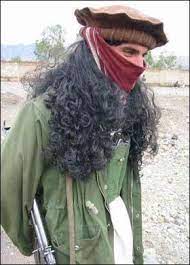
The pressure on Abdullah Mahsud in the aftermath of his Chinese abduction venture allowed for an opportunity for Baitullah to negotiation a ceasefire with the Pakistani government. Despite the offer not being extended to Abullah, the rising Baitullah accepted a peace accord from the Pakistanis in February 2005, at the urging of the Afghan Taliban97. A potential peace with Pakistan would allow Baitullah to focus efforts on Afghanistan, much to the Taliban’s benefit; a proposition refused by Abdullah98. Baitullah was more conspicuous in his actions than Abdullah, resulting in the authorities’ preference for him, when forced to accept the unfortunate reality of militant rule in the FATA99. Pakistan was willing to allow compliant militants launching cross border attacks, so long as they could ensure relative peace within their own borders. Srarogha Fort outside of Wana hosted only a few Pakistani forces who witnessed the agreement’s bizarre circumstances100. The choreographed event featured Baitullah obscuring his appearance, while surrounded by followers promising “death to America”, as he accepted to amnesty101. Baitullah declared to his followers that his acceptance was not capitulation, while simultaneously assuring the Pakistanis that his campaign against them would cease102. However, he warned of rapid resumption if needed103. He gave no assurances to end cross border raids into Afghanistan. Baitullah also demanded enhancements in the tribal agencies and the restriction of security checkpoints104.
Yet the Pakistanis were compelled to sign the deal, due to their unpopularity among the tribal populace, and Baitullah’s propensity for having the upper hand in hostile engagements105. Baitullah both coerced the deal and directly benefited from the signing106. The ostensible peace with the Pakistanis allowed for Baitullah to commence the implementation of Shariah law within his domain. The puritanical restrictions were enforced in the most severe manner, with even the most menial infractions being met with violence107. Schools and music faced bans, male beards were mandatory, all while females were destined to dwell under extreme constraints108.
Despite assurances to cease housing and provisioning non-local militants109, Baitullah was able to refuse the registration or deportation of the foreigners, and incorporated many of the elements into his command110. Abdullah Mahsud’s disregard of the potential ceasefire stemmed from his relationship with, protection of, and usage of foreign elements in his operations111. The most prominent foreign militants in question were the Uzbeks.
Islamic Movement of Uzbekistan
Another violent, relevant, and influential entity and al-Qaida ally was the Islamic Movement of Uzbekistan. From its founding, the IMU was intent on overthrowing the Uzbeki President Islam Karimov, and was composed of Uzbeks mostly from the Ferghana Valley region, which itself encompassed portions of Tajikistan, Kyrgyzstan, as well as Uzbekistan112. Command the the movement was held by Juma Namangani, a former Soviet paratrooper113, who was born as Jumaboi Ahmadjanovich Khojayev114. Namangani was the accepted military leader of the organization, while his deputy Tahir Abdulhalilovich Yuldashev 115 was considered the political116, legal and religious authority117. Namangani and Yuldashev had been associated since 1990-1 where they formed their first allegiance dedicated to remove Karimov from governance of the former Soviet state118. This was a construct known as Adolat, or Justice, an apparently disjointed effort to impose Islamic governance, pursuing puritanical societal and punitive measures119. These developments actually resulted in the takeover of a local communist office and a visit from Karimov in an attempt to dissuade and calm Yuldashev and his followers120. Karimov attempted to abolish the group, but the adherents displaced to Tajikistan and an awaiting civil war121, wherein Namangani engaged as a senior lieutenant within the United Tajik Opposition faction of the conflict122. When the war ceased in 1997, the religious radicals attempted to establish a base in Tajikistan, but Yuldashev brokered a successful transfer to Afghanistan under the protection of the Taliban by 1998123. There in Kabul, the IMU was officially commenced as a jihadist organization, bringing at least 2000 militants to bolster Taliban ranks in exchange for the safe haven and operational base in northern Afghanistan around Mizar I Sharif and Kunduz124. By 1999, Namangani joined from Tajikistan125.
In February of 1999, the IMU was prepared to strike. Six car bombs were deployed across the Uzbeki capital of Tashkent in an effort to assassinate Karimov and propagate discord126. Although 13-16 individuals were killed, the desired results were not achieved, and the perpetrators were of dubious origin127. However, Namangani’s contacts within Tajikistan allowed him to have a satellite base therein for his men, and allowed for his forces to conduct cross border operations into Kyrgyzstan in order to conquer portions of the Ferghana in August 1999128. By October, the IMU was repelled, but only after significant political chaos for the Karimov Uzbeki regime and the Kyrgyz government129. Also, in 1999 Yuldashev met again with senior Taliban leaders to ensure the symbiotic relationship in which the hosts provided funds, access to weapons and other supplies, while the IMU provided their militants for usage by the Taliban armed forces130. The Taliban even diverted jihadists of Chechen and Uyghur ethnicities to align with Namangani in the north. Reliant upon the Taliban for safety and finances, the IMU sought other sources of funding to include the lucrative regional opium trade131. Slowly the IMU evolved into a multiethnic organization, while still claiming to be focused on Uzbeki politics. Perhaps it was a foregone conclusion that Namangani’s military force would be utilized for international efforts based on this ethnic expansion, but during their time enjoying the Taliban hospitality, the IMU refuted ideas that they were changing their name to the Islamic Movement of Turkistan and shifting their goals to a broader region132. Those within the ranks opposed to the broadening strategy were thus staved off and left to smolder, but only temporarily, as an eventual political shift facilitated the dissidents’ chance to rise.
The IMU became known to US authorities primarily for the abduction of four American mountain climbers in Kyrgyzstan, before they subsequently absconded from their captors133. They soon gained an exponential amount of notoriety. IMU forces were incorporated into the ranks of the Taliban military against the Northern Alliance, with Namangani appointed as commander of all foreign elements in the engagements134, a position directly given to the Uzbek by Mullah Mohamed Omar135. Titled the 22nd Division, Namangani’s Taliban sanctioned forces also included the Libyans of the Libyan Islamic Fighting Group (LIFG)136. This was a command also recognized and respected by al-Qaida137. In fact, Abdulhadi al-Iraqi’s Brigade 55 operated under the auspices of Namangani as the conflict commenced138. Later, 2001 estimates postulated that Namangani commanded upwards of 10,000 militants139. Thus, the Uzbek commander found himself a target along the front lines in Kunduz amidst the American invasion. Large numbers of IMU militants were killed in American airstrikes in Afghanistan. Traveling in a convoy of some 700 Uzbeks, Chechens, Uyghurs and other foreign elements, traversing the treacherous roads from Kunduz to Mizar I Sharif as the lines collapsed, Namangani was mortally wounded on November 11, 2001,140 in such an airstrike141.
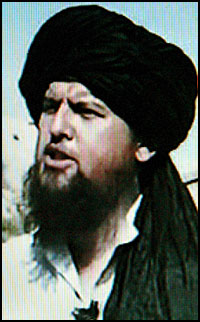
Yuldashev and his cohorts remained in the country in order to continue waging war against the occupiers142. Inevitably, this resulted in increased chances of direct battle. In the battle of Shah I Kot, a majority of the 200 foreign fighters under command of the Taliban leader Saifur Rahman Mansour, were actually Uzbeks from Yuldashev’s combatants143. He left 70 of his men among the dead. Yuldashev and the IMU survivors fled next to Pakistan’s FATA in order to recuperate from their losses144. Therein Yuldashev was able to solidify his rule of the IMU, but not without significant controversy. In order to remain relevant, financed, and functional, Yuldashev was compelled to enmesh with the local Pashtun militias of South Waziristan, as well as the al-Qaida network, resulting in a shift to regional and global ambitions as opposed to a focus on Uzbekistan145.
Islamic Jihad Union
Born in Uzbekistan in April 1972, Najmuddin Kamolitdinovich Jalolov146 was the lead dissenter from Yuldashev’s rule. He was intimately involved in the 1999 Tashkent atacks, before escaping to Kazazhstan, Chechnya, and finally Afghanistan147. According to his US Treasury terrorist designation, his separation from Yuldashev began as early as 2001, presumably as soon as Namangani perished148. Officially Jalolov split from the IMU in March 2002 after fighting at Shah I Kot and relocating to tribal Pakistan149. Previously, Jalolov had trained in explosives and mines at al-Qaida camps in the 1990s, and with the close ties of al-Qaida and the IMU, was able to become associated with a variety of jihadist leaders, including bin Laden, Mullah Omar, and ETIP leader Hassan Mahsum150.
Jalolov fomented the dissent within the ranks and formed his Islamic Jihad Group in 2002, alongside of his protégé, a 19 year old Uzbek from Tashkent named Suhail Fatilloevich Buranov151. Jalolov desired the overthrow of the Islam Karimov government in his home Uzbekistan, while Yuldashev and the IMU was ever increasing their ambitions to become a regional militant force, with the intention of referring to themselves as the Islamic Movement of Turkistan152. Ironically, it was Jalolov who appealed to a variety of other IMU members who were not actually Uzbek153. Jalolov took on the kunya Abu Yahya Mohamed Fateh, in order to evoke a Turkish audience into equating him with Mehmet Fateh, the Turkish conqueror of Istanbul154. Jalolov was previously connected to Central Asian, Turkish and Chechen jihadists battling in the rebellious Russian Caucasus region155. In addition, Buranov, although a young IMU recruit and fighter, displayed innate leadership skills due to his multilingual abilities, providing Jalolov with an inroad to multiple potential communities156. Buranov, known as Abu Huzaifa or Mansur Suhail, spoke not just Uzbek, but Turkish, Arabic, Pashto, and Russian157. In fact, the similar and kindred Turkic languages in Central Asia made for a vital recruitment tool for Jalolov158. When Jalolov and Buranov formed the IJG, its membership was well less than 100, but it is false to say that their group was of little significance159. The organization based out of Mir Ali, North Waziristan, linked to and supported by the Haqqani Network, with Jalolov boasting staunch relationships with local Pashtun, Libyan, Uyghur, and al-Qaida militants160.
Eastern Turkistan Islamic Movement / Turkistani Islamic Party
Of the potential offshoots of the IMU, another important contingent was of course the Eastern Turkistan Islamic Movement or ETIM. In later iterations of their media publications, they consistently referred to themselves as the Turkistani Islamic Party or TIP. While there is some debate as to the origins of the two networks, it seems most plausible that the former evolved into the later. The ETIM were represented by the Uyghurs, a Turkic ethnicity found in China’s western Xinjiang province, and thus culturally similar to the Central Asians of the IMU. It makes sense then that the Taliban sent Uyghur militants to Namangani and Yuldashev for incorporation in their ranks. Their initial leader was Hassan Mahsum, known as Abu Mohamed al-Turkistani, whose demise we have previously discussed. His successor to the movement was Memetiming Memeti, known as Abdulhaq al-Turkistani, who explained that the most militant portions of the ETIM, which apparently became the TIP were fostered by and sprang from the IMU. As another regional jihadist group, the ETIM expressly concerned itself with attacks and disruption of the Chinese government in Xinjiang province. The US designated the ETIM as a terrorist organization in August 2002 at the behest of the Chinese government in order to appease Beijing’s opposition to the potential US invasion of Iraq. The US began to cite these regional groups, particularly ETIM and IMU, as having refocused on attacking America and American interests abroad161. The Chinese overplayed the threat of the ETIM by claiming that Mahsum and his men were dispatching terrorists into China at a prodigious rate. On the other end of the spectrum, Mahsum claimed to have no coordination or attachments with al-Qaida162. Neither scenario was entirely accurate. The ETIM was intent on insurrection in Xinjiang, but did not have the means or wherewithal to launch successful and large attacks. However, Mahsum was most assuredly associating with al-Qaida and the IMU. Mahsum directly coordinated with insurgents fighting against the US invasion in Afghanistan163, and maintained close relationships with senior al-Qaida figures.
As discussed in a previous chapter, Bin Laden personally invited the ETIM to come under his auspices, with Hasan Mahsum founding the ETIM training camp at Tora Bora, a known al-Qaida complex164. Additionally, al-Qaida financially and logistically supported the ETIM, allowing them to grow closer to the Arab extremists and the Uzbeks of the IMU165. This directly led to the previously discussed restructuring giving rise to the TIP166. Abdulhaq al-Turkistani (Memeti) not only ran the Uyghur Guesthouse in Jalalabad, but heavily participated in the weapons training exercises in Tora Bora167. He was explicitly stated to be in charge of the camp up until the Tora Bora complex was bombed in late 2001168.
As early as August 2001, Hasan Mahsum began calling meetings of what he refered to as the League of Islamic Mujahidin, which operated as a interoperability of the ETIM, IMU, EIJ, and al-Qaida169.
According to the 17 Uyghur figures that were detained in Guantanamo Bay, Mahsum and Memeti were confirmed as participating in training Uyghur recruits at the camp in Tora Bora. Hassan Mahsum was able to provide between 300 and 600 fighters to assist the Taliban and al-Qaida after the invasion170. Several found themselves already in Tora Bora as the Arabs fled there for the last stand battle of 2001171. After the invasion, the ETIM/TIP leadership was able to flee into the FATA of Pakistan and therein regroup, developing those close relationships with al-Qaida leadership.
As for Abdulhaq al-Turkistani, he was born in October 1971 in China as Memetiming Aximu172. Later named Memetiming Memeti, he left Xinjiang in March 1998 for Afghanistan, joining Mahsum and the other militants for training173. In November 2003, shortly after Mahsum’s death at the hands of the Pakistanis, Memeti was voted to become the new chieftain of the ETIM174. It was under his leadership that the ETIM dissolved and was replaced fully by the TIP175. Memeti expanded on Mahsum’s relationship with al-Qaida and by 2005 had joined their Majlis ash-Shura176. A Memeti lieutenant, named Emeti Yakuf and known as Abdulshakur al-Turkistani, was the party’s primary paramilitary commander177.
Exploits of the Central Asian Militants
Najmuddin Jalolov and the Islamic Jihad Group were not stagnant during this time and continued to plot against the Islam Karimov government of Uzbekistan. To this point, in March 2004 Jalolov was able to make his move. Setting up an IJG cell in Kazakhstan along the Uzbek border, a Kyrgysz national named Zhakshybek Bimurzajev, coordinated a series of attacks within Uzbekistan at the behest of Jalolov178. From the Kazakh city of Shimkent, Bimurzajev dispatched his operatives to the Uzbek capital of Tashkent179. Operations in the IMU homeland fell under the command of Ahmed Bekmirzajev180. Having likely established the IJG alongside Jalolov, Bekmirzajev was deployed to command operations within Uzbekistan181. The onslaught was heralded late on March 28, when an explosives accident among the militants resulted in several deaths and the destruction of a safehouse and bomb manufactory182.
Uniquely, Bekmirzajev deployed female suicide bombers for the pending operations. On March 29, 2004, the first volleys were fired, when IJG combatants ambushed police forces in two locations, killing three183. This was immediately followed by two female suicide bombers detonating in the Chorsu Bazaar of the city– [A], resulting in numerous police and civilian casualties184. The following day, two vehicles were approached by police tactical units outside of Tashkent, leading to a third female suicide bombing. The driver of one exited the vehicle, and she targeted the police forces. Four additional militants from the vehicles displaced to a new location and made a stand in a nearby home. Apparently this was a safehouse and contained reinforcements for the IJG fighters. Eventually the militants within committed suicide or were killed by police when they stormed the residence185. Later on March 31, a militant being chased in Tashkent blew himself up. In the end, 33 militants, 10 police and four civilians were killed in the carnage. Ground commander Bekmirzajev was himself among the dead186.
Jalolov continued the campaign on July 30, 2004, when three suicide bombers were deployed by Bimurzajev against more visible targets187. In a noticeable detour from the IJG philosophy, the jihadists targeted both the Israeli and American Embassies in Tashkent188. In addition, the Uzbek prosecutor general’s office was attacked. Seven were wounded there when the bomber detonated in the entrance hall. Two Uzbek guards were killed outside of the Israeli Embassy, and two more succumbed to wounds at the American Embassy – [B]. No staff members of either institution were killed, and there was no damage to the Embassy proper at each location. Bimurzajev and cohorts were captured in November 2004 in Uzbekistan, but senior leadership in Pakistan remained unscathed189.
It appeared now as if the IJG was morphing into an outfit invested in global jihadism. The July attacks corresponded with the trials of 15 IJG suspects in the March incidents, but the wider concern was that Jalolov was willing now to engage the US directly. In fact, the IJG was significantly influenced by the Haqqani Network and al-Qaida.
Jalolov previously become associated with Abu Laith al-Libi during the Battle of Shah I Kot190. Jalolov was said to be among the first to confront American soldiers during the battle191. While Abu Laith was said to have gained the respect of his contemporaries during the battle, the feeling with Jalolov was no doubt mutual, and a friendship was formed. Abu Laith maintained close contacts with the IJG throughout their formative years and was credited with providing Jalolov and his leadership cadre with the logistical, operational, and social assistance they craved192. Abu Laith and some of his closest lieutenants, including Abu Abdullah al-Shami and Abu Luqman al-Makki guided, taught, and cared for IJG members193. It was becoming apparent that the war being fought in Afghanistan by the likes of Siraj Haqqani and Abu Laith had an ardent supporter in Jalolov.
In May 2005, the Islamic Jihad Group was designated by the US Department of State as a terrorist entity194. Jalolov changed the name of the Islamic Jihad Group into the new appellation of Islamic Jihad Union shortly thereafter195.
CITATIONS and SUBSTANTIVE NOTES:
- [A] The Chorsu Bazaar female bombers were identified as Dihnoza Kholmanadova and Shahnoza Inoyatova. The third female assailant was Zahro Turaeva. All were young, educated, and were students of Arabic at the Egyptian Embassy in Tashkent196.
- [B] The suicide bombers were identified as Avazkhan Shayusupov, a Kazakh, at the Uzbek Prosecutor General’s Office; Mavlon Valiyev, a Kazakh, at the Israeli Embassy; and Dulat Iskakov, a Kazakh, at the US Embassy197.
- Treasury Designates Seven Al Qaida Associates, US Department of the Treasury Press Release, October 3, 2005, https://home.treasury.gov/news/press-releases/js2960 ↩︎
- Treasury Designates Seven Al Qaida Associates, US Department of the Treasury Press Release, October 3, 2005, https://home.treasury.gov/news/press-releases/js2960 ↩︎
- Treasury Designates Seven Al Qaida Associates, US Department of the Treasury Press Release, October 3, 2005, https://home.treasury.gov/news/press-releases/js2960 ↩︎
- Treasury Targets Leader of Group Tied to Al Qaida, US Department of the Treasury Press Release, April 20, 2009, https://home.treasury.gov/news/press-releases/tg92 // China releases blacklist in Olympic terror plot, NBC News via the Associated Press, October 21, 2008, https://www.nbcnews.com/id/wbna27313538 // ‘Eastern Turkistan’ terrorists identified, Xinhua News Agency, China Daily, October 21, 2008, https://www.chinadaily.com.cn/china/2008-10/21/content_7126503.htm ↩︎
- al-Harb `ala al-Islam: Qissat Fazul Harun, The War against Islam: the Story of Harun Fazul, Autobiography of Harun Fazul, February 2009 ↩︎
- Evidence Collection, List of 170 Al-Qaida Members, recovered 2001 from home of Mohamed Atef, Ref Number: AFGP-2002-600046, Combatting Terrorism Center – West Point, https://ctc.westpoint.edu/wp-content/uploads/2013/10/List-of-Names-of-Al-Qaida-Members-Translation.pdf ↩︎
- Return of the Taliban: Interview with Haji Omar Khan, PBS Frontline, October 3, 2006, https://www.pbs.org/wgbh/pages/frontline/taliban/militants/omar.html ↩︎
- Militant Leader Vows Jihad Against US, Dawn, June 22, 2004, https://www.dawn.com/news/394976/militant-leader-vows-jihad-against-us ↩︎
- Militant Leader Vows Jihad Against US, Dawn, June 22, 2004, https://www.dawn.com/news/394976/militant-leader-vows-jihad-against-us ↩︎
- Militant Leader Vows Jihad Against US, Dawn, June 22, 2004, https://www.dawn.com/news/394976/militant-leader-vows-jihad-against-us ↩︎
- Talibanistan: Negotiating the Borders Between Terror, Politics, and Religion, Peter Bergen and Katherine Tiedemann, Oxford University Press, 2013 ↩︎
- Militant Leader Vows Jihad Against US, Dawn, June 22, 2004, https://www.dawn.com/news/394976/militant-leader-vows-jihad-against-us ↩︎
- Pakistan Raids Terrorist Hideouts, by Salahuddin Haider, Arab News, January 9, 2004, https://www.arabnews.com/node/242753 ↩︎
- Pakistan Raids Terrorist Hideouts, by Salahuddin Haider, Arab News, January 9, 2004, https://www.arabnews.com/node/242753 ↩︎
- Militant Leader Vows Jihad Against US, Dawn, June 22, 2004, https://www.dawn.com/news/394976/militant-leader-vows-jihad-against-us ↩︎
- Senior Taliban Commander Reported Killed in US Strike, by Bill Roggio, The Long War Journal, October 27, 2008, https://www.longwarjournal.org/archives/2008/10/senior_taliban_comma.php ↩︎
- Senior Taliban Commander Reported Killed in US Strike, by Bill Roggio, The Long War Journal, October 27, 2008, https://www.longwarjournal.org/archives/2008/10/senior_taliban_comma.php ↩︎
- Senior Taliban Commander Reported Killed in US Strike, by Bill Roggio, The Long War Journal, October 27, 2008, https://www.longwarjournal.org/archives/2008/10/senior_taliban_comma.php ↩︎
- A Who’s Who of the Insurgency in Pakistan’s North-West Frontier Province: Part One – North and South Waziristan, by Rahimullah Yusufzai, Jamestown Terrorism Monitor, Volume 6, Issue 18, September 22, 2008, https://jamestown.org/program/a-whos-who-of-the-insurgency-in-pakistans-north-west-frontier-province-part-one-north-and-south-waziristan/ // Return of the Taliban: Interview with Haji Omar Khan, PBS Frontline, October 3, 2006, https://www.pbs.org/wgbh/pages/frontline/taliban/militants/omar.html ↩︎
- A Who’s Who of the Insurgency in Pakistan’s North-West Frontier Province: Part One – North and South Waziristan, by Rahimullah Yusufzai, Jamestown Terrorism Monitor, Volume 6, Issue 18, September 22, 2008, https://jamestown.org/program/a-whos-who-of-the-insurgency-in-pakistans-north-west-frontier-province-part-one-north-and-south-waziristan/ ↩︎
- A Who’s Who of the Insurgency in Pakistan’s North-West Frontier Province: Part One – North and South Waziristan, by Rahimullah Yusufzai, Jamestown Terrorism Monitor, Volume 6, Issue 18, September 22, 2008, https://jamestown.org/program/a-whos-who-of-the-insurgency-in-pakistans-north-west-frontier-province-part-one-north-and-south-waziristan/ ↩︎
- Question Mark of South Waziristan: Biography and Analysis of Maulvi Nazir Ahmad, by Chris Harnisch, Critical Threats, July 17, 2009, https://www.criticalthreats.org/analysis/question-mark-of-south-waziristan-biography-and-analysis-of-maulvi-nazir-ahmad#_ednf4b396d3e65bc44c2ebc2afe2817d96322 // Profile: The ‘good’ Taliban leader, The Express Tribune, January 3, 2013, https://tribune.com.pk/story/488855/profile-the-%E2%80%98good%E2%80%99-taliban-leader ↩︎
- Militants Were Paid to Repay Al Qaeda Debt, Dawn, February 9, 2005, https://www.dawn.com/news/401686/militants-were-paid-to-repay-al-qaeda-debt ↩︎
- Militants Were Paid to Repay Al Qaeda Debt, Dawn, February 9, 2005, https://www.dawn.com/news/401686/militants-were-paid-to-repay-al-qaeda-debt ↩︎
- For descriptions of Afghan coerced Conscripts see examples in the Guantanamo Assesment Files of ISN 626, 630, 358, and 363. For a description of the plight of Pakistani Volunteers see Guantanamo Assessment File ISN 21. ↩︎
- For descriptons of militants claiming to be Drivers see examples the Guantanamo Assessment Files of ISN 355, 358, 361, 362, 363, and 366. For examples of Cooks, Clerical duties, and Medical see ISN19, 352, 136, and 141. For examples of Guards see ISN360, and 364. ↩︎
- Former GTMO Detainee Terrorism Trends-Update, Defense Analysis Report-Terrorism, Defense Intelligence Agency, December 4, 2007 // Guantanamo Assessment File, Mohamed Yusef Yaqub, ISN 367, https://wikileaks.org/gitmo/prisoner/367.html ↩︎
- Guantanamo Assessment File, Mohamed Yusef Yaqub, ISN 367, https://wikileaks.org/gitmo/prisoner/367.html ↩︎
- THE REACH OF WAR; U.S. Said to Overstate Value Of Guantánamo Detainees, by Tim Golden and Don van Natta Jr, The New York Times, June 21, 2004, https://www.nytimes.com/2004/06/21/world/the-reach-of-war-us-said-to-overstate-value-of-guantanamo-detainees.html ↩︎
- THE REACH OF WAR; U.S. Said to Overstate Value Of Guantánamo Detainees, by Tim Golden and Don van Natta Jr, The New York Times, June 21, 2004, https://www.nytimes.com/2004/06/21/world/the-reach-of-war-us-said-to-overstate-value-of-guantanamo-detainees.html ↩︎
- After Gitmo, A Talib Takes Revenge, by Tim McGirk and Rahimullah Yusufzai, Time Magazine, June 7, 2004, https://content.time.com/time/subscriber/article/0,33009,994373,00.html ↩︎
- After Gitmo, A Talib Takes Revenge, by Tim McGirk and Rahimullah Yusufzai, Time Magazine, June 7, 2004, https://content.time.com/time/subscriber/article/0,33009,994373,00.html ↩︎
- Former GTMO Detainee Terrorism Trends-Update, Defense Analysis Report-Terrorism, Defense Intelligence Agency, December 4, 2007 ↩︎
- THE REACH OF WAR; U.S. Said to Overstate Value Of Guantánamo Detainees, by Tim Golden and Don van Natta Jr, The New York Times, June 21, 2004, https://www.nytimes.com/2004/06/21/world/the-reach-of-war-us-said-to-overstate-value-of-guantanamo-detainees.html ↩︎
- After Gitmo, A Talib Takes Revenge, by Tim McGirk and Rahimullah Yusufzai, Time Magazine, June 7, 2004, https://content.time.com/time/subscriber/article/0,33009,994373,00.html ↩︎
- Former GTMO Detainee Terrorism Trends-Update, Defense Analysis Report-Terrorism, Defense Intelligence Agency, December 4, 2007 ↩︎
- After Gitmo, A Talib Takes Revenge, by Tim McGirk and Rahimullah Yusufzai, Time Magazine, June 7, 2004, https://content.time.com/time/subscriber/article/0,33009,994373,00.html ↩︎
- After Gitmo, A Talib Takes Revenge, by Tim McGirk and Rahimullah Yusufzai, Time Magazine, June 7, 2004, https://content.time.com/time/subscriber/article/0,33009,994373,00.html ↩︎
- THE REACH OF WAR; U.S. Said to Overstate Value Of Guantánamo Detainees, by Tim Golden and Don van Natta Jr, The New York Times, June 21, 2004, https://www.nytimes.com/2004/06/21/world/the-reach-of-war-us-said-to-overstate-value-of-guantanamo-detainees.html ↩︎
- LAST DAYS OF THE TALIBAN?, by Sami Yousafzai, Newsweek, December 26, 2004, https://www.newsweek.com/last-days-taliban-123543 ↩︎
- LAST DAYS OF THE TALIBAN?, by Sami Yousafzai, Newsweek, December 26, 2004, https://www.newsweek.com/last-days-taliban-123543 ↩︎
- LAST DAYS OF THE TALIBAN?, by Sami Yousafzai, Newsweek, December 26, 2004, https://www.newsweek.com/last-days-taliban-123543 ↩︎
- LAST DAYS OF THE TALIBAN?, by Sami Yousafzai, Newsweek, December 26, 2004, https://www.newsweek.com/last-days-taliban-123543 ↩︎
- Former GTMO Detainee Terrorism Trends-Update, Defense Analysis Report-Terrorism, Defense Intelligence Agency, December 4, 2007 ↩︎
- After Gitmo, A Talib Takes Revenge, by Tim McGirk and Rahimullah Yusufzai, Time Magazine, June 7, 2004, https://content.time.com/time/subscriber/article/0,33009,994373,00.html ↩︎
- After Gitmo, A Talib Takes Revenge, by Tim McGirk and Rahimullah Yusufzai, Time Magazine, June 7, 2004, https://content.time.com/time/subscriber/article/0,33009,994373,00.html ↩︎
- LAST DAYS OF THE TALIBAN?, by Sami Yousafzai, Newsweek, December 26, 2004, https://www.newsweek.com/last-days-taliban-123543 ↩︎
- THE REACH OF WAR; U.S. Said to Overstate Value Of Guantánamo Detainees, by Tim Golden and Don van Natta Jr, The New York Times, June 21, 2004, https://www.nytimes.com/2004/06/21/world/the-reach-of-war-us-said-to-overstate-value-of-guantanamo-detainees.html ↩︎
- THE REACH OF WAR; U.S. Said to Overstate Value Of Guantánamo Detainees, by Tim Golden and Don van Natta Jr, The New York Times, June 21, 2004, https://www.nytimes.com/2004/06/21/world/the-reach-of-war-us-said-to-overstate-value-of-guantanamo-detainees.html ↩︎
- After Gitmo, A Talib Takes Revenge, by Tim McGirk and Rahimullah Yusufzai, Time Magazine, June 7, 2004, https://content.time.com/time/subscriber/article/0,33009,994373,00.html ↩︎
- The Guantanamo Docket: Detainees at the Prison at Guantanamo Bay, The New York Times, 363 Shai Jahn Ghafoor, https://www.nytimes.com/interactive/2021/us/guantanamo-bay-detainees.html#detainee-363 // Guantanamo Assessment File, Shai Jan Ghafur, ISN 363, https://wikileaks.org/gitmo/prisoner/363.html ↩︎
- Former GTMO Detainee Terrorism Trends-Update, Defense Analysis Report-Terrorism, Defense Intelligence Agency, December 4, 2007 // Guantanamo Assessment File, Shai Jan Ghafur, ISN 363, https://wikileaks.org/gitmo/prisoner/363.html ↩︎
- Former Gitmo Inmate Killed in Afghanistan, The Associated Press, September 26, 2004, https://www.foxnews.com/story/former-gitmo-inmate-killed-in-afghanistan ↩︎
- Former GTMO Detainee Terrorism Trends-Update, Defense Analysis Report-Terrorism, Defense Intelligence Agency, December 4, 2007 ↩︎
- Former Gitmo Inmate Killed in Afghanistan, The Associated Press, September 26, 2004, https://www.foxnews.com/story/former-gitmo-inmate-killed-in-afghanistan ↩︎
- Former GTMO Detainee Terrorism Trends-Update, Defense Analysis Report-Terrorism, Defense Intelligence Agency, December 4, 2007 // Former Gitmo Inmate Killed in Afghanistan, The Associated Press, September 26, 2004, https://www.foxnews.com/story/former-gitmo-inmate-killed-in-afghanistan ↩︎
- Cheney defends Guantanamo as essential to war / VP says that if freed, prisoners would return to battlefield, by Elisabeth Bumiller, The New York Times, June 14, 2005, https://www.sfgate.com/politics/article/Cheney-defends-Guantanamo-as-essential-to-war-2628669.php ↩︎
- Profile: Abdullah Mehsud, BBC News, July 24, 2007, http://news.bbc.co.uk/1/hi/world/south_asia/3745962.stm ↩︎
- Profile: Abdullah Mehsud, BBC News, July 24, 2007, http://news.bbc.co.uk/1/hi/world/south_asia/3745962.stm ↩︎
- Profile: Abdullah Mehsud, BBC News, July 24, 2007, http://news.bbc.co.uk/1/hi/world/south_asia/3745962.stm ↩︎
- Profile: Abdullah Mehsud, BBC News, July 24, 2007, http://news.bbc.co.uk/1/hi/world/south_asia/3745962.stm ↩︎
- Guantanamo Assessment File, Said Mohamed Alam Shah, ISN 92, https://wikileaks.org/gitmo/prisoner/92.html ↩︎
- Guantanamo Assessment File, Said Mohamed Alam Shah, ISN 92, https://wikileaks.org/gitmo/prisoner/92.html ↩︎
- Guantanamo Assessment File, Said Mohamed Alam Shah, ISN 92, https://wikileaks.org/gitmo/prisoner/92.html ↩︎
- Guantanamo Assessment File, Said Mohamed Alam Shah, ISN 92, https://wikileaks.org/gitmo/prisoner/92.html ↩︎
- Profile: Abdullah Mehsud, BBC News, July 24, 2007, http://news.bbc.co.uk/1/hi/world/south_asia/3745962.stm ↩︎
- Profile: Abdullah Mehsud, BBC News, July 24, 2007, http://news.bbc.co.uk/1/hi/world/south_asia/3745962.stm ↩︎
- Profile: Abdullah Mehsud, BBC News, July 24, 2007, http://news.bbc.co.uk/1/hi/world/south_asia/3745962.stm ↩︎
- Profile: Abdullah Mehsud, BBC News, July 24, 2007, http://news.bbc.co.uk/1/hi/world/south_asia/3745962.stm ↩︎
- Pakistan raid saves one Chinese hostage, NBC News via The Associated Press, October 12, 2004, https://www.nbcnews.com/id/wbna6233188 ↩︎
- Revolution in the Pakistani mountains, by Syed Saleem Shahzad, Asia Times, March 22, 2006 ↩︎
- Revolution in the Pakistani mountains, by Syed Saleem Shahzad, Asia Times, March 22, 2006 ↩︎
- Revolution in the Pakistani mountains, by Syed Saleem Shahzad, Asia Times, March 22, 2006 ↩︎
- The Impact of Pashtun Tribal Differences on the Pakistani Taliban, by Rahimullah Yusufzai, Jamestown Foundation, Terrorism Monitor, Volume 6 Issue 3, February 11, 2008, https://jamestown.org/program/the-impact-of-pashtun-tribal-differences-on-the-pakistani-taliban/ ↩︎
- Negotiations Continue for Release of Chinese Hostages, Xinhua News Agency, China Daily, October 12, 2004, http://www.china.org.cn/english/2004/Oct/109205.htm ↩︎
- Negotiations Continue for Release of Chinese Hostages, Xinhua News Agency, China Daily, October 12, 2004, http://www.china.org.cn/english/2004/Oct/109205.htm ↩︎
- Pakistan raid saves one Chinese hostage, NBC News via The Associated Press, October 12, 2004, https://www.nbcnews.com/id/wbna6233188 ↩︎
- Negotiations Continue for Release of Chinese Hostages, Xinhua News Agency, China Daily, October 12, 2004, http://www.china.org.cn/english/2004/Oct/109205.htm ↩︎
- Pakistan raid saves one Chinese hostage, NBC News via The Associated Press, October 12, 2004, https://www.nbcnews.com/id/wbna6233188 ↩︎
- Negotiations Continue for Release of Chinese Hostages, Xinhua News Agency, China Daily, October 12, 2004, http://www.china.org.cn/english/2004/Oct/109205.htm ↩︎
- Negotiations Continue for Release of Chinese Hostages, Xinhua News Agency, China Daily, October 12, 2004, http://www.china.org.cn/english/2004/Oct/109205.htm ↩︎
- Negotiations Continue for Release of Chinese Hostages, Xinhua News Agency, China Daily, October 12, 2004, http://www.china.org.cn/english/2004/Oct/109205.htm ↩︎
- Negotiations Continue for Release of Chinese Hostages, Xinhua News Agency, China Daily, October 12, 2004, http://www.china.org.cn/english/2004/Oct/109205.htm ↩︎
- Pakistan raid saves one Chinese hostage, NBC News via The Associated Press, October 12, 2004, https://www.nbcnews.com/id/wbna6233188 ↩︎
- Pakistan raid saves one Chinese hostage, NBC News via The Associated Press, October 12, 2004, https://www.nbcnews.com/id/wbna6233188 ↩︎
- Pakistan raid saves one Chinese hostage, NBC News via The Associated Press, October 12, 2004, https://www.nbcnews.com/id/wbna6233188 ↩︎
- Pakistan raid saves one Chinese hostage, NBC News via The Associated Press, October 12, 2004, https://www.nbcnews.com/id/wbna6233188 ↩︎
- Pakistan raid saves one Chinese hostage, NBC News via The Associated Press, October 12, 2004, https://www.nbcnews.com/id/wbna6233188 ↩︎
- Ex-Guantanamo detainee turns to terrorism, by Lisa Myers, NBC News, October 21, 2004, https://www.nbcnews.com/id/wbna6300363 ↩︎
- Ex-Guantanamo detainee turns to terrorism, by Lisa Myers, NBC News, October 21, 2004, https://www.nbcnews.com/id/wbna6300363 ↩︎
- Ex-Guantanamo detainee turns to terrorism, by Lisa Myers, NBC News, October 21, 2004, https://www.nbcnews.com/id/wbna6300363 ↩︎
- Ex-Guantanamo detainee turns to terrorism, by Lisa Myers, NBC News, October 21, 2004, https://www.nbcnews.com/id/wbna6300363 ↩︎
- Why is the Pakistan army scared of this man?, by Mohammad Shehzad, Rediff News, March 10, 2006, https://web.archive.org/web/20071216105921/http://in.rediff.com/news/2006/mar/10pspec.htm ↩︎
- Why is the Pakistan army scared of this man?, by Mohammad Shehzad, Rediff News, March 10, 2006, https://web.archive.org/web/20071216105921/http://in.rediff.com/news/2006/mar/10pspec.htm ↩︎
- Hidden Hand, by Rahimullah Yousufzai, Newsline Magazine, February 14, 2008, https://newslinemagazine.com/magazine/hidden-hand/ ↩︎
- Hidden Hand, by Rahimullah Yousufzai, Newsline Magazine, February 14, 2008, https://newslinemagazine.com/magazine/hidden-hand/ ↩︎
- Baitullah Mehsud and 35 others get government amnesty, by Iqbal Khattak, Daily Times, February 8, 2005, https://web.archive.org/web/20060529222628/http://www.dailytimes.com.pk/default.asp?page=story_8-2-2005_pg1_9 ↩︎
- Recent Developments in Waziristan, by Daan Van Der Schriek, Jamestown Terrorism Monitor, Volume 3, Issue 5, May 5, 2005, https://jamestown.org/program/recent-developments-in-waziristan-2/ ↩︎
- Baitullah Mehsud gets ready to surrender, by Iqbal Khattak, Daily Times, January 30, 2005, https://web.archive.org/web/20080104010626/http://www.dailytimes.com.pk/default.asp?page=story_30-1-2005_pg7_1 ↩︎
- Recent Developments in Waziristan, by Daan Van Der Schriek, Jamestown Terrorism Monitor, Volume 3, Issue 5, May 5, 2005, https://jamestown.org/program/recent-developments-in-waziristan-2/ ↩︎
- Baitullah Mehsud and 35 others get government amnesty, by Iqbal Khattak, Daily Times, February 8, 2005, https://web.archive.org/web/20060529222628/http://www.dailytimes.com.pk/default.asp?page=story_8-2-2005_pg1_9 ↩︎
- Baitullah Mehsud and 35 others get government amnesty, by Iqbal Khattak, Daily Times, February 8, 2005, https://web.archive.org/web/20060529222628/http://www.dailytimes.com.pk/default.asp?page=story_8-2-2005_pg1_9 ↩︎
- Baitullah Mehsud and 35 others get government amnesty, by Iqbal Khattak, Daily Times, February 8, 2005, https://web.archive.org/web/20060529222628/http://www.dailytimes.com.pk/default.asp?page=story_8-2-2005_pg1_9 ↩︎
- Recent Developments in Waziristan, by Daan Van Der Schriek, Jamestown Terrorism Monitor, Volume 3, Issue 5, May 5, 2005, https://jamestown.org/program/recent-developments-in-waziristan-2/ ↩︎
- Why is the Pakistan army scared of this man?, by Mohammad Shehzad, Rediff News, March 10, 2006, https://web.archive.org/web/20071216105921/http://in.rediff.com/news/2006/mar/10pspec.htm ↩︎
- Why is the Pakistan army scared of this man?, by Mohammad Shehzad, Rediff News, March 10, 2006, https://web.archive.org/web/20071216105921/http://in.rediff.com/news/2006/mar/10pspec.htm ↩︎
- Why is the Pakistan army scared of this man?, by Mohammad Shehzad, Rediff News, March 10, 2006, https://web.archive.org/web/20071216105921/http://in.rediff.com/news/2006/mar/10pspec.htm ↩︎
- Why is the Pakistan army scared of this man?, by Mohammad Shehzad, Rediff News, March 10, 2006, https://web.archive.org/web/20071216105921/http://in.rediff.com/news/2006/mar/10pspec.htm ↩︎
- Recent Developments in Waziristan, by Daan Van Der Schriek, Jamestown Terrorism Monitor, Volume 3, Issue 5, May 5, 2005, https://jamestown.org/program/recent-developments-in-waziristan-2/ ↩︎
- Why is the Pakistan army scared of this man?, by Mohammad Shehzad, Rediff News, March 10, 2006, https://web.archive.org/web/20071216105921/http://in.rediff.com/news/2006/mar/10pspec.htm ↩︎
- Recent Developments in Waziristan, by Daan Van Der Schriek, Jamestown Terrorism Monitor, Volume 3, Issue 5, May 5, 2005, https://jamestown.org/program/recent-developments-in-waziristan-2/ ↩︎
- From The Ferghana Valley to South Waziristan: The Evolving Threat of central Asian Jihadists, by Thomas M Sanderson, Daniel Kimmage, and David A Gordon, A Report of the Center For Strategic and International Studies Transnational Threats Project, March 2010 ↩︎
- From The Ferghana Valley to South Waziristan: The Evolving Threat of central Asian Jihadists, by Thomas M Sanderson, Daniel Kimmage, and David A Gordon, A Report of the Center For Strategic and International Studies Transnational Threats Project, March 2010 ↩︎
- Guantanamo Assessment File, Mohamed Ahmed Abdullah al-Hanashi, ISN 78, https://wikileaks.org/gitmo/prisoner/78.html // Uzbek Taliban Chief Feared in Homeland, by Doug Struck, The Washington Post, November 9, 2001, https://www.washingtonpost.com/archive/politics/2001/11/10/uzbek-taliban-chief-feared-in-homeland/1c37a1cb-1043-4524-bdb8-412bb6197e09/ ↩︎
- The Islamic Jihad Union, by Ronald Sandee, The NEFA Foundation, October 14, 2008, https://www.academia.edu/12893790/The_Islamic_Jihad_Union_IJU_ ↩︎
- Guantanamo Assessment File, Zakir Jan Hasam, ISN 672, https://wikileaks.org/gitmo/prisoner/672.html ↩︎
- Jihad: The Rise of Militant Islam in Central Asia, Ahmed Rashid, Penguin Books, 2002 ↩︎
- From The Ferghana Valley to South Waziristan: The Evolving Threat of central Asian Jihadists, by Thomas M Sanderson, Daniel Kimmage, and David A Gordon, A Report of the Center For Strategic and International Studies Transnational Threats Project, March 2010 // The Islamic Movement Of Uzbekistan: A Resurgent Imu?, by Igor Rotar, Jamestown Terrorism Monitor, Volume 1, Issue 8, December 18, 2003, https://jamestown.org/program/the-islamic-movement-of-uzbekistan-a-resurgent-imu-2/ ↩︎
- From The Ferghana Valley to South Waziristan: The Evolving Threat of central Asian Jihadists, by Thomas M Sanderson, Daniel Kimmage, and David A Gordon, A Report of the Center For Strategic and International Studies Transnational Threats Project, March 2010 // The Islamic Movement Of Uzbekistan: A Resurgent Imu?, by Igor Rotar, Jamestown Terrorism Monitor, Volume 1, Issue 8, December 18, 2003, https://jamestown.org/program/the-islamic-movement-of-uzbekistan-a-resurgent-imu-2/ ↩︎
- From The Ferghana Valley to South Waziristan: The Evolving Threat of central Asian Jihadists, by Thomas M Sanderson, Daniel Kimmage, and David A Gordon, A Report of the Center For Strategic and International Studies Transnational Threats Project, March 2010 ↩︎
- From The Ferghana Valley to South Waziristan: The Evolving Threat of central Asian Jihadists, by Thomas M Sanderson, Daniel Kimmage, and David A Gordon, A Report of the Center For Strategic and International Studies Transnational Threats Project, March 2010 ↩︎
- From The Ferghana Valley to South Waziristan: The Evolving Threat of central Asian Jihadists, by Thomas M Sanderson, Daniel Kimmage, and David A Gordon, A Report of the Center For Strategic and International Studies Transnational Threats Project, March 2010 ↩︎
- From The Ferghana Valley to South Waziristan: The Evolving Threat of central Asian Jihadists, by Thomas M Sanderson, Daniel Kimmage, and David A Gordon, A Report of the Center For Strategic and International Studies Transnational Threats Project, March 2010 ↩︎
- Jihad: The Rise of Militant Islam in Central Asia, Ahmed Rashid, Penguin Books, 2002 ↩︎
- Jihad: The Rise of Militant Islam in Central Asia, Ahmed Rashid, Penguin Books, 2002 // Islamic Jihad Union: al-Qaida’s Key to the Turkic World?, by Einar Wigen, Norwegian Defense Research Establishment, February 23, 2009, https://www.ps.au.dk/fileadmin/site_files/filer_statskundskab/subsites/cir/pdf-filer/14.6-1.pdf ↩︎
- UNDERSTANDING THE ISLAMIC MOVEMENT OF UZBEKISTAN THROUGH SOCIAL MOVEMENT THEORY, AND ANALYZING AND EVALUATING ITS POTENTIAL THREAT TO KAZAKHSTAN, by Ulan Sadibekov, Naval Postgraduate Thesis, December 2014, https://apps.dtic.mil/sti/tr/pdf/ADA620895.pdf // From The Ferghana Valley to South Waziristan: The Evolving Threat of central Asian Jihadists, by Thomas M Sanderson, Daniel Kimmage, and David A Gordon, A Report of the Center For Strategic and International Studies Transnational Threats Project, March 2010 ↩︎
- UNDERSTANDING THE ISLAMIC MOVEMENT OF UZBEKISTAN THROUGH SOCIAL MOVEMENT THEORY, AND ANALYZING AND EVALUATING ITS POTENTIAL THREAT TO KAZAKHSTAN, by Ulan Sadibekov, Naval Postgraduate Thesis, December 2014, https://apps.dtic.mil/sti/tr/pdf/ADA620895.pdf // From The Ferghana Valley to South Waziristan: The Evolving Threat of central Asian Jihadists, by Thomas M Sanderson, Daniel Kimmage, and David A Gordon, A Report of the Center For Strategic and International Studies Transnational Threats Project, March 2010 ↩︎
- UNDERSTANDING THE ISLAMIC MOVEMENT OF UZBEKISTAN THROUGH SOCIAL MOVEMENT THEORY, AND ANALYZING AND EVALUATING ITS POTENTIAL THREAT TO KAZAKHSTAN, by Ulan Sadibekov, Naval Postgraduate Thesis, December 2014, https://apps.dtic.mil/sti/tr/pdf/ADA620895.pdf // From The Ferghana Valley to South Waziristan: The Evolving Threat of central Asian Jihadists, by Thomas M Sanderson, Daniel Kimmage, and David A Gordon, A Report of the Center For Strategic and International Studies Transnational Threats Project, March 2010 ↩︎
- UNDERSTANDING THE ISLAMIC MOVEMENT OF UZBEKISTAN THROUGH SOCIAL MOVEMENT THEORY, AND ANALYZING AND EVALUATING ITS POTENTIAL THREAT TO KAZAKHSTAN, by Ulan Sadibekov, Naval Postgraduate Thesis, December 2014, https://apps.dtic.mil/sti/tr/pdf/ADA620895.pdf // From The Ferghana Valley to South Waziristan: The Evolving Threat of central Asian Jihadists, by Thomas M Sanderson, Daniel Kimmage, and David A Gordon, A Report of the Center For Strategic and International Studies Transnational Threats Project, March 2010 ↩︎
- Guantanamo Assessment File, Mullah Mohamed Fazul, ISN 07, https://wikileaks.org/gitmo/prisoner/7.html ↩︎
- The Islamic Jihad Union, by Ronald Sandee, The NEFA Foundation, October 14, 2008, https://www.academia.edu/12893790/The_Islamic_Jihad_Union_IJU_ ↩︎
- UNDERSTANDING THE ISLAMIC MOVEMENT OF UZBEKISTAN THROUGH SOCIAL MOVEMENT THEORY, AND ANALYZING AND EVALUATING ITS POTENTIAL THREAT TO KAZAKHSTAN, by Ulan Sadibekov, Naval Postgraduate Thesis, December 2014, https://apps.dtic.mil/sti/tr/pdf/ADA620895.pdf ↩︎
- Redesignation of the Islamic Movement of Uzbekistan as a Foreign Terrorist Organization, Richard Boucher Spokesman, US Department of State, US Department of State Terrorist Designation, September 25, 2002, https://2001-2009.state.gov/r/pa/prs/ps/2002/13708.htm // Uzbek Militancy in Pakistan’s Tribal Region, by David Witter, The Institute for the Study of War, January 27, 2011, https://www.understandingwar.org/report/uzbek-militancy-pakistans-tribal-region ↩︎
- The Islamic Jihad Union, by Ronald Sandee, The NEFA Foundation, October 14, 2008, https://www.academia.edu/12893790/The_Islamic_Jihad_Union_IJU ↩︎
- Guantanamo Assessment File, Abdulrahman Othman Ahmed al-Ghamdi, ISN 95, https://wikileaks.org/gitmo/prisoner/95.html ↩︎
- Guantanamo Assessment File, Abdulzahir, ISN 753, https://wikileaks.org/gitmo/prisoner/753.html ↩︎
- Letter to Abu al-Faraj and Abd al-Hadi from Abu Saad, dated November 19, 2002 ↩︎
- Guantanamo Assessment File, Mohamed Ahmed Abdullah al-Hanashi, ISN 78, https://wikileaks.org/gitmo/prisoner/78.html // Guantanamo Assessment File, Yasin Mohamed Saleh Basardah, ISN 252, https://wikileaks.org/gitmo/prisoner/252.html ↩︎
- UNDERSTANDING THE ISLAMIC MOVEMENT OF UZBEKISTAN THROUGH SOCIAL MOVEMENT THEORY, AND ANALYZING AND EVALUATING ITS POTENTIAL THREAT TO KAZAKHSTAN, by Ulan Sadibekov, Naval Postgraduate Thesis, December 2014, https://apps.dtic.mil/sti/tr/pdf/ADA620895.pdf ↩︎
- Guantanamo Assessment File, Mahrabon Faizullah Odinaev, ISN 77, https://wikileaks.org/gitmo/prisoner/77.html ↩︎
- Al Qaeda Biggie Dead As Osama Stays Holed Up, by John Lehmann, New York Post, November 26, 2001, https://nypost.com/2001/11/26/al-qaeda-biggie-dead-as-osama-stays-holed-up/ ↩︎
- Abu al-Laith al-Libi, by Kevin Jackson, CTC Jihadi Bios Project, https://ctc.westpoint.edu/wp-content/uploads/2015/02/CTC_Abu-al-Layth-al-Libi-Jihadi-Bio-February2015-1.pdf ↩︎
- Abu al-Laith al-Libi, by Kevin Jackson, CTC Jihadi Bios Project, https://ctc.westpoint.edu/wp-content/uploads/2015/02/CTC_Abu-al-Layth-al-Libi-Jihadi-Bio-February2015-1.pdf ↩︎
- The Rise and Fall of the Islamic Jihad Union: What Next for Uzbek Terror Networks?, by Cerwyn Moore, Terrorism Monitor Volume 8, Issue 14, April 9, 2010, https://jamestown.org/program/the-rise-and-fall-of-the-islamic-jihad-union-what-next-for-uzbek-terror-networks/ ↩︎
- The Islamic Jihad Union, by Ronald Sandee, The NEFA Foundation, October 14, 2008, https://www.academia.edu/12893790/The_Islamic_Jihad_Union_IJU // Uzbek Militancy in Pakistan’s Tribal Region, by David Witter, The Institute for the Study of War, January 27, 2011, https://www.understandingwar.org/report/uzbek-militancy-pakistans-tribal-region ↩︎
- Treasury Designates Leadership of the IJU Terrorist Group, US Department of the Treasury Press Release, June 18, 2008, https://home.treasury.gov/news/press-releases/hp1035 ↩︎
- German Jihad: On the Internationalisation of Islamist Terrorism, Guido Steinberg, Columbia University Press, 2013 ↩︎
- Treasury Designates Leadership of the IJU Terrorist Group, US Department of the Treasury Press Release, June 18, 2008, https://home.treasury.gov/news/press-releases/hp1035 ↩︎
- The Islamic Jihad Union, by Ronald Sandee, The NEFA Foundation, October 14, 2008, https://www.academia.edu/12893790/The_Islamic_Jihad_Union_IJU ↩︎
- Islamic Jihad Union: al-Qaida’s Key to the Turkic World?, by Einar Wigen, Norwegian Defense Research Establishment, February 23, 2009, https://www.ps.au.dk/fileadmin/site_files/filer_statskundskab/subsites/cir/pdf-filer/14.6-1.pdf ↩︎
- Treasury Designates Leadership of the IJU Terrorist Group, US Department of the Treasury, June 18, 2008, https://home.treasury.gov/news/press-releases/hp1035 // The Rise and Fall of the Islamic Jihad Union: What Next for Uzbek Terror Networks?, by Cerwyn Moore, Terrorism Monitor Volume 8, Issue 14, April 9, 2010, https://jamestown.org/program/the-rise-and-fall-of-the-islamic-jihad-union-what-next-for-uzbek-terror-networks/ // German Jihad: On the Internationalisation of Islamist Terrorism, Guido Steinberg, Columbia University Press, 2013 ↩︎
- The Evolving Role of Uzbek-led Fighters in Afghanistan and Pakistan, by Jeremy Binnie and Joanna Wright, CTC Sentinel, Volume 2, Issue 8, August 2009, https://ctc.westpoint.edu/wp-content/uploads/2010/06/Vol2Iss8-Art2.pdf ↩︎
- The Rise and Fall of the Islamic Jihad Union: What Next for Uzbek Terror Networks?, by Cerwyn Moore, Terrorism Monitor Volume 8, Issue 14, April 9, 2010, https://jamestown.org/program/the-rise-and-fall-of-the-islamic-jihad-union-what-next-for-uzbek-terror-networks/ // German Jihad: On the Internationalisation of Islamist Terrorism, Guido Steinberg, Columbia University Press, 2013 ↩︎
- Islamic Jihad Union: al-Qaida’s Key to the Turkic World?, by Einar Wigen, Norwegian Defense Research Establishment, February 23, 2009, https://www.ps.au.dk/fileadmin/site_files/filer_statskundskab/subsites/cir/pdf-filer/14.6-1.pdf // German Jihad: On the Internationalisation of Islamist Terrorism, Guido Steinberg, Columbia University Press, 2013 ↩︎
- German Jihad: On the Internationalisation of Islamist Terrorism, Guido Steinberg, Columbia University Press, 2013 ↩︎
- German Jihad: On the Internationalisation of Islamist Terrorism, Guido Steinberg, Columbia University Press, 2013 ↩︎
- German Jihad: On the Internationalisation of Islamist Terrorism, Guido Steinberg, Columbia University Press, 2013 ↩︎
- The Rise and Fall of the Islamic Jihad Union: What Next for Uzbek Terror Networks?, by Cerwyn Moore, Terrorism Monitor Volume 8, Issue 14, April 9, 2010, https://jamestown.org/program/the-rise-and-fall-of-the-islamic-jihad-union-what-next-for-uzbek-terror-networks/ ↩︎
- German Jihad: On the Internationalisation of Islamist Terrorism, Guido Steinberg, Columbia University Press, 2013 ↩︎
- German Jihad: On the Internationalisation of Islamist Terrorism, Guido Steinberg, Columbia University Press, 2013 // The Islamic Jihad Union, by Ronald Sandee, The NEFA Foundation, October 14, 2008, https://www.academia.edu/12893790/The_Islamic_Jihad_Union_IJU ↩︎
- Guantanamo Assessment File, Yusef Abbas, ISN 275, https://wikileaks.org/gitmo/prisoner/275.html ↩︎
- Uyghur Separatist Denies Links to Taliban, Al-Qaeda, Radio Free Asia, January 27, 2002, https://www.rfa.org/english/news/politics/85871-20020127.html ↩︎
- Martyrs in a Time of Alienation, by Abu Ubaidah al-Maqdisi (Abdullah al-Adam), (book of 120 deceased militant biographies from the Khorasan theatre), 2008 ↩︎
- Guantanamo Assessment File, Zanunjan Dawat, ISN 219, https://wikileaks.org/gitmo/prisoner/219.html ↩︎
- Guantanamo Assessment File, Zanunjan Dawat, ISN 219, https://wikileaks.org/gitmo/prisoner/219.html ↩︎
- Guantanamo Assessment File, Zanunjan Dawat, ISN 219, https://wikileaks.org/gitmo/prisoner/219.html ↩︎
- Guantanamo Assessment File, Zanunjan Dawat, ISN 219, https://wikileaks.org/gitmo/prisoner/219.html ↩︎
- Guantanamo Assessment File, Abdulhalil Mamut, ISN 278, https://wikileaks.org/gitmo/prisoner/278.html ↩︎
- Guantanamo Assessment File, Zanunjan Dawat, ISN 219, https://wikileaks.org/gitmo/prisoner/219.html ↩︎
- Guantanamo Assessment File, Zanunjan Dawat, ISN 219, https://wikileaks.org/gitmo/prisoner/219.html ↩︎
- Guantanamo Assessment File, Zanunjan Dawat, ISN 219, https://wikileaks.org/gitmo/prisoner/219.html ↩︎
- ‘Eastern Turkistan’ terrorists identified, Xinhua News Agency, China Daily, October 21, 2008, https://www.chinadaily.com.cn/china/2008-10/21/content_7126503.htm ↩︎
- ‘Eastern Turkistan’ terrorists identified, Xinhua News Agency, China Daily, October 21, 2008, https://www.chinadaily.com.cn/china/2008-10/21/content_7126503.htm ↩︎
- ‘Eastern Turkistan’ terrorists identified, Xinhua News Agency, China Daily, October 21, 2008, https://www.chinadaily.com.cn/china/2008-10/21/content_7126503.htm // Will Xinjiang’s Turkistani Islamic Party Survive the Drone Missile Death of its Leader?, by Andrew McGregor, Jamestown Terrorism Monitor, Volume 8, Issue 10, March 11, 2010, http://www.jamestown.org/single/?no_cache=1&tx_ttnews%5Btt_news%5D=36144 ↩︎
- Will Xinjiang’s Turkistani Islamic Party Survive the Drone Missile Death of its Leader?, by Andrew McGregor, Jamestown Terrorism Monitor, Volume 8, Issue 10, March 11, 2010, http://www.jamestown.org/single/?no_cache=1&tx_ttnews%5Btt_news%5D=36144 // BF ↩︎
- Treasury Targets Leader of Group Tied to Al Qaida, US Department of the Treasury Press Release, April 20, 2009, https://home.treasury.gov/news/press-releases/tg92 ↩︎
- ‘Eastern Turkistan’ terrorists identified, Xinhua News Agency, China Daily, October 21, 2008, https://www.chinadaily.com.cn/china/2008-10/21/content_7126503.htm // Al-Qaeda’s Uighur Jihadi: A Profile of the Turkistan Islamic Party’s Abdul Shakoor Turkistani, by Jacob Zenn, Jamestown Militant Leadership Monitor, Volume 2, Issue 12, December 30, 2011, https://web.archive.org/web/20120129165145/http://mlm.jamestown.org/single/?tx_ttnews%5Btt_news%5D=38823&tx_ttnews%5BbackPid%5D=539&cHash=1f58f53554aa9c114daa07f07bf8419a ↩︎
- German Jihad: On the Internationalisation of Islamist Terrorism, Guido Steinberg, Columbia University Press, 2013 ↩︎
- German Jihad: On the Internationalisation of Islamist Terrorism, Guido Steinberg, Columbia University Press, 2013 ↩︎
- The Islamic Jihad Union, by Ronald Sandee, The NEFA Foundation, October 14, 2008, https://www.academia.edu/12893790/The_Islamic_Jihad_Union_IJU ↩︎
- The Islamic Jihad Union, by Ronald Sandee, The NEFA Foundation, October 14, 2008, https://www.academia.edu/12893790/The_Islamic_Jihad_Union_IJU ↩︎
- The Islamic Jihad Union, by Ronald Sandee, The NEFA Foundation, October 14, 2008, https://www.academia.edu/12893790/The_Islamic_Jihad_Union_IJU ↩︎
- German Jihad: On the Internationalisation of Islamist Terrorism, Guido Steinberg, Columbia University Press, 2013 // MPP ↩︎
- German Jihad: On the Internationalisation of Islamist Terrorism, Guido Steinberg, Columbia University Press, 2013 // MPP ↩︎
- German Jihad: On the Internationalisation of Islamist Terrorism, Guido Steinberg, Columbia University Press, 2013 // MPP ↩︎
- German Jihad: On the Internationalisation of Islamist Terrorism, Guido Steinberg, Columbia University Press, 2013 ↩︎
- The Islamic Jihad Union, by Ronald Sandee, The NEFA Foundation, October 14, 2008, https://www.academia.edu/12893790/The_Islamic_Jihad_Union_IJU ↩︎
- Two Killed in Uzbekistan Blasts, BBC News, July 30, 2004, https://news.bbc.co.uk/2/hi/asia-pacific/3940019.stm // German Jihad: On the Internationalisation of Islamist Terrorism, Guido Steinberg, Columbia University Press, 2013 ↩︎
- The Islamic Jihad Union, by Ronald Sandee, The NEFA Foundation, October 14, 2008, https://www.academia.edu/12893790/The_Islamic_Jihad_Union_IJU ↩︎
- Abu al-Laith al-Libi, by Kevin Jackson, CTC Jihadi Bios Project, https://ctc.westpoint.edu/wp-content/uploads/2015/02/CTC_Abu-al-Layth-al-Libi-Jihadi-Bio-February2015-1.pdf ↩︎
- Abu al-Laith al-Libi, by Kevin Jackson, CTC Jihadi Bios Project, https://ctc.westpoint.edu/wp-content/uploads/2015/02/CTC_Abu-al-Layth-al-Libi-Jihadi-Bio-February2015-1.pdf ↩︎
- Abu al-Laith al-Libi, by Kevin Jackson, CTC Jihadi Bios Project, https://ctc.westpoint.edu/wp-content/uploads/2015/02/CTC_Abu-al-Layth-al-Libi-Jihadi-Bio-February2015-1.pdf ↩︎
- Abu al-Laith al-Libi, by Kevin Jackson, CTC Jihadi Bios Project, https://ctc.westpoint.edu/wp-content/uploads/2015/02/CTC_Abu-al-Layth-al-Libi-Jihadi-Bio-February2015-1.pdf ↩︎
- U.S. Department of State Designates the Islamic Jihad Group Under Executive Order 13224, US Department of State press release, Richard Boucher, Spokesman, May 26, 2005, https://2001-2009.state.gov/r/pa/prs/ps/2005/46838.htm ↩︎
- The Evolving Role of Uzbek-led Fighters in Afghanistan and Pakistan, by Jeremy Binnie and Joanna Wright, CTC Sentinel, Volume 2, Issue 8, August 2009, https://ctc.westpoint.edu/wp-content/uploads/2010/06/Vol2Iss8-Art2.pdf ↩︎
- The Islamic Jihad Union, by Ronald Sandee, The NEFA Foundation, October 14, 2008, https://www.academia.edu/12893790/The_Islamic_Jihad_Union_IJU ↩︎
- The Islamic Jihad Union, by Ronald Sandee, The NEFA Foundation, October 14, 2008, https://www.academia.edu/12893790/The_Islamic_Jihad_Union_IJU ↩︎
© Copyright 2025 Nolan R Beasley
 Chronicles in Zealotry