
Segment VII – Of An Unholy Merger (Chapter 27 – Among Influence and Intrigue)
For the entirety of the Series, please see – https://chroniclesinzealotry.com/fugitives-of-the-peninsula/
Having heralded their arrival on the global stage via the audacious assassination attempt against Prince Mohamed bin Naif, AQAP began to sow their influence abroad. Herein we examine the AQAP involvement within Yemeni and Saudi political and military intrique. Disturbingly, their reach expanded beyond Arabia, extending into the heart of America, and even into might of the US military. The ascension of AQAP as the most prolific threat to Western security was now rapidly complete.
A Mysterious Detonation
Meanwhile, on September 14, 2009 just over two weeks after the assassination attempt of Prince Mohamed, three of Wuhayshi’s men who were involved in that operation, died in an explosion while meeting with local Yemeni fighters in Saada [1,2]. Their deaths are shrouded in mystery and there was and is much speculation as to the how and why of the event. The Yemeni government was quick to claim that its forces had killed the three wanted Saudi militants, all from List E, in confrontations against the Shiite Houthi rebels in Northern Yemen [3,4]. There were several factors at play for this particular event. Firstly, it has been asserted multiple times that AQAP and other Sunni extremist groups had been essentially contracted by the Yemeni government to fight against the Shiite rebels [5,6]. Secondly, the Yemeni statement has the implication that the AQAP fighters were sided with the Houthis when they were killed. This is a circumstance which is extremely unlikely due to the large degree of hatred exhibited by Sunni extremists such as AQAP towards the Shia. Thirdly, as the area in which the AQAP members were killed borders the Kingdom, it can be asserted that they were in the region to help fighters cross the border to Saudi Arabia and then to reenter Yemen. This option seems likely, since the Saudis later declared that the three men were directly linked to Assiri’s attempt on Prince Mohamed’s life [1]. So, the AQAP fighters may have been assisting the Yemeni government’s efforts against the Houthis, but they were also wanted, and additionally they were suspected of involvement in an attack on a Saudi royal. The Saudis announced the identities of all three men on January 18, 2010 after DNA analysis of the bodies [7,8]. In many other cases in which Saudi most wanted list members are killed in foreign theatres, the Saudis have no way to determine if the men neutralized are actually those claimed. In order for the Saudis to gain access to these bodies to conduct DNA testing, it must be that they knew in advance where the men were and thus that they were targeted. This offers the best evidence that the Saudis themselves were responsible for the explosion or strike which killed the militants and several of their Yemeni counterparts [8]. In fact, after the Houthis made a cross border raid into Saudi Arabia, the Saudi government directly participated in airstrikes on Houthi targets and in helping Yemen quell the rebellion [2,9]. The Yemenis were quick to claim that they had conducted the operation, but yet they had taken credit for bombardments in the past in order to cover foreign airstrikes [7]. Such was the case initially with the assassination of Qaed Sinan Salim al-Harithi (Abu Ali al-Harithi) in November 2002. The Saudis would not be directly involved in striking Houthi targets until after the aforementioned cross border raid by the Houthis which occurred in early November 2009 [9]. Even then, the Yemenis attempted to cover for the Saudis [10]. Thus, in September of that year, the Saudis would definitely have needed a plausible cover story for a strike against militant positions. Also, the Saudis, when they announced the jihadists’ identities, made the statement that they had been killed while assembling a bomb [1]. A bomb factory accident, involving the mishandling of caustic explosive chemicals, would make it less likely that the Saudis would have known about the extremists’ deaths in enough time to procure the bodies, thus the confirmation of the deaths would likely have come in the form of an AQAP announcement and not DNA analysis. Also, a bomb factory accident has been the cover for covert airstrikes in the past. When the US used a predator drone to kill Hamza Rabia, the Egyptian in charge of Al-Qaida’s external operations in late 2005, it was originally claimed that he was killed assembling an explosive [11,12]. It thus seems most likely that even though the men may have been assisting Yemeni government endeavors, they were selectively targeted by the Saudis with Yemeni assistance due to their involvement in the Prince Mohamed attempt. On January 18, 2010 the Saudis confirmed that the dead AQAP militants were: Mohamed Abdulrahman Sulaiman al-Rashid (E-71), Sultan Radi Sumailil al-Otaibi (E-32), and Fahd Sulaiman Saleh al-Jutaili (E-62) [1].

Jutaili was another former Guantanamo detainee, and became the first AQAP Saudi recidivist to be killed waging jihad. First though, in regards to the aforementioned Houthi issues, the focus should be on Rashid. The young jihadist left the Kingdom around 2004 in order to fight in Iraq before eventually making his way to Wuhaishi’s domain in Yemen [8,13,14]. Once there he offered his services as an up-and-coming ideologue for the group. He even supposedly mentored Ibrahim al-Assiri [13]. The 28 year old Rashid was responsible for creating one AQAP media release prior to his death [8,14,15,16]. The recording was not released until November 9, 2009, by which time the Houthi conflict had expanded to involving the Saudis [14,15,16]. Rashid’s recorded polemic specifically dealt with the Houthis and represented a shift in AQAP monologues towards attacking the Shiites [14,15,16]. The release was full of acrimonious speech and accusations against the Houthis and Shiites in general [14,15,16]. Rashid went as far as to say that Americans were Islam’s greatest threat, but that Shiites were second, of a greater concern than Jews or Christians [15,16]. It was pointed out at the time that this was a new tactic for AQAP, however it must be said that Sunni extremist aggression against the Shia was by no means a new thought process [14]. It is true that AQAP and its predecessor AQSA had focused primarily on foreign influence and not on the Shia as targets. As Rashid had fought in Iraq under Abu Musab al-Zarqawi (he references the leader of AQI in his audiotape [14,15]), he may well have been indoctrinated into inciting violence against the Shia therein. It was a common tactic of Zarqawi’s to attack Shiites in order to bring about civil war in Iraq [17]. With fighters like Rashid arriving from Iraq, the tendency to attack the Shia may well have transcended across borders and al-Qaida franchises alike. Also, it could be seen as a change in rhetoric to justify the potential employment of AQAP fighters in the Yemeni government’s war against the Houthi rebels. Either way, Rashid’s statement was an attempt at inciting hatred against the religious minority. Also, at the time of the release, Rashid was dead, but the intelligence community had no such proof as of yet, and thus feared that the young man would evolve into a troubling new spokesman for AQAP.
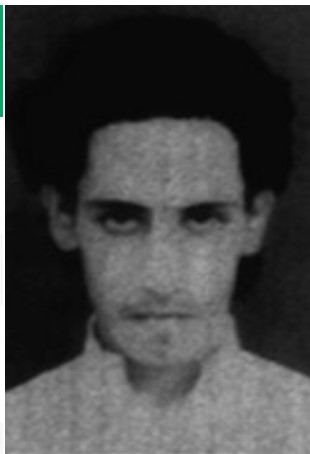
Also disconcerting was the fact that another of the militants killed in the blast, Sultan Radi al-Otaibi, had already been portrayed in the media as having been killed in Iraq [18]. Specifically, the man’s family was informed that he had died in Baghdad during January of 2007 [19]. It appeared that the 26 year old jihadist had actually made his way back from Iraq and integrated into Wuhaishi’s network. His death having been announced was either a clever way for AQAP to conceal his movements or most likely just the result of miscommunication between fighters in Iraq. Regardless, this would put to question more of the announcements released by Al-Qaida and extremist groups in the future about the fates of their constituents. Otaibi left the Kingdom on his brother’s passport back on October 9, 2006 for Iraq, supposedly died and then showed back up in Yemen [8,20]. This fact solves the mystery of why Walid Radi al-Sumailil al-Otaibi’s passport was found in Tarim with the bodies of Hamza al-Quayti and his men [21]. The Tarim cell had apparently facilitated both Badah Mukhlis al-Qahtani and Sultan al-Otaibi from Yemen to Iraq, with the latter having used his brother’s passport to get to Yemen [21]. It is common for foreign fighters entering a particular theatre to surrender their passports to their handlers. While, Qahtani perished in Iraq, Otaibi lived to fight another day, eventually dying in the September 14 blast [1,22]. In the immediate aftermath of the explosion, two former Guantanamo detainees and List E members, Othman Ahmed al-Ghamdi (E-53) and Yusef Mohamed Mubarak al-Shehri (E-85) called home to their families and informed them of the death of the third militant in the blast: Jutaili [4]. They praised their comrade and asked that his relatives be informed of his death [4]. Jutaili’s family had been pleading with him to turn himself in and return home [1]. His brother stated that in July 2009, Jutaili had called in order to receive news on his young daughter’s health [1].

Jutaili was from Buraidah, al-Qasim province and was influenced like so many others by radical clerics to join the jihadists [23]. By August 2001, Jutaili had received instruction on how to reach Afghanistan and undergo militant training [23]. He traveled to Qatar on August 20, 2001 and from there flew to Karachi [1,23]. From the port city he traveled to Quetta before eventually being facilitated across the border and all the way to Kandahar [23]. In Kandahar, he stayed in al-Qaida’s Nibras guesthouse before training at al-Faruq camp [23]. Jutaili received instruction from Abu Abdulrahman al-Muhajir aka Muhsin Musa Matwalli Atwah, wanted for his role in the 1998 US Embassy Bombings [23]. Afterwards, Jutaili joined al-Qaida’s Brigade 55 and was stationed at the front lines north of Kabul near Bagram [23]. These lines were decimated and put into full retreat during the US invasion and bombardment in late 2001. Like so many of his cohorts, Jutaili found himself fleeing to Tora Bora to regroup [23]. Once in those mountain trenches, Jutaili fought under an individual called Osama al-Adani before eventually fleeing across the Pakistani border where he was captured [23]. The young man was then sent to Guantanamo where he resided until his release in March of 2006 [1]. From there he entered the Saudi Care Rehabilitation Center and eventually graduated and was released [7,24]. His story ended sadly and justly after his “rehabilitation.” Ibrahim al-Rubaish, who acted as AQAP’s chief ideologue, eulogized Jutaili in June of 2011 [24]. Rubaish quashed claims that Jutaili and his fellows were fighting alongside the Houthis [24]. The ideologue assured his audience that the AQAP fighters would never fight for Shiites [24]. Rubaish did however side with the story that Jutaili was killed by bombs that the fighters were being instructed on at the time [24]. However, Rubaish may have been hesitant for some reason to reveal a Saudi airstrike on the vicinity of his cohorts. He may also have simply been unaware that the bombing was perpetrated by the Saudis if it truly were not an accident. Despite the loss of these three men, AQAP still had forces along the border; fighters who could be moved at ease into Saudi Arabia for future attacks.
A Failed Incursion
Just a month after Othman al-Ghamdi and Yusef al-Shehri called to inform others of Jutaili’s death, Shehri was sent on a mission back into his homeland [25]. His mission would be martyrdom [25,26]. On October 13, 2009 Shehri and two other militants crossed the border and entered into the Kingdom [26,27,28]. From there they drove their vehicle unhindered for nearly 100 km towards whatever their target may have been [29]. The vehicle was full of assault rifles, grenades, explosives and also contained four suicide vests [25-30]. Shehri was wearing one, while his companion Rayed Abdullah Salim al-Dhahiri al-Harbi (E-29) was wearing another [25-30]. Their unnamed driver was taking them to meet with accomplices in Saudi Arabia so that the men could complete an extravagant attack [27,31]. In fact, it was revealed later that the two men were involved in a plot that was yet another attempt on the life of Prince Mohamed bin Naif [32]. By chance, luck, or some sort of intense intelligence operation, the vehicle was stopped that same day around 6 am, in Darb, Jizan Province [29,30]. The security forces manning the mobile Hamra checkpoint had seemingly stumbled upon the vehicle [29,31,33]. The forces took note of a male driver and two female occupants in the back seat wearing ultra-conservative abayas which covered their entire forms [25,26,30]. The patrol called in a female officer to search the women, but the attempt failed and resulted in the militants opening fire on the checkpoint [29,30]. In the brutal gun battle that ensued, one security force member, Amir Ahmed al-Shuwaish, a 12 year veteran, perished and another was wounded [30]. The militant driver was captured but both Shehri and Harbi, the brother Faris al-Harbi, a suicide bomber in Iraq (D-21), were killed [25-31]. Frighteningly, both of their suicide vests were primed and ready to be used [26]. The men were traveling not only with an excessive amount of weapons, but also with a large amount of cash [6,28]. The driver had rented a black truck in Jeddah before traveling over 700 km to pick up his cohorts and bring them back into the Kingdom [34]. After his arrest, he eventually led authorities to arrest six Yemenis who were providing logistics to the operation [31]. Even though the driver was not initially suspected of ties to AQAP, he was eventually revealed to have extensive relationships with the organization [34,35]. The cell was to have carried out a major attack and the analysis of the suicide belts revealed them to contain RDX explosives and hundreds of metal rounds [26,27,28,32].

While Harbi was only 21 years old, he had familial connections to al-Qaida fighters through his deceased brother Faris [27,31]. Faris and his pernicious actions had greatly influenced Rayed, and his martyrdom led his brother to jihad [31]. Harbi had the opportunity to attend college in his home of al-Ras, but dropped out in order to pursue his short lived stint with AQAP [31]. As mentioned, Yusef al-Shehri also had extensive familial connections to al-Qaida. He was the brother in law of Said al-Shehri, AQAP’s second in command [31,36]. Yusef had actively set up the marriage between his sister and his fellow Guantanamo returnee [31]. He was the brother of Saad Mohamed al-Shehri (D-19), who had released propaganda for fighters to go to Iraq back in 2003 while he himself was based in Afghanistan [37]. Shehri’s brothers Faisal and Mustafa were already imprisoned for extremism [26,31]. Mustafa’s son Abdulillah was also on List E (E-38), and had followed Yusef to Yemen [27,38]. His cousin Abdulghani was under arrest in Saudi Arabia as well [26]. The two brothers and their cousin were held at Riyadh’s al-Haier prison [26,31]. Saad and Yusef’s father was a retired Saudi colonel and had offered his sons an education and a way of life other than religious radicalism [31]. Yusef’s sister, Wafa al-Shehri had married a militant named Abdulrahman al-Ghamdi who was eventually killed by security forces on June 2, 2004 in the mountains outside of Taif [31,39]. It was this sister that Yusef helped to marry Said al-Shehri upon his and Yusef’s return from Guantanamo Bay [31]. Wafa became active in the organization, although when Said fled to Yemen she initially remained behind and pleaded with him to return [36,40]. When he failed to do so, she took her children and joined him in hiding within the Yemeni borders [36]. Pertaining to another portion of Yusef and Rayed’s mission, the doomed militants had actually been intending to meet with another militant wife named Haila al-Qusayir [40]. The two were to enable Qusayir’s transportion across the border into Yemen in order for her to become a second wife to Said al-Shehri [40]. She was previously married to an AQSA militant named Mohamed al-Wakeel who had been killed in the late December 2004 battles between security forces and the organization following their failed double bombings of the Interior Ministry and the Special Forces HQ [40,41]. Following Wakeel’s death, Qusayir became active in the organization, surreptitiously spearheading fundraising operations and eventually leading cells of intended suicide bombers [40.42,43]. Yusef and Rayed were said to be delivering their extra suicide vests to Qusayir in order to be given to the appropriate operatives already in the Kingdom [43]. Thus Yusef’s operation was integrally connected to the woman who was colloquially known as Lady or Madam al-Qaida [40,43].

As for Yusef’s past, he had traveled to Pakistan before entering Afghanistan and was assessed to have undergone training at al-Faruq [37]. He then went to Kabul [37]. Yusef was sent to the front lines of Kunduz in the spring of 2001 where he fought in Brigade 55 under the commander Abdulsalam al-Hadhrami [37]. After Hadhrami’s death in the US bombardment of the lines, his successor Gharib al-Sanaani led the rest of the Kunduz survivors to Mazar I Sharif where they surrendered to Northern Alliance Troops under General Abdulrashid Dostum [ 37,44]. As has been mentioned, Shehri was then placed in the Qala I Jangi fortress where a subsequent prison revolt led to the deaths of hundreds of Taliban and Brigade 55 members [37]. Interestingly, a June 2005 internet statement listed the names of 99 Saudis of Brigade 55 who were killed in the Fortress [45]. Shehri and around 80 other fighters of various nationalities survived by hiding in the basement of the compound and were eventually handed over to US custody [37,46]. Despite conflicting reports as to his age, the Americans contended that Yusef was merely 15 at the time of his capture in Afghanistan, making him among the youngest of the Guantanamo prisoners [31,47]. It was his brother Saad that had recruited him originally and brought him to the Afghan theatre, indoctrinating and brainwashing Yusef from a very early age [31]. Therefore, his rehabilitation in Saudi Arabia after his release from Guantanamo was destined to be a failure.
With at least fifteen names believed to be removed from List E, the Saudis had achieved some impressive successes on a massive list whose occupants were all outside of their country. In fact, the action in this chronicle continued to take place outside of the Kingdom. AQAP and their allies next had an indirect impact on events within the United States.
Influence In America
Major In Extremism
On the morning of November 5, 2009 Army psychiatrist Major Nidal Malik Hasan, who had given away many of his personal belongings upon being informed of his upcoming deployment, dressed in traditional Muslim garments and departed for work at Fort Hood, Texas, the largest US military base on the planet [48,49,50,51]. By the time he arrived, he was in proper military uniform, but also in possession of a semiautomatic handgun and a surfeit of ammunition [51]. The American of Palestinian descent arrived and sat at the Soldier Readiness Processing Center where soldiers were medically evaluated both before deployment and upon their return from their theatres of conflict [51,52]. Hasan had been commissioned as an officer back in 1997 after graduating from Virginia Tech. Eventually, Hasan graduated from the Uniformed Services University of Health Sciences and worked his way to the rank of Major [49]. Major Hasan, as an army psychiatrist, was someone who could offer a unique perspective on the wars in Iraq and Afghanistan as he himself was a devout Muslim. It was later understood that keeping Major Hasan in his position within the Armed Forces was a tragic mistake. The man showed signs of being mentally unstable and of leaning towards religious radicalism [53]. While working at Walter Reed Medical Center, his colleagues met in private to express their concerns about their colleague, yet he was allowed to stay on for a variety of convenient reasons [53]. While working on his Master’s degree he gave disturbing presentations in which he seemingly justified terrorist activities and tended to sympathize with radical Islamic militants. [54,55]. His actions were not deemed as threatening by his peers although they were seen as irksome [53].

Even more disturbing was the fact that Major Hasan corresponded often with Anwar al-Awlaki via email [55,56]. In fact, the two men exchanged emails 18 times between December of 2008 and June of 2009 [56]. The FBI and DoD officials monitored these emails but saw them as a part of Major Hasan’s research into Muslims in the American military [55,57]. In reality, the emails in reality demonstrated a very twisted individual, who was expressing sincere disloyalty to his military and country. Major Hasan waas profoundly disenfranchised with his nation and profession over the wars in predominantly Muslim countries [51,55]. The psychiatrist himself had developed depression and other mental problems leading up to his coming rampage [55]. He had also requested and been denied, that some of his patients to be charged for crimes which they had confessed to him [58]. Furthermore, Major Hasan purchased a semi-automatic handgun and had been training with it in the weeks leading up to November 5 [59]. On that day, Major Hasan brought that gun to his base.
Little Rock Attack
Hasan was not the first radical in 2009 to take up arms against American military personnel. On June 1, a Muslim convert named Abdulhakim Mujahid Mohamed (originally known as Carlos Leon Bledsoe) opened fire on an Army recruitment center in Little Rock, Arkansas [60,61]. He killed one Army Private and wounded another before fleeing the scene in his truck [60,61]. He had intended to kill as many Army personnel as possible, spreading fear and carnage through the country in the name of AQAP [61,62]. He was easily captured by Little Rock police shortly after his intended spree began [60]. Disturbingly, Bledsoe had converted to Islam in Memphis, TN back in 2004, and instantly gravitated towards radical and jihadist beliefs [61,63]. Eventually he traveled to Yemen, married, and attempted to obtain training from militants there [61,62,63]. He also attempted to join militants in Somalia but failed to do so [61]. He had desired to make car bombs, or become a suicide bomber, yet he later asserted that AQAP elements he met in a Yemeni prison helped to radicalize him further, and assisted him in developing a better scheme to implement [61,64,65]. He traveled to Yemen in September 2007 in order to teach English and was arrested for overstaying his visa in November of 2008 [63,65]. Upon being deported to the US in January 2009 Bledsoe began to heavily plot his upcoming terror activities [61,65]. Although it is not believed he was directly linked to AQAP leadership, nor is it believed he was dispatched by them, it is very possible that he interacted with AQAP elements which helped to urge along his radicalization due to the fact that he was an American [61,62]. Bledsoe meanwhile, claimed that he was directly affiliated with Wuhaishi and extremists such as Anwar al-Awlaki [61,62]. His father, Melvin Bledsoe, stated that his son was exaggerating his connections in order to amplify his stature in the jihadist community [62]. Bledsoe was interested in Awlaki and had obtained some of his literature while in Yemen [61]. The young jihadist wrote a letter to the judge presiding over his case proclaiming that he was a soldier for AQAP and directly involved with Wuhaishi [62]. Bledsoe, who had been incarcerated in Yemen, found himself sentenced to life imprisonment in his home country [66]. His violence did not end there, as he was also charged with two prison stabbings during his first year of incarceration [67]. It is most probable that Bledsoe acted alone in the Little Rock shootings, influenced by radical religious thought in Yemen and by his own demented state of mind. However AQAP had, at the very least, managed to inspire a killing within the United States.
Fort Hood Massacre
AQAP also inspired and openly praised the aforementioned Nidal Hasan [68]. On the day of November 5, Major Hasan arose from a desk in the Soldier Readiness Processing Center and shouted “Allah Akbar,” before revealing his semi-automatic handgun and opening fire [51,52,69]. Major Hasan focused on killing just uniformed military, although he did kill a civilian Physician’s Assistant when the man rushed him with a chair in order to cease the massacre [51,70,71]. Major Hasan killed, in addition to the civilian, twelve soldiers [72]. The highest ranking of which was a Lieutenant Colonel [72]. Two civilian police officers engaged Hasan, with one being wounded and the other managing to shoot down the deranged gunman [70]. The Army psychiatrist turned religious radical was paralyzed from the waist down when wounded and was thus apprehended [73].
Strangely, the Fort Hood massacre was not officially considered a terrorist act, although others have named it as such, and the victims want it classified as such [74,75,76]. AQAP considers both shootings as events for which they are partially responsible due to their influence [68]. In fact, it is this event which first thrust Anwar al-Awlaki’s name into the public collective awareness [77]. Major Hasan, as mentioned, had attended Awlaki’s mosque in 2001 in the Washington, DC area along with three of the 9/11 hijackers [77]. Nidal Hasan’s fascination with Awlaki led to the rekindling of their relationship via email in 2008 [56]. Hasan went as far as to say that he could not wait to join Awlaki in the afterlife [56]. In the aftermath of the Fort Hood shootings and events to come later in the year, Awlaki would take on the role of major villain of the American government. Immediately after the attack, Awlaki posted online praise for Hasan’s actions and outlined his correspondence with the Major to a Yemeni journalist [68,78]. However, while the radical imam had been consistently investigated for links to militants, he had not been considered an integral part of any terrorist organization up until this point. Perhaps, the best evidence now to the contrary was the email correspondence which Major Hasan conducted with the ideologue. In them Nidal Hasan asks of rationale for suicide bombings or whether it is acceptable for Muslim soldiers to kill their fellow comrades [56]. Awlaki is shown to encourage these thoughts in Major Hasan and to justify the crimes, if by no other means than by not discrediting them [56,79]. If Anwar al-Awlaki had been a significant target on American intelligence radars at this time, then his connection with Major Hasan would seemingly have led to the psychiatrist at least being removed from his duties. The FBI failed to act upon an obviously dangerous developing scenario between Hasan and the known AQAP sympathizer, even though some law enforcement response to the emails should have been conducted [80]. Nothing of the sort occurred, and Anwar al-Awlaki and AQAP could claim some sense of victory through Hasan’s tragic massacre.
SEGMENT VII Appendix (For Status of List E as of November 2009):
LIST E:
- IBRAHIM HASSAN TALI AL-ASSIRI (Y)
- IBRAHIM SULAIMAN HAMAD AL-HABLAIN (L)
- IBRAHIM SALMAN MOHAMED AL-RUBAISH * (Y)
- IBRAHIM MOHAMED ABDULLAH AL-MUDIAN (Q)
- AHMED IBRAHIM MOHAMED AL-TUWAIJRI (L)
- AHMED SALEH ALI AL-SHIHA (K)
- AHMED ABDULLAH SALEH AL-KHAZMARI AL-ZAHRANI (I)
- AHMED ALI BARAKAT AL-SHADAWI AL-ZAHRANI (K)
- AHMED ALI ATALLAH AL-FARHUD (Y)
- AHMED QATIM MOHAMED AL-HUZALI (Y)
- OSAMA HAMUD GHARMAN AL-SHEHRI (K)
- OSAMA ALI ABDULLAH DAMJAN AL-DOSARI (K)
- BASIL AYED ALI AL-QAHTANI (Y)
- BADAH MUKHIS BADAH AL-KODARI AL-QAHTANI (Q)
- BADR SAUD OWAID AL-AWFI AL-HARBI (Y)
- BADR MOHAMED NASIR AL-SHEHRI (K)
- BAHEEJ ABDULAZIZ ABDULLAH AL-BAHEEJI (S-Q)
- TURKI MASHAWI ZAYED AL-ASSIRI * (Y)
- THAMIR MOHAMED GHIRAM AL-AMRI (Y)
- JABIR JABRAN ALI AL-FAIFI* (Y)
- HASSAN IBRAHIM HAMAD AL-SHABAAN (I)
- HASSAN AYED BADAH AL-SAAD AL-QAHTANI (Q)
- HUSSEIN MOHAMED ABDU (H)
- HAMAD HUSSEIN NASIR AL-HUSSEIN (K)
- KHALID IBRAHIM AHMED AL-SUNBUL AL-ASSIRI (K)
- KHALID SALIM OWAID AL-LUHAIBI AL-HARBI (K)
- KHALID SALEH ALI AL-SAMITI (K)
- KHALID GHALLAB FARI AL-ROUKI AL-OTAIBI (I)
- RAYED ABDULLAH SALIM AL-DHAHIRI AL-HARBI (Y)
- RAYAN MOHAMED HUMAIDI AL-ZAYEDI (I)
- SAID ALI JABIR AL-SHEHRI * (Y)
- SULTAN RADI SUMAILIL AL-OTAIBI (S-Q)
- SALEH SULAIMAN HAMAD AL-HUBLAIN (K)
- SALEH ABDULLAH SALEH AL-QARAWI (I)
- SALEH NAIF EID AL-MAKHLAFI (K) “ABU HAFS AL-NAJDI”
- TULAIHAN MUTLAQ TULAIHAN AL-MUTAIRI (K)
- ADEL FILAIH SALIM AL-JAFARI AL-ANAZI (K)
- ABDULILLAH MUSTAFA MOHAMED AL-JUBAIRI AL-SHEHRI (Y)
- ABDULRAHMAN ABDULLAH ABDURRAHMAN AL-DOSARI (S)
- ABDULLAH HASSAN TALI AL-ASSIRI (Y)
- ABDULLAH SALIM DUHAIM AL-QAHTANI (I)
- ABDULLAH ABDURRAHMAN ABDULLAH AL-MURSHID (?)
- ABDULLAH ABDURRAHMAN MOHAMED AL-HARBI (Y)
- ABDULLAH ABDULKARIM IBRAHIM AL-SALOUM (Q)
- ABDULLAH OTHMAN ABDURRAHMAN AL-DUBAIKHI (Q)
- ABDULLAH FARAJ MOHAMED HAMUD AL-JUWAIR (Y)
- ABDULLAH MOHAMED ABDULLAH AL-AYED (K)
- ABDULLAH NASIR SULAIMAN AL-RAYAI (S-Y)
- ABDULMUHSIN ABDULLAH IBRAHIM AL-SHARIKH (I)
- OBAID ABDURRAHMAN ABDULLAH AL-OTAIBI (Y)
- OBAID MUBARAK OBAID AL-KUFAIL (L-S)
- ATIQ FARAJ SATI AL-HASSANANI (K)
- OTHMAN AHMED OTHMAN AL-OMEIRA AL-GHAMDI * (Y)
- OTHMAN SULAIMAN DAKHEEL AL-SUWAID (Q)
- ADNAN MOHAMED ALI AL-SAYEGH * (Y)
- AZZAM ABDULLAH ZUREIK AL-MAULID AL-SUBHI (K)
- OKAIL OMAISH OKAIL AL-MUTAIRI (Q)
- ALI SAUD OMAIR AL-SHANBARI (K)
- ALI ABDULAZIZ ALI AL-AMRI (Y)
- FAYEZ GHUNAID HAMID AL-HIJRI AL-HARBI (K)
- FAHD RIKAD SAMIR AL-RUWAILI (S)
- FAHD SALEH SULAIMAN AL-JUTAILI * (Y)
- FAHD MOHAMED SAAD AL-AJLAN (Q)
- FAHD MOHAMED ALI AL-JUAITHIN (Q)
- FAWAZ AL-HUMAIDI HAJID AL-HABRADI AL-OTAIBI (I)
- FAWZAN OWAIZ ATIQ AL-ZAHIMI AL-SALAMI (Q)
- FAISAL JASIM MOHAMED AL-AMRI AL-KHALIDI (K)
- QASIM MOHAMED MAHDI AL-RIMI (Y)
- MAJID MOHAMED ABDULLAH AL-MAJID (Q)
- MOHAMED SAAD SAID AL-SIYAM AL-AMRI (Q)
- MOHAMED ABDURRAHMAN SULAIMAN AL-RASHID (Y)
- MOHAMED ABDULLAH HASSAN ABUL KHAYR (K)
- MOHAMED ATIQ OWAID AL-AWFI AL-HARBI* (Y)
- MOHAMED ALI MOHAMED AL-MUTLAQ (K)
- MOHAMED HILAL THAWAB AL-MAQATI AL-OTAIBI (K)
- MURTADA ALI SAID MUKRAM * (Y)
- MISHAL MOHAMED RASHID AL-SHADOUKHI* (Y)
- MUJAB ATIYAH ABDULKARIM AL-ZAHRANI (ABDULLAH AZZAM AL-SAUDI) (K)
- MUKAD QAED MUKAD AL-MAQATI (K)
- NASIR ABDULKARIM ABDULLAH AL-WUHAISHI “ABU BASHIR AL-YEMENI” (Y)
- NAIF MOHAMED SAID AL-KODARI AL-QAHTANI (Y)
- WALID ABDULLAH IBRAHIM BIN BARGHASH (K)
- WALID ALI MASHAFI AL-MASHAFI AL-ASSIRI (Y)
- YUSEF MOHAMED JAMIL ABDULLAH AL-TAKRUNI (K)
- YUSEF MOHAMED MUBARAK AL-JUBAIRI AL-SHEHRI * (Y)
- * = Former Guantanamo Bay Detainee
- (K) = Believed to be operating in the Khorasan region
- (Q) = Believed to be operating in Iraq (Mesopotamian region)
- (Y) = Believed to be operating in Yemen (Arabian region)
- (L) = Believed to be operating in Lebanon (Levantine region)
- (S) = Believed to be operating in Syria (Levantine region)
- (I) = Believed to be operating in Iran (Persian region)
- (H) = Believed to be operating in the Horn of Africa (Somalia)
- (?) = Unknown area of operation
- [81,82 AND VARIOUS SOURCES]
LEGEND:
- KILLED IN EXCHANGE OR RAID
- PERISHED IN SUICIDE ATTACK
- CAPTURED
- FREE AT LARGE
- SUSPECTED DECEASED (WITHOUT DECISIVE EVIDENCE)
CITATIONS and SUBSTANTIVE NOTES:
- [1] 3 Saudis involved in attempt on prince life, by Abdullah Al-Oraifij and Mansour Al-Shehri, The Saudi Gazette, January 19, 2010, http://www.saudigazette.com.sa/index.cfm?method=home.regcon&contentid=2010011960638
- [2] Three Saudi militants killed in blast abroad, The Associated Press and The Gulf News, January 18, 2010, http://gulfnews.com/news/gulf/saudi-arabia/three-saudi-militants-killed-in-blast-abroad-1.570019
- [3] Former Gitmo detainee killed in shootout, by Thomas Joscelyn, The Long War Journal, September 30, 2009, http://www.longwarjournal.org/archives/2009/09/former_gitmo_detaine.php
- [4] Report by Yemen Post Staff on killed Saudi militants, The Yemen Post, September 27, 2009, http://www.webcitation.org/query?url=http%3A%2F%2Fyemenpost.net%2FDetail123456789.aspx%3FID%3D3%26SubID%3D1317%26MainCat%3D3&date=2009-10-02
- [5] Yemeni al-Qaida leader: State conducts terror attacks, by Jane Novak, The Long War Journal, December 3, 2008, http://www.longwarjournal.org/archives/2008/12/yemeni_al_qaeda_lead_2.php
- [6] Yemen: Al-Qaida fighting rebels at ‘government’s request,’ Adnkronos, January 31, 2008, http://www.adnkronos.com/AKI/English/Security/?id=1.0.1830285308
- [7] Blast kills 3 terrorists, The Arab News, January 19, 2010, http://www.webcitation.org/query?url=http%3A%2F%2Fwww.arabnews.com%2F%3Fpage%3D1%26section%3D0%26article%3D131464%26d%3D19%26m%3D1%26y%3D2010%26pix%3Dkingdom.jpg%26category%3DKingdom&date=2010-01-18
- [8] Ain al-Yaqeen News Magazine, January 22, 2010, http://www.ainalyaqeen.com/arch_2010/Jan-22/en1.php
- [9] Saudis ‘to keep up Houthi campaign,’ Al-Jazeera News, November 10, 2009, http://www.aljazeera.com/news/middleeast/2009/11/20091110141322 184400.html
- [10] Yemen denies Saudi air strike targeted its soil, al-Arabiya News, November 5, 2009, http://www.alarabiya.net/articles/2009/11/05/90326.html
- [11] Al-Qaida no. 3 dead, but how?, CNN News, December 4, 2005, http://www.cnn.com/2005/WORLD/asiapcf/12/03/pakistan.rabia/
- [12] Evidence suggests US missile used in strike, NBC News, December 5, 2005, http://www.nbcnews.com/id/10303175/#.UnxJYfmTiuI
- [13] Ibrahim Asiri, by Gregory Johnsen, Waq al-waq blog, November 1, 2010, http://bigthink.com/waq-al-waq/ibrahim-asiri
- [14] The Saudization of AQAP, by Gregory Johnsen, Waq al-waq blog, November 11, 2009, http://bigthink.com/waq-al-waq/the-saudization-of-aqap
- [15] I am a sincere advisor to you, by Mohamed Abdulrahman al-Rashid, al-Malahim video release, as translated by Ansar al-Mujahideen English Forum on January 11, 2010, originally released November 9, 2009, http://theunjustmedia.com/Islamic%20Perspectives/Jan10/I%20am%20a%20Sincere%20Advisor%20to%20You.htm
- [16] Saudis say al-Houthi rebels following al-Qaida’s tactics, by Abdulrahman al-Shaheen and Nasser Arrabyee, The Gulf News, November 12, 2009, http://gulfnews.com/news/gulf/yemen/saudis-say-al-houthi-rebels-following-al-qaida-s-tactics-1.526264
- [17] US: Al-Zarqawi steps up attacks on Iraqi civilians, CNN News, May 11, 2006, http://www.cnn.com/2006/WORLD/meast/05/11/iraq.main/
- [18] Release concerning the deaths of five jihadists from Saudi most wanted list, as retrieved from www.muslim.net, http://www.muslm.net/vb/showthread.php?t=381807
- [19] NEFA Foundation: Al-Qaida says two of Saudi’s ‘most wanted’ already dead, by Evan Kohlmann, Counterterrorism blog, February 11, 2009, http://counterterrorismblog.org/2009/02/nefa_foundation_al-qaida_says.php
- [20] Examining Saudi Arabia’s most wanted list, by Christopher Boucek, Combating Terrorism Center at West Point, CTC Sentinel, May 15, 2009, http://www.ctc.usma.edu/posts/examining-saudi-arabia%E2%80%99s-85-most-wanted-list
- [21] Five members of terrorist cell killed and two others detained, by Mohamed al-Kibsi, The Yemen Observer, August 14, 2008, http://www.yobserver.com/front-page/10014753.html
- [22] AQAP Publication, Sada al-Malahim, no. 8
- [23] Guantanamo Assessment File, Fahd Saleh Sulaiman al-Jutaili, ISN 177, http://wikileaks.org/gitmo/prisoner/177.html
- [24] AQAP releases martyr’s biography for ex-Gitmo detainee, by Thomas Joscelyn, The Long War Journal, June 23, 2011, http://www.longwarjournal.org/archives/2011/06/aqap_releases_martyr.php
- [25] Saudi concern rises over al-Qaida activity in Yemen, by Caryle Murphy, The Christian Science Monitor, October 19, 2009, http://www.csmonitor.com/World/Middle-East/2009/1019/p06s10-wome.html
- [26] Two Yemeni al-Qaida members killed in shootout in Saudi Arabia, The Saudi Gazette, http://www.newenglishreview.org/blog_email.cfm/blog_id/23675
- [27] Two militants killed in Saudi shootout were local, by Donna Abu Nasr, The Associated Press, October 19, 2009, http://www.webcitation.org/query?url=http%3A%2F%2Fwww.google.com%2Fhostednews%2Fap%2Farticle%2FALeqM5huS832u88llmLiqcqf-H1aLd5RdAD9BDIEF00&date=2009-10-23
- [28] Ain al-Yaqeen News Magazine, October 23, 2009, http://www.ainalyaqeen.com/arch_2009/23-oct/en10.php
- [29] Shootout in Jizan, by Abdullah Al-Oraifij, Eftikhar Bahufain and Muhammad Zaila’ee, The Saudi Gazette, http://www.saudigazette.com.sa/index.cfm?method=home.regcon&contentID=2009101451474
- [30] Two terrorists, security officer killed in battle, by Muhammad al-Majed, The Arab News, October 14, 2009, http://www.arabnews.com/node/328977
- [31] Al-Qaida lied about funds, seeks recruitment of foreigners in Kingdom, The Saudi Gazette, http://64.65.60.109/index.cfm?method=home.PrintContent&fa=regcon&action=Print&contentid=2009102352344&simplelayout=1
- [32] Fourth assassination attempt against Prince foiled, by Abdullah al-Oraifij, The Saudi Gazette, http://www.saudigazette.com.sa/index.cfm?method=home.regcon&contentID=2010081681128
- [33] Testimony of Gregory Johnsen before the Senate Foreign Relations Committee, January 20, 2010, http://www.foreign.senate.gov/imo/media/doc/JohnsenTestimony100120a1.pdf
- [34] Truck used in Jizan clash rented out of Jeddah, by Turki al-Suheil, Asharq al-Awsat, October 20, 2009, http://www.webcitation.org/query?url=http%3A%2F%2Fwww.aawsat.com%2Fenglish%2Fnews.asp%3Fsection%3D1%26id%3D18542&date=2009-10-23
- [35] Jizan 3rd man a Saudi with ‘very close ties to al-Qaida,’ by Abdullah al-Oraifij, The Saudi Gazette, http://www.saudigazette.com.sa/index.cfm?method=home.PrintContent&action=Print&contentID=0000000052062
- [36] The orphaned stepson of an al-Qaida leader, abandoned somewhere on a Yemeni mountainside, by Richard Spencer, The Telegraph, January 25, 2013, http://blogs.telegraph.co.uk/news/richardspencer/100200171/the-orphaned-stepson-of-an-al-qaeda-leader-abandoned-somewhere-on-a-yemeni-mountainside/
- [37] Guantanamo Assessment File, Yusef Mohamed Mubarak al-Shehri, ISN 114, http://wikileaks.org/gitmo/prisoner/114.html
- [38] Ain al-Yaqeen News Magazine, February 7, 2009, http://www.ainalyaqeen.com/arch_2009/7-feb/en7.php
- [39] Saudis kill militants allegedly tied to Khobar attack, The Associated Press, June 2, 2004, http://www.foxnews.com/story/0,2933,121516,00.html#ixzz2PEJYGdT6
- [40] Saudi women played a marginal role in group’s activities, by Muhammad al-Sulami, Arab News, December 1, 2010, http://www.arabnews.com/node/361957
- [41] Ain al-Yaqeen News Magazine, January 7, 2005, http://www.ainalyaqeen.com/issues/20050107/feat2en.htm
- [42] AQAP’s growing security threat to Saudi Arabia, by Caryle Murphy, Combating Terrorism Center at West Point, June 3, 2010, http://www.ctc.usma.edu/posts/aqap%E2%80%99s-growing-security-threat-to-saudi-arabia
- [43] ‘First Lady of al-Qaida’ jailed for 15 years, by Richard Spencer, The Telegraph, October 30, 2011, http://www.telegraph.co.uk/news/worldnews/middleeast/saudiarabia/8858301/First-Lady-of-al-Qaeda-jailed-for-15-years.html
- [44] Guantanamo Assessment File, Ghalib Nasir al-Baihani, ISN 128, http://wikileaks.org/gitmo/prisoner/128.html
- [45] Terrorist Recruitment and Radicalization in Saudi Arabia, Thomas Hegghammer, http://www.thefreelibrary.com/Terrorist+recruitment+and+radicalization+in+Saudi+Arabia.-a0156581738
- [46] America’s ‘detainee 001’ – the persecution of John Walker Lindh, by Frank Lindh, The Guardian, July 9, 2011, http://www.theguardian.com/world/2011/jul/10/john-walker-lindh-american-taliban-father
- [47] Short career for young al-Qaida man, Dalje.com, October 19, 2009, http://dalje.com/en-world/short-career-for-young-qaeda-man/278620
- [48] Neighbor: Fort Hood suspect emptied his apartment before mass shootings, The Associated Press, November 6, 2009, http://www.foxnews.com/story/2009/11/06/neighbor-fort-hood-suspect-emptied-his-apartment-before-mass-shootings/
- [49] Fort Hood suspect Nidal Malik Hasan seemed ‘cool, calm, religious’, CNN News, November 7, 2009, http://www.cnn.com/2009/CRIME/11/06/fort.hood.suspect/
- [50] Fort Hood: The largest US military base in the world, The Telegraph, November 6, 2009, http://www.telegraph.co.uk/news/uknews/defence/6511138/Fort-Hood-The-largest-US-military-base-in-the-world.html
- [51] Defendant in in Fort Hood shooting case admits to being gunman, by Manny Fernandez, The New York Times, August 6, 2013, http://mobile.nytimes.com/2013/08/07/us/court-martial-begins-in-fort-hood-killings.html
- [52] Army doctor held in Ft. Hood rampage, by Robert D. McFadden, The New York Times, November 5, 2009, http://www.nytimes.com/2009/11/06/us/06forthood.html?_r=0
- [53] Walter Reed officials asked: Was Hasan psychotic?, by Daniel Zwerdling, NPR News, November 11, 2009, http://www.npr.org/templates/story/story.php?storyId=120313570
- [54] Fort Hood suspect warned of threats within the ranks, by Dana Priest, The Washington Post, November 10, 2009, http://www.washingtonpost.com/wp-dyn/content/story/2009/11/09/ST2009110903704.html
- [55] Investigators study tangle of clues on Fort Hood suspect, by Scott Shane and James Dao, The New York Times, November 14, 2009, http://www.nytimes.com/2009/11/15/us/15hasan.html?hp
- [56] Major Hasan’s email: ‘I can’t wait to join you’ in afterlife, by Brian Ross and Rhonda Schwartz, ABC News, November 19, 2009, http://abcnews.go.com/Blotter/major-hasans-mail-wait-join-afterlife/story?id=9130339
- [57] FBI reassessing past look at Fort Hood suspect, by Devlin Barrett, The Associates Press, http://seattletimes.com/html/nationworld/2010232219_apusforthoodshooting.html
- [58] Fort Hood captain: Hasan wanted patients to face war crimes charges, by Brooks Egerton, The Dallas Morning News, November 17, 2009, http://www.dallasnews.com/news/20091117-Fort-Hood-captain-Hasan-wanted-9439.ece
- [59] Suspect in Ft. Hood rampage sought high-tech gun, salesman says, by David Zucchino, The Los Angeles Times, October 21, 2010, http://articles.latimes.com/2010/oct/21/nation/la-na-fort-hood-20101022
- [60] Suspect arrested in Arkansas recruiting center shooting, CNN News, June 1, 2009, http://www.cnn.com/2009/CRIME/06/01/arkansas.recruiter.shooting/
- [61] Muslim who shot soldier in Arkansas says he wanted to cause more death, by Kristina Goetz, Knoxville Sentinel News, November 13, 2010, http://www.knoxnews.com/news/2010/nov/13/muslim-who-shot-solider-arkansas-says-he-wanted-ca/
- [62] Man claims terror ties in Little Rock shooting, by James Dao, The New York Times, January 21, 2010, http://www.nytimes.com/2010/01/22/us/22littlerock.html?hp
- [63] A Muslim son, a murder trial and many questions, by James Dao, The New York Times, February 16, 2010, http://www.nytimes.com/2010/02/17/us/17convert.html?pagewanted=1&_r=1
- [64] Suspect’s lawyer outlines defense in killing of soldier, by James Dao, The New York Times, June 4, 2009, http://www.nytimes.com/2009/06/05/us/05recruit.html?ref=us
- [65] The making of an American jihadist: Abdulhakim Mujahid Mohamed, IPT News, April 15, 2011, http://www.investigativeproject.org/2772/the-making-of-an-american-jihadist-abdulhakim
- [66] Man sentenced to life in Arkansas military recruiting station shooting, The Associated Press, July 25, 2011, http://www.foxnews.com/us/2011/07/25/man-pleads-guilty-to-shooting-soldiers-outside-arkansas-military-recruiting/
- [67] Man charged in recruiter shooting accused of jail stabbing, The Associated Press, June 10, 2010, http://www.arkansasonline.com/news/2010/jun/10/man-charged-recruiter-shooting-accused-jail-stabbi/
- [68] Inquiry and Analysis report no. 873, AQAP and Awlaki praise of Maj. Nidal Hasan, by Steven Stalinsky, The Middle East Media Reference Institute, August 15, 2012, http://www.memri.org/report/en/print6593.htm
- [69] “Allahu Akbar”: Ft. Hood General says Hasan shouted “God is Great!” before shooting, The Associated Press and the Huffington Post, November 6, 2009, http://www.huffingtonpost.com/2009/11/06/robert-cone-nidal-malik-h_n_348145.html
- [70] Police officers describe Fort Hood gunfight, by David Zucchino, The Los Angeles Times, October 21, 2010, http://articles.latimes.com/2010/oct/21/nation/la-na-fort-hood-20101021
- [71] Fort Hood widow hears about husband’s final moments, by Megan McCloskey, Stars and Stripes, October 15, 2010, http://www.stripes.com/news/fort-hood-widow-hears-about-husband-s-final-moments-1.121911
- [72] Fort Hood: The victims, CBS News, 2010, http://www.cbsnews.com/2100-201_162-5554678.html
- [73] Alleged Fort Hood shooter paralyzed from the waist down, lawyer says, CNN News, November 13, 2009, http://www.cnn.com/2009/CRIME/11/13/fort.hood.hasan/index.html
- [74] Terror act or workplace violence? Hasan trial raises sensitive issue, by Allen G. Breed and Ramit Plushnick-Masti, The Associated Press, August 11, 2013, http://azstarnet.com/news/national/terror-act-or-workplace-violence-hasan-trial-raises-sensitive-issue/article_be513c51-a35d-5b4f-b3a0-13654f019ea6.html
- [75] Mukassey says Fort Hood attack was terrorism, by Ryan J. Reilly, Main Justice, http://www.mainjustice.com/2009/11/09/mukasey-says-fort-hood-attack-was-terrorism/
- [76] Fort Hood shooting victims want attack designated as terrorism, Allen G. Breed and Ramit Plushnick-Masti, The Associated Press, August 10, 2013, http://www.huffingtonpost.com/2013/08/10/fort-hood-shooting-terrorism_n_3736888.html
- [77] Fort Hood shooting: Texas army killer linked to September 11 terrorists, by Philip Sherwell and Alex Spillius, The Telegraph, November 7, 2009, http://www.telegraph.co.uk/news/worldnews/northamerica/usa/6521758/Fort-Hood-shooting-Texas-army-killer-linked-to-September-11-terrorists.html
- [78] Radical imam praises alleged Fort Hood shooter, urges Muslims to ‘follow in footsteps,’ The Associated Press, November 9, 2009, http://www.foxnews.com/story/2009/11/09/radical-imam-praises-alleged-fort-hood-shooter-urges-muslims-to-follow-in/
- [79] Imam al-Awlaki says he did not pressure accused Fort Hood gunman Nidal Hasan, The Huffington Post, November 16, 2009, http://www.huffingtonpost.com/2009/11/16/imam-al-awlaki-says-he-di_n_358748.html
- [80] Lawmaker: Report on Fort Hood attack faults FBI, by Eileen Sullivan, The Associated Press, July 18, 2012, http://cnsnews.com/news/article/lawmaker-report-fort-hood-attack-faults-fbi
- [81] Saudi Arabia’s 85 most wanted, by J.M. Berger, Intelwire blog, February 5, 2009, http://intelwire.egoplex.com/2009_02_05_blogarchive.html
- [82] Al-Qaida in Yemen – evolving threats, by Danielle Sheldon, International Institute for Counter Terrorism, March 5, 2010, http://www.ict.org.il/Articles/tabid/66/Articlsid/825/currentpage/6/Default.aspx
© Copyright 2025 Nolan R Beasley
 Chronicles in Zealotry
