
Segment VII – Of An Unholy Merger (Chapter 26 – To Embrace The Prince)
For the entirety of the Series, please see – https://chroniclesinzealotry.com/fugitives-of-the-peninsula/
For both iteration of Arabian al-Qaida, a bane of their existence was the campaign helmed by Prince Mohamed bin Naif. Equiped with the appropriate tools and personnel, AQAP was now prepared to violently address the issue. This chapter explores AQAP ventures in ransom and assassination. We also examine the process and efficacy of militant surrender, both from Arabia and the Khorasan.
The Brothers Assiri
The surrenders of prominent fighters like Mohamed al-Awfi al-Harbi and Fahd al-Ruwaili gave the Saudi government sincere hope that several others would follow suit. It also gave AQAP a plan to strike back at those who had been hunting for them and their precursors in AQSA for so many years. Wuhaishi and his men developed a scheme to strike right at the heart of the Saudi wanted list campaign: Prince Mohamed bin Naif. To do so, Wuhaishi called upon one of his most important ascending followers, Ibrahim Hassan al-Assiri (E-1).
Ibrahim and his younger brother Abdullah were born to a pious family in Riyadh and throughout their youth they became entranced with religious idealism which eventually evolved into radicalism [1,2]. Ibrahim was older, born in 1982, and they were but two in a family of four brothers and three sisters, yet Ibrahim was able to exert incredible influence on his malleable sibling [3]. Their true transformation did not begin until after 9/11 and the commencement of the Iraq War, as they saw their own nation of Saudi Arabia seemingly turning its back on the plight of Muslims to side with what they viewed as American aggression [2]. The two brothers quickly decided to join fighters in Iraq but they unintentionally found themselves in two separate departing cells [2,4]. As fate would have it, Ibrahim’s cell was busted by the Saudi security forces and the elder brother was imprisoned [2,4,5]. Abdullah frequently visited Ibrahim in prison and the shared experienced seemed to push both brothers over the edge into full extremism [2,4,5].
Ibrahim was quoted in 2009 explaining: “They put me in prison and I began to see the depths of the Saudi servitude to the Crusaders and their hatred for the true worshippers of God, from the way they interrogated me [3].” His disdain for and vitriol towards his own nation were apparent. Abdullah and Ibrahim had already submitted to an extreme brand of Islam but now they were becoming committed jihadists.
Ibrahim was released from Saudi prison and the two yet again joined a cell of radicals intending to join Al-Qaida in Iraq and/or perpetrate attacks in the Kingdom on behalf of the decimated AQSA. This cell was led by Mohamed Rashid al-Julaidan, the AQSA militant known as Abu Dawud al-Najdi, and this contingent was also busted by the Saudi security forces, resulting in a severe firefight in June of 2006 [4,5,6]. As the gun battle raged, the Assiri brothers found themselves helplessly away from their cohorts, but followed the situation closely via media coverage [2,4]. In the end, Julaidan and five of his men were killed [5,6]. By chance, these two had not been with their fellows on the night of the battle and thus avoided an early death at the hands of the Saudi security forces. Had they perished that night, their storied AQAP careers would never have existed. In the end, with their jihadist cell leaders dead, the brothers chose not to stay and fight within the Kingdom. Instead, Ibrahim and Abdullah fled to Yemen where they eventually emerged as combatants within Wuhaishi’s developing AQAP [2,4,5]. To their family who had transplanted to Mecca and now planned to move once again to Riyadh, the brothers were but on a detour to Medina, and not on a course with a nefarious destiny [3].
Ibrahim became valuable to the organization due to his experience with chemistry. Ibrahim had attended King Saud University in Riyadh for chemistry and related science subjects [7]. In fact, it was while there that he first became incensed by the US invasion of Iraq and began plotting to join fighters therein [7]. He utilized his chemistry and other skills to become a frighteningly innovative bomb maker for AQAP [5,7,8]. Originally it was stated that he received his explosives training with AQAP from a Pakistani expert, yet it is now believed that he mostly self-educated, using his innate intellect, assiduity, and college experience to become an adept crafter of bombs [8]. Based on his future achievements, it is believed that he developed the picture frame and cassette player bombs used by AQAP against the South Koreans, and it has been suggested that he even assisted with explosives in the 2008 Sanaa Embassy attack [5,7,8]. He would develop an even more disturbing method of explosive delivery [5,7].
It should be mentioned that while Ibrahim is an important character in the story, he is merely a well-trained henchman to men like Wuhaishi, Qasim al-Rimi and Said al-Shehri. He has often been listed as a monumental threat to the US and Saudi Arabia and as a mastermind of terrorist acts due to his having developed the bombs used in several attacks, and due to his positioning as number 1 on the Wanted List E [8,9]. While in the past, the rankings on the wanted lists did seem to reflect some degree of value and significance, for List E it must be observed that the 85 names are merely listed in alphabetical order. Therefore Ibrahim’s positioning at the apex of the list is completely coincidental. However, Ibrahim was vital in the fact that he offered his unique skills, as well as his brother, to Wuhaishi.
German Abduction
Wuhaishi’s unquestioned rule on the group is exemplified by an ambitious mission that AQAP undertook in June 2009. A German Christian family based in Saada, acting as medical professionals and missionaries drew the ire of AQAP members [10,11]. Dr. Johannes Hentschel was a devout Christian and his nurse wife Sabine helped raise their family of three young children in Yemen, while simultaneously performing outreach to locals and coordinating with other foreign Christians [10,11]. Dr. Hentschel had moved with his wife to Saada in 2003, working at a Protestant hospital ran by a Christian charity out of the Netherlands [10,11]. He had anticipated returning to Germany to allow his children to begin their schooling therein. While Wuhaishi saw this as an opportunity for a kidnapping and garnering of exorbitant ransom, his overzealous men saw the family as a threat [12]. Yet Dr. Hentschel was dismissive of threats he received at his hospital [10]. Therefore on June 12, his wife, their young son and two young daughters, two German female Bible students, a South Korean teacher, and a British engineer were abducted by Wuhaishi’s network while exploring outside of Saada [10]. Almost immediately the plan went awry. The two German female students and the South Korean teacher were shot and killed [10]. Their bodies were found later by Yemeni authorities. AQAP did not launch an immediate ransom demand or claim of responsibility, and thus were only suspets in the murders [13]. Eventually, a video was released of the children, and within it AQAP required ransom for their liberation [11]. The Hentschel family and the British engineer remained missing. Wuhaishi later explained the debacle to Osama bin Laden via a letter to an intermediary and senior al-Qaida official Atiyah Abdulrahman [12]. In the letter he lamented that his men were inexperienced in abductions and thus were unable to obtain desired ransoms. Wuhaishi elaborated that eventually his men were forced to kill the Hentschel parents and the British hostage when they conducted some sort of resistance [12]. The young Hentschel son, Simon who was less than two years of age, perished next [12]. However, AQAP released the last two children, Anna and Lydia for a modest sum of $5 million in May 2010, with Wuhaishi claiming that he had attempted to communicate earlier with Atiyah for advice on the matter [10,12]. The Saudis attempted to describe the transaction inaccurately as a rescue [11]. German authorities declared that the girls spoke only Arabic and referred to each other as Sarah and Fatima, no doubt names given to them by their captors [14]. But this botched kidnapping was not the defining moment of AQAP in 2009. The brothers Assiri would next reach the summit of infamy.
An Assassin in Jeddah
In the midst of the summer of 2009, Wuhaishi and AQAP dispatched the younger Assiri brother, Abdullah, on a crucial suicide mission [2,15]. His target was Prince Mohamed bin Naif and his bomb was very well concealed. Ibrahim had placed an explosive composed of PETN into his brother’s rectum in order to avoid having the bomb in an external and easily detected area exposed to searches by the Prince’s entourage and bodyguards [2,4,5]. Assiri, as was mentioned in the beginning of this Segment, contacted the Saudi authorities and offered to surrender himself, if only he could personally thank Prince Mohamed bin Naif for his generosity, compassion, and mercy [16,17]. The Saudis, Prince Naif, and his son viewed this as a very beneficial event. They had seen other higher profile militants surrender and it now seemed to be having an effect on the younger fighters as well. The Prince did not want to deny the request and offered to meet the 23 year old Abdullah as an honored guest at his home in Jeddah [1,18]. In fact, the Prince had directly spoken to Abdullah over the phone after being apprised of the young man’s decision to be the next to surrender [19]. This would be a great public relations move as well and show that the wanted lists were working to inspire militants to return home and repudiate their fight. However, there was much more to the story than this. In the days leading up to the attacks, Saudi intelligence had received false information fed to their informants by AQAP militants that Said al-Shehri and a contingent of the network was preparing to break away and surrender to the Saudis [15]. In order to obtain terms for surrender Shehri was dispatching one of his men, Mohamed al-Ghazali, known to the Saudis as Rashid [15]. The man was a Yemeni intelligence officer, strategically placed into AQAP in order to bring the militants to justice [15,20]. However, Ghazali was betraying his duty and had begun actually working for the jihadists [15,20]. Ghazali dissembled his ulterior motives upon meeing with Prince Mohamed bin Naif to discuss the terms of surrender for Shehri; his true mission was to gain knowledge for AQAP on how a meeting with the Prince would actually be conducted [15]. Ghazali returned to Yemen where he was to send members of the defecting AQAP contingent to the Prince [15]. Abdullah al-Assiri was to be the first [15]. From the AQAP perspective, a Saudi had to be the one to carry out this mission, for political reasons as well as pride and practicality [2,15]. Assiri traveled from Marib province, crossed into Najran, and surrendered to the Saudis [15]. He was subsequently flown to Jeddah and prepared to meet with his benefactor Prince on the morning of August 27, 2009 [1,15,18]. Prior to submitting to the Saudis, Assiri had detailed to Yemeni government officials that he also wanted to make a statement along with Prince Mohamed bin Naif in order to urge others to surrender themselves [15,21]. Assiri’s personal audience with the Prince could bring about the removal of even more militants from jihadist theatres. As mentioned, the young militant even spoke directly to the Prince via cellphone prior to the meeting [19]. Assiri stated to the Prince, “I need to meet you to tell you the whole story,” to which Mohamed responded “If you come, I will sit with you…[19]” The Prince also advised Assiri, “Be careful of bad people who want to exploit you [19].” In the end, the risk was seen as worth the taking, due to the potential benefits. The suicide bomber was flown on the Prince’s own jet to the meeting [1,18].

Upon reaching his sought after target, Abdullah al-Assiri (E-40), embraced his Prince and then joined him for the important conference that the Saudis hoped would bring about the surrender of Said al-Shehri and several other militants of import [2,15]. Assiri while in the presence of the Prince, phoned his fellow militants in an effort to convince Mohamed bin Naif that he could speak to the defectors [15]. Assiri was actually believed to be speaking with Naif al-Qahtani and other AQAP leaders [22]. Despite assertions that Naif al-Qahtani led the plot, AQAP later emphatically stated that Qasim al-Rimi created and orchestrated the plot while Mohamed al-Ghazali coordinated it [2,15,22]. Upon handing the phone to the Prince so that he could confer with the defectors, Assiri detonated the explosives in his rectum and was killed [15,23]. The explosion was mostly absorbed by the bomber’s body and thus the Prince was spared, although injured [23]. Prince Mohamed and his father Prince Naif both later defended their wanted lists and the practice of accepting militant surrenders [24,25]. They continued to call for others to lay down arms [24,25]. This operation was an important one for AQAP in that it showed a new initiative in striving for specific assassinations. These types of crimes exemplified the innovativeness and danger that the organization maintained. AQAP quickly claimed responsibility for the assassination attempt and praised Abdullah, who they named as Abu al-Khair al-Assiri [15,24]. Also, Ibrahim al-Rubaish would give meaning and reason to the mission with his next releases [26].
Prince Mohamed bin Naif was hospitalized for his injured hand and then visited by King Abdullah [27]. The king softly admonished his brother’s son Mohamed for not having Assiri searched prior to the audience [27]. The nonplussed Prince Mohamed acknowledged his flawed tactic of welcoming the jihadist, and followed it with an incredible understatement about the situation: “He surprised me by blowing himself up [23].” However, as mentioned, both Prince Naif and Prince Mohamed responded with aplomb and vowed to continue to accept surrendering militants from the most wanted lists in hopes of resolving cases non-violently.
The political repercussions of the event simmered for several years after the detonation. Despite the outward appearance of stability and calm, the injuries sustained by Prince Mohamed were indeed detrimental to his health and eventually his political standing. Stories emerged by 2017 that the shrapnel embedded in the Prince were the cause of persistent pain and were thus treated with pain killers to include morphine [28]. The subsequent treatment led to an addiction to the prescription medications [28]. In fact, the Prince needed to be thrice admitted to a Swiss clinic in the following years [28]. The addiction ostensibly caused his removal from the line of succession in 2017 [28]. Nonetheless, in 2009, the Prince was functional despite the wounds, and continued forward with his sincere belief that the militants could be swayed to surrender.
Further Fugitives Abroad
The Princes’ belief that militants would continue to peacefully submit to authorities maintained posture. Fawaz al-Humaidi Hajid al-Hadrani al-Otaibi (E-65) had been part of an Al-Qaida network in Iran according to reports [29]. Possibly, he was a part of Saleh al-Qarawi’s network or another al-Qaida operation in the Shiite nation. Or it could be that Otaibi used Iran as a pathway to join al-Qaida in Afghanistan and Pakistan. Most likely, the Saudis were claiming any fighter in the Khorasan was a fighter in Iran. With the successful repatriation of militants like Harbi and Ruwaili, the family of Otaibi reached out to him and helped to convince him to follow suit [29]. The case of Otaibi was lost amidst the wash of negative stories on militant surrender in the week after Assiri’s suicide bombing. On September 2, 2009 the Saudi Interior Ministry announced that Otaibi had returned home and handed himself over to the proper authorities [29]. Otaibi was allowed to meet with his family and participate in Ramadan ceremonies [29]. Brigadier General Mansur al-Turki of the Interior Ministry reiterated Prince Naif and Prince Mohamed’s earlier statements that not all repentant militants have ill intentions towards their countrymen [29]. Most, they believed, would be truly contrite [29]. Otaibi had left to join Al-Qaida networks via Iran a year earlier in the late summer of 2008 [29,30]. Prior to his departure, Otaibi’s family took note of no strange behavior but stated that he did have tendencies towards religious extremism [30]. In fact, his mother stated that he had dreamed of jihad [30]. A member of the Saudi National Guard, he had informed his family that he was being transferred to a different station, and then disappeared before eventually contacting them from Pakistan [30]. He was apparently discouraged by what he saw while in Iran and Pakistan [30]. He later informed his family that he had failed to find the idealistic jihad for which he had sought [30]. This led him back home and to his surrender. In fact, Otaibi took note of other recruits from other countries who had returned home after their homelands offered to them repentance measures [30]. Otaibi had also seen media reports of fellow Saudi militants on Lists E and D surrendering peacefully [30].
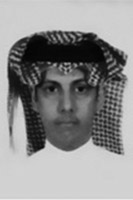
Otaibi surrendered to the Saudi Embassy in Pakistan before arriving in the infamous al-Hair prison in Riyadh [30]. His interrogation revealed that in his opinion, Al-Qaida was in dire financial straits [30,31]. Their lack of funding was leading them to turn away new and needed foreign recruits [30,31]. As an alternative, al-Qaida seemed to rely on local fighters in the Federally Administered Tribal Areas (FATA) of Pakistan such as Pakistani Taliban fighters. Al-Qaida was also more focused on having fighters attack within their home countries [30,31]. Although local Pakistanis and Afghanis wanted Arabs to fight along the front lines with them, Al-Qaida seemed to be suggesting to these jihadists that they return home and assist AQAP and other organizations in their native lands [30,31]. He also stated that al-Qaida was frustrated with the policies for surrender in Arab nations which allowed fighters a valid exit from their militancy [30]. Otaibi had been trained in North or South Waziristan by al-Qaida militants [30]. This was after the Saudis had last logged him as being in Iran [30]. In Otaibi’s subsequent interviews, it should be noted that he never specifically mentions Iran, but only his time in the FATA [30,31]. It could be that his connection with Al-Qaida in Iran was an assertion of the Saudis while in reality he operated in the Waziristans only. This furthers the thought that the Saudis were just claiming the militants’ connections to Iran in order to demonize the state. This seems to be the case, as it appears Otaibi merely reached Pakistan through Iran as mentioned earlier [31]. Although the Princes were showing that surrender was an option for these List E members, several more still met violent ends.

By September 29, 2009 Saudi media reported that the family of one List E member had been informed of his death in Afghanistan [32]. According to his family, Ahmed Saleh Ali al-Shiha (E-6) was shot in the chest in May 2009 during battle and succumbed to those wounds [32]. With their son supposedly laid to rest in Afghanistan, the family held services for him in Riyadh, sans the body [32]. Shiha’s mother stated that she had received a telephone call informing her of her son’s demise and that prior to this she had no knowledge of his involvement with militants in Afghanistan [32]. According to reports, Shiha’s mother had last spoken with him in April 2009 [32]. Shiha had attended university classes in Riyadh for a single semester before dropping out and leaving for Pakistan in 2006 [32]. Brig. General Mansur al-Turki of the Interior Ministry refused to validate the reports or dismiss them [32]. While it is certainly possible that the phone call was a smoke screen to cover Shiha’s movements, the announcement of a militant’s death via a telephone call to his family is consistent with jihadist protocol. Therefore Shiha may well have died in Afghanistan.
While there were undoubtedly more of the List E militants abroad than within the Peninsula, those available to AQAP would prove to be involved in convoluted political and familial circumstances. The next chapter discusses these situations, as well as the overall expanding influence the network was obtaining in the Western world. Frighteningly, this culminated in inspiring jihadist efforts in America.
CITATIONS and SUBSTANTIVE NOTES:
- [1] Suicide bomber named, by Abdullah al-Oreifij, The Saudi Gazette, September 1, 2009, http://www.webcitation.org/query?url=http%3A%2F%2Fwww.saudigazette.com.sa%2Findex.cfm%3Fmethod%3Dhome.regcon%26contentID%3D2009083148387&date=2009-09-01
- [2] The Last Refuge: Yemen, Al-Qaeda, and America’s War in Arabia. By Gregory Johnsen. W. W. Norton & Company, New York, 2012, p. 158-160
- [3] Profile: Al-Qaeda ‘bomb maker’ Ibrahim al-Asiri, BBC News, July 4, 2014, https://www.bbc.com/news/world-middle-east-11662143
- [4] AQAP Publication, Sada al-Malahim, no. 11
- [5] Ibrahim Hassan al-Assiri, Yemen bombmaker, key suspect in terror plot, by Paul Schemm, The Huffington Post, October 31, 2010, http://www.huffingtonpost.com/2010/11/01/ibrahim-hassan-alasiri-ye_n_776842.html
- [6] Ain al-Yaqeen News Magazine, June 30, 2006, http://www.ainalyaqeen.com/issues/20060630/feat7en.htm
- [7] Ibrahim al-Assiri: al-Qaida’s ‘genius’ bomb maker, by Bruce Riedel, The Daily Beast, May 8, 2012, http://www.thedailybeast.com/articles/2012/05/08/ibrahim-al-asiri-al-qaeda-s-genius-bombmaker.html
- [8] Al-Qaida bombmaker represents CIA’s worst fears, by Sudarsan Raghavan and Peter Finn, The Washington Post, May 8, 2012, http://articles.washingtonpost.com/2012-05-08/world/35455247_1_asiri-al-qaeda-bombmaker-aqap
- [9] Yemen’s hunt for master bomber Ibrahim al-Asiri, by Michael Andrews and Colin Freeman, The Telegraph, August 10, 2013, http://www.telegraph.co.uk/news/worldnews/middleeast/10235147/Yemens-hunt-for-master-bomber-Ibrahim-al-Asiri.html
- [10] Girls aged six and four fly home from Yemen kidnap ordeal, David Crossland, The National, May 21, 2010 https://www.thenational.ae/world/mena/girls-aged-six-and-four-fly-home-from-yemen-kidnap-ordeal-1.539616
- [11] Saudi forces rescue German girls held hostage in Yemen, by Kate Connolly, The Guardian, May 18, 2010, https://www.theguardian.com/world/2010/may/18/german-hentschel-hostages-yemen
- [12] Letter to Atiyahallah (Letter from Nasir al-Wuhaishi to Atiyah Abdulrahman), dated June 8, 2010, https://www.dni.gov/files/documents/ubl2017/english/Letter%20to%20Atiyah-Allah.pdf
- [13] Timeline: Al-Qaeda activity in Yemen, October 6, 2010 https://www.reuters.com/article/us-yemen-attack-qaeda-timeline/timeline-al-qaeda-activity-in-yemen-idUSTRE6951VR20101006
- [14] Kidnapped German Sisters Speak Arabic to Each Other, by Allan Hall, The Telegraph, May 23, 2010, https://www.telegraph.co.uk/news/worldnews/europe/germany/7756675/Kidnapped-German-sisters-speak-Arabic-to-each-other.html
- [15] Al-Qaida in the Arabian Peninsula claims missile plot targeting Saudi leaders, Translated by Flashpoint Partners, October 4, 2010, https://flashpoint-intel.com/inteldocument/flashpoint_aqapsaudisam1110.pdf
- [16] Attack on Saudi Prince raises Yemen stakes, UPI, August 31, 2009, http://www.webcitation.org/query?url=http%3A%2F%2Fwww.upi.com%2FEmerging_Threats%2F2009%2F08%2F31%2FAttack-on-Saudi-prince-raises-Yemen-stakes%2FUPI-30731251755908%2F&date=2009-09-01
- [17] Bizarre tale of Saudi bomber, Bloomberg News, September 1, 2009, http://www.webcitation.org/query?url=http%3A%2F%2Fwww.metro.us%2Fus%2Farticle%2F2009%2F08%2F31%2F03%2F2946-82%2Findex.xml&date=2009-09-01
- [18] Was bomber who tried to kill Saudi Prince an al-Qaida “mole,” Debkafile Special Report, August 31, 2009, http://web.debka.com/article/8336/
- [19] Saudi Prince spoke to bomber on phone before attack, Reuters, September 1, 2009, http://mobile.reuters.com/article/topNews/idCATRE5805NW20090901
- [20] Al-Qaida in Yemen claims failed attempt to shoot down Saudi plane, by Xu Leiying, Xinhua News, October 6, 2010, http://english.cri.cn/6966/2010/10/06/1821s597855.htm
- [21] Al-Qaida names Saudi Arabia bomber, Al-Jazeera News, August 30, 2009, http://www.webcitation.org/query?url=http%3A%2F%2Fenglish.aljazeera.net%2Fnews%2Fmiddleeast%2F2009%2F08%2F200983091051611545.html&date=2009-09-01
- [22] Dead al-Qaida man organized failed assassination on Prince, by Abdullah al-Oraifij, The Saudi Gazette, http://www.saudigazette.com.sa/index.cfm?method=home.PrintContent&fa=regcon&action=Print&contentid=2010052373182&simplelayout=1
- [23] Terrorist hid explosives in his bottom, The Telegraph, September 21, 2009, http://www.telegraph.co.uk/news/newstopics/howaboutthat/6212908/Terrorist-hid-explosives-in-his-bottom.html
- [24] Saudi Prince defends policy on militants, http://www.webcitation.org/query?url=http%3A%2F%2Fwww.reuters.com%2Farticle%2FlatestCrisis%2FidUSLU594154&date=2009-09-01
- [25] Bombing will not alter Saudi policy on militants, by Wael Mahdi, The National, August 31, 2009, http://www.thenational.ae/news/world/middle-east/bombing-will-not-alter-saudi-policy-on-militants
- [26] Ibrahim al-Rubaish: New religious ideologue of al-Qaida in Saudi Arabia calls for revival of assassination tactic, y Murad Batal al-Shishani, The Jamestown Foundation, Terrorism Monitor, Volume 7, Issue 36, November 25, 2009, http://www.jamestown.org/single/?no_cache=1&tx_ttnews%5Btt_news%5D=35771&tx_ttnews%5BbackPid%5D=7&cHash=d0039659b9
- [27] Would be killer linked to al-Qaida, Saudis Say, by Michael Slackman, August 28, 2009, The New York Times, http://www.nytimes.com/2009/08/29/world/middleeast/29saudi.html
- [28] Addiction and intrigue – Inside the Saudi palace coup, Reuters, July 19, 2017, https://www.reuters.com/article/us-saudi-palace-coup-idUSKBN1A41IS/
- [29] Al-Qaida in Iran suspect surrenders to Saudi authorities, by Turki al-Saheil, Asharq al-Awsat, September 3, 2009, http://www.aawsat.net/2009/09/article55253695
- [30] US leaked diplomatic cable 09RIYADH1166, FORMER TERRORIST SAYS AL-QAIDA LACKS FINANCING, US Embassy in Riyadh, September 8, 2009, http://www.cablegatesearch.net/cable.php?id=09RIYADH1166
- [31] Al-Qaida in financial crisis due to tabs on charity – Otaibi, The Saudi Gazette, http://www.webcitation.org/query?url=http%3A%2F%2Fwww.saudigazette.com.sa%2Findex.cfm%3Fmethod%3Dhome.regcon%26contentID%3D2009090749110&date=2009-09-13
- [32] Al-Turki: no info on wanted militant’s death in Afghanistan, by Khalid al-Shalahi, The Saudi Gazette, September 29, 2009, http://www.sauress.com/en/saudigazette/50202
© Copyright 2025 Nolan R Beasley
 Chronicles in Zealotry