
Segment VII – Of An Unholy Merger (Chapter 25 – From The Fringes To The Ideologues)
For the entirety of the Series, please see – https://chroniclesinzealotry.com/fugitives-of-the-peninsula/
Having discussed the 2009 Saudi most wanted militant list in terms of the Guantanamo recidivists, the deceased, and the notorious, we commence this chapter with an assessment of exactly how many of these jihadists were evident in each major theatre. Several fringe characters from the list were able to be removed in the initial months after publication, along with one recognizable extremist. Further, we chronicle the continued violence of AQAP, and the ideologues of vital necessity to the group, utilized to justify the torrent of religious brutality.
Allocation of the Wanted
It must be addressed that a significant amount of the wanted men of List E consisted of militants not necessarily directly linked to AQSA or AQAP. Some, as previously discussed, were involved with upper echelon al-Qaida leaders in Pakistan. Several more were merely fighters in the FATA or Afghanistan. There was also the aforementioned Saleh al-Qarawi’s network in Iran and the Khorasan. Adel Filaih al-Jafari al-Anazi (E-37) for instance, was one of several extremists on List E that had connections to senior al-Qaida leaders in Iran [1]. Some other list members were fighting with jihadist groups not linked to al-Qaida. For example, Ahmed Ibrahim Mohamed al-Tuwaijri (E-5) was a member of the Asbat al-Ansar extremist group operating in a Palestinian refugee camp within Lebanon [2]. However, it must be noted that the Saudis claim Tuwaijri had been involved with Abu Musab al-Zarqawi in Iraq [2]. In fact, six List E members were said to be operating in the region of Lebanon and Syria, while 35 were known to be in the Khorasan (Afghanistan, Pakistan, Iran) [2]. Four more were unaccounted for while 14 operated within Iraq [2]. Still, there were 26 who were linked to Wuhaishi and believed to be a part of his network in Yemen [2]. These included all of the former Guantanamo bay detainees as well as Qasim al-Rimi and Wuhaishi himself [2,3]. In addition, the Assiri brothers (Ibrahim and Abdullah), Fahd Faraj al-Juwair’s brother Abdullah, and Naif al-Qahtani were recognizable members of AQAP [2,3]. Obaida Abdulrahman Abdullah al-Otaibi (E-50) was an AQSA militant involved in preparations to attack oil facilities and had joined with Wuhaishi’s organization [2]. Along with him, according to an analysis of the wanted list, were Mohamed Abdulrahman Sulaiman al-Rashid (E-71) and Walid Ali Mishafi al-Assiri (E-83) [2]. Rayed Abdullah al-Harbi (E-29) offered himself to AQAP and was known for having a brother, Faris (D-21) who perpetrated a suicide attack for al-Qaida in Iraq [4]. To further exemplify the familial interconnections of the militants of AQAP, Abdulilah Mustafa Mohamed al-Jubeiri al-Shehri (E-38) was the nephew of Yusef and Saad al-Shehri while Badr Saud Owaid al-Awfi al-Harbi (E-15) was the cousin of Mohamed Atiq al-Awfi al-Harbi [2,4]. Both were believed to operating in Yemen with AQAP, as Abdulilah had traveled to the theatre with his uncle Yusef and Badr had at one point been involved in the jihadist magazine Sawt al-Jihad [2,4]. Badah Mukhlis al-Qahtani’s (E-14) passport had been discovered in Tarim at the location where Yemeni security forces engaged and killed Hamza al-Quayti, the YSB leader, and four of his men [5]. The passport of Walid Radi al-Sumailil al-Otaibi was also found in Tarim, and upon examining his name, he appears to be the brother of Sultan Radi al-Otaibi (E-32). It is unlikely that either man remained in Yemen as Qahtani is listed as fighting US forces in Iraq, thus it is likely that AQAP facilitated the Saudi’s movements from Yemen to his intended destination [3]. Regardless, several members of the Saudi influx of militants who had joined Wuhaishi could be identified among the List E members.
South Koreans in Shibam
Soon after the release of the wanted List, AQAP responded with yet another attack against foreign nationals within Yemen. In November 2008, AQAP officially claimed responsibility for the attack on the US Embassy in Sanaa [6]. Now they were poised to turn their ire from diplomats back onto tourists. In another ambush on the famed tourist attraction of Shibam in Hadramout province, the organization attacked South Korean tourists with a bomb as they prepared for photographs near the ancient and towering mud dwellings [7,8]. Two Korean men and two Korean women perished along with their Yemeni guide in the March 15, 2009 suicide bombing [7]. Frighteningly, Wuhaishi was not forced to use his experienced fighters as suicide bombers, as he was able to recruit local youths, indoctrinate them to his cause, and train them for their missions. Abdulrahman bin Mahdi was merely 18 when he conducted his mission against the tourists at Shibam [9]. He used a unique device in which his bomb was concealed within a picture frame [9]. This would not be the last time a unique contraption was used by AQAP bombers.
In fact, just three days later 20 year old Khalid Abdullah Ali al-Dhayani carried a cassette player rigged to explode as a motorcade passed by him [9,10,11]. The motorcade contained three family members of the previous bombing’s victims, as well as three official South Korean investigators [9,11]. They were in Yemen to visit the site of the bombing in Shibam [11]. The motorcade was making its way to a military airbase in Sanaa and had arrived at the gates of their destination when the young suicide bomber detonated his device [9]. Although the lead car was damaged, no one was injured or killed in this attack [9,11]. However, AQAP later claimed to have had inside information as to the whereabouts of the Korean investigators, their schedule, and the route of their vehicles [9]. This was a crucial indication that the AQAP militants were receiving assistance from well-placed individuals within the security apparatus of the country. Furthermore both Dhayani and Mahdi had been under suspicion by Yemeni security forces of being involved in AQAP plots [9]. Despite this, the Yemenis were unable to prevent the bombings. The attacks greatly frightened the South Korean populace about their relationship with Yemen, thus giving AQAP a political gain [11]. There was also the economic effect to consider as this was now the third major attack on tourists conducted by the organization, and Yemen was rapidly being viewed as unsafe once again as a vacation destination.
It is possible, although unconfirmed that the suicide bomber Khalid Abdullah Ali al-Dhayani was of relation to Hamza Saleh Ali al-Dhayani, who had been named as a suspect in AQAP’s attack against Spanish tourists in 2007, as well as a suspect in both of the attacks on the US Embassy in 2008 [12,13,14]. Hamza al-Dhayani, having been implicated in the incidents went into hiding in Marib province, protected by local tribesmen [12]. It was Dhayani who eventually broke the silence on the issue of the relationship between the Yemeni government and AQAP. His claims were extraordinary and he went as far as to say that the Yemeni government was complicit in the acts of terror committed within their borders [12]. These incidents were perpetrated, according to Dhayani, in order to gain international aid, sympathy, and funding [12]. More importantly, political adversaries could be labeled as al-Qaida and targeted by the government with ease and with international approval [12]. Dhayani’s claims may touch the truth of the matter: That the Yemeni government was using jihadists to fight political wars for them. Dhayani overtly states that it is the Political Security Organization (PSO) which contains many jihadists and al-Qaida linked militants, and which is used by the state to combat the government’s foes [12]. This subject will be discussed in detail later. The Yemenis certainly had some sort of relationship with jihadist militants, seemingly using them to fight against said political enemies, while allowing them freedom from prisons in return [12]. Concerning the declaration, Dhayani had jihadist credentials as he had fought in Afghanistan from the age of 16 onwards, and only returned to Yemen after the US invasion of 2001 [12]. As for his fate, Dhayani eventually surrendered to the Yemenis in June of 2010, due to the work of tribal negotiators in Marib province [15]. At the time of his arrest, Dhayani ceased to be labeled as the primary suspect in the 2007 Queen of Sheba bombing (among others), but rather more accurately as a subordinate of Hamza al-Quayti (G-8) and co-conspirator of Ammar al-Waeli (H-6) [15]. Despite Dhayani’s claims that the Yemeni government complicity was the impetus for the attacks, and while it appeared true that the Yemenis were benefiting from the jihadist presence in certain cases, Wuhaishi and his men were taking aim at foreign interests, striking internal targets, and upsetting the equilibrium. Soon the hierarchs of the organization turned on the government that supposedly had sheltered them.
As for the spring of 2009, AQAP had conducted a successful operation just over a month after several of its top leaders were named on List E. However, Wuhaishi perpetrated this attack on the South Koreans without the assistance of one of the men who accompanied him in his videoed merger announcement from January.
Early List E Removals
Mohamed Atiq al-Awfi al-Harbi (E-73) had turned himself in to Saudi authorities [16,17,18,19]. The story was released to the press on February 17, 2009 and stated that Harbi, apparently much more timorous in reality than his video persona, surrendered about a week after the issuance of List E [16]. The former Guantanamo detainee was said to have contacted Saudi authorities and then three days later turned himself in to the Yemenis [18,19]. The Yemenis claimed to have extradited him to his home country while some sources stated that he went to the Saudi border to surrender directly to the Kingdom’s forces [17]. Regardless, the Saudis quickly possessed the man and left only 10 known Guantanamo recidivists within Wuhaishi’s ranks. Harbi was drafted back into the folds of militancy by Said al-Shehri, who came to Harbi’s house and picked him up just three months prior to the merger announcement [20]. Harbi’s parents believed that Shehri had brainwashed their son [20]. Harbi’s saga with al-Qaida and militancy began when he and his brother Sami al-Harbi received training while in Chechnya and then participated in jihadist fighting therein [21]. Later the two brothers went to Afghanistan and received additional training at al-Qaida’s al-Faruq camp, followed by more advanced weaponry education [21]. The brothers stayed in the al-Qaida guesthouse named for the COLE bomber Nibras [21]. They were identified as having been fighters associated with the NGO al-Wafa, which served as a front for moving money for al-Qaida and funding militant operations [21]. Harbi was detained with several other future Guantanamo detainees in Pakistan and was assessed to have been smuggling funds to fighters [21]. According to the Harbi family, Sami was killed while fighting in Afghanistan after the US invasion commenced [20]. This fact coupled with Harbi’s eventual detention led to severe health and stress problems in their father [20]. Harbi was assessed to be of low importance overall by the Saudis and Americans and was thus released to Saudi care in November of 2007 [16,21]. He reconnected with his family but then shortly thereafter rejoined Shehri (after an apparently persuasive phone call) and his former militant cohorts [20]. After his eventual surrender, Harbi confessed on state TV to his role in al-Qaida and made several startling claims [22,23]. He remarked that AQAP was essentially run as a paramilitary formation with ranks, a large congregation of foot soldiers, and military like divisions [23]. He also stated that certain states, including Iran, sponsored AQAP and its attacks with funding and support [22]. He even claimed that the Iranians were supporting the AQAP fighters in order to have them assist the Houthi Shiite rebels of the northern Saada province in their war against Yemen [22,23]. This blatant mendacity was a way to promote Saudi and Yemeni propaganda against Iran and the Shiite rebels. Harbi also stated that AQAP had found a haven in Yemen and it allowed for members to strike at soft targets and oil installations within Saudi Arabia before fleeing back to their rough hideaways in the Kingdom’s southern neighbor [22]. Harbi had become nothing more than a tool in Saudi Arabia’s information war against Iran.

Harbi was not to languish in a torturous incarceration, as he was placed in a luxurious suite at a maximum security prison where he was interrogated for information concerning AQAP [24]. Harbi claimed to his interviewer that his supposed torture at the hands of Americans at Guantanamo had overridden the lessons learned from the Saudi Care Rehabilitation program, and thus he had rashly decided to rejoin the jihadists [24]. In a later interview he stated when referring to his surrender: “I saw the truth. I saw that the path was a deviant path away from the sayings of the Prophet. Thanks to God Almighty’s generosity, I realized that and I made a final decision to return to Saudi Arabia [24].” He also stated that his wife and children played a significant role in his decision to return and that he had been forced to participate in the merger video [24]. That Harbi was forced to participate seems more than a stretch of the imagination. It is most likely that his vehement jihadist language in the video was real but that the man was afraid of death at the hands of security forces. His hesitancy could have cost him his life within his own organization as he also said that he had sworn an allegiance along with other members directly to Wuhaishi [24]. In the end, the Guantanamo recidivist who claimed to have been tortured by the Americans was now living a comfortable life in his protected and imprisoned state of existence.
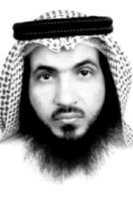
Meanwhile, in the immediate aftermath of the suicide attacks against the South Koreans, the Yemenis on March 15, 2009 conducted a raid in Taiz province [25]. The raid culminated in the arrest of AQAP militants, one of whom was Abdullah Abdulrahman Mohamed al-Bahimah al-Harbi (E-43) [25]. Taiz was not known as a hot spot for militant activity nor was it known for hiding militants, which was due to the lack of influence from tribes that a province like Marib or Abyan provided. Perhaps the Yemenis conducted a raid on an easy target in order to alleviate the potential pressure that would again be placed on them after another bombing against foreign nationals within their borders. However, Mahdi, the first suicide bomber used against the Koreans was a native of Taiz, so perhaps the raid targeted men directly associated with his recruitment, considering Mahdi himself had actually been under surveillance [9]. The Yemenis were able to announce success with the Harbi capture and eventually extradited the man along with four other non-List E militants back to the Saudis [26]. The extradition occured by March 29, 2009, and despite Yemeni claims that all five militants were wanted, the Saudis confirmed only Abdullah al-Harbi was on the list [26].
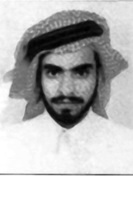
The Saudis continued to be able to take wanted militants into their custody alive in March of 2009. Next, an al-Qaida in Iraq member arranged for his surrender to the Saudi authorities. It appeared that the Saudi wanted List E was having its desired effect in convincing at least some of the militants to lay down their arms and return home. In mid-March, Fahd Rikad Samir al-Ruwaili (E-61) returned to Saudi Arabia from abroad and officially surrendered to authorities [23,27,28]. The 31 year old Qatari born Ruwaili had left for Syria in early April 2003, shortly after the US invasion of Iraq [23]. In Syria he helped set up training camps along the Iraqi border and facilitated the recruitment of young jihadists for al-Qaida in Iraq [23,27,28]. He also assisted them with forged documents and weapons smuggling in order to get arms and fighters into the fray within Iraq [23,27,28]. In fact, he was known as Emir al-Hedoud, or the Prince (Leader) of the borders for his role in facilitating the crossings of jihadists from Syria to Iraq [23]. He helped push a great multitude of explosives and militants into Anbar province, the Iraqi region that contains the hot zone of Fallujah [27]. It was from Iraq that he contacted his family with his desire to return home [28]. His family then contacted authorities who arranged for his return and arrest [23]. Ruwaili was able to provide the Saudi authorities with valuable intelligence on the inner workings of al-Qaida in Iraq, including information on the immediate family of Abu Musab al-Zarqawi [29]. The Interior Ministry praised his example and requested that more of the List E members lay down arms and return from fighting abroad [23]. The Saudi Interior Ministry under Prince Naif and Brigadier General Mansur al-Turki specifically denied the accusation that the Egyptians facilitated the surrender [23]. Regardless, the Saudis had removed yet another name from their extensive list.
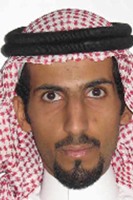
It is important to point out the Naif al-Qahtani, editor of the AQAP magazine Sada al-Malahim, continued throughout this time to produce issues of the militant propaganda. It is perhaps this type of propaganda that dissuaded more wanted militants from actually following the examples of the likes of Harbi and Ruwaili. Sada al-Malahim’s eighth issue for instance was released in March 2009 and directly addresses the new most wanted list [30]. In an article attributed directly to Qahtani, the editor rails against US forces in the region, and questions the Saudis as to their need for the List E members, as they are outside of the Kingdom’s borders [30]. To this point, Qahtani reveals that Badah Mukhlis Badah al-Kodari al-Qahtani (E-14) was killed in Iraq, waging jihad against US forces [30]. It is unclear how exactly Badah was killed but it is important to remember that his passport had been found with the bodies of Hamza al-Quayti and his men in Tarim [5]. Badah had been facilitated into Iraq to fight, so this evidence gives credence to Naif’s claim. Furthermore, examination of the two men’s names, Naif Mohamed Said al-Kodari al-Qahtani and Badah Mukhlis Badah al-Kodari al-Qahtani, reveals that it is possible that they are distantly related. Therefore, Naif would seemingly have credible knowledge on Badah’s fate in Iraq. It is important to note that the propagandist does not mention the fate of Sultan Radi al-Otaibi, even though he supposedly was also killed in Iraq, and the fact that his brother’s passport had been found with the Tarim cell. This lessens the credence of Otaibi’s supposed death. In addition to the discussed revelation, Naif al-Qahtani uses this article to give further religious authority to the upper echelons of AQAP leadership: Wuhaishi, Qasim al-Rimi, and Said al-Shehri [30]. Although it is a stretch to consider these men religious authorities, the organization as it evolved, counted amongst its ranks three actual viable religious scholars of three different nationalities.
Revamped Ideologues
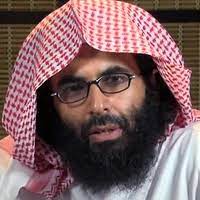
Although members of List E were turning themselves into the proper authorities, so many more remained active in their theatres and were convinced that their actions were justified. These religious rationalizations came from their respective groups’ ideologues and theologians. The evolved AQAP was no exception and Wuhaishi had built a team, a Shariah committee, of individuals who kept his fighters in line with supposed Islamic Law, and spoke heavily as to their religious rights, duties, and requirements. These three men, as mentioned above, came from three differing backgrounds. First and foremost, one of Wuhaishi’s main ideologues was Ibrahim Salman al-Rubaish (E-3), of the former Guantanamo detainees [31,32]. Rubaish was from the Buraidah, al-Qasim province and graduated from the Imam Mohamed bin Saud University [31]. Unsurprisingly, his degree was in Shariah Law [31]. Rubaish trained at al-Faruq camp in Afghanistan after being influenced by radical Saudi clerics to make the decision to enter into this particular brand of instruction [33]. Rubaish was at the camp when it was evacuated because of coalition bombing and he fought at Tora Bora under a commander named Hamza al-Zubair al-Masri, at the Zubair position [33] – [A]. The positions at Tora Bora were named after their respective commanders [33]. Rubaish was subsequently captured by the Pakistanis once he crossed into their territory and was turned over to the Americans [33]. He stayed in Guantanamo until December of 2006 when he was finally released to Saudi authorities [31]. While in American custody he was said to have held a leadership role amongst the other prisoners, one that probably stemmed from his religious credentials [33]. He claimed to have no ill will towards the Americans or Saudis, and the Saudis even assessed that he was of low value for detention [33]. His writings became known and he was even cited by researchers for writing a poem about his time in Guantanamo entitled “Ode to the Sea [32].” On outward appearances alone, it made sense for a prisoner like Rubaish to be freed from captivity and allowed to enter the Saudi Care Rehabilitation Center. It also begs the question as to whether the man was already radicalized or if his stint in Guantanamo pushed him over the edge. The fact that he was training for jihad at an al-Qaida camp and fought at Tora Bora show that he was certainly of the capacity to pose a threat to Western or Saudi interests. Rubaish, by April of 2008, had graduated from his program and was attempting to accomplish a Master’s Degree before rejoining the ranks of al-Qaida [31]. He left behind a wife and family to conduct his new career of inspiring jihadists [31]. In the months to come he made several issuances for Wuhaishi and AQAP, giving reasons and justifications for their attacks, stances, and actions [31,32]. He also wrote a book in an attempt to discredit popular Saudi cleric Salman al-Awda who openly spoke against radicalism and al-Qaida [31]. He openly rebuked King Abdullah of Saudi Arabia for allowing the new Technical King Abdullah University in Jeddah to be a co-ed campus [31]. Rubaish, it can be seen, was an instrumental tool in Wuhaishi’s war. There were others.
The AQAP Shariah Committee in its entirety was led by the second important ideologue, a Yemeni cleric named Adel al-Abab [34]. Abab was known as Sheikh Abu Zubair Adel al-Abab and was considered a senior theologian in the group [34,35,36]. His being a Yemeni also offered importance to the fact that his messages were heard by his fellow countrymen. In fact, while AQAP initially struggled to add to their ranks from all regions of Yemen, Abab helped the organization gain standing in more of the nation, while successfully promoting a full insurgency against the Yemeni government [35,36]. While Rubaish and Abab were arguably the most important ideologues at Wuhaishi’s disposal, the most infamous radical cleric in Yemen was no doubt an American citizen named Anwar Nasir al-Awlaki, due to his charisma, mastery of English, and penchant for internet sermons [37]. Awlaki had ties to a powerful tribe to protect him, and his history consisted of several interactions with people of importance within the jihadist circles. His transformation from imam to radical imam took him on a journey across the US and into Yemen where he eventually acted in accordance with AQAP. In doing so he would earn the wrath of the US government.

Awlaki was born in 1971 in New Mexico, yet at age 7 moved with his family to their ancestral homeland and was thus raised primarily in Yemen [38]. His father, Nasir had received his Master’s degree from New Mexico State University and had gone on to eventually receive a doctorate from the University of Nebraska, later working for the University of Minnesota [38]. Nasir would actually go on to work for the Agriculture Ministry in Yemen and eventually served as the President of the University of Sanaa [38]. Upon his return to the US in 1991, the younger Awlaki sought out a college education in Colorado, eventually earning his Master’s degree from Colorado State University in Civil Engineering [38,39]. At one point in the early 1990s, during a summer vacation, he visited a war torn Afghanistan and was appalled at the conditions therein [37,39,40]. Awlaki was able to attend school on a student visa and scholarship from Yemen as he pretended to actually be a native of that country instead of the US, therefore defrauding his own University [39,41]. He graduated and then worked as an imam in Denver for a while prior to relocating in San Diego [38,39]. He perhaps foreshadowed his future jihadist ideology while still in Denver when he caused a small confrontation after suggesting to a young man that he should fight in Chechnya [39]. Starting in 1996, he was employed as an imam in San Diego and built a following with young Muslims, primarily due to his mastery of the English language, his overall charisma, and his passionate sermons [39,41]. He also sought out a Master’s degree from San Diego State University [38,41,42]. While in San Diego, future 9/11 hijackers and bin Laden associates Nawaf al-Hazmi and Khalid al-Mihdhar attended Awlaki’s mosque and even personally met with him [38,39]. Awlaki eventually left San Diego and settled in the area surrounding Washington, DC, where he could engage in attempting to obtain a doctorate from George Washington University [38,40]. While there he became imam of yet another mosque, although at this time he was still considered a moderate cleric [38,40]. His past criminal record linked him to prostitutes and a charity that was believed to have funneled money to HAMAS [37,39,40]. However, Awlaki himself was not considered to be a terrorist [39,40,43]. While in the Washington area, Hazmi, Mihdhar and 9/11 pilot Hani Hanjour, attended Awlaki’s sermons [39,40,43]. Future investigations named Awlaki as Hazmi’s personal religious advisor [39]. Another interesting character to interact with Awlaki during this time was Army Major Nidal Hassan, who came to admire, respect, trust, and listen attentively to Awlaki [38,44]. After the 9/11 attacks, Awlaki was questioned repeatedly about his connections to the hijackers, although he was never arrested [40,42]. Disturbingly, Awlaki’s phone number was found in the German apartment of 9/11 conspirator Ramzi Binalshibh, which fueled the fire of his FBI questionings [40,42,43]. In addition, authorities in Colorado, in June 2002, issued a warrant for Awlaki’s arrest, which stemmed from his fraudulent claims of being born in Yemen, used to receive a Social Security card, passport, and scholarship [45,46]. The warrant was withdrawn prior to Awlaki ever being apprehended however, much to the chagrin of authorities in San Diego [45]. The cleric had found himself on a federal watch list of those suspected of aiding in terrorism, yet without a warrant for his arrest on any charge, authorities could not detain him [46]. Awlaki then essentially fled to Britain where he again served as an imam with an intense following [43]. This time however, he lectured with asperity, and his militant tone drew the suspicion of the British government during a series of fiery sermons [39,47]. Then in 2004, he went to what he considered his homeland: Yemen [40,43]. There his sermons were more and more radical and he was eventually placed under arrest by the Yemeni authorities in mid-2006 [38,43]. Supposedly, this was done over the matter of his involvement in the abduction of a Shiite teenager for ransom, an incident related to tribal matters more than terrorism [38,43]. It was assumed that Awlaki was kept in detention solely because the US wanted him there [39,43]. While imprisoned he endured interrogations conducted by the FBI, who focused on his connections with 9/11 hijackers [39,43]. The powerful Awlaki tribe negotiated his release in December 2007 (with American approval), and Awlaki returned to his native lands to supposedly live out his days [38,39,48]. Awlaki used his tribal influence, his charisma, and his radical Islamic teachings to recruit, embolden, and protect AQAP members and jihadist fighters [48,49]. His sermons came to center on jihadist ideals and he propagated the idea of a necessary conflict between Muslims and the West due to the latter’s supposed war on the former [48]. Awlaki supposedly lived a quiet life under the protection of his tribe, but that quickly changed along with his rhetoric [48]. In fact, by early 2009, when Wuhaishi and his war really began to escalate, Awlaki was said to have officially crossed the line and became a member of the organization while in hiding; claims that his father Nasir attempted to refute [50]. Although Awlaki continued to make ideological issuances about and to other jihadists, it is not believed he was originally a central leader in Wuhaishi’s network of fighters, yet he was becoming more and more vital due to his ability to use tribal favors to protect the militants and for the ease in which he garnered and galvanized members [49]. Thus, Awlaki worked his way slowly into the upper echelons of AQAP. For the organization, it would take the collective messages of men like Rubaish, Abab, and Awlaki to maintain their fighters on a singular track of mind, and to keep them from surrendering to the Saudi or Yemeni governments.
We will next examine the most audacious assassination attempt conducted by the al-Qaida affiliate to date, its perpetrators, target, and consequences. Parallel to these violent actions were activities designed by Wuhaishi to increase the stature, influence, and finances of the expanding network. All the while, the Saudis chisel away at their list of abundant wanted militants.
CITATIONS and SUBSTANTIVE NOTES:
- [A] For a profile of Hamza al-Zubair al-Masri and his fate within al-Qaida, please see the Chronicles in Zealotry special Series: Dark Years in al-Qaida, specifically the following chapter: https://chroniclesinzealotry.com/2025/01/22/series-dark-years-of-al-qaida-the-perfume-letter-plot-and-failaka-island/
- [1] The al-Qaida-Iran connection, Asharq al-Awsat, June 8, 2011, http://www.aawsat.net/2011/06/article55246222
- [2] Examining Saudi Arabia’s most wanted list, by Christopher Boucek, Combating Terrorism Center at West Point, CTC Sentinel, May 15, 2009, http://www.ctc.usma.edu/posts/examining-saudi-arabia%E2%80%99s-85-most-wanted-list
- [3] Al-Qaida in Yemen – evolving threats, by Danielle Sheldon, International Institute for Counter Terrorism, March 5, 2010, http://www.ict.org.il/Articles/tabid/66/Articlsid/825/currentpage/6/Default.aspx
- [4] Al-Qaida lied about funds, seeks recruitment of foreigners in Kingdom, The Saudi Gazette, http://64.65.60.109/index.cfm?method=home.PrintContent&fa=regcon&action=Print&contentid=2009102352344&simplelayout=1
- [5] Five members of terrorist cell killed and two others detained, by Mohamed al-Kibsi, The Yemen Observer, August 14, 2008, http://www.yobserver.com/front-page/10014753.html
- [6] Yemen: Claim made on Embassy blast, by Robert F. Worth, The New York Times, November 14, 2008, http://www.nytimes.com/2008/11/15/world/middleeast/15briefs-CLAIMMADEONE_BRF.html?_r=2&ref=world&oref=slogin&
- [7] Four South Korean tourists, guide killed in Yemen bombing, The Associated Press, March 15, 2009, http://www.foxnews.com/story/2009/03/15/4-south-korean-tourists-guide-killed-in-yemen-bombing/
- [8] Tourists die in Yemen explosion, BBC News, March 15, 2009, http://news.bbc.co.uk/2/hi/7945013.stm
- [9] Yemen: Al-Qaida reveals new information on attacks against Koreans, by Mohamed al-Azaki, The Yemen Post, April 10, 2010, http://www.yemenpost.net/Detail123456789.aspx?ID=3&SubID=1010
- [10] Security agencies reveal the identity of the terrorist that targeted Korean security delegation, Al-Tagheer News, April 8, 2009, http://www.al-tagheer.com/news.php?id=8459
- [11] Korea grapples with second attack in Yemen, by Donald Kirk, The Christian Science Monitor, March 18, 2009, http://www.csmonitor.com/World/Global-News/2009/0318/korea-grapples-with-second-attack-in-yemen
- [12] Yemeni al-Qaida leader: State conducts terror attacks, by Jane Novak, The Long War Journal, December 3, 2008, http://www.longwarjournal.org/archives/2008/12/yemeni_al_qaeda_lead_2.php
- [13] al-Qaida behind bombing near US mission in Yemen, Agence France Presse, March 22, 2008, http://www.google.com/hostednews/afp/article/ALeqM5i6t57ojyX0RRWL4X-hwDPzwP_hog
- [14] Yemeni forces kill an al-Qaida leader in raid, by Isam al-Sufyani, al-Motamar.net, August 8, 2007, http://www.almotamar.net/en/print.php?id=3176&mode=print
- [15] Senior al-Qaida member surrenders to authorities in Yemen, by Khaled al-Mahdi, Deutsche Presse-Agentur, June 8, 2010, http://www.edmondsun.com/natworld/x1358975989/Senior-al-Qaida-member-surrenders-to-authorities-in-Yemen
- [16] Al-Qaida member turns self in to Saudi authorities, Agence France-Presse, February 17, 2009, http://www.google.com/hostednews/afp/article/ALeqM5iv6J77Kd-3UaF2UVo-2bmBepx9eQ
- [17] Saudi Arabia: Guantanamo ex-inmate is in custody, by Robert F. Worth, The New York Times, February 17, 2009, http://www.nytimes.com/2009/02/18/world/middleeast/18briefs-GUANTNAMOEXI_BRF.html?ref=world
- [18] Al-Qaida figure surrenders to Saudi authorities, Reuters, February 17, 2009, http://www.reuters.com/article/2009/02/17/idUSLH126343
- [19] Al-Qaida man turns himself in, The Arab News, February 18, 2009, http://www.arabnews.com/node/321099
- [20] Al-Oufi, al-Shihri betrayed our trust: Families, friends, by Abdullah al-Oraifij and Khaled al-Shalahi, The Saudi Gazette, January 29, 2009, http://www.saudigazette.com.sa/index.cfm?method=home.regcon&contentID=2009012927911
- [21] Guantanamo Assessment File, Mohamed Atiq al-Awfi al-Harbi, ISN 333, http://wikileaks.org/gitmo/prisoner/333.html
- [22] Saudi jihadist accuses Iran of sponsoring al-Qaida, by Habib Trabelsi, Middle East Online, March 30, 2009, http://www.middle-east-online.com/english/?id=31258
- [23] Ain al-Yaqeen News Magazine, April 3, 2009, http://www.ainalyaqeen.com/arch_2009/3-apr/en9.php
- [24] Yemen al-Qaida link to Guantanamo Bay prison, by Peter Taylor, BBC News, January 13, 2010, http://news.bbc.co.uk/2/hi/8454804.stm
- [25] Yemen arrests Saudi al-Qaida militant, Saba News, March 15, 2009, http://www.sabanews.net/ar/print178486.htm
- [26] Yemen extradites five men wanted by Saudi, Agence France-Presse, March 29, 2009, http://www.alarabiya.net/articles/2009/03/29/69504.html
- [27] Al-Qaida operative surrenders, by M. Ghazanfar Ali Khan, The Arab News, March 17, 2009, http://www.arabnews.com/node/322560
- [28] Top al-Qaida terror suspect surrenders, by Mohammed al-Kinani and Abdullah al-Orefij, The Saudi Gazette, March 27, 2009, http://www.saudigazette.com.sa/index.cfm?method=home.regcon&contentid=2009032733335
- [29] The Untold Story of Zarqawi’s Wife, Asharq al-Awsat, May 11, 2013, http://www.aawsat.net/2013/05/article55301339
- [30] AQAP Publication, Sada al-Malahim, no. 8
- [31] Ibrahim al-Rubaish: New religious ideologue of al-Qaida in Saudi Arabia calls for revival of assassination tactic, y Murad Batal al-Shishani, The Jamestown Foundation, Terrorism Monitor, Volume 7, Issue 36, November 25, 2009, http://www.jamestown.org/single/?no_cache=1&tx_ttnews%5Btt_news%5D=35771&tx_ttnews%5BbackPid%5D=7&cHash=d0039659b9
- [32] Former Guantanamo detainee now al-Qaida in the Arabian Peninsula’s Mufti, by Thomas Joscelyn, The Long War Journal, December 3, 2009, http://www.longwarjournal.org/archives/2009/12/former_guantanamo_de_1.php#ixzz2D5HKsMVM
- [45-33] Guantanamo Assessment File, Ibrahim Sulaiman Mohamed al-Rubaish, ISN 192, http://wikileaks.org/gitmo/prisoner/192.html
- [34] AQAP’s top sharia official killed in recent drone strike, by Bill Roggio, The Long War Journal, October 20, 2012, http://www.longwarjournal.org/archives/2012/10/aqaps_top_sharia_off.php
- [35] In Yemen, an emboldened al-Qaida, by Paul Cruickshank, Pam Benson, and Tim Lister, CNN News, March 13, 2012, http://security.blogs.cnn.com/2012/03/13/in-yemen-an-emboldened-al-qaeda/
- [36] Al-Qaida in Yemen: Countering the threat from the Arabian Peninsula, by Katherine Zimmerman, October 19, 2012, American Enterprise Institute’s Critical Threats, http://www.criticalthreats.org/yemen/zimmerman-qaeda-yemen-countering-threat-arabian-peninsula-october-19-2012
- [37] Cleric al-Awlaki dubbed ‘bin Laden of the internet,’ by Aamer Madhani, USA Today, August 24, 2010, http://usatoday30.usatoday.com/news/nation/2010-08-25-1A_Awlaki25_CV_N.htm
- [38] Radical imam traces roots to New Mexico, by Tom Sharpe, The New Mexican, November 14, 2009, http://www.santafenewmexican.com/Local%20News/Radical-imam-traces-roots-to-N-M-#.UOeB0H3LdRw archived in http://archive.is/yc3UR
- [39] Imam’s path from condemning terror to preaching jihad, by Scott Shane and Souad Mekhennet, The New York Times, May 8, 2010, http://www.nytimes.com/2010/05/09/world/09awlaki.html?pagewanted=all&_r=0
- [40] How dangerous is the cerlic Anwar al-Awlaki, by Bobby Ghosh, Time Magazine, January 13, 2010, http://content.time.com/time/world/article/0,8599,1953426-2,00.html
- [41] Radical Muslim cleric lied to qualify for US funded college scholarship, by Catherine Herridge, Fox News, April 12, 2010, http://www.foxnews.com/us/2010/04/12/radical-muslim-cleric-lied-qualify-funded-college-scholarship/
- [42] Anwar al-Awlaki: From American boy to face of terror, by Brian Ross, ABC News and Nightline, September 30, 2011, http://abcnews.go.com/Blotter/anwar-al-awlaki-american-boy-face-terror/story?id=13666145
- [43] Imam from Virginia mosque now thought to have aided al-Qaida, by Susan Schmidt, The Washington Post, February 27, 2008, http://www.washingtonpost.com/wp-dyn/content/article/2008/02/26/AR2008022603267.html
- [44] Cleric says he was confidant to Hassan, by Sudarsan Raghavan, The Washington Post, November 16, 2009, http://www.washingtonpost.com/wp-dyn/content/article/2009/11/15/AR2009111503160.html
- [45] US attorney defends dropping radical cleric’s case in 2002, by Felisa Cardona, The Denver Post, December 3, 2009, http://www.denverpost.com/technology/ci_13914150
- [46] How Anwar Awlaki got away, by Joseph Rhee and Mark Schone, ABC News, November 30, 2009, http://abcnews.go.com/Blotter/FtHoodInvestigation/anwar-awlaki/story?id=9200720&page=1
- [47] Al-Qaida leader’s tour of Britain revealed, by Duncan Gardham, The Telegraph, November 5, 2010, http://www.telegraph.co.uk/news/uknews/terrorism-in-the-uk/8113977/Al-Qaeda-leaders-tour-of-Britain-revealed.html
- [48] Yemen tribe protecting American-Yemeni Islamic cleric, The Associated Press, January 19, 2010, http://www.foxnews.com/world/2010/01/19/yemen-tribe-protecting-american-yemeni-islamic-cleric/
- [49] Yemen’s chaos leads to evolution of an al-Qaida cell, by Steven Erlanger, The New York Times, January 2, 2010, http://www.nytimes.com/2010/01/03/world/middleeast/03yemen.html
- [50] CNN exclusive: Al-Awlaki’s father says son is not ‘Osama bin Laden,’ by Paula Newton, CNN News, January 11, 2010, http://www.cnn.com/2010/WORLD/meast/01/10/yemen.al.awlaki.father/
© Copyright 2025 Nolan R Beasley
 Chronicles in Zealotry