
Segment VI – A Subdued Silence (Chapter 21 – Resuming The Savagery)
For the entirety of the Series, please see – https://chroniclesinzealotry.com/fugitives-of-the-peninsula/
This chapter discusses violent engagements with jihadists in both Yemen and yet again within Saudi Arabia. We resume the story as the Saudis address situations within their own borders, to include detainee escapes and vestigial cells. While reduced to wanton attacks, the shattered remains of AQSA maintained their threat. We also examine the developing militant forces inside Yemen, comprised of familiar characters, now liberated from their incarcerations. The reinvigoration of the Yemeni franchise to the south, proved now to be an effective catalyst for renewed terror.
Saudi Escapees and Remaining Cells
Unfortunately, the Saudis were also forced to manuever through their own prison escapes of al-Qaida militants, which threatened to transmute a desultory militant presence into another thriving network. In the first escape, in April 2006, four AQSA militants fled from al-Kharj prison during a prisoner transfer [1,2]. This event led the Saudis to the last major incident with hard core elements of AQSA, which occurred in June [3]. At this time, the Saudi authorities had chased this vestigial cell of seven AQSA jihadists through the al-Nahkheel neighborhood of Riyadh to a militant safe house [2,3]. The tracking of the seven came amongst a series of additional raids which netted forty militant suspects, including two Somalis, an Ethiopian, and an Iraqi [3]. The militants being trailed exited their vehicle outside of their safe house and engaged security forces in an intense 45 minute gun battle, wounding seven of their pursuers and killing one: Abdulrahman Hassan al-Shehri [3]. Of the militants, only one survived the battle, and was himself seriously injured prior to arrest [1,2,3]. The dead militants were eventually named as: Mohamed Rashid al-Julaidan, Sami Saud al-Mutairi, Mishaal Abdullah al-Rashoud, Hamud Muqbil al-Otaibi, Saad Abdullah al-Muaither, and Ghazi Salim al-Otaibi [1,3]. They were some of the last dedicated elements of AQSA remaining. Two of the dead were of significance to the overall structure of AQSA. Mishaal al-Rashoud was the son of Abdullah al-Rashoud (B-24), the deceased ideologue who had perished in Iraq [1]. In addition, Rashoud was one of the al-Kharj escapees [2]. Julaidan meanwhile, was known as Abu Daoud al-Najdi and had appeared in an AQSA propaganda video alongside another al-Kharj escapee named Naif al-Shaibani [1]. In fact, in addition to the weapons and money seized at the safe house, the authorities found a studio for filming AQSA releases [3]. This studio produced videos proving that the men were in the final stages of preparing a suicide attack on security forces in Riyadh [3]. Julaidan, along with Sami al-Mutairi had also escaped from Saudi custody, the two of them having fled from a Riyadh police station [2]. In October 2008, AQAP released a short biography of Julaidin, a man who had been considered important in the early existence of this incarnation of the organization [4]. The release described Julaidan as having been a fighter for Al-Qaida in Iraq and as such the man served prison terms in Saudi Arabia and in Syria, for his Iraqi militant travels and connections [4]. Reports indicate that Julaidan had made his men swear an oath of allegiance to him as well [5]. As for the lesser known members of the six men killed in this cell, Ghazi Salim al-Otaibi was later accused by the Saudis of having assisted Rashoud and his accomplices in escaping from al-Kharj [5]. Hamud Muqbil al-Otaibi was also one of the four al-Kharj escapees, which meant that two had perished in the ferocious gunbattle [1,6]. A third would soon join them, as the seriously wounded and captured militant was revealed to be Mashari Mohamed al-Maqati al-Otaibi, yet another al-Kharj escapee [6,7]. He would succumb to his wounds not long after his arrest [7]. Naif Hamad al-Shaibani, the last of the escapees, had actually been captured the day prior to the al-Nakheel shootout, quite possibly leading to the eventual battle [7]. Two additional members of Julaidan’s AQSA cell, the brothers Ibrahim and Abdullah al-Assiri, who were not with their comrades that fateful night, managed to escape unhindered from the carnage that befell their cohorts and flee to a new base in Yemen to wage jihad [8].
On July 8, 2006, seven more militants escaped from al-Malaz prison in Riyadh [9,10]. The exact method of escape is unknown although the Saudis were quick to claim that no security forces or prison staff were involved [10,11]. While this seems unlikely, the Saudis were obviously worried about how this would be perceived [11]. Interpol became upset when they learned about the escape from a media release instead of officially from the Kingdom [12]. As such they issued an alert for the escapees: Saudis Abdulaziz Abdullah Sulaiman al-Masud, Osama Abdulrahman Sulaiman al-Wahabi, Turki Hilal Sanad Jaish al-Mutairi, Ghazi Muhsin Rashid al-Osaimi al-Otaibi, Abdulaziz Mohamed Saleh al-Fallaj, Mohamed Abdulaziz Daheeb al-Qahtani and Yemeni Abdulrahman Taha al-Hatar [9,12]. The men were assisted in their escape by a Zarqawi lieutenant named Saleh Abdullah al-Qarawi and facilitated into Iraq and Lebanon to continue jihad [13]. The Saudi Qarawi had been selected by Zarqawi to enhance his network and ambitions outside of Iraq, linking him to other nations [13]. Yet Qarawi was also used to facilitate the movement of jihadists, both veterans and new recruits [13]. The prison escapees from al-Malaz provided Qarawi with battle-hardened men to send to Iraq. The movement of these escapees involved more than just Qarawi of course. The US later killed, on December 7, 2006, a Saudi named Fahd Hilal Awad al-Salafi al-Maqati al-Otaibi who had facilitated the escapees to and from Jeddah prior to leaving the Kingdom [14]. Otaibi, known as Fahd al-Saudi was killed by US forces in Ramadi, Iraq at a checkpoint [14]. Incidentally, Iraqi insurgents of the Mujahideen Shura Council, by November 2006, announced that two of the escapees, Masud and Fallaj had been killed in Iraq as well [15]. As for the rest of the escapees, an August 21, 2006 security force operation in al-Jamia district of Jeddah recaptured both Otaibi and Mutairi [16]. The operation was not a smooth raid, but rather a 17 hour gun battle in and around a building where four militants had made a stand [16]. The four, including the escapees were surprisingly captured instead of killed [16]. Since reports stated that the men had been smuggled into Iraq and two of their compatriots quickly died there, it is unknown why Otaibi and Mutairi remained in Jeddah. Perhaps they were still awaiting their transport to Iraq, as they had been initially smuggled the coastal city by Fahd al-Saudi [14]. Two of the remaining three escapees appear to remain at large. One of the suspects, Osama al-Wahabi had been arrested with Yunis al-Hayari and charged with harboring him, therefore exhibiting that Wahabi had experience with the leadership cadre of the organization [9,11]. Wahabi was later reported to have perished in Iraq in October 2007 [17]. Meanwhile, the story of the deceased escapees exemplifies how so many Saudis were at that point in time fighting in Iraq and other foreign theatres, instead of terrorizing their own homeland.
Answering the Call Against Oil
While many foreign militants were engaged in fighting Western forces in Iraq and Afghanistan, there was still a dedicated central leadership for insurgency in the Arabian Peninsula, based in Yemen, and they were preparing more devastation and terror attacks against both the West and their own Arab governments. The core group of the Sanaa escapees (consisting of Fawaz al-Rubayi, Nasir al-Wuhaishi and the rest) perpetrated their first attack in response to a release by Dr. Ayman Zawahiri on the fifth anniversary of the 9/11 attacks [18,19]. Zawahiri implored jihadists to target oil facilities in the Arabian Peninsula in a continuation of the trend set forth by Juwair and his cohorts in Saudi Arabia. In fact, Zawahiri had made a similar announcement in September 2005 (the full version was released in December 2005) preceding Juwair’s attempt on Abqaiq the following February [20]. In the early morning hours of September 15, 2006, Rubayi, Wuhaishi and their group obliged Zawahiri’s request. As guards were changing shifts, two sets of two cars sped towards their targets in Marib and Hadramout provinces within Yemen [18,19,21]. The vehicles contained ten gasoline canisters strapped with TNT and were intended to cause significant damage to the Safir oil refinery and gas production center in Marib and the Al-Dhabba oil exporting terminal in Hadramout [18,19,21]. The two vehicles attacking in Safir were destroyed by the Yemeni guards who immediately opened fire on the approaching aggressors [18,19,21]. Little damage was reported in this instance, while in Hadramout a fire broke out around an oil storage unit when both the attacking vehicles at that location were also destroyed by Yemeni guards [18,19,21]. In the end, all four suicide attackers and one of the guards from Hadramout were killed in the gunfire and explosions, and the revitalized AQAP had been foiled in their initial attempt to strike at major targets [18,19,21].
It was immediately asserted that some form of Al-Qaida branch or followers thereof would be found responsible for the attempts due to Zawahiri’s statements [18]. Other analysts argued that the attack must have been in planning by al-Qaida elements long before Zawahiri’s statement was released [19]. Regardless, it became more than apparent that the regrouping Arabian Peninsula branch of al-Qaida was responsible when the four suicide bombers were identified. The Safir perpetrators were identified as Omar Said Jarallah (G-11), the former bin Laden bodyguard and Nashiri crew member, and Ahmed Mohamed al-Abyadh [22]. In the Hadramout incident, one attacker was identified as Shafiq Zayed (G-15), dressed as a military officer and the other as Hashim Khalid al-Iraqi, dressed as an installation employee [21,22]. It can be assumed that Jarallah and al-Abyadh were disguised similarly as their trucks were made to look like company vehicles from the installation [18]. The four were linked to four additional unidentified jihadists who were subsequently arrested in Sana’a with a weapons cache, forged documents, and disguises [19]. With Jarallah and Zayed having been prison escapees it was revealed that the remaining fugitives were leading an active and capable Al-Qaida cell, or an entire organization within Yemen. In fact, the Yemenis had suspected that assaults were coming after Abqaiq, and based on intelligence had openly warned oil installations on September 3 to be extra vigilant in case of attack [19]. This warning seems to have been heeded and cost two List G members their lives in response.

Rubayi, Wuhaishi and their men viewed the attack as a message to the Yemenis, Saudis, Americans, and other Westerners that their organization was still relevant enough to perpetrate crimes [23]. Plus, the incident assuredly sparked fear amongst Westerners in the Peninsula who could imagine another long string of soft target attacks aimed at them. Rubayi, who had previously operated under al-Qaida’s point man in Yemen, Abu Ali al-Harithi, pushed for these attacks to occur frequently and with devastating consequences. Those arrested in the aftermath of the bombings stated that Rubayi was directly involved in putting together the bombing teams and plotting the oil facility attacks [24,25]. That being said, although Rubayi was an operational leader within the cell, it was revealed that Wuhaishi was the overall chief of the escapees and their developing organization, with Qasim al-Rimi as his overseer of military operations [26]. With the instability of Yemen, the men no doubt saw that they were able to build a potentially extensive jihadi force. Nasir al-Wuhaishi, in his leadership role within the cell and growing network, was revealed to the public as Abu Bashir al-Yemeni, the personal secretary of Osama bin Laden during his time in Afghanistan [27,28]. Abu Bashir al-Yemeni had been included on lists of al-Qaida wanted in the immediate aftermath of the US invasion of Afghanistan [29]. Wuhaishi in this secretarial position was close to bin Laden and al-Qaida leadership, a fact which resulted in the West being greatly disturbed to have such an individual in charge of the recovering Arabian network [27,28].
Justice Finds Rubayi
By the end of September though, US intelligence and Yemeni counter terrorism efforts began to close in on the cell. Perhaps due to intelligence gleaned from the bombings and from subsequent arrests, the Yemenis and supposedly their American allies were able to uncover some of the leadership of the rudimentary network, within two houses on the outskirts of Sana’a [30,31,32]. The resulting raid on October 1, 2006 began with a helicopter attack on the residences followed by a raid from the airborne security forces [30]. The target of the mission was Fawaz al-Rubayi [30].
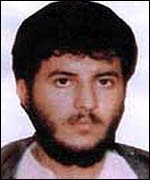
Rubayi, as has been mentioned, was a recognized Al-Qaida operative, and had been sought after by the FBI in a February 2002 issuance (see List H) [33]. His brother Abu Bakr Yahya al-Rubayi seems to have followed in his brother’s footsteps and was a part of the growing AQAP cell under Wuhaishi [26,34]. Abu Bakr was arrested by the Yemenis and would stand trial for the foiled attacks in Marib and Hadramout [26,34,35]. Abu Bakr was also part of the fifteen man group put to trial for the Limburg, Hunt Oil Helicopter, and Embassy plots, which had contained nine of the escapees including his brother Fawaz [36]. Abu Bakr’s family claimed that although he was sentenced to 10 years, he never actually served any of his time [35]. This would appear to be the case if just two years after his supposed sentencing, he was being apprehended again. Another Rubayi meanwhile, Salman Yahya al-Rubayi (ISN 508), was being held at the US prison in Guantanamo Bay, having been captured as a fighter in Afghanistan [37]. Though his family states that Salman merely went to Afghanistan to find his brother Fawaz, his leaked Guantanamo assessment file clearly tells a different story [35,37]. Salman was a dedicated jihadist just like his brothers. While Fawaz, Abu Bakr, and Salmam were extremists, their oldest brother Hassan appears to have avoided a violent life [35]. The Rubayi family had been expelled from Saudi Arabia and sent to Yemen with hundreds of thousands of others during the Persian Gulf War [35]. Fawaz actually worked in a presidential palace as a clerk for a while, and it is there that his family claims he was convinced by security officials to receive militant training in Afghanistan [35]. Thus, in 2000, Rubayi traveled to Afghanistan to attend Al-Qaida camps, later informing his family that he had the intention of becoming a martyr [35]. He was actually deployed back to Yemen, to be placed in charge of a cell under the command of Abu Ali al-Harithi, and then later worked for Nashiri [38]. Rubayi’s exploits included the aforementioned crime streak he stood trial for in Yemen, culminating in the death of Yemeni soldier Hamid Khasruf who was attempting to arrest him [39]. Rubayi and his compatriot Hizam Mujali murdered Khasruf and escaped his custody [39]. They were eventually captured in March of 2003 by the Yemenis at the request of the American government [39]. After the 2006 prison escape, Rubayi even visited his ailing father in the hospital, avoiding detection while at the same time refraining from disguising his identity [35]. Rubayi was a paramount operative for Al-Qaida in Yemen and was linked to numerous other Al-Qaida personalities through his association with training camps in Afghanistan. Rubayi has even been accused of training under Abu Musab Zarqawi during his time in Afghanistan (as Zarqawi was not a member of Al-Qaida, Rubayi also trained at official camps in order to have been eventually linked up with Nashiri) and that he was acquainted with Mohamed Atta and Ziad Jarrah, two 9/11 pilots [39].
As the helicopter and airborne raid ensued, Rubayi was entrapped within one of the residences and is reported to have commenced firing and throwing grenades upon his besiegers [30]. In the next house, his associate Mohamed Ahmed Abdullah al-Dailami (G-9) was discovered and killed [30,31,32]. While some sources state that Dailami fought against the raid, his family asserts that he was killed in his bed [30,32,40]. Dailami had been Rubayi’s driver during his failed attempt to shoot down the Hunt Oil Company helicopter back in 2002 [41]. Rubayi meanwhile was killed when his residence was stormed during the firefight [30,42]. Some witnesses claim however, that his residence was completely destroyed by rocket fire from the helicopters first [31]. Furthermore, Gregory Johnsen in his book The Last Refuge states that while Dailami was killed in the firefight, Rubayi was actually surrendering afterwards, with no weapons in hand, when he was gunned down [40]. This is the most likely scenario and probably came about due to Rubayi’s refusal to surrender himself and gain a security guarantee from the Yemenis, so that the Saleh government could please the US [35]. Abu Bakr reported that the Yemeni security forces contacted him and stated that Fawaz would die if he did not turn himself in [35]. It may also be assessed that his murder of the Yemeni soldier Khasruf was finally being avenged [40].
Regardless of the methods used, the Yemeni security forces, most likely with the help of American intelligence (although this claim was later rebuffed [31]) had managed to eliminate two very dangerous members of the evolving AQAP hierarchy. As the Yemenis were eager in the past to cut deals with Al-Qaida terrorists and fighters, allowing them to remain under loose house arrest and allowing them early release from prisons, it has been asserted that most of the trials are mockeries aimed at pleasing Western governments [35]. The Al-Qaida fighters have been suspected of being used by the Yemeni government against Shia rebels and other political opponents [43]. As such, the jihadists have enjoyed relative freedom within the country. The assassinations of Rubayi and Dailami reflected either a Yemen responding heavily to the attacks on the oil installations or a Yemen acting in unison with American intelligence to remove threats. The latter option seems the most coherent within the overall story line. The latter option also could include the suspicion that the Yemenis, while acting to remove threats, were just offering the Americans something to make it seem as if they were cooperating in the war. Meanwhile, Wuhaishi and the remaining fugitives were able to remove themselves from immediate danger and regroup elsewhere. On November 7, 2006 the newly emerging Al-Qaida in Yemen (AQAP) claimed responsibility for the oil installation attacks as a response to the death of Zarqawi in Iraq at the hands of US forces and in response to the aforementioned request of Dr. Zawahiri [26]. The fact that the internet release was so late and failed to mention Rubayi’s death, led some analysts to conclude that the group had struggled to upload the statement online [26]. If anything, it demonstrated the communications infancy in which the group calling itself Al-Qaida in Yemen found itself in during its evolution into the eventual AQAP. In November of 2007, a year later, Yemen concluded the trials of those involved in the oil facility attacks, with the primary suspect in custody Abu Bakr al-Rubayi receiving an eight year sentence [34]. Convicted and sentenced in absentia were Wuhaishi, Qasim al-Rimi, Ibrahim al-Huwaidi, Jabir al-Bannah, Mohamed al-Umdah, and Hamza al-Quayti [34].
A Threat Lingers
On Sunday January 14, 2007 security forces had their next major encounter with one of Wuhaishi’s men. In the Saba district of Abyan province, police attempted to stop a man, dressed and veiled as a woman, who appeared to be carrying a firearm [44,45]. Upon being confronted, the figure opened fire on the forces with an automatic weapon and threw grenades resulting in the deaths of two officers [44,45]. The gunman was killed in the return volley [44,45]. Security officials had stalked Yasir Nasir Ali al-Homiqani (G-20) to southern Yemen and in the brief exchange eliminated the escapee from Wuhaishi’s ranks [44]. In October 2008, AQAP released short biographies of two men who had been eliminated early in the organization’s revitalization process: Mohamed al-Julaidan and Yasir al-Homiqani (G-20) [46]. The release stated that Homiqani had been plotting against Ethiopian targets when he was gunned down by security forces [46].
Jumping from Yemen to its northern neighbor, the Saudis next faced a threat from within their own borders. With the decimation of the AQSA network, the threat from within the Kingdom had been greatly diminished and only two List members were believed to at that point still be active in the country. One of them was Walid Mutlaq al-Radadi (C-12) who continued operating despite being without his leadership cadre. It is unknown if Radadi decided to act on his own or if he was linked to Wuhaishi and his developing network. Regardless, on Feb 26 2007, Radadi chose to recommence AQSA/AQAP’s long tradition of strikes against soft targets and Westerners within the Kingdom [47,48,49].

That February day began as a group of French tourists were completing their travels to the ancient Nabatean city of Madain Saleh in order to sightsee and camp [47,48,49]. The group had also consisted of a large number of Belgians who returned to Riyadh while the French journeyed on towards Mecca and Medina [47,48]. The French lived and worked in Riyadh but had become lost upon the road [47,48,50]. Upon becoming disoriented, the group was passed by Radadi and one of his men, Majid Muadh al-Harbi, in their Nissan Patrol [51]. The two militants were living in a tent as Radadi was on the run from authorities [52]. Their camp was set up relatively close by to where the tourists found themselves that fateful morning [52]. The men rushed away from the travelers and returned with another militant, Abdullah Sayer al-Mohamedi, before asking the stray tourists where they were from [50,51]. Just days before, AQSA remnants had posted online they would find ways to drive the “Crusaders” from their country [53]. This seemed to be a reference to attacking any Westerner discovered by the jihadists. As such, once Radadi and his men concluded that the group was European they opened fire on them with automatic weapons [47,48,49,50]. Two French Engineers who worked for Schneider Electric, a teacher, and a 17 year old boy were killed [47,48,51]. Two of the victims died at the scene, one at the hospital, while the 17 year old boy lingered in critical condition for a while before falling to his injuries [47,48]. Three women, a young girl and 15 year old boy were spared [53]. Upon completion of the murders, Radadi’s group was joined by Nasir Latif al-Balawi who assisted in their escape [50,53]. There was no claim of responsibility for the attacks, but the Saudi security forces were able to identify Radadi and his men as the killers by March 1, 2007 [51,54]. On March 6 for example, the Saudis issued warrants for both Balawi and Mohamedi [55].
Their best break in the case came along a stretch of tranquil highway leading from Medina to a popular camping ground exactly one month after the March 6 announcement [54,55,56]. Security forces descended upon a residence along this stretch of road believed to be the hideout of Radadi [54,56]. The frantic Radadi engaged security forces as they were evacuating residents from the area and surrounding him [55]. Radadi’s usage of both guns and grenades left one of the security force members, Dhafir Abdullah al-Nafei, dead at the scene [55]. Witnesses reported intense gunfire in the early morning raid [55]. Two other security force members were wounded in the exchange but Radadi himself was eventually killed [54,55,56]. With his death no more members of List C remained alive or free. In Radadi’s possession at the time of his demise were the actual weapons used to slay the Frenchmen [50]. Radadi and his men were viewed as cold hearted murderers as they had summarily executed the men after separating them from the women and children of the tourist group [55]. Next on May 27, 2007 the Saudis were able to apprehend Majid Muadh Rashid al-Harbi in Wasita village, 100 km south of Hail city without incident [52]. Harbi had been under surveillance for three days after stealing a vehicle at gun point in order to maintain his run from authorities [52]. Nasir al-Balawi was eventually arrested in mid-July of 2007 after Saudi authorities were tipped off by local residents in al-Jawf province as to his location [53]. Mohamedi meanwhile evaded authorities until October 2007 when his vehicle ran out of gas near a farm 90 km from Medina near the city of Al-Jafdour [57,58]. The derelict had been hiding in the rugged, arid, desert terrain of the area for some time and the farmer he asked for assistance took note of his exhausted appearance and the fact that he was armed with an automatic weapon [58]. The farmer left Mohamedi and called for the authorities, who returned and eventually found the destitute Mohamedi hiding on the farm under a carpet on an old sofa [58]. The physically weak and wearied fugitive was taken without incident [58]. The three major suspects as well as several others arrested for hiding them and assisting them in their fugitive state were tried for the murders in December 2011 [59] – [A].
A startling resumption of terror attacks, as represented by the oil refinery incidents in the fall of 2006, were met by an auspicious counter campaign that was seemingly destined to deconstruct the fanatical network before it could truly bring about any harm. Yet in the next chapter we discuss further the comical Yemeni notion of security guarantees, the flight of some of the escapees to other war theatres, and the progression of sophistication and determination in the fledgling and wounded al-Qaida franchise’s operations.
CITATIONS and SUBSTANTIVE NOTES:
- [A] – Two of the direct participants apprehended for the French murders, Abdullah Sayer Muadh Massad al-Mohamedi and Majid Muadh Rashid al-Harbi were executed on January 1, 2016 by the Saudi government for terrorism convictions [60]. These occurred as components of a Saudi mass execution that day of 47 combined Sunni terrorists and Shia dissidents.
- [1] 14 Saudis are released from Guantanamo Bay, by Samir al-Saadi, The Arab News, June 25, 2006, http://www.arabnews.com/node/286791
- [2] Al-Nakhil Rumble, by Abdullah al-Eraifij, The Saudi Gazette, June 24, 2006, http://www.freerepublic.com/focus/f-news/1655175/posts
- [3] Ain al-Yaqeen News Magazine, June 30, 2006, http://www.ainalyaqeen.com/issues/20060630/feat7en.htm
- [4] Abu Dawud al-Najdi, from Sada al-Malahim Men of the Road series, October 22, 2008, http://counterterrorismblog.org/2008/10/nefa_foundation_alqaida_in_yem_1.php
- [5] Pair planned to kidnap young princes, by Mansour al-Shihri, The Saudi Gazette, January 24, 2013, http://www.saudigazette.com.sa/index.cfm?method=home.regcon&contentid=20130124150406
- [6] Personal Correspondence with Thomas Hegghammer, Stanford University, from his Thesis: Appendix 4: Biographies of militants in post-2001 Saudi Arabia (dataset used in Chapter 12), Extended Samples
- [7] AQSA Publication, Sawt al-Jihad, no. 30, https://groups.yahoo.com/neo/groups/alphacity/conversations/topics/1164
- [8] The Last Refuge: Yemen, Al-Qaeda, and America’s War in Arabia, Gregory Johnsen, W. W. Norton and Company, 2013, p. 160-162
- [9] Terror Suspects escape from prison, by Raid Qusti and Samir al-Saadi, The Arab News, July 9, 2006, http://www.arabnews.com/node/287484
- [10] Terror suspects flee Saudi jail, BBC News, July 8, 2006, http://news.bbc.co.uk/2/hi/middle_east/5160410.stm
- [11] Saudis deny report of al-Qaida-security force link, by Mariam al-Hakeem, The Gulf News, July 10, 2006, http://gulfnews.com/saudis-deny-report-of-al-qaida-security-force-link-1.244092
- [12] Interpol issues alert for 7 terror suspects who fled Saudi jail, by Helena Fouquet, Bloomberg News, July 11, 2006, http://www.bloomberg.com/apps/news?pid=newsarchive&sid=a.uABZaggi7w&refer=home
- [13] In the Shadow of al-Zarqawi: A Profile of the Saudi Militant Saleh al-Qarawi, by Murad Batal al-Shishani, The Jamestown Foundation, Terrorism Leadership Monitor, Volume 1, Issue 4, April 29, 2010, http://mlm.jamestown.org/single/?tx_ttnews%5Btt_news%5D=36334&tx_ttnews%5BbackPid%5D=568&no_cache=1
- [14] Iraqi forces kill at least four attacking insurgents, American Forces Press Service, December 24, 2006, http://www.defense.gov/News/NewsArticle.aspx?id=2522
- [15] Suicide Bombers in Iraq: The Strategy and Ideology of Martyrdom, Mohammed M. Hafez, United States Institute of Peace Press, 2007, p. 177
- [16] Jeddah shootout: Security forces identify 2 militants, by Samir al-Saadi, The Arab News, August 23, 2006, http://www.arabnews.com/node/280842
- [17] Path of Blood: The Story of Al-Qaeda’s War on the House of Saud, Thomas Small and Jonathan Hacker, Simon & Schuster UK, 2015
- [18] Attacks on Yemen oil plants kill 5 days after Zawahiri threatens region, The Associated Press, September 15, 2006, http://www.foxnews.com/story/2006/09/15/attacks-on-yemen-oil-plants-kill-5-days-after-zawahiri-threatens-region/
- [19] Al-Qaida oil attack thwarted in Yemen, by Chris Heffelfinger, The Jamestown Foundation, Terrorism Focus, Volume 3, Issue 37, September 26, 2006, http://www.mail-archive.com/osint@yahoogroups.com/msg29416.html
- [20] Zawahiri urges attacks on Iraq’s oil, The Associated Press, December 7, 2005, http://www.foxnews.com/story/2005/12/07/zawahiri-urges-attacks-on-iraq-oil/
- [21] Foreign Facilities, Companies Shut Down, Mohammed Al-Asaadi, The Yemen Observer, September 15, 2006, http://www.yobserver.com/local-news/printer-10010908.html
- [22] Releads with details on bombers, Deutsche Presse Agentur, September 19, 2006, http://rawstory.com/news/2006/Releads_with_details_on_bombers_09192006.html
- [23] Al-Qaida in Yemen claims responsibility for thwarted attacks, translated by SITE Institute and posted by Jane Novak on Armies of Liberation blog, November 7, 2006, http://armiesofliberation.com/archives/2006/11/07/al-qaeda-in-yemen-claim-responsibility-for-thwarted-attacks/
- [24] Yemen begins interviews in bombing of oil installations, by Khaled al-Mahdi, The Arab News, December 3, 2006, http://www.arabnews.com/node/291790
- [25] 39 suspected oil facility bombers on trial, by Jane Novak, Armies of Liberation blog, April 16, 2007, http://armiesofliberation.com/archives/2007/04/16/39-suspected-oil-facility-bombers-on-trial/
- [26] Al-Qaida in Yemen: Timeline of strikes and statements, by Jane Novak, Armies of Liberation blog, September 21, 2008, http://armiesofliberation.com/archives/2008/09/21/al-qaeda-in-yemen-timeline/
- [27] INTERPOL – United Nations Security Council Special Notice, al-Wahishi, Nasir Abd-al-Karim Abdullah, January 19, 2010, http://www.interpol.int/%E2%80%8B@en/layout/set/print/UN/(un_id)/4465545
- [28] UN Sanctioning of Nasir al-Wuhaishi, UN Security Council, January 19, 2010, http://www.un.org/sc/committees/1267/NSQDi274E.shtml
- [29] Who’s dead, who’s captured and who’s still on the loose in the war on al-Qaida, by John J. Lumpkin, The Associated Press, January 9, 2002, http://lang.sbsun.com/socal/terrorist/0102/09/terror05.asp
- [30] Al-Qaida men killed in Yemen, by Khaled al-Mahdi, The Arab News, October 2, 2006, http://www.arabnews.com/node/289853
- [31] US involvement in anti-terror ops denied, by Jane Novak, Armies of Liberation blog, October 5, 2006, http://armiesofliberation.com/archives/2006/10/05/us-involvement-in-anti-terror-ops-denied/
- [32] Al-Rabie killed in exchange of fire, Al-motamar.net, October 1, 2006, http://www.almotamar.net/en/1017.htm
- [33] FBI Most Wanted, FBI Seeking Information Alert, February 11, 2002, http://web.archive.org/web/20020213124728/http://www.fbi.gov/mostwant/seekinfo/2-11-02.htm
- [34] Sentences against 32 al-Qaida linked defendants in Yemen, Al-Motamar.net, November 7, 2007, http://www.almotamar.net/en/3674.htm
- [35] Fawaz al-Rabie’s family interview, by Jane Novak, Armies of Liberation blog, October 11, 2006, http://armiesofliberation.com/archives/2006/10/11/fawaz-al-rabies-familys-interview/
- [36] Yemen jails five Limburg attackers, by Nasser Arrabyee, The Gulf News, August 29, 2004, http://m.gulfnews.com/yemen-jails-five-limburg-attackers-1.331048
- [37] Salman al-Rubayi Guantanamo Assessment File, ISN 508, http://wikileaks.org/gitmo/prisoner/508.html
- [38] The Last Refuge: Yemen, Al-Qaeda, and America’s War in Arabia, Gregory Johnsen, W. W. Norton and Company, 2013, p. 70
- [39] Tracking Yemen’s 23 Escaped Jihadi Operatives Parts 1 and 2, by Gregory Johnsen, The Jamestown Foundation, September 27, 2007, http://www.jamestown.org/single/?no_cache=1&tx_ttnews%5Btt_news%5D=4437
- [40] The Last Refuge: Yemen, Al-Qaeda, and America’s War in Arabia, Gregory Johnsen, W. W. Norton and Company, 2013, p. 164-165
- [41] The Last Refuge: Yemen, Al-Qaeda, and America’s War in Arabia, Gregory Johnsen, W. W. Norton and Company, 2013, p. 100-101
- [42] Yemeni security forces kill two senior al-Qaida operatives, Deutsche Presse Agentur, October 1, 2006, http://rawstory.com/news/2006/Yemeni_security_forces_kill_two_sen_10012006.html
- [43] Al-Qaida escape in Yemen: Facts, Rumors and Theories, by Jane Novak, Worldpress.org, February 16, 2006, http://www.worldpress.org/Mideast/2267.cfm
- [44] Police kills fifth al-Qaida fugitive, by Adnan Hizam, The Yemen Observer, January 18, 2007, http://www.yobserver.com/local-news/printer-10011532.html
- [45] One terrorist fugitive killed by security forces, Saba News, January 16, 2007, http://www.sabanews.net/ar/news124972.htm
- [46] Yasir Nasir al-Homiqani, from Sada al-Malahim Men of the Road series, October 22, 2008, http://counterterrorismblog.org/2008/10/nefa_foundation_alqaida_in_yem_1.php
- [47] Gunmen kill 3 French sightseers on road near Saudi holy city, by Hassan Fattah, The New York Times, February 27, 2007, http://www.nytimes.com/2007/02/27/world/middleeast/27saudi.html
- [48] French killed in Saudi shooting, BBC News, February 27, 2007, http://news.bbc.co.uk/2/hi/6398395.stm
- [49] Attack on French tourists in Saudi: The frustration of covering breaking news, by Rasheed Abou-Alsamh, Rasheed’s World blog, March 2, 2007, http://www.rasheedsworld.com/wp/2007/03/attack-on-french-tourists-in-saudi-the-frustration-of-covering-breaking-news/
- [50] Eight arrested for French expats killings, by Samir al-Saadi, The Arab News, April 19, 2007, http://www.arabnews.com/node/297365
- [51] Police name suspect in killings of four French nationals, AKI, March 1, 2007, http://xrdarabia.org/?s=radadi&utm_source=INK&utm_medium=copy&utm_campaign=share&
- [52] Saudi Arabian Ministry of the Interior announcement on capture of Majid Rashid al-Harbi, May 28, 2007
- [53] Suspect in Frenchmen’s murder captured, by Raid Qusti, The Arab News, July 16, 2007, http://www.arabnews.com/node/300716
- [54] Saudi Arabia kills wanted Qaida-linked militant, Reuters, April 6, 2007, http://uk.reuters.com/article/2007/04/06/idUKL0645691120070406
- [55] Gunbattle at Dawn in Madeenah, Yousuf Muhammad, The Arab News, April 7, 2007, http://www.fatwa-online.com/gunbattle-at-dawn-in-madeenah/
- [56] Saudis kill French murders suspect, BBC News, April 6, 2007, http://news.bbc.co.uk/2/hi/middle_east/6532651.stm
- [57] 4th Suspect held in murder of Frenchmen, by Raid Qusti, The Arab News, October 15, 2007, http://www.arabnews.com/node/304583
- [58] Farmer turned in al-Muhammadi, newspaper claims, The Arab News, October 17, 2007, http://www.arabnews.com/node/304637?quicktabs_stat2=0
- [59] Saudi begins trial over militant killing of four French, Reuters, December 28, 2011, http://www.trust.org/alertnet/news/saudi-begins-trial-over-militant-killing-of-4-french/
- [60] Saudi Arabia Executes 47 Terrorism Convicts, Al-Arabiya News, January 2, 2016, https://english.alarabiya.net/News/middle-east/2016/01/02/Saudi-interior-ministry
© Copyright 2025 Nolan R Beasley
 Chronicles in Zealotry