
The captures of Khalid Sheikh Mohamed and his nephew Ammar al-Baluchi thoroughly disrupted the current and potential mechanics of al-Qaida external operations. Now the two represented an abundant wealth of intelligence for American authorities, if they could properly decipher and analyze the trove. Despite enhanced interrogation techniques, KSM proved difficult. For example, he often referred to his operative Adnan al-Shukrijumah, whom he named as Abu Jafar al-Tayyar, as involved in multifarious plots in disparate locations1. A previously confiscated letter from KSM to Ramzi Binalshibh referenced Shukrijumah planning to be smuggled from Mexico to a country presumed to be the US2. KSM alluded to Shukrijumah’s role in an American mission, but was judged to be misdirecting the CIA as to his actual position3. Uncertainty as to Shukrijumah’s location prevailed, with the CIA declaring that he fled the US after the arrest of KSM, and the FBI confirming his departure in May 20014. Multiple interrogations of suspects revealed Shukrijumah was in Pakistan. In fact, the elusive operative was transplanted from Karachi to the new headquarters of al-Qaida external operations, in Pakistan’s Federally Administered Tribal Areas.
For the entirety of the Series, please see – https://chroniclesinzealotry.com/predators-of-the-khorasan/
Meanwhile in South Waziristan
Directly due to the devastating raids against al-Qaida external operators earlier in the year, Abu Faraj al-Libi journeyed to Shakai, South Waziristan in September 2003 in order to establish the direction and procedures for al-Qaida external missions with the Egyptian Hamza Rabia5. It was Hamza Rabia’s residency in South Waziristan that made him an alluring option to now helm these plots6. After the capture of Khalid Sheikh Mohamed, Abu Faraj assisted in transporting Ayman al-Zawahiri to a new safehouse in Shakai7. Thus, Abu Faraj conveyed the desires and parameters to Hamza Rabia direct from Zawahiri’s specific requests8. They utilized available assets, such as paramilitary operative Spin Ghul, who approached Abu Faraj with the intention of bombing the US Embassy and other targets in his native Niger9. He was dispatched in August 2003, remaining in communication with Hamza Rabia via courier for coordination of the plot10. Thus, Abu Faraj oversaw Hamza Rabia and the South Waziristan based al-Qaida survivors as they were commissioned to revitalize and restore a minimalistic al-Qaida training apparatus in the FATA for such external endeavors, mimicking their camps from Afghanistan11.
Meanwhile, paramilitary oversight remained with Abdulhadi al-Iraqi. The Shakai base provided the perfect launching area for attacks against US forces just across the border in Afghanistan. This included the village of Angor Adda, wherein several al-Qaida seniors openly functioned, despite any infrequent Pakistani clearance operations. The Egyptian Khalid Habib established himself in Angor Adda, often reported as a “frontline12,” and indeed he was often joined by his compatriots. Multifarious groups interoperated with one another, as for example, the Libyan Islamic Fighting Group (LIFG) paramilitary commander Abu Laith al-Libi labored side-by-side with East Turkistan Islamic Movement (ETIM) leader Hassan Mahsum in the region13. Centralizing the efforts, the Egyptian-Canadian Ahmed Said al-Khadr was tasked with coordinating with the local militias with whom al-Qaida was now entrenched14. All the while, the Americans were seemingly incapable of responding to the cross-border al-Qaida ventures.
In the autumn, around September or October, Abdulhadi and weapons procurement manager Hamza al-Jawfi met with an operative named Janat Ghul who was known to deliver additional Arabs to the camp from Iran15. Also present at the meeting in Jawfi’s house were Hassan Ghul and Egyptian Sami Mohamed Fahmi Tufankashi16. The Egyptian was known as Abu Abdulrahman al-Masri or more specifically Abu Abdulrahman BM. He was given this name due to his proficiency with the BM-12 rocket launcher17. Tufankashi had traveled to Afghanistan via Saudi Arabia to fight the Soviets18. After departing during the Afghan civil war, he returned after the Taliban consolidated power and rejoined with his militant compatriots. After the invasion he fled with family through the safehouses of Karachi, before departing for a third country where he was incarcerated briefly19. Following his liberation he returned and joined the al-Qaida camp in Shakai, where he became a known and respected advisor and instructor20. As such he was at the meeting with Janat Ghul, in which the operative offered to procure Russian constructed anti-aircraft missiles. With Hamza al-Jawfi’s role in weapons procurement and the status of a fighter like BM who was knowledgeable of the launchers, Abdulhadi was joined by experts. However, Abdulhadi refused Janat Ghul his requested funds, and later was vindicated, as Janat Ghul assuredly concocted the claim just to manipulate the militant commander into providing money21. These types of circumstances represented the al-Qaida efforts to properly arm their contingent for their forays into occupied Afghanistan. Incursions which were met with minimal resistance from Pakistani authorities.
Plight of the Canadian
As Pakistani raids were concerned in the Federally Administered Tribal Areas (FATA), the locals were known to be stringent in their protection of their guests. Thus, the Pakistani Army had no real desire to fight the tribesmen while trying to flush out the foreigners. Usually, the foreign elements were warned well in advance of a raid, at which point they could arrange to hide or flee, preventing any such firefight between the Pakistanis and the tribal hosts22. In October 2003, such a perfunctory raid was scheduled for the village of Angor Adda, South Waziristan, located precariously close to the Afghan border. Perhaps because of consistent failures in apprehending al-Qaida in the FATA, the Pakistanis approached the task in a much more aggressive manner than usual. A prompt warning was not delivered to the native tribesmen in this instance23. Also it can be assumed that with the amount of attacks occurring across the border in Paktika province, ending with combatants retreating to South Waziristan, the militant nests needed to be addressed by Pakistani forces, as pressured by the incandescent and exasperated Americans24.
The safehouse in question was infested with al-Qaida just a day prior to the Pakistani maneuver; to include Abdulhadi al-Iraqi, Ahmed Said al-Khadr, Hamza al-Jawfi, Sheikh Issa al-Masri, and of course Khalid Habib25. In addition, Hassan Mahsum, commander of the ETIM coordinated here with the other militants26. It was a startling fact that so many of the functional members of the network were utilizing the same dwelling to convene, just mere miles away from the coalition forces they plotted against. Khadr, had just traveled to the location with his young son Karim, having previously been subjected to the loss of other children27.
Ahmed Said al-Khadr, the previously discussed Canadian al-Qaida operative, had dwelled in the outskirts of Toronto, raising his family, having arrived in the nation in 197728. During the 1980s he procured funds for the mujahidin resistance against the Soviets in Afghanistan under the guise of charities29, and even founded the Health and Education Project International Canada, a veiled effort to supply financial support to militant training camps30. In 1990, Khadr transplanted his family to Peshawar, Pakistan in order to be in the theatre of action31. He arranged a marriage for his 15 year old daughter Zaynab to a Sudanese-Egyptian Khalid Abdullah32. Yet this partner was suspected of purchasing a vehicle used in the 1995 Egyptian Islamic Jihad suicide bombing against the Egyptian Embassy in Islamabad, resulting in 17 killed33. Khalid Abdullah disappeared before the marriage could commence, avoiding justice for the bombing34. Due to this, Khadr was arrested for his connections to the attack, and held in Pakistan35. Protesting his confinement, Khadr commenced a hunger strike to gain attention to his supposed innocence36. Detention was brief, as Canadian Prime Minister Jean Chretien petitioned to Pakistani Prime Minister Benazir Bhutto, requesting fairness for Khadr, who was in turn released from custody shortly thereafter37. Liberated, Khadr arrived in Toronto vindicated38, but soon reneged and returned to the Khorasan region39.
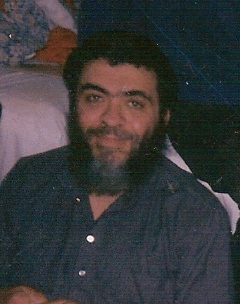
From 1996 onward, the Khadr family was based in Jalalabad, Afghanistan, but moved frequently through the region, traveling, and spending significant time at bin Laden’s Nazim Jihad compound40. Zaynab eventually married Khalid Abdullah, but the union was rapidly dissolved, and the latter finally extradited to Egypt41. For her second wedding in 1999, senior al-Qaida leadership including bin Laden were in attendance42. Khadr remained an emissary for bin Laden, even working to mediate between the al-Qaida commander, the Taliban, and Afghan warlord Hekmatyar Gulbuddin43. As such, he was in the region, managing his orphanages and charities, when the invasion came in 2001. Further, he was added to the Treasury Department’s Specially Designated Global Terrorists List on October 12, 200144, meaning he was an initial target in the nascent War on Terror.
Remaining in Kabul until the city fell in November, Khadr escaped to Logar province with his wife, sending his children ahead first to an orphanage that he established45. Despite the fortuitous avoidance of the bombing, Khadr’s son, Abdulrahman, at age 20, was captured by the Northern Alliance during the fighting that November46. This when he attempted to drive back from Logar to Kabul in an effort to receive funds from his parents47. Khadr eventually connected with and established himself in the South Waziristan agency of the FATA with his fellow militants48. With his 15 year old son Omar restless and tired of being left with the women, Khadr allowed him to train under and dwell with paramilitary commander Abu Laith al-Libi and his men49. In the summer of 2002, when Abu Laith needed a Pashto proficient militant for an excursion to Khost, Omar joined, only to be captured after a violent July firefight in which Omar killed a US medic and was himself wounded and apprehended50. Following the capture of Omar, Khadr moved his wife Elsamnah, daughter Zaynab, and sons Abdullah and Karim, to join him permanently in South Waziristan51.
There they were oft in the presence of the temperamental Egyptian Hamza al-Jawfi, responsible for acquiring weapons for the network52. Khadr’s status, wealth, and Western passport gave him no benefits in South Waziristan, as he hid with Jawfi, his now taxing friend from his time across the border in Khost53. Jawfi had been met with several personal disasters in the time since the 9/11 attacks. These included the death of a newborn child, and the death of his wife in the follow-on pregnancy54. Most assuredly, some of this can be contributed to the harsh conditions of living in the tribal agencies in hiding. Thus, Jawfi had become contentious and his relationships strained. Some was self imposed, as Jawfi once destroyed a collection of Western movies (including Harry Potter films) on DVD that were secretly being viewed by Karim and Jawfi’s own four remaining children55. Despite this, Khadr preferred Jawfi over Abdulhadi56. He preferred both over Abu Laith al-Libi, whom he decidedly blamed for Omar’s capture57.
Khadr may have been promoted to the al-Qaida Majlis ash-Shura, and was primarily responsible for activities in the tribal agencies, which included attacks on forces allied with the Americans, and the coordination of al-Qaida with the locals and the Taliban58. An examination of al-Qaida documents demonstrates the coalescing of foreign elements under an umbrella known as the Majlis al-Shura al-Mujahidin, and it was this council to which Khadr was named59. It is unclear how synonymous, if at all, this council was with the al-Qaida Majlis al-Shura. Nonetheless, Khadr as an Arab, specifically of Egyptian origin, being placed in charge of coordination with local militants maintaining paramilitary responsibilities, indicates that he was probably on the overall council as well. While important, his status was inflated in his son Omar’s leaked Guantanamo assessment file, which asserted that Khadr may have been fourth in line of al-Qaida60.
Khadr’s specific paramilitary assigned area of command was Shagai, in Khyber agency, where his forces could stage cross border raids into Afghanistan61. Thus, coalition, Afghan, and even Pakistani forces were at risk of attack by this developing threat in the FATA. The Canadian tasked his son Abdullah to assist in obtaining weaponry for these efforts, and during six months in 2003, Abdullah visited weapons purveyors and used $20,000 in fundings for rifles, ammunition, RPGs, and mortars62. Abdullah transferred the equipment to an al-Qaida lieutenant in charge of weapons procurement and distribution (Hamza al-Jawfi)63. Abdullah was previously employed with Jawfi in acquiring weapons for the Taliban struggle against the Northern Alliance64. He also obtained an abundance hydrogen peroxide to be used in the manufacturing of mines and other explosive devices, sixty of which were made for use in Afghanistan against the Americans65. With weapons delivered, Ahmed Said al-Khadr was readied for outfitting his men for guerilla warfare. Khadr promoted an approach to the fight that relied on subtle tactics, while Abdulhadi preferred more traditional warfare66. This was a point of contention in that Khadr believed there was no way the al-Qaida forces could survive without resorting to guerilla warfare67. As an example, al-Qaida later eulogized one Mohamed Anwar, known as Abu al-Walid al-Pakistani of Lahore, a veteran of the Lashkar e Taibi outfit, who desired to fight in Kashmir68. However, he later joined with Khadr and participated in several ambushes and rocket fire against coalition forces, the final incident resulting in his death69. It then certainly makes sense that Khadr would be in the Angor Adda village with Khalid Habib and Abdulhadi al-Iraqi, especially given their responsibilities as militant combat commanders70, and Khadr’s role in organizing with local elements71. Perhaps his own displeasure with the Iraqi could be mediated through direct influence with the Egyptians and locals both.
Gunfight in Angor Adda

On October 3, 2003, the Pakistani Army warned of an impending raid, but the unspoken arrangement collapsed. Pakistani forces attacked via helicopter taking the Khadr family unawares. While most of the al-Qaida officials had time to escape or hide, Khadr and his son Karim were returning to the safehouse from morning prayers72. Karim was wounded through the spine, rendering him paralyzed from the waist down and lying in a roadside ditch for hours. Khadr made it to the doorway of the safehouse before being killed73. Al-Qaida internal communications lamented that Khadr did not take the threat posed by the Pakistani military and government seriously74. Among the seven other fighters shot and killed in the safehouse was Hassan Mahsum, emir of the ETIM75. In addition, President Pervez Musharraf claimed an individual named Samarkand was killed as well76. Hamza Rabia in internal communications also references an Abu Samarkand being killed, indicating that he was an established fighter within the group 77. A further eulogy identified him as Abu Samarkand al-Urduni, confirming his nationality as Jordanian78. He was Habis Abdullah bin Falah, who once proselytized in America, and fought against the Soviets in Afghanistan79. After the war he participated in a jihadist movement in Peshawar, before reuniting with al-Qaida and associated militants after the American invasion80. To do so he traveled through China to return to Pakistan81. Despite his and Khadr’s colorful histories, it was the slain ETIM leader Mahsum that garnered the most attention from the incident.

The ETIM was composed of ethnic Uyghurs inhabiting China’s western Xinjiang province, but representing some of the eastern reaches of the Turkic peoples, most closely associated with Central Asians such as Uzbeks. The US designated the ETIM as a terrorist organization in August 2002 at the behest of the Chinese government in order to appease Beijing’s opposition to the potential US invasion of Iraq, and began to suspiciously report that the focus of the ETIM had diverged from China to attacking American interests82. Mahsum was adamant that his ETIM had no affiliation with al-Qaida or the Taliban whatsoever, and received no financial or logistical assistance from either entity83. This was an obviously fraudulent claim made just the year prior. His reception of bin Laden’s pre-9/11 invitation to base his activities out of an al-Qaida camp (Tora Bora84) proved the statement untrustworthy. Captured Uyghur militants at Guantanamo directly contradicted the claim, relaying that Mahsum accepted significant al-Qaida support while based in Afghanistan85. That he would be associated with Khadr in the enterprise of linking the disparate militants into a functional combatant force was no surprise, as just prior to 9/11, Mahsum began convening meetings of what he dubbed the League of Islamic Mujahidin, a conglomerate of various jihadist entities86. In addition, he at one point in South Waziristan shared an office with Abu Laith al-Libi, where they conducted militant activity and recruiting87. Out of necessity, the ETIM, intent on freedom from China, was now enmeshed with al-Qaida and others in a war with the coalition forces, resulting in lethal consequences. In this early autumn gunfight, Mahsum perished alongside of the al-Qaida councilor. The mud constructed buildings were not indicative of the influence within. The eight militants fell with two Pakistani soldiers, resulting in a spectacle in South Waziristan88. One of Mahsum’s bodyguards, Idris al-Turkistani, perished with his commander as well89. The Pakistani military later readily confirmed Mahsum’s demise90.
The raid and resulting carnage was viewed as a mistake, a problem to be blamed on Khadr for his assumed carelessness, and not due to the concentration of al-Qaida central commanders and officials in South Waziristan. Thus, the locale was still viewed as a safehaven and operational base, despite some difficulties in travel and communication. Especially given the issues with the major cities, as had precipitated the fall of KSM and his cohorts. An al-Qaida facilitator and official, Sharif al-Masri, came to Shakai some time between October and November, in order to convene with his peers91. Living in vicinity of Quetta, Baluchistan province, he attempted to manage al-Qaida resistance in Kandahar from across the border92. Complete with at least two aides on a staff, the Egyptian was of obvious importance, especially considering that Kandahar was such a significant location for the Taliban and al-Qaida. His gathering with the other commanders displayed productivity achieved from Shakai.
The Musharraf Conspiracy
Meanwhile, Hamza Rabia from the base in the Shakai valley spent the autumn of 2003 reinvigorating al-Qaida operational prowess, and conducted the planning and instructing of operatives in an assassination attempt against Pakistani President Pervez Musharraf93. This type of operation specifically had been discussed by KSM and Abdulhadi in spring 200294. A Syrian known as Abu Bakr al-Suri provided electronics lessons and explosives training for the participants, consisting of approximately a dozen Pakistani militants95. The Syrian was now assistant to Rabia in his endeavors96.
Described as the first real field operation for Abu Faraj, the December 2003 suicide attack and assassination attempts on Pervez Musharraf in Rawalpindi, were conducted in coordination with local Pakistani militants97. Local operatives were coordinated for the event by Pakistani Amjad Hussain Faruqi98, and trained by Hamza Rabia in Shakai99. Musharraf understood that al-Qaida was willing and able to bring their vengeance against Pakistan100.
With KSM in CIA custody and Abu Faraj receiving direct orders from bin Laden, the Libyan invariably became enmeshed with terroristic operations101. Abu Faraj issued the orders to assassinate President Musharraf, coordinating between the External Operations unit under Hamza Rabia, and his local network of a variety of Pakistani militants and contacts, under Faruqi102. In this capacity, Hamza Rabia assumed External Operations, with the promise of producing attacks and results where KSM had failed after 9/11103. This also provided Abu Faraj a layer of protection, in that he was not privy to all of the details of the plots. The groundwork was to be handled by Hamza Rabia, and in urban Pakistan by Faruqi.
The Punjabi Faruqi commenced his association with Pakistani jihadists fighting in Kashmir as early as 1988, amounting to being a child soldier104. When the jihadists, foreign militants, and extremists in neighboring Afghanistan took Kabul and consolidated power in 1992, Faruqi was but a youth, at 18, yet was marching in alongside of the Paksitani jihadist faction Sipah e Sahaba Pakistan, or SSP105. Known for their anti-Shiite leanings, the SSP was associated with Harakat ul-Ansar (HuA) and Lashkar e Taiba, among the prominent Pakistani jihadist movements106. Although young, Faruqi made a name for himself operating in Afghanistan, and joined with Mullah Mohamed Omar on the latter’s mission to protect cotton shipments through Afghanistan into Pakistan107. As the Taliban grew from Kandahar outward, influencing and conquering, Faruqi remained with the organization108. He and his men directly participated in the taking of Herat for Mullah Mohamed Omar109. His legend continued to grow with these exploits. He departed the SSP, joining his comrades in HuA, before taking time to fight in Kashmir on their behalf110. By September 1996, as the Taliban took cities including Jalalabad and Kabul, Faruqi returned in order to participate in the conquest111. When the Taliban executed former Afghan President Najibullah, Faruqi was supposedly there112.
Faruqi became acquainted with al-Qaida leadership during this time, and assisted in the migration of the militant officials from Jalalabad to Kandahar113. Herein, he probably became closely associated with Abu Faraj al-Libi, as President Musharraf clarified in his biography that the two met while in Afghanistan114.
When the HuA split back into its original entities in October 1997, Faruqi joined the Harakat ul Jihad Islami (HuJI) as a lieutenant to Qari Saifullah Akhtar, and later after bin Laden’s fatwa declarations in February 1998, maintained presence as a representative of the HuJI with al-Qaida115. So great was Faruqi’s legend that he was even reported to have been a hijacker on Indian Airlines Flight 814 in December 1999116. In fact, he was also said to have been a bodyguard to Maulana Masud Azhar, a Harakat ul Mujahidin (HuM) leader freed alongside Ahmed Omar Said Sheikh, as a result of the hijacking117.
Regardless of the veracity of these adventures attributed to Faruqi, he was still a primary force in HuJI after the 9/11 attacks and during the American invasion of Afghanistan. So much so that he was among the leaders of the thousands of Paksitanis associated with HuJI that came to the defense of the Taliban118. Faruqi was specifically said to have recruited approximately 200 of his fellow Punjabis for the cause119. Those numbers were dwindled by the American air campaign against Taliban forces, but Faruqi managed to flee home to Pakistan, rebuilding relationships with al-Qaida along the way.
Faruqi’s flight found him hiding in a madrassa in Karachi before reaching a communications link with Daniel Pearl’s primary abductor Ahmed Omar Said Sheikh, and more importantly KSM and Ramzi Binalshibh120. After the fall of those al-Qaida operatives, Faruqi became another asset under the purview of Abu Faraj, and with his Pakistani networks was able to ensure that operations inside his native borders persisted. Abu Faraj provided funds for the Musharraf attack to Faruqi, who was willing to combat his own government, utilizing his renegade faction of Pakistani militants, now known as Lashkar e Jangvi121. Thus, he provided the operatives, even recruiting several Pakistani air force technicians for the first December attack122. Ayman al-Zawahiri had on September 10 and 28, called upon the Pakistani security apparatus to remove Musharraf from power123. Apparently, some were willing.
December Assassination Attempts
In November, Abu Faraj visited both Hamza Rabia and Abu Bakr al-Suri at their domicile being utilized as a training center and headquarters for operational plotting in Shakai124. In this location, Hamza Rabia conducted research and instruction on explosives, detonators, and other security related issues125. During the visit, the Libyan and Egyptian reportedly discussed uranium supposedly buried near Kandahar126. However, this conference was undoubtedly primarily to prepare for the coming Musharraf assassination attempt. Hamza Rabia’s bombs were potent and readied.
December 14, 2003 saw President Musharraf returning from Karachi to Rawalpindi, intending to be transported from the Air Force base to his residence in the city, referred to as the Army House127. As the President’s vehicle crossed the Jhanda Chichi Bridge128, in the vicinity of Army House, the al-Qaida attempt came to fruition. Explosives planted on the bridge detonated and tore a gap in the road, decimating reinforced concrete, and exposing the abyss underneath129. The President’s movements were offered by the lowly military technicians approached by Faruqi, and these same men were involved in planting the bombs on his behalf130. Astonishingly, up to 250 kg of C4 explosives were planted on the bridge, leaving Pakistani forces incredulous, but forced to admit the participation of military personnel131. Fortunately, Musharraf’s vehicle had just passed the point and was safe from falling, although it was launched forward in the air132. This fortune was accounted for later when it was revealed that a radio signal jammer employed by the President’s security resulted in delaying the detonation signal to the bridge133. Escaping and reaching his home unharmed, Musharraf and his wife even journeyed to a wedding held in Islamabad that same evening134. There were surprisingly no casualties in this event135. While Musharraf believed himself safe after the attempt, and reveled in the unease and despair of the assassins in their failure, Abu Faraj and Faruqi had contingency plans.
By December 25, 2003, Musharraf was still making public appearances, but with increased security, an armored Mercedes limousine, obstructed traffic to prevent approaching assassins, and additional vehicles in his motorcade136. After speaking at a conference that day in Islamabad, the motorcade began the transit back to the Army House, with Musharraf in the third car, behind staffers and security, along with a heavy police escort137. After crossing the bridge from the previous attempt, the motorcade was 200 yards from that blast site and was almost home138. Police had halted traffic from the other side of the road, but a van was able to attempt to penetrate through a gap in the median to reach Musharraf’s vehicle139. This occurred near a gas station along the route, from which the van approached140. A lone policeman stood vigilant against the van, but was killed141. The van actually struck the median instead of making it through the gap, perhaps lessening the potential damage to Musharraf’s vehicle. Nonetheless, when the suicide bomber detonated, there was carnage and destruction brought to the roadway, the blast taking the President’s car from the right rear and leveling damage to it142. However, the armored vehicle and its occupants survived and sped away, before yet another suicide bomber detonated his car, resulting in significant damage143. This too was near a gas station along the road, which is believed to be the point of origin for the second bomber144. In this instance, a police van responded and rammed the second suicide bomber before that vehicle could directly impact the President’s limosine145. Musharraf’s vehicle now driving on rims, with damage to the windshield as the second blast had hit them from the front right quarter, still managed to return safely to Army House146. Three vehicles in the convoy were damaged, but no one from within them killed147. Outside that protection however, fourteen were killed, including police, plus the two suicide bombers148. A third van misfired, never departing its position near the bridge, and was quickly overwhelmed by police149.
Junior Pakistani Army soldiers and six Pakistani Air Force technicians were arrested and charged in connection with the assassination attempts150 – [A]. Initial reports from the time rapidly blamed al-Qaida for the attacks, in concert with Jaish e Mohamed and Lashkar e Jangvi151. The suicide bombers were identified and associated with Jaish e Mohamed specifically, according to the media152. Local reports asserted that Brigade 313, a confederation of the main Pakistani militant groups may have been responsible as well153. Concerning al-Qaida, Abu Faraj was yet to be mentioned at first; instead, the Pakistanis predicted that Abdulhadi al-Iraqi was involved, and may even have been in Rawalpindi to oversee the operation154. Some mixed version of these reports revealed itself in the reality.
In the first attack, a crafty civilian and Jaish e Mohamed associate, Mushtaq Ahmed155, was arrested for coordinating the Air Force technicians, and for physically sending the signal to detonate the bridge156. Later, in November 2004, he escaped prison in Rawalpindi, after obtaining an Air Force uniform from a drowsy guard157. Moving to Peshawar and then Lahore, he blended in with society, but continued to communicate with family and friends, efforts which were monitored by the ISI158. Planning yet another attempt on Musharraf in Islamabad, Mushtaq was finally apprehended in April 2005159.
Concerning the second attack, a Pakistani al-Qaida affiliate known as Salahuddin, in need of financial assistance, coordinated with Abdulhadi, and then Abu Faraj in search of employment, before being assigned to the assassination attempt under Faruqi160. He and his men recruited corporals from the Special Services Group, a type of Pakistani special forces161. One was in the guard detail of the vice chief of staff of the Army, while another was previously assigned to Musharraf’s own detail162. One suicide bomber, a Kashmiri named Mohamed Jamil was but 23, yet had a vigorous jihadist career163. He was affiliated with Jaish e Mohamed, and traveled to Afghanistan to attend militant training camps in January 2001, staying in country through the eventual invasion164. Jamil was wounded, captured by the Northern Alliance in Kabul, and extradited home to Pakistan165. In April 2002, the Pakistanis holding him in Peshawar, saw no reason for continued detention and released him166. His home was raided in Kashmir after the bombing167, and family members arrested168. His motives were seen as unchecked religious fanaticism169. The second bomber, Hazir Sultan, an Afghan national and affiliated with HuJI, was 42, and attended training in South Waziristan170. He was viewed as easily swayed due to lack of positive familial influences171. Most likely both of these men were trained by Hamza Rabia in South Waziristan in preparation for the operations. Especially given that Sultan was living in the agency. It was reported that he was witness to the raid that killed Ahmed Said al-Khadr in October 2003172. The failed third bomber was identified as Amir Sohail, captured during the fracas173. Their cohorts in the plot were a mix of civilian militants and low-ranking Army soldiers [B].
Shifting Focus
By late December the jihadists in Shakai became aware that Hamza Rabia was culpable for the Musharraf operation174. Around the same time, the Tanzanian operative Ahmed Khalfan Ghailani, previously laboring for KSM, was reassigned to Hamza Rabia along with two others by Abdulhadi al-Iraqi in order to assist with external operations175. Abdulhadi moved often between homes in the valley, and utilized the local madrassa and an impromptu guesthouse for foreign fighers without families, in order to conduct meetings176. Directly under his command within the village where Abdulhadi called home were an additional nearly 50 Arabs and others177. In fact, by the end of 2003 the camp included approximately 60 Arabs, upwards of 200 Uzbeks and Central Asians, and numerous Baluchi Pakistanis providing logistics178. Included among them were Abdulhadi’s assistant Osaid al-Yemeni and the logistician Muawiya al-Baluchi179. The latter resided in the guesthouse for unaccompanied fighters, alongside of several others including a Syrian who was most probably, Yasin al-Suri, eventually known for his role in transplanting additional foreign elements and funds into the region through Iran180. The numbers were growing as for example, in December Janat Ghul delivered three further Arabs to the encampment via the Iran route, accompanied by one Qattal al-Uzbeki, who also resided in the unaccompanied house181. Even though many of these individuals were not originally associated with al-Qaida, they were now united in their plight as well as the insurgency. Among the most notable was the Palestinian Khalil al-Deek, the composer of an “Encyclopedia of Jihad” during the 1990s, who was previously detained in Jordan as a component of the failed “Millennium Plot,” aimed at Americans in Amman182. Yet there was a particular subset of the foreign elements that concentrated the most influence.
As Egyptians dominated the politics of the camp, pressuring and clashing with Abdulhadi’s personality and decisions, even more of the Africans were drawn to the concentration of militants in Shakai. As mentioned, Shura member Sheikh Said al-Masri (Mustafa Othman Abu al-Yazid) arrived in November, fleeing the disarray in Karachi caused by the various raids against al-Qaida figures183. Around the same time, Egyptian operative Sharif al-Masri visited, although he was based outside of Quetta, Baluchistan, responsible for operating assignments in Kandahar184. The successful transplant of al-Qaida to South Waziristan was yielding dividends, but the focus in 2003 increasingly centered on Iraq, for the American public, politicians, the media, but even for al-Qaida, and especially for Abdulhadi. Abu Faraj al-Libi meanwhile, attempted to balance the objectives and personnel under his command. Situations in Iraq could provide a possible outlet and solution to his problem of the disputation between the Egyptian seniors and Abdulhadi al-Iraqi. First though, he faced a series of events in 2004 fraught with obstacles for the terror network.
CITATIONS and SUBSTANTIVE NOTES:
- [A] The six Air Force technicians implicated and involved in the first attack and were named as Niaz Mohamed, Adnan Rashid, Khalid Mahmud, Nawazish Ali, Karam Din, and Nasrullah. All were convicted via court martial on October 3, 2005, with Nasrullah sentenced to life and the other five to death185. However, later reporting noted that the six Air Force were recruited by the civilian militant, Mushtaq Ahmed, and that Karam Din also actually received a life sentence186. Karam Din died in prison on September 15, 2023. Niaz Mohamed was executed on December 31, 2014187, Khalid Mahmud on January 10, 2015, and Nawazish Ali and Mushtaq Ahmed both on January 13, 2015. Adnan Rashid was freed from prison during a Taliban assault to liberate inmates in Bannu, Pakistan on April 15, 2012. Separately, an Army soldier, Islam Siddiqui, was alleged to have handled the actual device to detonate the bridge, and as such was rapidly convicted and hanged on August 20, 2005. This despite the assertion from President Musharraf himself that Mushtaq Ahmed was the man responsible for directly detonating the explosives. Thus, the Siddiqui case was suspicious and was subject to allegations of police misconduct and government interference, with his trial not conducted in parallel with the others, and his files not open to the defense attorneys of the others.
- [B] In the second attack, civilians Ghulam Sarwar Bhatti (the recruiter known as Salahuddin), Ikhlas Ahmed (known as Rusi due to his half-Russian heritage), and Rashid Qureshi (known as Tipu) were accused of recruiting and conspiring with lower ranking Army corporals Arshad Mahmud, Zafar Iqbal Dogar, and Mohamed Hanif. Planning was partially conducted in the home of another civilian conspirator, Zubair Ahmed (known as Tawsif), who also oversaw surveillance of President Musharraf’s normal route188. Rana Mohamed Naveed was accused of hosting a weapons cache in his family’s home for the explosives189 . Four of the civilians and Naik (corporal) Arshad Mahmud were sentenced to death on August 26, 2005. Arshad Mahmud was executed on December 20, 2014. Rusi, Salahuddin, Tipu, and Tawsif followed in hanging on December 22, 2014. Despite being sentenced to death by an appellate court, a further appeal resulted in commuting failed suicide bomber Amir Sohail’s (known as Sajad) and Rana Naveed’s sentences to terms of imprisonment. Naveed was released in November 2022. Lance Naif (corporal) Dogar (Musharraf’s former guard) never completed his portion of the attack, and was later utilized as a witness at trial. Less clear was a supposed militant from Khyber agency named Adnan Khan who was also convicted and given a 15 year sentence, with claims that he had attended a training camp. His family claimed he was mentally disabled after detention. Khan was eventually released in February 2017, but promptly went unaccounted for.
- Senate Select Committee on Intelligence, Committee Study of the CIA’s Detention and Interrogation Program, Executive Summary, December 13, 2012 ↩︎
- Senate Select Committee on Intelligence, Committee Study of the CIA’s Detention and Interrogation Program, Executive Summary, December 13, 2012 ↩︎
- Senate Select Committee on Intelligence, Committee Study of the CIA’s Detention and Interrogation Program, Executive Summary, December 13, 2012 ↩︎
- Senate Select Committee on Intelligence, Committee Study of the CIA’s Detention and Interrogation Program, Executive Summary, December 13, 2012 ↩︎
- Guantanamo Assessment File, Mustafa Faraj Mohamed al-Jadid al-Uzaibi (Abu Faraj al-Libi), ISN 10017, https://wikileaks.org/gitmo/prisoner/10017.html ↩︎
- Al Qaeda in the Tribal Areas of Pakistan and Beyond, by Rohan Gunaratna and Anders Nielsen, Studies in Conflict & Terrorism, Volume 31, Issue 9, December 30, 2008 ↩︎
- Guantanamo Assessment File, Mustafa Faraj Mohamed al-Jadid al-Uzaibi (Abu Faraj al-Libi), ISN 10017, https://wikileaks.org/gitmo/prisoner/10017.html ↩︎
- Guantanamo Assessment File, Mustafa Faraj Mohamed al-Jadid al-Uzaibi (Abu Faraj al-Libi), ISN 10017, https://wikileaks.org/gitmo/prisoner/10017.html ↩︎
- Al-Qaeda Operative Sentenced to Life in Prison for Terrorism Offenses Targeting Americans Overseas, Office of Public Affairs, US Department of Justice press release, February 16, 2018, https://www.justice.gov/archives/opa/pr/al-qaeda-operative-sentenced-life-prison-terrorism-offenses-targeting-americans-overseas ↩︎
- Al-Qaeda Operative Sentenced to Life in Prison for Terrorism Offenses Targeting Americans Overseas, Office of Public Affairs, US Department of Justice press release, February 16, 2018, https://www.justice.gov/archives/opa/pr/al-qaeda-operative-sentenced-life-prison-terrorism-offenses-targeting-americans-overseas // Hamza Rabia letter to Spin Ghul, dated unknown ↩︎
- Al Qaeda in the Tribal Areas of Pakistan and Beyond, by Rohan Gunaratna and Anders Nielsen, Studies in Conflict & Terrorism, Volume 31, Issue 9, December 30, 2008 ↩︎
- Senate Select Committee on Intelligence, Committee Study of the CIA’s Detention and Interrogation Program, Executive Summary, December 13, 2012 ↩︎
- Martyrs in a Time of Alienation, by Abu Ubaidah al-Maqdisi (Abdullah al-Adam), (book of 120 deceased militant biographies from the Khorasan theatre), 2008 ↩︎
- Martyrs in a Time of Alienation, by Abu Ubaidah al-Maqdisi (Abdullah al-Adam), (book of 120 deceased militant biographies from the Khorasan theatre), 2008 ↩︎
- Senate Select Committee on Intelligence, Committee Study of the CIA’s Detention and Interrogation Program, Executive Summary, December 13, 2012 ↩︎
- Senate Select Committee on Intelligence, Committee Study of the CIA’s Detention and Interrogation Program, Executive Summary, December 13, 2012 ↩︎
- Anatomy of Terror: From the Death of bin Laden to the Rise of the Islamic State, Ali Soufan, WW Norton & Company, 2017 ↩︎
- Martyrs in a Time of Alienation, by Abu Ubaidah al-Maqdisi (Abdullah al-Adam), (book of 120 deceased militant biographies from the Khorasan theatre), 2008 ↩︎
- Martyrs in a Time of Alienation, by Abu Ubaidah al-Maqdisi (Abdullah al-Adam), (book of 120 deceased militant biographies from the Khorasan theatre), 2008 ↩︎
- Martyrs in a Time of Alienation, by Abu Ubaidah al-Maqdisi (Abdullah al-Adam), (book of 120 deceased militant biographies from the Khorasan theatre), 2008 ↩︎
- Senate Select Committee on Intelligence, Committee Study of the CIA’s Detention and Interrogation Program, Executive Summary, December 13, 2012 ↩︎
- Guantanamo’s Child: The Untold Story of Omar Khadr, Michelle Shephard, John Wiley and Sons Canada, 2008 ↩︎
- Guantanamo’s Child: The Untold Story of Omar Khadr, Michelle Shephard, John Wiley and Sons Canada, 2008 ↩︎
- Afghan battle kills sergeant from Elizabeth, by Beverly M Reid, The Star Ledger, December 22, 2002 ↩︎
- Guantanamo’s Child: The Untold Story of Omar Khadr, Michelle Shephard, John Wiley and Sons Canada, 2008 ↩︎
- Martyrs in a Time of Alienation, by Abu Ubaidah al-Maqdisi (Abdullah al-Adam), (book of 120 deceased militant biographies from the Khorasan theatre), 2008 ↩︎
- Guantanamo’s Child: The Untold Story of Omar Khadr, Michelle Shephard, John Wiley and Sons Canada, 2008 ↩︎
- THREATS AND RESPONSES: DETAINEE; Canadian Teenager Held by U.S. in Afghanistan in Killing of American Medic, by Clifford Krauss, The New York Times, September 14, 2002, https://www.nytimes.com/2002/09/14/world/threats-responses-detainee-canadian-teenager-held-us-afghanistan-killing.html ↩︎
- THREATS AND RESPONSES: DETAINEE; Canadian Teenager Held by U.S. in Afghanistan in Killing of American Medic, by Clifford Krauss, The New York Times, September 14, 2002, https://www.nytimes.com/2002/09/14/world/threats-responses-detainee-canadian-teenager-held-us-afghanistan-killing.html ↩︎
- Memorandum for Detainee Omar Ahmed Khadr 0766, Guantanamo Bay, Cuba, Office of the Chief Prosecutor, Office of Military Commissions, Notification of the Swearing of Charges, https://www.asser.nl/upload/documents/20120820T103005-Khadr_Sworn_Charges.pdf ↩︎
- Memorandum for Detainee Omar Ahmed Khadr 0766, Guantanamo Bay, Cuba, Office of the Chief Prosecutor, Office of Military Commissions, Notification of the Swearing of Charges, https://www.asser.nl/upload/documents/20120820T103005-Khadr_Sworn_Charges.pdf ↩︎
- Zaynab Khadr, outspoken oldest sibling of Omar, detained in Turkey, by Joseph Brean, The National Post, February 2, 2016, https://nationalpost.com/news/canada/zaynab-khadr-outspoken-oldest-sibling-of-omar-detained-in-turkey ↩︎
- How this al Qaeda militant turned into a ‘victim’ — then a millionaire, by Isabel Vincent, The New York Post, July 9, 2017, https://nypost.com/2017/07/09/how-this-al-qaeda-militant-turned-into-a-victim-then-a-millionaire/ ↩︎
- Zaynab Khadr, outspoken oldest sibling of Omar, detained in Turkey, by Joseph Brean, The National Post, February 2, 2016, https://nationalpost.com/news/canada/zaynab-khadr-outspoken-oldest-sibling-of-omar-detained-in-turkey ↩︎
- THREATS AND RESPONSES: DETAINEE; Canadian Teenager Held by U.S. in Afghanistan in Killing of American Medic, by Clifford Krauss, The New York Times, September 14, 2002, https://www.nytimes.com/2002/09/14/world/threats-responses-detainee-canadian-teenager-held-us-afghanistan-killing.html ↩︎
- How this al Qaeda militant turned into a ‘victim’ — then a millionaire, by Isabel Vincent, The New York Post, July 9, 2017, https://nypost.com/2017/07/09/how-this-al-qaeda-militant-turned-into-a-victim-then-a-millionaire/ ↩︎
- THREATS AND RESPONSES: DETAINEE; Canadian Teenager Held by U.S. in Afghanistan in Killing of American Medic, by Clifford Krauss, The New York Times, September 14, 2002, https://www.nytimes.com/2002/09/14/world/threats-responses-detainee-canadian-teenager-held-us-afghanistan-killing.html ↩︎
- THREATS AND RESPONSES: DETAINEE; Canadian Teenager Held by U.S. in Afghanistan in Killing of American Medic, by Clifford Krauss, The New York Times, September 14, 2002, https://www.nytimes.com/2002/09/14/world/threats-responses-detainee-canadian-teenager-held-us-afghanistan-killing.html ↩︎
- How this al Qaeda militant turned into a ‘victim’ — then a millionaire, by Isabel Vincent, The New York Post, July 9, 2017, https://nypost.com/2017/07/09/how-this-al-qaeda-militant-turned-into-a-victim-then-a-millionaire/ ↩︎
- Memorandum for Detainee Omar Ahmed Khadr 0766, Guantanamo Bay, Cuba, Office of the Chief Prosecutor, Office of Military Commissions, Notification of the Swearing of Charges, https://www.asser.nl/upload/documents/20120820T103005-Khadr_Sworn_Charges.pdf // Affadavit of FBI Special Agent Gregory T. Hughes, concerning Abdullah Ahmed Khadr, November 23, 2005, https://web.archive.org/web/20090305181446/http://nefafoundation.org/miscellaneous/FeaturedDocs/U.S._v_Khadr_FBIAff.pdf ↩︎
- Zaynab Khadr, outspoken oldest sibling of Omar, detained in Turkey, by Joseph Brean, The National Post, February 2, 2016, https://nationalpost.com/news/canada/zaynab-khadr-outspoken-oldest-sibling-of-omar-detained-in-turkey ↩︎
- Zaynab Khadr, outspoken oldest sibling of Omar, detained in Turkey, by Joseph Brean, The National Post, February 2, 2016, https://nationalpost.com/news/canada/zaynab-khadr-outspoken-oldest-sibling-of-omar-detained-in-turkey // Affadavit of FBI Special Agent Gregory T. Hughes, concerning Abdullah Ahmed Khadr, November 23, 2005, https://web.archive.org/web/20090305181446/http://nefafoundation.org/miscellaneous/FeaturedDocs/U.S._v_Khadr_FBIAff.pdf ↩︎
- Affadavit of FBI Special Agent Gregory T. Hughes, concerning Abdullah Ahmed Khadr, November 23, 2005, https://web.archive.org/web/20090305181446/http://nefafoundation.org/miscellaneous/FeaturedDocs/U.S._v_Khadr_FBIAff.pdf ↩︎
- Treasury Department Releases List of 39 Additional Specially Designated Global Terrorists, US Department of the Treasury Press Release, October 12, 2001, https://ofac.treasury.gov/recent-actions/20011012 ↩︎
- Guantanamo’s Child: The Untold Story of Omar Khadr, Michelle Shephard, John Wiley and Sons Canada, 2008 ↩︎
- THREATS AND RESPONSES: DETAINEE; Canadian Teenager Held by U.S. in Afghanistan in Killing of American Medic, by Clifford Krauss, The New York Times, September 14, 2002, https://www.nytimes.com/2002/09/14/world/threats-responses-detainee-canadian-teenager-held-us-afghanistan-killing.html ↩︎
- Guantanamo’s Child: The Untold Story of Omar Khadr, Michelle Shephard, John Wiley and Sons Canada, 2008 ↩︎
- Senate Select Committee on Intelligence, Committee Study of the CIA’s Detention and Interrogation Program, Executive Summary, December 13, 2012 ↩︎
- Guantanamo’s Child: The Untold Story of Omar Khadr, Michelle Shephard, John Wiley and Sons Canada, 2008 ↩︎
- Guantanamo’s Child: The Untold Story of Omar Khadr, Michelle Shephard, John Wiley and Sons Canada, 2008 ↩︎
- Guantanamo’s Child: The Untold Story of Omar Khadr, Michelle Shephard, John Wiley and Sons Canada, 2008 ↩︎
- Guantanamo Assessment File, Abdulnasir Mohamed Khantumani, ISN 307, https://wikileaks.org/gitmo/prisoner/307.html ↩︎
- Guantanamo’s Child: The Untold Story of Omar Khadr, Michelle Shephard, John Wiley and Sons Canada, 2008 ↩︎
- Guantanamo’s Child: The Untold Story of Omar Khadr, Michelle Shephard, John Wiley and Sons Canada, 2008 ↩︎
- Guantanamo’s Child: The Untold Story of Omar Khadr, Michelle Shephard, John Wiley and Sons Canada, 2008 ↩︎
- Guantanamo’s Child: The Untold Story of Omar Khadr, Michelle Shephard, John Wiley and Sons Canada, 2008 ↩︎
- Abu al-Laith al-Libi, by Kevin Jackson, CTC Jihadi Bios Project, https://ctc.westpoint.edu/wp-content/uploads/2015/02/CTC_Abu-al-Layth-al-Libi-Jihadi-Bio-February2015-1.pdf ↩︎
- Guantanamo’s Child: The Untold Story of Omar Khadr, Michelle Shephard, John Wiley and Sons Canada, 2008 // Martyrs in a Time of Alienation, by Abu Ubaidah al-Maqdisi (Abdullah al-Adam), (book of 120 deceased militant biographies from the Khorasan theatre), 2008 ↩︎
- Martyrs in a Time of Alienation, by Abu Ubaidah al-Maqdisi (Abdullah al-Adam), (book of 120 deceased militant biographies from the Khorasan theatre), 2008 ↩︎
- Guantanamo Assessment File, Omar Ahmed al-Khadr, ISN 766, https://wikileaks.org/gitmo/prisoner/766.html ↩︎
- Affadavit of FBI Special Agent Gregory T. Hughes, concerning Abdullah Ahmed Khadr, November 23, 2005, https://web.archive.org/web/20090305181446/http://nefafoundation.org/miscellaneous/FeaturedDocs/U.S._v_Khadr_FBIAff.pdf ↩︎
- Affadavit of FBI Special Agent Gregory T. Hughes, concerning Abdullah Ahmed Khadr, November 23, 2005, https://web.archive.org/web/20090305181446/http://nefafoundation.org/miscellaneous/FeaturedDocs/U.S._v_Khadr_FBIAff.pdf ↩︎
- Affadavit of FBI Special Agent Gregory T. Hughes, concerning Abdullah Ahmed Khadr, November 23, 2005, https://web.archive.org/web/20090305181446/http://nefafoundation.org/miscellaneous/FeaturedDocs/U.S._v_Khadr_FBIAff.pdf ↩︎
- Affadavit of FBI Special Agent Gregory T. Hughes, concerning Abdullah Ahmed Khadr, November 23, 2005, https://web.archive.org/web/20090305181446/http://nefafoundation.org/miscellaneous/FeaturedDocs/U.S._v_Khadr_FBIAff.pdf ↩︎
- Affadavit of FBI Special Agent Gregory T. Hughes, concerning Abdullah Ahmed Khadr, November 23, 2005, https://web.archive.org/web/20090305181446/http://nefafoundation.org/miscellaneous/FeaturedDocs/U.S._v_Khadr_FBIAff.pdf ↩︎
- Guantanamo’s Child: The Untold Story of Omar Khadr, Michelle Shephard, John Wiley and Sons Canada, 2008 ↩︎
- Guantanamo’s Child: The Untold Story of Omar Khadr, Michelle Shephard, John Wiley and Sons Canada, 2008 ↩︎
- Martyrs in a Time of Alienation, by Abu Ubaidah al-Maqdisi (Abdullah al-Adam), (book of 120 deceased militant biographies from the Khorasan theatre), 2008 ↩︎
- Martyrs in a Time of Alienation, by Abu Ubaidah al-Maqdisi (Abdullah al-Adam), (book of 120 deceased militant biographies from the Khorasan theatre), 2008 ↩︎
- Senate Select Committee on Intelligence, Committee Study of the CIA’s Detention and Interrogation Program, Executive Summary, December 13, 2012 ↩︎
- Guantanamo’s Child: The Untold Story of Omar Khadr, Michelle Shephard, John Wiley and Sons Canada, 2008 ↩︎
- Guantanamo’s Child: The Untold Story of Omar Khadr, Michelle Shephard, John Wiley and Sons Canada, 2008 ↩︎
- Guantanamo’s Child: The Untold Story of Omar Khadr, Michelle Shephard, John Wiley and Sons Canada, 2008 ↩︎
- Al-Qaida Internal Communique entitled “Lessons Learned Following The Fall of the Islamic Emirate,” https://www.dni.gov/files/documents/ubl/english/Lessons%20Learned%20Following%20the%20Fall%20of%20the%20Islamic%20Emirate.pdf ↩︎
- Pakistan kills Uighur independence fighter, Al-Jazeera, December 23, 2002, https://www.aljazeera.com/news/2003/12/23/pakistan-kills-uighur-independence-fighter ↩︎
- In the Line of Fire: A Memoir, by Pervez Musharraf, Free Press, 2006 ↩︎
- Hamza Rabia letter to Spin Ghul, dated unknown ↩︎
- Martyrs in a Time of Alienation, by Abu Ubaidah al-Maqdisi (Abdullah al-Adam), (book of 120 deceased militant biographies from the Khorasan theatre), 2008 ↩︎
- Martyrs in a Time of Alienation, by Abu Ubaidah al-Maqdisi (Abdullah al-Adam), (book of 120 deceased militant biographies from the Khorasan theatre), 2008 ↩︎
- Martyrs in a Time of Alienation, by Abu Ubaidah al-Maqdisi (Abdullah al-Adam), (book of 120 deceased militant biographies from the Khorasan theatre), 2008 ↩︎
- Martyrs in a Time of Alienation, by Abu Ubaidah al-Maqdisi (Abdullah al-Adam), (book of 120 deceased militant biographies from the Khorasan theatre), 2008 ↩︎
- Guantanamo Assessment File, Yusef Abbas, ISN 275, https://wikileaks.org/gitmo/prisoner/275.html ↩︎
- Uyghur Separatist Denies Links to Taliban, Al-Qaeda, Radio Free Asia, January 27, 2002, https://www.rfa.org/english/news/politics/85871-20020127.html ↩︎
- Guantanamo Assessment File, Zanunjan Dawat, ISN 219, https://wikileaks.org/gitmo/prisoner/219.html ↩︎
- Guantanamo Assessment File, Abdulhalil Mamut, ISN 278, https://wikileaks.org/gitmo/prisoner/278.html ↩︎
- Guantanamo Assessment File, Zanunjan Dawat, ISN 219, https://wikileaks.org/gitmo/prisoner/219.html ↩︎
- Abu al-Laith al-Libi, by Kevin Jackson, CTC Jihadi Bios Project, https://ctc.westpoint.edu/wp-content/uploads/2015/02/CTC_Abu-al-Layth-al-Libi-Jihadi-Bio-February2015-1.pdf ↩︎
- Pakistan kills Uighur independence fighter, Al-Jazeera, December 23, 2002, https://www.aljazeera.com/news/2003/12/23/pakistan-kills-uighur-independence-fighter ↩︎
- Martyrs in a Time of Alienation, by Abu Ubaidah al-Maqdisi (Abdullah al-Adam), (book of 120 deceased militant biographies from the Khorasan theatre), 2008 ↩︎
- Pakistan kills Uighur independence fighter, Al-Jazeera, December 23, 2002, https://www.aljazeera.com/news/2003/12/23/pakistan-kills-uighur-independence-fighter ↩︎
- Senate Select Committee on Intelligence, Committee Study of the CIA’s Detention and Interrogation Program, Executive Summary, December 13, 2012 ↩︎
- Senate Select Committee on Intelligence, Committee Study of the CIA’s Detention and Interrogation Program, Executive Summary, December 13, 2012 ↩︎
- Senate Select Committee on Intelligence, Committee Study of the CIA’s Detention and Interrogation Program, Executive Summary, December 13, 2012 ↩︎
- Abdulhadi al-Iraqi Charge Sheet, February 3, 2014, https://www.mc.mil/Portals/0/pdfs/alIraqi/Hadi%20Al%20Iraqi%20Referred%20Charge%20Sheet.pdf ↩︎
- Senate Select Committee on Intelligence, Committee Study of the CIA’s Detention and Interrogation Program, Executive Summary, December 13, 2012 ↩︎
- Guantanamo Assessment File, Mustafa Faraj Mohamed al-Jadid al-Uzaibi (Abu Faraj al-Libi), ISN 10017, https://wikileaks.org/gitmo/prisoner/10017.html ↩︎
- After They Failed To Assassinate Musharraf, by Amir Mir, The Herald, January 2004 Issue, http://www.herald.dawn.com/news/1153914/after-they-failed-to-assassinate-musharraf // Guantanamo Assessment File, Mustafa Faraj Mohamed al-Jadid al-Uzaibi (Abu Faraj al-Libi), ISN 10017, https://wikileaks.org/gitmo/prisoner/10017.html ↩︎
- Al Qaeda in the Tribal Areas of Pakistan and Beyond, by Rohan Gunaratna and Anders Nielsen, Studies in Conflict & Terrorism, Volume 31, Issue 9, December 30, 2008 ↩︎
- Senate Select Committee on Intelligence, Committee Study of the CIA’s Detention and Interrogation Program, Executive Summary, December 13, 2012 ↩︎
- In the Line of Fire: A Memoir, by Pervez Musharraf, Free Press, 2006 ↩︎
- Al Qaeda in the Tribal Areas of Pakistan and Beyond, by Rohan Gunaratna and Anders Nielsen, Studies in Conflict & Terrorism, Volume 31, Issue 9, December 30, 2008 ↩︎
- Al Qaeda in the Tribal Areas of Pakistan and Beyond, by Rohan Gunaratna and Anders Nielsen, Studies in Conflict & Terrorism, Volume 31, Issue 9, December 30, 2008 ↩︎
- Guantanamo Assessment File, Mustafa Faraj Mohamed al-Jadid al-Uzaibi (Abu Faraj al-Libi), ISN 10017, https://wikileaks.org/gitmo/prisoner/10017.html ↩︎
- Pakistan: Security Forces Kill Senior Al-Qaeda Suspect, Radio Free Europe Radio Liberty, September 27, 2004, https://www.rferl.org/a/1055033.html ↩︎
- The curious case of Amjad Farooqi, by B Raman, Rediff.com, September 30, 2004, https://www.rediff.com/news/2004/sep/30raman.htm ↩︎
- The curious case of Amjad Farooqi, by B Raman, Rediff.com, September 30, 2004, https://www.rediff.com/news/2004/sep/30raman.htm ↩︎
- The curious case of Amjad Farooqi, by B Raman, Rediff.com, September 30, 2004, https://www.rediff.com/news/2004/sep/30raman.htm ↩︎
- The curious case of Amjad Farooqi, by B Raman, Rediff.com, September 30, 2004, https://www.rediff.com/news/2004/sep/30raman.htm ↩︎
- The curious case of Amjad Farooqi, by B Raman, Rediff.com, September 30, 2004, https://www.rediff.com/news/2004/sep/30raman.htm ↩︎
- The curious case of Amjad Farooqi, by B Raman, Rediff.com, September 30, 2004, https://www.rediff.com/news/2004/sep/30raman.htm ↩︎
- The curious case of Amjad Farooqi, by B Raman, Rediff.com, September 30, 2004, https://www.rediff.com/news/2004/sep/30raman.htm ↩︎
- The curious case of Amjad Farooqi, by B Raman, Rediff.com, September 30, 2004, https://www.rediff.com/news/2004/sep/30raman.htm ↩︎
- The curious case of Amjad Farooqi, by B Raman, Rediff.com, September 30, 2004, https://www.rediff.com/news/2004/sep/30raman.htm ↩︎
- In the Line of Fire: A Memoir, by Pervez Musharraf, Free Press, 2006 ↩︎
- The curious case of Amjad Farooqi, by B Raman, Rediff.com, September 30, 2004, https://www.rediff.com/news/2004/sep/30raman.htm ↩︎
- The curious case of Amjad Farooqi, by B Raman, Rediff.com, September 30, 2004, https://www.rediff.com/news/2004/sep/30raman.htm ↩︎
- The curious case of Amjad Farooqi, by B Raman, Rediff.com, September 30, 2004, https://www.rediff.com/news/2004/sep/30raman.htm // Pakistan: Security Forces Kill Senior Al-Qaeda Suspect, Radio Free Europe Radio Liberty, September 27, 2004, https://www.rferl.org/a/1055033.html ↩︎
- The curious case of Amjad Farooqi, by B Raman, Rediff.com, September 30, 2004, https://www.rediff.com/news/2004/sep/30raman.htm ↩︎
- Pakistan: Security Forces Kill Senior Al-Qaeda Suspect, Radio Free Europe Radio Liberty, September 27, 2004, https://www.rferl.org/a/1055033.html ↩︎
- The curious case of Amjad Farooqi, by B Raman, Rediff.com, September 30, 2004, https://www.rediff.com/news/2004/sep/30raman.htm ↩︎
- Pakistani Forces Kill Top Fugitive, by Kamran Khan, The Washington Post, September 27, 2004, https://www.washingtonpost.com/archive/politics/2004/09/27/pakistani-forces-kill-top-fugitive/9fcae1b3-2570-469f-a819-88594f7ec6e7/ ↩︎
- Pakistani Forces Kill Top Fugitive, by Kamran Khan, The Washington Post, September 27, 2004, https://www.washingtonpost.com/archive/politics/2004/09/27/pakistani-forces-kill-top-fugitive/9fcae1b3-2570-469f-a819-88594f7ec6e7/ ↩︎
- After They Failed To Assassinate Musharraf, by Amir Mir, The Herald (Dawn), December 14, 2017, https://herald.dawn.com/news/1153914/after-they-failed-to-assassinate-musharraf ↩︎
- Guantanamo Assessment File, Mustafa Faraj Mohamed al-Jadid al-Uzaibi (Abu Faraj al-Libi), ISN 10017, https://wikileaks.org/gitmo/prisoner/10017.html ↩︎
- Guantanamo Assessment File, Mustafa Faraj Mohamed al-Jadid al-Uzaibi (Abu Faraj al-Libi), ISN 10017, https://wikileaks.org/gitmo/prisoner/10017.html ↩︎
- Guantanamo Assessment File, Mustafa Faraj Mohamed al-Jadid al-Uzaibi (Abu Faraj al-Libi), ISN 10017, https://wikileaks.org/gitmo/prisoner/10017.html ↩︎
- In the Line of Fire: A Memoir, by Pervez Musharraf, Free Press, 2006 ↩︎
- After They Failed To Assassinate Musharraf, by Amir Mir, The Herald (Dawn), December 14, 2017, https://herald.dawn.com/news/1153914/after-they-failed-to-assassinate-musharraf ↩︎
- In the Line of Fire: A Memoir, by Pervez Musharraf, Free Press, 2006 ↩︎
- In the Line of Fire: A Memoir, by Pervez Musharraf, Free Press, 2006 // Pakistani Forces Kill Top Fugitive, by Kamran Khan, The Washington Post, September 27, 2004, https://www.washingtonpost.com/archive/politics/2004/09/27/pakistani-forces-kill-top-fugitive/9fcae1b3-2570-469f-a819-88594f7ec6e7/ // Fugitive Named In 2 Pakistan Plots, by Munir Ahmad, The Associated Press via CBS News, May 26, 2004, https://www.cbsnews.com/news/fugitive-named-in-2-pakistan-plots/ ↩︎
- After They Failed To Assassinate Musharraf, by Amir Mir, The Herald (Dawn), December 14, 2017, https://herald.dawn.com/news/1153914/after-they-failed-to-assassinate-musharraf // Two Soldiers Convicted in Musharraf Assassination Attempts, Voice of America, December 13, 2004, https://www.voanews.com/a/a-13-2004-12-24-voa35-67335172/382216.html ↩︎
- In the Line of Fire: A Memoir, by Pervez Musharraf, Free Press, 2006 ↩︎
- After They Failed To Assassinate Musharraf, by Amir Mir, The Herald (Dawn), December 14, 2017, https://herald.dawn.com/news/1153914/after-they-failed-to-assassinate-musharraf ↩︎
- In the Line of Fire: A Memoir, by Pervez Musharraf, Free Press, 2006 ↩︎
- Fugitive Named In 2 Pakistan Plots, by Munir Ahmad, The Associated Press via CBS News, May 26, 2004, https://www.cbsnews.com/news/fugitive-named-in-2-pakistan-plots/ ↩︎
- In the Line of Fire: A Memoir, by Pervez Musharraf, Free Press, 2006 // After They Failed To Assassinate Musharraf, by Amir Mir, The Herald (Dawn), December 14, 2017, https://herald.dawn.com/news/1153914/after-they-failed-to-assassinate-musharraf ↩︎
- In the Line of Fire: A Memoir, by Pervez Musharraf, Free Press, 2006 ↩︎
- PAKISTANI LEADER ESCAPES ATTEMPT AT ASSASSINATION, by Salman Masood, The New York Times, December 26, 2003, https://www.nytimes.com/2003/12/26/world/pakistani-leader-escapes-attempt-at-assassination.html ↩︎
- In the Line of Fire: A Memoir, by Pervez Musharraf, Free Press, 2006 ↩︎
- PAKISTANI LEADER ESCAPES ATTEMPT AT ASSASSINATION, by Salman Masood, The New York Times, December 26, 2003, https://www.nytimes.com/2003/12/26/world/pakistani-leader-escapes-attempt-at-assassination.html ↩︎
- In the Line of Fire: A Memoir, by Pervez Musharraf, Free Press, 2006 ↩︎
- In the Line of Fire: A Memoir, by Pervez Musharraf, Free Press, 2006 ↩︎
- In the Line of Fire: A Memoir, by Pervez Musharraf, Free Press, 2006 ↩︎
- PAKISTANI LEADER ESCAPES ATTEMPT AT ASSASSINATION, by Salman Masood, The New York Times, December 26, 2003, https://www.nytimes.com/2003/12/26/world/pakistani-leader-escapes-attempt-at-assassination.html ↩︎
- In the Line of Fire: A Memoir, by Pervez Musharraf, Free Press, 2006 ↩︎
- In the Line of Fire: A Memoir, by Pervez Musharraf, Free Press, 2006 ↩︎
- PAKISTANI LEADER ESCAPES ATTEMPT AT ASSASSINATION, by Salman Masood, The New York Times, December 26, 2003, https://www.nytimes.com/2003/12/26/world/pakistani-leader-escapes-attempt-at-assassination.html ↩︎
- In the Line of Fire: A Memoir, by Pervez Musharraf, Free Press, 2006 // Pakistani Forces Kill Top Fugitive, by Kamran Khan, The Washington Post, September 27, 2004, https://www.washingtonpost.com/archive/politics/2004/09/27/pakistani-forces-kill-top-fugitive/9fcae1b3-2570-469f-a819-88594f7ec6e7/ ↩︎
- Who Attacked Musharraf, by Zafar Abbas, The Herald (Dawn), June 2005 issue, https://herald.dawn.com/news/1153956 ↩︎
- Two Soldiers Convicted in Musharraf Assassination Attempts, Voice of America, December 13, 2004, https://www.voanews.com/a/a-13-2004-12-24-voa35-67335172/382216.html ↩︎
- PAKISTANI LEADER ESCAPES ATTEMPT AT ASSASSINATION, by Salman Masood, The New York Times, December 26, 2003, https://www.nytimes.com/2003/12/26/world/pakistani-leader-escapes-attempt-at-assassination.html ↩︎
- Sources: Banned militant group tried to assassinate Musharraf, NBC News via The Associated Press, December 31, 2003, https://www.nbcnews.com/id/wbna3849428 ↩︎
- After They Failed To Assassinate Musharraf, by Amir Mir, The Herald (Dawn), December 14, 2017, https://herald.dawn.com/news/1153914/after-they-failed-to-assassinate-musharraf ↩︎
- After They Failed To Assassinate Musharraf, by Amir Mir, The Herald (Dawn), December 14, 2017, https://herald.dawn.com/news/1153914/after-they-failed-to-assassinate-musharraf ↩︎
- Supreme Court Summons AG In Musharraf Attack Case, The Business Recorder, March 23, 2006, https://www.brecorder.com/news/3261465 ↩︎
- In the Line of Fire: A Memoir, by Pervez Musharraf, Free Press, 2006 ↩︎
- In the Line of Fire: A Memoir, by Pervez Musharraf, Free Press, 2006 ↩︎
- In the Line of Fire: A Memoir, by Pervez Musharraf, Free Press, 2006 ↩︎
- In the Line of Fire: A Memoir, by Pervez Musharraf, Free Press, 2006 ↩︎
- In the Line of Fire: A Memoir, by Pervez Musharraf, Free Press, 2006 ↩︎
- In the Line of Fire: A Memoir, by Pervez Musharraf, Free Press, 2006 ↩︎
- In the Line of Fire: A Memoir, by Pervez Musharraf, Free Press, 2006 ↩︎
- After They Failed To Assassinate Musharraf, by Amir Mir, The Herald (Dawn), December 14, 2017, https://herald.dawn.com/news/1153914/after-they-failed-to-assassinate-musharraf ↩︎
- After They Failed To Assassinate Musharraf, by Amir Mir, The Herald (Dawn), December 14, 2017, https://herald.dawn.com/news/1153914/after-they-failed-to-assassinate-musharraf ↩︎
- After They Failed To Assassinate Musharraf, by Amir Mir, The Herald (Dawn), December 14, 2017, https://herald.dawn.com/news/1153914/after-they-failed-to-assassinate-musharraf ↩︎
- After They Failed To Assassinate Musharraf, by Amir Mir, The Herald (Dawn), December 14, 2017, https://herald.dawn.com/news/1153914/after-they-failed-to-assassinate-musharraf ↩︎
- Sources: Banned militant group tried to assassinate Musharraf, NBC News via The Associated Press, December 31, 2003, https://www.nbcnews.com/id/wbna3849428 ↩︎
- After They Failed To Assassinate Musharraf, by Amir Mir, The Herald (Dawn), December 14, 2017, https://herald.dawn.com/news/1153914/after-they-failed-to-assassinate-musharraf ↩︎
- In the Line of Fire: A Memoir, by Pervez Musharraf, Free Press, 2006 ↩︎
- After They Failed To Assassinate Musharraf, by Amir Mir, The Herald (Dawn), December 14, 2017, https://herald.dawn.com/news/1153914/after-they-failed-to-assassinate-musharraf ↩︎
- In the Line of Fire: A Memoir, by Pervez Musharraf, Free Press, 2006 ↩︎
- After They Failed To Assassinate Musharraf, by Amir Mir, The Herald (Dawn), December 14, 2017, https://herald.dawn.com/news/1153914/after-they-failed-to-assassinate-musharraf ↩︎
- Who Attacked Musharraf, by Zafar Abbas, The Herald (Dawn), June 2005 issue, https://herald.dawn.com/news/1153956 ↩︎
- Senate Select Committee on Intelligence, Committee Study of the CIA’s Detention and Interrogation Program, Executive Summary, December 13, 2012 ↩︎
- Abdulhadi al-Iraqi Charge Sheet, February 3, 2014, https://www.mc.mil/Portals/0/pdfs/alIraqi/Hadi%20Al%20Iraqi%20Referred%20Charge%20Sheet.pdf ↩︎
- Senate Select Committee on Intelligence, Committee Study of the CIA’s Detention and Interrogation Program, Executive Summary, December 13, 2012 ↩︎
- Senate Select Committee on Intelligence, Committee Study of the CIA’s Detention and Interrogation Program, Executive Summary, December 13, 2012 ↩︎
- Senate Select Committee on Intelligence, Committee Study of the CIA’s Detention and Interrogation Program, Executive Summary, December 13, 2012 ↩︎
- Senate Select Committee on Intelligence, Committee Study of the CIA’s Detention and Interrogation Program, Executive Summary, December 13, 2012 ↩︎
- Senate Select Committee on Intelligence, Committee Study of the CIA’s Detention and Interrogation Program, Executive Summary, December 13, 2012 // Treasury Targets Key Al-Qa’ida Funding and Support Network Using Iran as a Critical Transit Point, US Department of the Treasury Press Release, July 28, 2011, https://home.treasury.gov/news/press-releases/tg1261 ↩︎
- Senate Select Committee on Intelligence, Committee Study of the CIA’s Detention and Interrogation Program, Executive Summary, December 13, 2012 ↩︎
- Senate Select Committee on Intelligence, Committee Study of the CIA’s Detention and Interrogation Program, Executive Summary, December 13, 2012 // 9/11 Commission Report, Chapter 6: From Threat to Threat, 2004 ↩︎
- Senate Select Committee on Intelligence, Committee Study of the CIA’s Detention and Interrogation Program, Executive Summary, December 13, 2012 ↩︎
- Senate Select Committee on Intelligence, Committee Study of the CIA’s Detention and Interrogation Program, Executive Summary, December 13, 2012 ↩︎
- Another Convict in Musharraf Attack Case Executed, by Waseem Ahmad Shah, December 31, 2014, Dawn, https://www.dawn.com/news/1154234 ↩︎
- Supreme Court Summons AG In Musharraf Attack Case, The Business Recorder, March 23, 2006, https://www.brecorder.com/news/3261465 ↩︎
- Another Convict in Musharraf Attack Case Executed, by Waseem Ahmad Shah, December 31, 2014, Dawn, https://www.dawn.com/news/1154234 ↩︎
- Who Attacked Musharraf, by Zafar Abbas, The Herald (Dawn), June 2005 issue, https://herald.dawn.com/news/1153956 ↩︎
- Who Attacked Musharraf, by Zafar Abbas, The Herald (Dawn), June 2005 issue, https://herald.dawn.com/news/1153956 ↩︎
© Copyright 2025 Nolan R Beasley
 Chronicles in Zealotry