
Segment VI – A Subdued Silence (Chapter 20 – The February Abscondence)
For the entirety of the Series, please see – https://chroniclesinzealotry.com/fugitives-of-the-peninsula/
In Saudi Arabia, the violent and abhorrent movement of al-Qaida in Saudi Arabia faced devastating losses through 2005 and into 2006. From the Battle of al-Ras to the failed venture against Abqaiq, the local insurgency in the Kingdom was defeated. Seemingly, the movement faced dire chances through the entire region as well. However, just as February 2006 seemed to be the end of al-Qaida ambitions in the Peninsula, it was also the month that in which an influx of al-Qaida veterans escaped from a Yemeni prison, giving lifeblood to the Arabian terror franchise. This Segment examines the ostensibly silence during the time in which al-Qaida’s Saudi operatives struggled, the Yemeni militants were rejuvenated, all as they evolved into al-Qaida in the Arabian Peninsula (AQAP). This specific chapter explores the liberated Yemeni prisoners, their escape, and further discusses the Saudi government’s situation with those remaining on their wanted lists.
Tunnel to Freedom
On Friday February 3, 2006, just a few weeks prior to the Abqaiq attack, the next generation of al-Qaida in the Arabian Peninsula leaders emerged from a 130 meter long tunnel into a mosque in time for prayers [1,2,3]. Mohamed Said Ali Hassan al-Umdah escaped from prison via the tunnel along with several other al-Qaida militants [4]. Umdah and several of his compatriots had been a part of the Nashiri nexus in the Peninsula several years before and were involved in the al-Qaida leader’s bombing plots against seafaring vessels [5]. Umdah was one of several of the escapees that US intelligence were aware of and thus very worried about [2]. He was not only a former subordinate of Nashiri’s but had been a bodyguard to bin Laden as well [6,7]. In the aftermath of the US invasion into Afghanistan, US forces discovered a video tape of Umdah in the compound where Mohamed Atef (Abu Hafs al-Masri, the military chief of Al-Qaida) had been killed [8]. In the video, Umdah vowed to perpetrate a suicide attack against the organization’s enemies [7,8]. The US was relieved when Umdah and his associates within the Nashiri nexus were corralled, arrested, tried, and sentenced [9,10]. In fact, Umdah had been held in Saudi Arabia prior to being extradited to Yemen [6]. The threat he and his associates posed had been successfully neutralized. Yet on that February day, Umdah and his fellow al-Qaida associates, with the help from the “negligence” of Yemeni Political Security Organization members, crawled to freedom from the Sanaa Political Prison through their carefully constructed tunnel [1,11]. Umdah, four years after his martyrdom testament was discovered, finally had the opportunity to carry through with his supposed destiny, as he and his fellow escapees would rebuild al-Qaida’s seemingly vanquished branch in the Peninsula.

The tunnel opened into the women’s restroom of the nearby mosque [1]. While digging was actually completed via primitive means [1], later reports speculated that the prisoners had also utilized drills and other power tools [12]. The mosque’s twenty-three newest worshippers eased their way out of the darkness and into the Yemeni capital of Sanaa, where they melted away into the city crowds. Strangely, the Imam of the mosque had heard the noises associated with the construction of the tunnel and informed prison staff [13]. He was dismissed right up until the moment he reported the opening to the floor of his women’s restroom [13]. Meanwhile, the prisoners would in the months to come regroup the militants of both Yemen and Saudi Arabia. From the ruins of AQSA would be born Al-Qaida in the Arabian Peninsula (AQAP) as we know it today. Although the militants had called themselves AQAP from before the reign of Muqrin (in fact they had used the term from November 2003 onward in press releases [14]), it is here that the group becomes a true representation of jihadists from throughout the Peninsula, and not just those based in the Saudi Kingdom. As such, the men who would lead the transition would be from among the twenty three who emerged from that tunnel in February. The tunnel led from a Yemeni Political Security Prison ran by the country’s intelligence service [1]. It is speculated that the PSO played at least some role in allowing the prisoners to escape and can be at least superficially verified in the arrest of twelve officials associated with the event [11,12]. Among the escaped prisoners were some of Yemen’s most notorious terror suspects. Many were accused of having links or participating with some of the most memorable attacks within the country. To the observant reader of this Series, several of the following names will be familiar from Segment I. Several had played a role in Al-Qaida, and with their attacks in years past had earned their prison sentences thusly. The twenty three men will be labeled as List G, as Lists E and F will be occupied by future Saudi most wanted lists released in 2009 and 2011 respectively. The reasoning for E and F to contain future lists is due to the fact that these are official Saudi wanted lists, and therefore take precedence in the order. The list of the twenty-three escapees is a supplementary roster of Al-Qaida and allied characters who were to help rebuild their Arabian franchise. This was not an official wanted issuance, but must be considered a vital list to the understanding of the structure of AQAP. This prison escape was instrumental in the revitalization of the Arabian franchise of al-Qaida since its eventual leaders came directly from the event. The resulting silence in militant activity following the Saudi war against Lists A-C would be subdued by the actions of Osama bin Laden’s former personal secretary and other known Al-Qaida personalities who walked out of that mosque as free men that day [14,15].
As for previous lists, Lists B and C only contained one name each remaining: Talib Saud al-Talib (B-16) and Walid Mutlaq al-Radadi (C-12). List D still had several members who were all based outside of Saudi Arabia. List G consists entirely of Yemenis. List G contains the following escapees:
- 1) Jamal Mohamed Ahmed Ali al-Badawi (COLE conspirator, wanted by FBI),
- 2) Nasir Abdulkarim Abdullah al-Wuhaishi (bin Laden personal secretary),
- 3) Qasim Mohamed Mahdi al-Rimi (al-Faruq instructor),
- 4) Jabir Ahmed Saleh al-Bannah (associate of the Lackawanna Six, wanted by FBI),
- 5) Fawaz Yahya Hassan al-Rubayi (al-Qaida operative, wanted by FBI),
- 6) Mohamed Said Ali Hassan al-Umdah (bin Laden bodyguard, wanted by FBI),
- 7) Abdullah Ahmed Saleh al-Rimi (al-Qaida facilitator, wanted by FBI),
- 8) Hamza Salim Amir al-Quayti (al-Qaida facilitator and Guesthouse administrator),
- 9) Mohamed Ahmed Abdullah al-Dailami,
- 10) Ibrahim Mohamed Abduljabar al-Huwaidi,
- 11) Omar Said Hassan al-Jarallah (bin Laden bodyguard),
- 12) Fawzi Mohamed Abdulqawi al-Wajeh,
- 13) Hizam Saleh al-Mujali,
- 14) Arif Saleh al-Mujali,
- 15) Shafiq Ahmed Omar Zayed,
- 16) Khalid Mohamed Abdullah al-Batati,
- 17) Mansur Nasir Awad al-Baihani,
- 18) Zakariya Nasir Awad al-Baihani,
- 19) Zakariya Ubadi Qasim al-Yafai,
- 20) Yasir Nasir Ali al-Homiqani,
- 21) Ibrahim Mohamed Abdu al-Maqri,
- 22) Abdulrahman Ahmed Hassan al-Basurah, and
- 23) Abdullah Yahya Saleh al-Wadai [4,14,16].
In the initial release of names by the Yemenis, the name of Nasir al-Wuhaishi was omitted [4], yet appears in all subsequent releases and issuances regarding the escapees [14,16].
Crimes of the Escapees

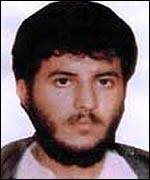
These men were in jail for a variety of reasons. The most prominent names included Rubayi, who had been sought after by the FBI in 2002 for his role in leading a cell of Yemenis allegedly hell-bent on destruction [17]. Rubayi had sworn bayat to bin Laden while in Afghanistan and had thus been a trusted operative in Yemen [18]. Rubayi was charged with his roles in several crimes including the Limburg oil tanker attack, the Hunt Oil Company helicopter attack, the plot to assassinate US Ambassador Edmund Hull, plots on various Embassies, and the murder of a Yemeni security forces member [10,19]. He had been sentenced to death for these convictions [10]. Badawi of course was in prison for his advanced role in the attack on the USS COLE [20]. Umdah, Wajeh, Qasim al-Rimi, Huwaidi, Jarallah, Dailami and Arif al-Mujali had also been charged in conjunction with Rubayi in the Limburg and Hunt Oil attacks, plots on Embassies, and the plot against Ambassador Hull [9,10,19]. Hizam al-Mujali was charged similarly but was also Rubayi’s accomplice when the two resisted arrest and killed the Yemeni security force member Hamid Khasruf in 2003, prior to their eventual detention [19,21]. Thus, he had also been sentenced to death [19,21]. Mujali was sentenced to death first when he and his brother Arif, as well as Qasim al-Rimi, Wajeh, Umdah, Huwaidi, Jarallah, Dailami and Rubayi were sentenced as part of a fifteen man group in August 2004 [9,12,22]. The same group would see their sentences increased by an appeals court in February of the following year [23]. It was at this point that Rubayi learned that he was to also die for the death of Hamid Khasruf [21,23]. The remainder of the fifteen men received sentences of up to 15 years [23]. The specifically mentioned nine escapees, sentenced in this trial, were members of Nashiri’s group in Yemen, and had been rounded up following the assassination of Harithi, and Nashiri’s arrest [22,23,5]. Furthermore, from these nine escapees, at least Rubayi, Wajeh, Jarrallah and Umdah had been bodyguards of Osama bin Laden, while Qasim al-Rimi was an instructor at al-Faruq training camp, having probably also been a bodyguard at some point [6,18,24,25]. Also sentenced in the overall fifteen man group was Fawzi Yahya Qasim al-Hababi, another of Nashiri’s men and bin Laden bodyguard [23,24]. He had been known as Abu al-Shaheed during his time with Nashiri and had facilitated actions between Nashiri’s core men and the local Yemeni contingent under Harithi [5,26]. He however did not escape in the Sanaa Political Prison incident. To this point, the Mujali brothers and Rubayi had originally been under the direct control of the local Harithi cell but had merged with Nashiri’s men and fell under his leadership [27,28].
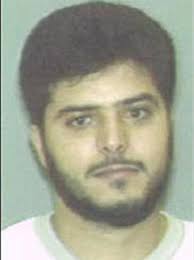
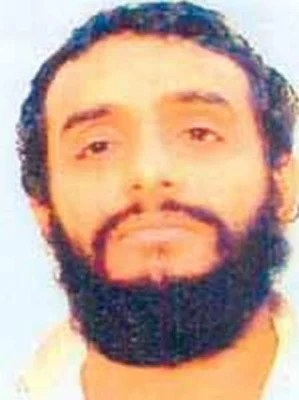
Another of the 23 escapees, Bannah, was a long sought after American citizen connected to the Lackawanna Six and the assassinated Kamal Derwish [29]. Bannah had not returned to America like the others in his cadre who had received training in Afghanistan [29]. Bannah became connected to Al-Qaida members and eventually had turned himself in to the Yemenis in return for not being extradited to America [30]. Escapee Abdullah al-Rimi had been charged with forging documents in order to get fighters into the theatre against the Americans [19]. He was described as an al-Qaida facilitator and as associate of Saif al-Adel [31]. He was also involved with a Swiss terrorist cell and allegedly had a role in financing operations in Saudi Arabia [32].
An additional eleven man cell was charged in early 2005 with forming an Al-Qaida linked armed group in Yemen, planning to travel to Iraq and fight, forging passports, and being in possession of weapons and explosives [33-35]. They had also all trained and fought in Afghanistan before returning to the Arabian Peninsula after the US invasion [33]. Escapees Mansur al-Baihani, along with Maqri, Zayed, and Wadai were involved in this particular trial [33-35]. All but one of the cell members were eventually exonerated [35]. They remained in prison awaiting their release although they had obviously participated in extremist activities. Another of this eleven man cell, Mohamed Saleh al-Kazemi, would upon his eventual release join again with the prison escapees [33-36]. Another was Abdulrauf Nassib the former Yemeni intelligence officer who had been travelling with Harithi on the day of the drone strike [33,37]. Nassib was released from prison by February 21, 2006, just weeks after the mass escape [38]. On a side note, several militants were inexplicably released in the aftermath of the escape, including Hadi al-Waeli (Hadi Dulqum), the arms dealer that had provided weapons and explosives to Nashiri and his men [35,38]. The only member of the eleven man cell to be convicted of anything was the Yemeni Saddam Hussein al-Hussaimi [35]. He would only spend a few more months in jail though before he was released and departed to wage jihad in the Afghanistan-Pakistan theatre [39]. He had only been convicted of forging documents, to be used by Yemenis on their way to fight in Iraq [34,35].
In terms of going to Iraq to fight, another of the prison escapees, Yasir al-Homiqani was incarcerated after being convicted of travelling to fight the coalition forces in that country [19]. Zakariya al-Yafai, Zakariya al-Baihani, Nasir al-Wuhaishi, and Hamza al-Quayti were all held after being extradited back to Yemen but were never charged with any crimes. This was despite the fact that they were verifiable important militants, Wuhaishi in particular, with intense Al-Qaida connections [19]. Zakariya al-Baihani and his brother Mansur, had two other brothers, Tawfiq and Ghalib, who were being held at Guantanamo Bay [18,40]. Quayti had overseen a guesthouse for al-Qaida in Afghanistan and had been a facilitator for the group [41]. Thus, he was proven to be close to several militant commanders [41]. After the US invasion, he fled to Iran where, along with al-Qaida theologian Abu Hafs al-Mauritani, he set up a safe waypoint for fleeing militants in Tehran [42]. He was eventually captured which led to his extradition from Iran to Saudi Arabia to Yemen [40]. Wuhaishi was actually Abu Bashir al-Yemeni who was bin Laden’s personal secretary [14,15,43]. As mentioned in Segment I, the secretary fled as well to Iran where he was eventually captured and extradited home [43].

The last two escapees, Basurah and Batati, were not part of Al-Qaida, but part of another group, the al-Tawhid Battalions [44]. Specifically, they were part of a cell formed by an Iraqi named Anwar al-Jailani and were involved in a plot to attack Yemeni officials and foreign embassies [19,34,35]. Basurah and Batati had been convicted and sentenced alongside of Jailani in August 2005 [45]. They eventually hitched themselves to the Al-Qaida militant prisoners at the intelligence facility prison and were able to flee along with them to freedom.
It should be noted again that the militants most likely had help from sympathetic elements of the Yemeni intelligence and security forces in their escape. Through full intentions or mere negligence, the results of the escape remain the same [1,12]. This theory again can be shown from the lack of concern displayed by the PSO members who were informed of the strange noises under the mosque, as well as the fact that Yemen brought some of the officers to trial [11,13]. Badawi had in fact escaped before in April 2003 with 9 other men including Fahd al-Quso, his accomplice in the COLE bombing [46,47]. The former intelligence officer Abdulrauf Nassib was accused of assisting in this manner, thus Yemeni intelligence had been suspected in the past of collaborating with Al-Qaida extremists [48]. After the escape, a core group of List G immediately began plotting to engage against Yemeni and foreign interests and to resume their war. They expanded the reach of AQAP to throughout the Arabian Peninsula and not just exclusively within the Saudi borders. The core of this inchoate organization plotting the next series of attacks consisted of Rubayi, Wuhaishi, Qasim al-Rimi, Jarallah, Quayti, Dailami, Zayed, Umdah, Bannah, and Huwaidi at least [49-52]. Specifically, Wuhaishi, Umdah, and Rimi were based with and sheltered by the old Harithi ally Bakr Said Mohamed Numaan (Abu Ayman al-Masri) as they gathered their strength [53]. Together these men would attempt to resume the dreams of Juwair and AQSA in their efforts against the oil flow from the Peninsula.
Guarantees of Security
This nucleus of renewed Arabian Al-Qaida regrouped with scattered militants from Saudi Arabia, Yemen and elsewhere as AQSA evolved into AQAP. While some escapees were able to flee into positions where they could rebuild AQAP from the ashes and gather more jihadists to their cause, several took a more prudent and advantageous path and turned themselves in. They surrendered themselves via security guarantees that they would not participate in militant activities within Yemen and be placed under a form of loose house arrest [54]. In other words, the militants engaged in making deals with the Yemeni government in order to obtain their freedom and prevent themselves from being hunted as prey. In turn, to the Americans and other foreign governments it appeared as if the Yemenis were actually making significant gains against the escaped militants. The stark reality however, was that the militants were the ones benefiting, gaining ground as well as their freedom. By early March of 2006, the Baihani brothers (G-17, G-18) as well as Wajeh and Maqri (G-12, G-21) had all turned themselves into the authorities [55,56]. By April 2, the Yemenis announced that they had arranged the surrender of Arif Mujali (G-14) [56]. The surrenders were actually arranged by the militants themselves, their families, and powerful tribal elders who were sheltering them [19,57]. The Yemenis were eager to make the deals in order to earn a steady truce of sorts with the militants, to appear to be a supporting partner in the “War on Terror,” and to potentially utilize the militants in their own political wars [12]. A subsequent US cable in April listed Mujali, the Baihanis, Maqri, Wajeh, and Mohamed al-Dailami (G-9) as having surrendered [56]. In the same cable the Yemenis promised that the remainders were still in Yemen and would be captured [56]. These six men quickly sought to acquire the aforementioned security guarantees and be released [58].
Meanwhile, the FBI, furious over the escape, issued alerts for Badawi and Bannah, as well as Abdullah al-Rimi [59,60]. Also known as Owais, Abdullah al-Rimi was believed to be an al-Qaida operative of some significance, who recruited men in Yemen, gathered funds for the group, and had connections to the COLE Bombing [60,61]. Meanwhile, Zakariya Yafai (G-19) was recaptured in a raid in a southern district of Sanaa on April 17, 2006 [57], while Khalid al-Batati (G-16) was reported on April 24 to have capitulated as well [62]. Batati, not being an Al-Qaida member (although still a jihadist), was also not one of the primary targets of the intelligence scramble to find the escapees. Abdullah al-Rimi however was, and on May 5, 2006 Yemeni security forces were able to apprehend him in Marib [19,63,64]. A leaked US Embassy cable revealed that by June 2006, the nine recaptured men were still in custody but that all with the exception of Rimi would be released due to “lack of evidence [58].” Rimi meanwhile, was transferred back into PSO custody [58]. This disturbing course of events occurred and the eight other men were released on security guarantees [19]. This correlated with a pledge from Yemeni President Saleh to turn a blind eye to the militants’ collective past if they agreed not to conduct their jihad within his nation [65].
Previously, the Yemeni efforts against al-Qaida had been applauded, such as with the arrest of Mohamed Hamdi al-Ahdal [66,67]. However, even with Ahdal the Yemeni judicial system failed to keep a recognized militant lieutenant, supporter, and financer imprisoned. Ahdal was initially feared by many intelligence analysts to be amongst the 23 escapees as his trial date was set for February of 2006 [4,67,68]. Once it was revealed that Ahdal remained in custody, his trial proceeded on February 13 under a veil of secrecy as well as skepticism from the West as to trial’s legitimacy [67]. Ahdal was found guilty of several charges by May 3, 2006 including financing militant attacks within the country, using money acquired from Osama bin Laden’s al-Qaida network to purchase weapons and supplies, and for assisting fighters in foreign theatres [69,70]. The problem was that the Yemenis could not specifically link him to either the COLE or Limburg bombings and thus he was merely sentenced to three years and one month in prison [69]. Perhaps as a vindication for the US and its insistence to the importance of this man, he shouted “victory to bin Laden and Zarqawi,” upon his sentencing [69]. It was announced in November 2006 that Ahdal would shortly be released, as his sentence was to include time already served [70]. Indeed, by early 2007, the mysterious Ahdal was released and blended back into regular Yemeni society [71]. A purported vital piece of the Nashiri network was a free man yet again, having received no real justice for his role in financing terror operations. His story occurred among an epidemic of militants being released early from incarceration.
More Saudi Most Wanted in Iraq


As the Yemeni government proceeded in what would become a farcical series of arrests and releases against Al-Qaida fighters and the escapees, Saudi Arabia had not given up on tracking down the remainder of its most wanted extremists. In fact, in light of how Yemen had thus far responded to its wanted extremists, Saudi Arabia’s methods of extermination were put in a more favorable light. However, Saudi Arabia’s rehabilitation program was still under serious question as to its effectiveness and capability in controlling extremism [72,73]. This question of the rehabilitation program within the Kingdom will be discussed in depth later. In the meantime, the Saudis continued their search for their wanted militants, and with the remainder mostly outside the Kingdom, they looked to news from beyond their borders as to the whereabouts of these men. A couple of major news pieces concerning the wanted Saudis in foreign lands emerged in the press in May 2006. In mid-May the Mujahideen Shura Council of Iraq (a conglomerate of Sunni militant forces under al-Qaida in Iraq) released a statement on its website announcing the deaths of Manoor Mohamed Yusef (D-2) and Othman Mohamed Hassan al-Korati (D-3) [74]. Pictures of the men were shown as well as a video of them prior to their deaths; a video in which they explained their reasoning for fleeing to Iraq [75,76]. In the release they were also called by their kunyas, Abu Hassan al-Makki (Yusef) and Abu Nasir al-Chadi (Korati) [75,76]. Both are assumed to have been killed engaging US forces within that country [75]. Saudi Interior spokesman Lt. Gen. Mansur al-Turki, a familiar figure in the Kingdom’s war on AQSA/AQAP reported to journalists that he could not confirm either death and that the Saudis would continue to seek out Yusef and Korati until they had physical evidence of their demises [74]. That being said, Al-Qaida in Iraq (which had evolved into the Mujahideen Shura Council) and other Al-Qaida branches have had a rather solid track record of truthfully announcing the deaths of their operatives. There have been some cases in which deaths are wrongly reported, but in this case, where an official release was given by the Mujahideen Shura Council, it must be assumed that both of these individuals are deceased. Furthermore, the deaths of these two List D members have been noted in a list of suicide bombers in Iraq [77].


Continuing with the Iraqi theme, the Saudis were able to locate two more List D members within that country shortly after the above announcement. By the end of May, the London based Saudi newspaper Asharq al-Awsat broke the stories of Abdullah Mohamed al-Ramyan (D-17) and Mohamed Saleh al-Rashoudi (D-18) who were imprisoned in the Kurdish city of Erbil in northern Iraq [78,79]. The newspaper pictured the two men in custody and interviewed them [78,79]. They were apparently arrested by the Kurds in September 2003 as they crossed into Iraq in an attempt to join Al-Qaida fighters there resisting the US occupation [78,79]. They traveled to Iraq via Syria, Jordan, and finally Turkey [79]. Their arrests and the relative lack of violence in Kurdish controlled areas of Iraq serve as a testament to the Kurdish forces and their anti-terrorism efforts [79]. The men had, up until that point, been kept secretly by the Kurdish with no visitors or trial [79]. The Kurds had also made no effort to extradite the men to the official Iraqi government or back home to Saudi Arabia [79]. Ramyan and Rashoudi denied being tortured and stated that they had learned the Kurdish language and customs [79]. Eventually, in September 2007 it appears the two men were rendered to Saudi custody, their long journey culminating in the notorious al-Hair prison [80]. Despite previously seeming well adjusted and perhaps rehabilitated while in Kurdish society, by June 2008, Ramyan’s corpse was delivered to his family from the Saudi prison, with instructions to remain silent, their delinquent relative a victim of prison violence, extreme interrogation, or some other misfortune [80]. It is unknown what precipitated this unfortunate fate. As for their crimes, Rashoudi had been accused of harboring and assisting wanted militants in the past [81]. Ramyan had been tasked with surveying a highway during an attempt to smuggle then AQSA leader Yusef al-Ayiri around the country [81]. Once the attempt was discovered by police, Ramyan engaged them in a gun battle and then supposedly fled across the Iraqi border [81]. This may not entirely be the truth as Ramyan was revealed to have entered Iraq via its northern border as stated above. Therefore, he most likely evaded the Saudis arrest attempt on the day of the smuggling operation and remained in country before departing for Iraq with Rashoudi. While the Saudis could mark names off of List D from afar, they still had to deal with some militancy within their own borders during 2006.
CITATIONS:
- [1] The Tunnel Rats of Terror, by Michael Hirsh, Mark Hosenball and Rod Nordland, Newsweek and the Daily Beast, February 20, 2006, http://www.thedailybeast.com/newsweek/2006/02/19/the-tunnel-rats-of-terror.html
- [2] Yemen al-Qaida debacle worries US and Europeans, by Mark Trevelyan, Reuters, February 9, 2006, http://www.freerepublic.com/focus/news/1574902/replies?c=14 and http://www.swissinfo.org/sen/swissinfo.html?siteSect=143&sid=6453888&cKey=1139492172000
- [3] INTERPOL issues urgent global security alert after al-Qaida suspects escape, INTERPOL Issuance, February 5, 2006, http://www.interpol.int/News-and-media/News-media-releases/2006/PR002
- [4] 23 al-Qaida suspects escape from political security prison, by Adel al-Haddad, The Yemen Times, February 4, 2006, http://www.webcitation.org/query?url=http%3A%2F%2Fwww.yementimes.com%2Farticle.shtml%3Fi%3D918%26p%3Dfront%26a%3D1&date=2009-09-07
- [5] Abdulrahim al-Nashiri Charge Sheet, September 15, 2011, https://www.mc.mil/Portals/0/pdfs/alNashiri2/Al%20Nashiri%20II%20(Referred%20Charges).pdf
- [6] AQAP release on death of Abu Gharib al-Taizi, Flashpoint Partners, May 1, 2012, https://flashpoint-intel.com/inteldocument/flashpoint_aqap042912-1.pdf
- [7] The Black Banners: The Inside Story of 911 and the War Against Al-Qaeda, Ali Soufan, W.W. Norton and Company, 2011, p. 363
- [8] Hunt for bin Laden ‘martyrs’, By Ben Fenton, The Telegraph, January 18, 2002, http://www.telegraph.co.uk/news/worldnews/asia/afghanistan/1381948/Hunt-for-bin-Laden-martyrs.html
- [9] Yemen jails five Limburg attackers, by Nasser Arrabyee, The Gulf News, August 29, 2004, http://m.gulfnews.com/yemen-jails-five-limburg-attackers-1.331048
- [10] Two Yemenis sentenced to death over Limburg and other attacks, Agence-France Presse, February 5, 2005, http://www.freerepublic.com/focus/f-news/1336568/posts
- [11] Yemen jails intelligence officers over jail escape, by Nasser Arrabyee, The Gulf News, July 16, 2006, http://gulfnews.com/news/gulf/yemen/yemen-jails-intelligence-officers-over-jail-escape-1.244725
- [12] Al-Qaida escape in Yemen: Facts, Rumors and Theories, by Jane Novak, Worldpress.org, February 16, 2006, http://www.worldpress.org/Mideast/2267.cfm
- [13] Mosque’s Imam heard digging 10 days before al-Qaida escape, by Donna Abu Nasr, The Associated Press, February 18, 2006, http://www.chron.com/news/nation-world/article/Muslim-cleric-heard-digging-10-days-before-Yemeni-1502989.php
- [14] INTERPOL – United Nations Security Council Special Notice, al-Wahishi, Nasir Abd-al-Karim Abdullah, January 19, 2010, http://www.interpol.int/%E2%80%8B@en/layout/set/print/UN/(un_id)/4465545
- [15] UN Sanctioning of Nasir al-Wuhaishi, UN Security Council, January 19, 2010, http://www.un.org/sc/committees/1267/NSQDi274E.shtml
- [16] Police kills fifth al-Qaida fugitive, by Adnan Hizam, The Yemen Observer, January 18, 2007, http://www.yobserver.com/local-news/printer-10011532.html
- [17] FBI Most Wanted, FBI Seeking Information Alert, February 11, 2002, http://web.archive.org/web/20020213124728/http://www.fbi.gov/mostwant/seekinfo/2-11-02.htm
- [18] Tawfiq Nasir al-Baihani, Guantanamo Assessment File, ISN 893, http://wikileaks.org/gitmo/prisoner/893.html
- [19] Tracking Yemen’s 23 Escaped Jihadi Operatives Parts 1 and 2, by Gregory Johnsen, The Jamestown Foundation, September 27, 2007, http://www.jamestown.org/single/?no_cache=1&tx_ttnews%5Btt_news%5D=4437
- [20] Yemen decrees death for 2 Cole terrorists, The Washington Times, September 29, 2004, http://www.washingtontimes.com/news/2004/sep/29/20040929-115840-6144r/?page=all
- [21] Two Yemenis get death for Limburg and other attacks, by Nasser Arrabyee, The Gulf News, February 6, 2005, http://gulfnews.com/news/gulf/yemen/two-yemenis-get-death-for-limburg-and-other-attacks-1.276328
- [22] 15 convicted in Yemen terror trial, The Washington Times, August 28, 2004, http://www.washingtontimes.com/news/2004/aug/28/20040828-110857-1006r/
- [23] Yemeni Oil Tanker attackers get harsher sentences, The Associated Press, February 5, 2005, http://www.foxnews.com/story/2005/02/05/yemeni-oil-tanker-attackers-get-harsher-sentences/
- [24] The Black Banners: The Inside Story of 911 and the War Against Al-Qaeda, Ali Soufan, W.W. Norton and Company, 2011, p. 359
- [25] Mahmud Omar Mohamed bin Atef, Guantanamo Assessment File, ISN 202, http://wikileaks.org/gitmo/pdf/ym/us9ym-000202dp.pdf
- [26] The Black Banners: The Inside Story of 911 and the War Against Al-Qaeda, Ali Soufan, W.W. Norton and Company, 2011, p. 497
- [27] The Last Refuge: Yemen, Al-Qaeda, and America’s War in Arabia, Gregory Johnsen, W. W. Norton and Company, p. 91-92
- [28] The Black Banners: The Inside Story of 911 and the War Against Al-Qaeda, Ali Soufan, W.W. Norton and Company, 2011, p. 495-499
- [29] Inside the Sleeper Cell, Chronology: The Lackawanna Investigation, PBS Frontline, October 16, 2003, http://www.pbs.org/wgbh/pages/frontline/shows/sleeper/inside/cron.html
- [30] Yemen refuses to extradite alleged leader of Lackawanna Six, by Abdulaziz Oudah, The Yemen Observer, February 13, 2004, http://www.yobserver.com/front-page/100143.html and http://www.freerepublic.com/focus/f-news/1076914/posts
- [31] Terror Watch: Like Clockwork: Swiss investigators have broken an Al Qaeda cell that proves the remarkable reach of the global-terror network, by Michael Isikoff, The Daily Beast, August 24, 2004, http://www.thedailybeast.com/newsweek/2004/08/24/terror-watch-like-clockwork.html
- [32] Swiss Secrecy may be a lure for al-Qaida, by Sebastian Rotella, The Lost Angeles Times, September 17, 2004, http://articles.latimes.com/2004/sep/17/world/fg-swiss17
- [33] Yemen al-Qaida trial begins, Al-Jazeera News, February 15, 2005, http://www.aljazeera.com/archive/2005/02/200841012423923117.html
- [34] Yemen jails six al-Qaida suspects, by Khaled al-Mahdi, The Arab News, March 22, 2005, http://www.arabnews.com/node/264106
- [35] Timeline of Yemen Arrests, 2002-2009, by Jane Novak, Armies of Liberation, http://armiesofliberation.com/archives/2009/06/12/al-qaeda-in-yemen-arrests-2002-2009/
- [36] Source: Yemen airstrike kills al-Qaida deputy, by Mohamed Jamjoom, CNN News, December 18, 2009, http://www.cnn.com/2009/WORLD/meast/12/18/yemen.alqaeda/index.html
- [37] Top Al-Qaida men arrested in Yemen, by Khaled al-Mahdi, The Arab News, March 5, 2004, http://www.arabnews.com/node/245298
- [38] Yemen frees suspected al-Qaida operative, UPI, February 21, 2006, http://www.upi.com/Business_News/Security-Industry/2006/02/21/Yemen-frees-suspected-al-Qaida-operative/UPI-93371140524275/
- [39] Al-Qaida’s Yemeni expatriate faction in Pakistan, by Evan Kohlmann, CTC Sentinel, January 1, 2011, http://www.ctc.usma.edu/posts/al-qaida%E2%80%99s-yemeni-expatriate-faction-in-pakistan
- [40] Ghalib Nasir al-Baihani, Guantanamo Assessment file, ISN 128, http://wikileaks.org/gitmo/prisoner/128.html
- [41] Ziyad Said Faraj al-Jahdali, Guantanamo Assessment file, ISN 286, http://wikileaks.org/gitmo/pdf/sa/us9sa-000286dp.pdf
- [42] Hussain Salim al-Yafai, Guantanamo Assessment file, ISN 1015, http://wikileaks.org/gitmo/pdf/ym/US1015.pdf
- [43] Is Yemen the new Afghanistan?, by Robert F. Worth, New York Times, July 6, 2010, http://www.nytimes.com/2010/07/11/magazine/11Yemen-t.html?pagewanted=all&_r=0
- [44] Yemeni Islamic Jihad, al-Tawheed Battalion, Yemen Soldiers Brigade, by Jane Novak, Armies of Liberation Blog via News Yemen, September 17, 2008, http://armiesofliberation.com/archives/2008/09/17/yemeni-islamic-jihad-al-tawheed-battalion-yemen-soldiers-brigade/
- [45] Yemen jails six for terror plots, by Nasser Arrabyee, The Gulf News, August 9, 2005, http://gulfnews.com/news/gulf/yemen/yemen-jails-six-for-terror-plots-1.296833
- [46] Main Suspects in USS Cole Bombing Escape from Yemeni Prison, The Associated Press, April 11, 2003, http://www.foxnews.com/story/0,2933,83890,00.html
- [47] Cole bomb suspects in Jailbreak, CNN News, April 11, 2003, http://www.cnn.com/2003/WORLD/meast/04/11/cole.escapes/
- [48] Yemen captures al-Qaida members, BBC News, March 4, 2004, http://news.bbc.co.uk/2/hi/3531657.stm
- [49] Sentences against 32 al-Qaida linked defendants in Yemen, Al-Motamar.net, November 7, 2007, http://www.almotamar.net/en/3674.htm
- [50] Releads with details on bombers, Deutsche Presse Agentur, September 19, 2006, http://rawstory.com/news/2006/Releads_with_details_on_bombers_09192006.html
- [51] Yemen begins interviews in bombing of oil installations, by Khaled al-Mahdi, The Arab News, December 3, 2006, http://www.arabnews.com/node/291790
- [52] Al-Qaida men killed in Yemen, by Khaled al-Mahdi, The Arab News, October 2, 2006, http://www.arabnews.com/node/289853
- [53] Inspire Magazine, Issue 8, Fall 2011 – released May 2012
- [54] Yemen employs new terror approach, by Kathy Gannon, The Associated Press and The Washington Post, July 4, 2007, http://www.washingtonpost.com/wp-dyn/content/article/2007/07/04/AR2007070400992_pf.html
- [55] Three al-Qaida members surrender to Yemeni authorities, Asharq al-Awsat, March 7, 2006, http://www.aawsat.net/2006/03/article55267590
- [56] US leaked diplomatic cable 06SANAA973, AL-QA’IDA ESCAPE: UPDATE, US Embassy in Sanaa, April 11, 2006, http://wikileaks.org/cable/2006/04/06SANAA973.html
- [57] 7th runaway al-Qaida prisoner surrenders, UPI, April 18, 2006, http://www.upi.com/Business_News/Security-Industry/2006/04/18/7th-runaway-al-Qaida-prisoner-surrenders/UPI-69151145355608/
- [58] US leaked diplomatic cable 06SANAA1698, TERROR TRIALS UPDATE: PROSECUTIONS CONTINUE, US Embassy in Sanaa, June 7, 2006, https://www.wikileaks.org/plusd/cables/06SANAA1698_a.html
- [59] Recent escapees from Yemen Prison added to most wanted terrorists and seeking information – war on terrorism lists, FBI National Press Release, February 23, 2006, http://www.fbi.gov/news/pressrel/press-releases/recent-escapees-from-yemen-prison-added-to-most-wanted-terrorists-and-seeking-information-war-on-terrorism-lists
- [60] FBI Most Wanted, FBI Seeking Information, Abdullah al-Rimi, http://www.fbi.gov/wanted/terrorinfo/abdullah-al-rimi
- [61] The Black Banners: The Inside Story of 911 and the War Against Al-Qaeda, Ali Soufan, W.W. Norton and Company, 2011, p. 264
- [62] Al-Qaida convict is 8th to surrender since Yemen jailbreak, The Associated Press, April 24, 2006, http://articles.latimes.com/2006/apr/24/world/fg-yemen24
- [63] Al-Qaida jailbreak fugitive no. 9 arrested, The Yemen Observer, May 11, 2006, http://www.yobserver.com/front-page/10010086.html
- [64] Yemen ‘catches al-Qaida fugitive,’ BBC News, May 12, 2006, http://news.bbc.co.uk/2/hi/4764499.stm
- [65] The Last Refuge: Yemen, Al-Qaeda, and America’s War in Arabia, Gregory Johnsen, W. W. Norton and Company, p. 156-157
- [66] Yemen Arrests a leading member of al-Qaida, The New York Times, November 26, 2003, http://www.nytimes.com/2003/11/26/world/yemen-arrests-a-leading-member-of-al-qaeda.html
- [67] Al-Qaida deputy tried in Yemen, BBC News, February 13, 2006, http://news.bbc.co.uk/2/hi/middle_east/4708640.stm
- [68] Hunt on for Yemeni jailbreakers, BBC News, February 4, 2006, http://news.bbc.co.uk/2/hi/middle_east/4682214.stm
- [69] Al-Qaida no 2 in Yemen gets light sentence, UPI, May 3, 2006, http://www.upi.com/Business_News/Security-Industry/2006/05/03/Al-Qaida-No-2-in-Yemen-gets-light-sentence/UPI-83371146657718/
- [70] Yemen to free top al-Qaida suspect, by Khaled al-Mahdi, The Arab News, November 19, 2006, http://www.arabnews.com/node/291309
- [71] The Cole Bombing in Yemen: A Seven Year Perspective, by Jane Novak, Armies of Liberation, October 12, 2007, https://janenovak.wordpress.com/2007/10/17/the-uss-cole-bombing-a-seven-year-perspective/
- [72] Rehabilitation and Deradicalization: Saudi Arabia’s counterterrorism successes and failures, by Robert L. Wagner, University for Peace: Peace and Conflict Monitor, August 1, 2010, http://www.monitor.upeace.org/innerpg.cfm?id_article=735
- [73] Can Jihadis be rehabilitated?, by Katherine Seifert, The Middle East Quarterly, Volume 17, Issue 2, Spring 2010, http://www.meforum.org/2660/can-jihadis-be-rehabilitated
- [74] Saudi Arabia investigating reports two most wanted were killed in Iraq, press release by the Saudi Embassy, May 15, 2006, http://www.saudiembassy.net/archive/2006/news/page575.aspx
- [75] Pair sought by Saudi Arabia killed in Iraq: Group, Asharq al-Awsat and Reuters, May 14, 2006, http://www.aawsat.net/2006/05/article55266720
- [76] Suicide Bombers in Iraq: The Strategy and Ideology of Martyrdom, Mohammed M. Hafez, United States Institute of Peace Press, 2007, p. 177
- [77] Homicide bombers by name, by Alan Peters, Anti-Mullah Blog, August 14, 2007, (Personal blog listing known suicide bombers in Iraq), http://noiri.blogspot.com/2007/08/homicide-bombers-by-name.html
- [78] 2 most wanted Saudis turn up in Kurdistan, The Arab News, May 31, 2006, http://www.arabnews.com/node/285503
- [79] Kurdish officials provide information on al-Qaida operatives in custody, by Lydia Khalil, The Jamestown Foundation, Terrorism Focus, Volume 3, Issue 22, June 6, 2006, http://www.aliraqi.org/forums/showthread.php?t=59643
- [80] Post Claims Saudi Militants Tortured to Death at Saudi Prison, CBS News, June 12, 2008, https://www.cbsnews.com/news/post-claims-saudi-militants-tortured-to-death-at-saudi-prison/
- [81] Young Militants not Battle-Hardened, by Rob L. Wagner, Maha Sami Aboulola and Shroog Talal Radain, The Saudi Gazette, June 30, 2005, https://sites.google.com/site/roblwagnerarchives/young-militants-not-battle-hardened
© Copyright 2025 Nolan R Beasley
 Chronicles in Zealotry