
Segment V – A Kingdom Bleeds Black (Chapter 18 – Decapitation And Dammam)
For the entirety of the Series, please see – https://chroniclesinzealotry.com/fugitives-of-the-peninsula/
In this Chapter, the search for an AQSA emir culminates in familiar fashion. We contrast this with the Kingdom mourning its own sovereign. In addition, the Saudis act with increasing aggression against the insurgents remaining in the Kingdom in an attempt to fully destroy the domestic movement, relegating the threat to the outside world. We begin with a benign operation before commencing the march to a crescendo of blood in the Battle of Dammam.
A Suspicious Neighbor
By late July of 2005, the Saudis were able to carry out what has already been described as a very unique operation: the arrest of a most wanted militant within the country [1]. The operation was a testament to the wanted list method of taking down terrorists and allowed the Saudis to garner information from a captured suspect instead of having to gun him down in battle. Of note, the last most wanted militant to be captured was almost exactly a year before, with Faris al-Zahrani’s August 2004 arrest [2].

On July 25, 2005, a 20 year old Saudi woman named Nahed noticed a suspicious man outside of her apartment complex in the early morning hours [3]. She attempted to inform her father around midnight, but he saw nothing [3]. Yet by 3 am, the strange and conspicuous man had returned [3]. He was attempting to cover his face and it appeared that he was waiting for someone impatiently as he paced about [3]. “He was going up and down the stairs repeatedly. I suspected that he was up to something and I informed my relatives and neighbors. A terrorist was arrested earlier in our neighborhood and I suspected that he might be one of them because he was not acting normally,” Nahed later said [3]. The second time that Nahed saw the man she was forced to contact her neighbors as her quote reflects [3]. Neighbors and Nahed’s relatives watched the man and informed police [3]. Saudi security forces set up a cordon in the al-Kurdi district of the holy city of Medina [3]. By the time the suspect had shown his ID and tried to leave, the security forces were able to capture him sans a fight [3]. Upon verification, the forces announced that Nahed’s tip had allowed for the arrest of Mohamed Said al-Siyam al-Amri (C-10) [3]. Amri was described as being in harsh physical condition and as having an explosive, possibly a pipe bomb on his person at the time of arrest [1,3]. Two of his accomplices were arrested without incident as well [41]. At the same time period, another militant was apprehended seamlessly in Riyadh when forces surrounded his villa [1]. Four additional suspects were rounded up the next day in Riyadh, presumably from Amri’s information [3]. In fact, Amri’s arrest led to a total of thirteen militants in custody from Medina and Riyadh prior to August 18, 2005 [4]. Amri, who had once been employed by a relief organization, was the only wanted list member amidst the many arrests [3]. His family stated their great relief at their son being taken alive [3].
The Losses Of A King And A Commander
In August of 2005, the Saudis lost their monarch. King Fahd died on August 1, 2005 after years of suffering from the effects of a stroke [5]. His brother Crown Prince Abdullah immediately ascended to the throne [5]. Many in the country had blamed King Fahd’s invitation of US forces into the Kingdom during the Persian Gulf War as the chief catalyst behind al-Qaida’s string of attacks against the West and within Saudi Arabia [5]. Despite this loss, the new monarch, King Abdullah, urged Prince Naif and Prince Mohamed to continue their campaign against the radicals. The Saudis attempted to obtain some victory in a month of mourning. As it turned out, the successful netting of Amri was but a foreshadowing of colossal events to come in the holy city of Medina. A manhunt spanning over two years culminated with a series of highly successful and simultaneous raids in Riyadh and Medina – raids that threatened to disembowel the upper echelons of AQSA and its network. On August 18, 2005, the Saudis began by moving in on six different locations in Medina [4,6,7]. The corresponding sweeps gathered nine AQSA suspects without a battle [4,6,7]. The seventh location, near the Prophet’s Mosque, proved more difficult [4,6,7]. Security forces while advancing on the building came into a fierce firefight with three AQSA suspects within [4,6,7]. The three suspects, barricaded in the seventh location, opened with intense volleys on bystanders and security forces on the outside [4,6,7].
The Saudi security forces fought back in an attempt to silence the barrage of gunfire. As mentioned, they managed to capture nine compatriots of AQSA leadership in Medina [4]. However, in this last locale, they came across the crown jewel of their search. Inside, firing upon the raiders was Saleh al-Awfi, leader of AQSA [4,6,7]. He had been traveling across the country, not in his sartorial norm, but rather dressed as a female in order to be smuggled in and out of certain locations and to hide from authorities [8]. His most trusted aide, Majid al-Hasri was at the time in Riyadh [8]. His position in Riyadh soon came under attack from security forces as well, suggesting that the Medina and Riyadh raids did not accidentally target al-Awfi [8]. Lance Corporal Mohamed Moawadh al-Shamani al-Harbi gave his life during the raid and a bystander was also seriously wounded in the fight to kill or detain Awfi [4,6].
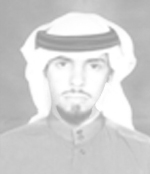
Awfi became the leader of AQSA not just through the attrition, but also because of his connections within Saudi security and prison forces [9]. The man was actually raised in Medina and held only a middle school equivalent education before going to Riyadh to train to become a prison guard [9]. He became a PFC in the prison service in 1988, and eventually moved back to Medina where he continued his work in that city’s prisons [9]. In both Riyadh and Medina he was disciplined for various “unbecoming behaviors” and also for tardiness and being absent from work [9]. Upon his dismissal for impropriety, he joined the ranks of jihadists fighting in Afghanistan, Bosnia, and eventually Chechnya during the 1990s [9]. Awfi was actually seriously wounded fighting the Russians in Chechnya after coming there in 1994 [9]. The injury was a head trauma and it took a while for the militant to recuperate [9]. Upon this recovery, Awfi unusually took to the employment of car sales where he was able to travel across Europe and presumably increase his charisma, intelligence on western culture, and contacts within the militant communities therein [9]. By 2001 Awfi had joined al-Qaida fighters in Afghanistan and was involved in fleeing that country after the US invasion [9,10]. He actually displaced from the fighting alongside Khalid al-Jehani of List A, and the two men had the intention of returning to Saudi Arabia [10]. Awfi did eventually return to the Kingdom where he reconnected with many of his contacts in the security and prison forces [9]. He then of course helped develop a prominent AQSA cell with Abdulaziz al-Muqrin and became one of his most trusted lieutenants [9]. It can be assumed that Awfi’s contacts and familiarity with security forces helped in Muqrin’s ability to obtain police and security uniforms, weapons, vehicles, etc. This was evident in the capture of Paul Johnson. Shortly after Awfi’s appointment as leader of AQSA, his hideout was raided on July 20, 2004 resulting in the capture of three of his men, Mishal al-Farraj, plus Saleh al-Ghaith, and Hamad Shadid al-Harbi, along with his own wife and three children [11,12,13]. As was discussed in Segment IV, Issa al-Aushan and one additional militant perished in the exchange, while Yunis al-Hayari, Awfi, and others escaped. Rumors persisted as to the fate of Awfi in the aftermath. While it is contested that Awfi was not leading the organization, it is apparent that he was the general in hiding, with Saud al-Otaibi and then Hayari running the outfit as captains on the frontlines [9]. It also seems that Awfi was able to get messages out to his men and run operations in the country as, for instance, he was directly blamed for the Jeddah Consulate attack [7,8,9]. This was evidenced in a later video release celebrating the assault, in which Awfi details the maneuvers and methods of the Fallujah Brigade (as the assailants described themselves) as if he were in a military briefing, exhibiting a sense of control despite being forced into hiding [14,15,16]. In addition, it has been suggested that the March 19, 2005 car bombing of a theatre in Qatar which led to the death of British citizen Jonathan Adams was incited by orders from Awfi [9,17]. His triumphant return to militant broadcasting that same month featured the hidden emir mentioning Qatar, attempting to incite violence from Qatari jihadists and perhaps indicating to plotters in that peninsula to attack [18]. The lack of terrorist attacks in Qatar and the close proximity of the bombing to Awfi’s announcement, lend credence to this idea. The suicide bomber, Egyptian Omar Abdullah Ahmed Ali, may have been either inspired by Awfi’s words or awaiting them [17]. The FBI confirmed that the Egyptian was a known al-Qaida operative and had knowledge of him since investigating the 1998 US Embassy Bombings in Africa, furthering the speculation that he could have been working for Awfi [19]. Later, al-Qaida operative Harun Fazul (wanted for his role in the Embassy Bombings) claimed to have known the bomber well while in Sudan, referring to him as Ahmed Omar, calling him a valuable al-Qaida member, and admitting to forging travel documents for him in Sudan. Despite this, Fazul claims that al-Qaida lost touch with Omar, and that he most likely was not acting on orders when carrying out the attack 20]. Regardless of how Awfi was able to communicate, it seems likely that he was regularly in connection with his men [8]. That establishment may interestingly enough have been what brought Saudi security forces to his door step on August 18, 2005. The wild gunfire that ensued showed the desperation of the formerly seriously wounded car salesman/prison guard to not fall as his many followers who had perished before him [6].
However, in the end, the intensive gunfire was finally silenced. It was replaced by an ominous though victorious silence throughout the al-Bahar neighborhood of the holy city [6,7]. One of Awfi’s men, Mohamed al-Samman, was gravely wounded and captured by the security forces [4,6,7,21]. Another, Mohamed Abdullah Mohamed al-Owaida, a close associate of Awfi’s was found dead in the hideout [4,6]. Most importantly, List B was finally reduced to just one remaining name, as the body of Saleh al-Awfi was extracted from the hideout where he made his last stand. Reporters, investigators, police, security forces and others finally had the relief of knowing that the AQSA commander had been dealt a mortal blow [6,7]. DNA analysis proved this to be Awfi [4]. He had waged jihad against the Kingdom but in the end he fell when the fight came to his doorstep. Meanwhile, his network was being targeted in Riyadh as well.

Majid Hamid Abdullah al-Hasri (C-14) was far away from his boss Saleh al-Awfi when he was cornered by Saudi security forces [8]. Hasri was Awfi’s closest aide de camp, and was important in hiding the leader of AQSA [8]. He facilitated the travel and elusiveness of the militant commander via forged documents and disguises [8]. Hasri was unique in the sense that Awfi did not use him as he would his other lieutenants in potentially fatal missions, or purposeful suicide operations [8]. He needed the man to act as a messenger, and to provide the capability to conceal the two of them [8]. Unfortunately for Awfi, the pair were not always together and were forced to use messengers and cellular phones to communicate with one another [8]. The Saudis were able to intercept some of these messages, with the help of the US Embassy, which led to an intelligence breakthrough [7]. Undoubtedly, these messages helped in steering authorities to both the Medina and Riyadh hideouts. Hasri, a veteran of Afghan training camps, while hiding in the northern Riyadh neighborhood of al-Maseef, came under attack from the Saudi forces at the same time as his superior in Medina [6,8]. Instead of surrendering, Hasri also chose to resist [6,8]. The fight was quelled when Hasri’s suicide vest he was wearing detonated [8]. Security forces found the remains of the body, and determined the gun fire had ceased with Hasri’s death [6,8]. It was initially reported that three of Hasri’s men were also killed in the firefight and the owner of the compound arrested [7]. Later reports indicated that there were only the one captured and one dead militant (Hasri) [4]. It was also initially and incorrectly reported that the dead included Fahd Farraj al-Juwair (C-2) [7]. The raids followed announcements by the US Embassy that it’s Consulates across the country would be closing certain days in August due to intelligence on possible attacks [7]. The timing of these closures and the raids themselves give credence to the fact that they were interconnected.
Rise Of An Unknown
With the help of US intelligence gatherers, the Saudis once again managed to decapitate the evolving militant organization [7]. The complex array of jihadist fighters was deprived of a vital leader and members of his valuable inner circle. Interestingly, the next militant to step up to the helm of AQSA was the first leader who had not factored in either List A or B. He was Fahd Farraj al-Juwair, initially reported dead in the Riyadh raid before DNA analysis revealed this not to be the case [7,22,23]. Juwair was an obvious choice to assume leadership of the group, as the Saudis had explicitly stated that he was the most important fugitive left standing [24]. Juwair and his younger brother Abdullah were most likely indoctrinated into AQSA due to familial ties [22,25]. Supposedly, two other Juwair brothers had perished already in the bloody insurgency against the Saudi government, although it has not been determined exactly when [22]. Most plausible is that these were relatives or cousins rather than brothers. Three such candidates can be easily seen in the catalogue of AQSA accomplices killed or captured during the campaign thus far. The first is Mishaal Hamud al-Farraj, who was reported killed, but actually captured in the raid on Awfi’s safehouse in Riyadh on July 20, 2004 [12,13,26]. The second is Mohamed Abdulrahman al-Farraj, killed by security forces in al-Thuwarait, north of al-Zulfi, on January 9, 2005. Mohamed al-Farraj was associated with the captured Khalid Hamud Juwair al-Farraj, who in turn was known to be a cousin of Juwair’s [27,28,29]. Plus, Juwair was from Zulfi, the same town as the aforementioned militants were based [23,27,30,31]. Furthermore, while the Saudis officially listed him as Fahd Farraj al-Juwair [24,32], AQSA propaganda referred to this man’s entire name as Fahd Farraj al-Juwair al-Farraj; thus providing a better case for the familial ties between the men [29,30,33]. To avoid confusion, in this document he will be referred to as Juwair.
Fahd Farraj al-Juwair, at 36, was part of a generation of skilled jihadist fighters that was willing to take the fight to the Saudis [23]. He had previously been selected as a suicide bomber by his erstwhile leader Abdulaziz al-Muqrin, even though it was yet another cousin, Fahd Abdullah al-Farraj, who appeared in an AQSA propaganda video proclaiming his willingness to seek martyrdom; a video also featuring a zealous and exuberant Abdulaziz al-Mudaihesh, as these two men carried out the Riyadh suicide bombing on the Traffic Directorate on April 21, 2004 [34,35]. This younger Fahd al-Farraj can be seen as the third candidate for Juwair relative killed during the insurgency. Juwair also authored articles in Sawt al-Jihad, including one directed to his cousin Khalid [29,30]. His presence in the militant publication helps solidify his close relations with the original AQSA leaders, propaganda editors, and ideologues from Lists A and B. Despite his writings, and perhaps due to his initial selection as a suicide operative, Juwair suffered a certain lack of notoriety at the time of his ascension to power when compared to his predecessor Awfi, and thus sought to cement his name as recognizable and feared. He also desired to bring AQSA back from the precipice of disaster in the aftermath of Awfi’s demise. The Saudis engaged in a bleak chess match against the remnants of Muqrin and Awfi’s network, now led by this relatively obscure wanted individual, in order to circumvent his violent intentions.
Desolation In Dammam
Zaid Saad Zaid al-Sammari (C-3) was a valuable piece in this game for Juwair. A knight of sorts, who had been strategically placed in the eastern coastal resort city of Dammam, Sammari was plotting an attack there to force AQSA back into the news media, the fears, and the minds of both Westerners and Saudis alike [36]. The crippling battle of al-Ras coupled with the loss of Awfi and Hasri had led AQSA to play an important card to regain their composure. As such, Sammari had with him in the city multiple personalities within the network that were both essential to the cause and wanted by the government [36]. This was a risky move because it placed so many of Juwair’s assets in one position.
Shortly after 2 pm on Sunday September 4, 2005, Sammari entered the Panda supermarket on King Mohamed Fahd Street in the city [37,38]. He had entered a pharmacy shortly before and was out running simple errands for himself and the militants hiding and plotting with him in the city [36,37]. Sammari and his companion Saleh Mansur Muhsin Al-Faridi al-Harbi (C-5), were circumspect: clean shaven, dressed to fit in with the crowd, and did not have the overbearing appearance of religious radicals [37]. They were intent on blending in with the population until such a time as they could strike as vipers within the resort town or in nearby locations. Unbeknownst to Sammari was the fact that he was being stalked by Saudi security forces. Employees at the supermarket and agents alike attempted to case the men to see if they were armed [37]. Indeed, they were.
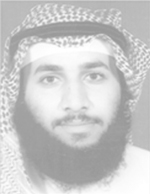
Sammari received training in Afghanistan as had many of his compatriots [36]. He was also considered an ideologue for the group [36]. This, as has been previously discussed, was a highly integral role within the outfit. Sammari was wanted for his role in attacking foreigners in Riyadh during the Muqrin and Awfi reign of terror [36]. Now, after 2 pm on the day in question, as Sammari and his companion left the supermarket, they were approached by Saudi forces [37]. The cordon was already set and the noose tightened. Sammari and Harbi attempted to shoot their way out of it regardless [37]. The resulting gun battle and siege became one of the biggest anti-terror operations ever carried out by the Saudi security forces and arguably one of the most destructive and savage [36,39,40].

Upon being confronted, Sammari and Harbi opened fire on the Saudis [37]. Luckily, no security forces or civilians were harmed in the exchange [37]. The Saudis had tracked the rest of Sammari’s men to a seaside villa in the city and began a heavy siege of the compound where an additional three gunmen had fled and were now attempting a last ditch defense [37,38]. Meanwhile, on King Mohamed Fahd Street outside of the supermarket, Harbi was shot and wounded in the abdomen before being captured [37]. Sammari himself was killed in the exchange and his men left to fend for themselves [37,38]. Harbi did not turn out to be as fortunate as he initially appeared. Despite surviving the battle on Sunday, he would succumb to his wounds the following day [36,38]. He was initially reported to be Walid Mutlaq Salim al-Radadi (C-12) by the press, but this would of course prove to be untrue [36,38].
As for the militants in the seaside villa, they were in for an epic battle with an overwhelming number of Saudi security members, police, and military. The Saudis brought in armored vehicles, highly trained troops, helicopters, artillery, and a massive amount of overall fire power [39,40]. The militants fought back hard using automatic weapons, RPGs, and whatever other form of defense they held at their disposal, while the Saudis fired their own RPGs from adjacent rooftops [38,39,40]. The resulting conflict damaged or destroyed numerous houses and vehicles around the epicenter of the battle in Dammam’s al-Hamra neighborhood [36].
The siege lasted for three days, from Sunday September 4 to Tuesday September 6 [39,40]. On the final morning of the confrontation, the Saudis brought in fresh troops, vehicles, and ambulances [40]. The time for storming the villa was at hand. The Saudis also brought in heavy equipment such as bulldozers for a bid to destroy the hideout which Sammari and his men had rented just two months before [38]. This was despite the fact that the Saudis claimed they had the advantage of time and wished to take the men alive [38]. The militants however, had no such desire.
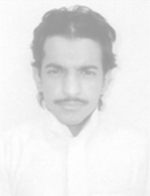
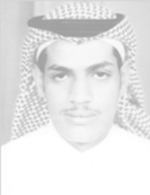
Therefore, Tuesday September 6, 2005 became their last day on earth as the Saudi troopers stormed the villa in a massive hail of gunfire around noon [40]. Prior to this they had cut off all water and electricity to the compound [39]. In the end, over 50 people, mostly Saudi security forces were hospitalized from wounds received in the battle [39]. A total of four of the security forces lay dead along with all three of the militants who had made their final refuge within [39]. The Saudis were able to recover a massive weapons cache within the villa which included automatic rifles, large amounts of ammunition, RPGs, two barrels containing explosives, several pipe bombs and homemade explosives, communication equipment, and computers [39,41]. Harbi (C-5), who had been killed in the streets of Dammam was considered one of the groups top explosives experts, which would account for why the five men in the villa had so many chemicals and bomb crafting material [36]. It also continued to point to the fact that the men were planning a massive operation [36]. In fact, Harbi had already participated in attacks against Saudi authorities and Sammari against foreigners in the Kingdom [36]. The Saudis had not only stopped the operation prematurely but had robbed AQSA of many of its top remaining personalities. The Saudis upon DNA analysis of the bodies were able to announce that all three men killed in the villa were on List C in addition to Sammari and Harbi [36]. This was a great score for the Saudi government and made the excessiveness of the battle in Dammam seem worthwhile. Sultan Saleh Hassan al-Hasri (C-6), who had participated in the killing of Paul Johnson, was one of the dead militants found amongst the rubble of the once beautiful villa [36]. Killed with him were Naif Farhan Jalal al-Jihaishi al-Shammari (C-13), and Mohamed Abdulrahman Mohamed al-Suwailmi (C-7) [36]. Shammari was a known forgery expert for AQSA and as such, many a forged document was also found in the rubble [36,41]. Uniquely, Shammari had been recruited to jihad by a study group from his school days [42]. From this he was influenced to train and fight in Afghanistan [42]. Suwailmi was a known computer and IT expert for AQSA, being involved in their recruiting and other computer based logistics [31,36]. He was also wanted for attacking Saudi checkpoints [31]. An interesting development in relation to the DNA testing of Suwailmi’s body quickly resulted and changed the status of List C yet again [43]. In addition to the already successful operation within Dammam, six other neighborhoods had explosives dismantled during the siege and eleven further individuals connected to Sammari’s cell were arrested, although none of them were on any wanted list [44]. As for the subsequent change in the status of List C, it turned out that DNA evidence had indeed shown that one of the dead men was a Suwailmi, but just not Mohamed al-Suwailmi [43]. The dead militant, found with a detonated explosives vest in the rubble was actually Mohamed’s brother Ahmed al-Suwailmi [43]. The DNA analysis was not able to adequately distinguish between the two [43]. By September 12, 2005 the Saudi government announced that the body was that of Ahmed and admitted the mistake [43]. This was important as both Suwailmis’ father, Abdulrahman, and the family of Naif al-Shammari reported that members of Al-Qaida in Iraq had contacted them to tell them their sons were fighting for them in that country [43]. The families had believed their sons not to even be in the Kingdom. The effect was that despite the Saudi government’s belief that Shammari and others were in the Kingdom, others wrote them off as having gone to Iraq to fight. This conceivably allowed them some free movement. It also continued to show the cooperation between AQSA and AQI to the point where they would cover for each other’s fighters. These were the most successful al-Qaida affiliates of the time, and as they shared a border in territory, they also shared a common goal. Ahmed al-Suwailmi had probably been recruited into the fold by his older brother and then hidden within Sammari’s cell in order to carry out a brazen attack on his own homeland.
The battle in Dammam was a victory for the Saudis but it did generate a lot of negative press because of the sheer amount of destruction caused [36]. In the end though, four additional names were crossed from List C and a budding terrorist was removed from the insurgency. Some sources claimed that one of the militants, either Shammari or Hasri had attempted to flee the scene and surrender but was killed by his colleagues [39]. This remains unconfirmed and is just a story within the fog of war. Regardless of how each death occurred, all three wanted men perished in the extraordinary engagement.
The destruction at Dammam raised the question of what exactly this cell may have been aiming to accomplish there, resulting in a hypothesis we will explore in the next chapter. Further, we will document the final throes of this iteration of al-Qaida’s Arabian franchise, as they desperately strive to follow orders, and sow chaos within the Kingdom.
CITATIONS:
- [1] Citizens help nab top terrorist, by Raid Qusti, Arab News, July 26, 2005, http://www.arabnews.com/node/270566
- [2] Saudis most wanted is captured, by Nadi Abou al-Magd, The Associated Press, August 6, 2004, http://www.cbsnews.com/2100-224_162-663581.html
- [3] More Terrorists arrested, by Samir al-Saadi, Arab News, July 27, 2005, http://www.arabnews.com/node/270609
- [4] 26th August 2005-Ministry of Interior statement on security operation, Saudi Press Agency, August 26, 2005, http://www.saudinf.com/display_news.php?id=3268
- [5] King Fahd of Saudi Arabia dies, BBC News, August 1, 2005, http://news.bbc.co.uk/2/hi/4734175.stm
- [6] Ain al-Yaqeen News Magazine, August 26, 2005, http://www.ainalyaqeen.com/issues/20050826/feat7en.htm
- [7] Al-Qaida chief in Kingdom killed, by Roger Harrison and Javid Hassan, Arab News, August 19, 2005, http://www.arabnews.com/node/271678
- [8] Wanted al Haseri killed with the leader of al Qaeda al Awfi in latest clashes in Saudi Arabia, by Omar El-Okaily, Asharq al-Awsat, August 20, 2005, http://www.aawsat.net/2005/08/article55270290/wanted-al-haseri-killed-with-the-leader-of-al-qaeda-al-awfi-in-latest-clashes-in-saudi-arabia
- [9] Profile: Saudi al-Qaida leader, BBC News, August 19, 2005, http://news.bbc.co.uk/2/hi/middle_east/4166612.stm
- [10] Background of the most wanted Terrorists Part 2, by Raid Qusti, Arab News, December 12, 2003, http://www.arabnews.com/node/241468
- [11] Al-Qaida leader Saleh al-Awfi slips through the net, by Stephen Ulph, Terrorism Focus Volume 1, Issue 1, The Jamestown Foundation, August 5, 2004, http://www.jamestown.org/programs/edm/single/?tx_ttnews%5Btt_news%5D=26725&tx_ttnews%5BbackPid%5D=166&no_cache=1#.UdjR-PmTgrU
- [12] Path of Blood: The Story of Al-Qaeda’s War on the House of Saud, Thomas Small and Jonathan Hacker, Simon & Schuster UK, 2015
- [13] Saudi Arabia executes 47 for Insurgency, Al-Arabiya, January 2, 2016, https://english.alarabiya.net/en/News/middle-east/2016/01/02/Saudi-interior-ministry.html
- [14] Sawt al-Jihad produced video on the Fallujah Brigade, Raid on the American Crusader Consulate in Jeddah
- [15] Path of Blood: The Story of Al-Qaeda’s War on the House of Saud, Thomas Small and Jonathan Hacker, Simon & Schuster UK, 2015
- [16] Jihad in Saudi Arabia, Thomas HegghJihad in Saudi Arabia: Violence and Pan-Islamism since 1979, Thomas Hegghammer, Cambridge University Press, 2010
- [17] Probe in to fatal Qatar bomb blast, BBC News, March 20, 2005, http://news.bbc.co.uk/2/hi/middle_east/4366421.stm
- [18] Audio statement from al-Qaida in Saudi Arabia to Abu Musab al-Zarqawi in Iraq, Flashpoint Partners, March 16, 2005, https://flashpoint-intel.com/inteldocument/saudi0305.pdf
- [19] The Black Banners: The Inside Story of 911 and the War Against Al-Qaeda, Ali Soufan, W.W. Norton and Company, 2011
- [20] Beward of Imitators, al-Qaida through the lens of its Confidential Secretary, by Nelly Lahoud, Harmony Program CTC at West Point, June 4, 2012, https://ctc.westpoint.edu/beware-of-imitators-al-qaida-through-the-lens-of-its-confidential-secretary/
- [21] Path of Blood: The Story of Al-Qaeda’s War on the House of Saud, Thomas Small and Jonathan Hacker, Simon & Schuster UK, 2015
- [22] Saudis: Kingdom’s al-Qaida leader among oil-plant militants killed, The Associated Press, February 28, 2006, http://www.foxnews.com/story/0,2933,186307,00.html
- [23] Saudi most wanted killed in raid, BBC News, February 28, 2006, http://news.bbc.co.uk/2/hi/middle_east/4759742.stm
- [24] Asharq al-Awsat Exclusive: an insight into the al-Hayari myth, by Mishari al-Zayadi, Asharq al-Awsat, July 4, 2005, http://www.aawsat.net/2005/07/article55270913/asharq-al-awsat-exclusive-an-insight-into-the-al-hayari-myth
- [25] Names keep climbing on infamous terror list, by Mansour al-Shihri and Khaled al-Shalahi, The Saudi Gazette, February 4, 2009, http://www.saudigazette.com.sa/index.cfm?method=home.regcon&contentID=2009020428379
- [26] Saudi Arabia Al-Qaida Cell Acknowledges Deaths of Three Members, Says Battle Was to Defend Leader’s Wife, by Sarah el Deeb, The Associated Press, July 26, 2004, http://www.freerepublic.com/focus/f-news/1179130/posts
- [27] 9th January 2005-Identities of deviants killed by security forces, Saudi Press Agency, January 9, 2005, http://www.saudinf.com/display_news.php?id=2476
- [28] Jihad in Saudi Arabia, Thomas HegghJihad in Saudi Arabia: Violence and Pan-Islamism since 1979, Thomas Hegghammer, Cambridge University Press, 2010, p. 192
- [29] AQSA Publication, Sawt al-Jihad, no. 27
- [30] Sawt al-Jihad, no. 18
- [31] Young Militants not Battle-Hardened, by Rob L. Wagner, Maha Sami Aboulola and Shroog Talal Radain, The Saudi Gazette, June 30, 2005, https://sites.google.com/site/roblwagnerarchives/young-militants-not-battle-hardened
- [32] Wanted: SR7M Bounty Hunt, by Rob L. Wagner, The Saudi Gazette, June 29, 2005, https://sites.google.com/site/roblwagnerarchives/wanted-sr7m-bounty-hunt
- [33] Transcript of Video of Fahd al-Juwair al-Farraj, Commander, Al-Qaida’s Committee in the Arabia Peninsula, Flashpoint Partners, March 15, 2006, https://flashpoint-intel.com/images/clientdocuments/pdf/0306/saudi0306.pdf
- [34] Path of Blood: The Story of Al-Qaeda’s War on the House of Saud, Thomas Small and Jonathan Hacker, Simon & Schuster UK, 2015
- [35] Global Jihadism: Theory and Practice, Jarret Brachman, Routledge, 2008, p. 150
- [36] All five terrorists killed were on the wanted list, by P.K. Abdul Ghafour, Arab News, September 9, 2005, http://www.arabnews.com/node/272710
- [37] Saudi security forces gun down terrorist in Dammam shootout, by Samir al-Saadi and Ahmed al-Akbi, Arab News, September 5, 2005, http://www.arabnews.com/node/272523
- [38] Standoff with terrorists in Dammam continues; 4 die, by Samir al-Saadi and Ahmed al-Akbi, Arab News, September 6, 2005, http://www.arabnews.com/node/272544
- [39] Terrorists wiped out in Dammam, by Samir al-Saadi and Ahmed al-Akbi, Arab News, September 7, 2005, http://www.arabnews.com/node/272598
- [40] Saudi police battle more militants, The Associated Press, September 6, 2005, http://www.foxnews.com/story/0,2933,168566,00.html
- [41] Saudi Storms, by Christopher Dickey, Newsweek and the Daily Beast, October 2, 2005, http://www.thedailybeast.com/newsweek/2005/10/02/saudi-storms.html
- [42] Jihad in Saudi Arabia, Thomas HegghJihad in Saudi Arabia: Violence and Pan-Islamism since 1979, Thomas Hegghammer, Cambridge University Press, 2010, p. 139
- [43] Saudi Interior Ministry: Body found not that of wanted terrorist, Asharq al-Awsat, September 13, 2005, http://www.aawsat.net/2005/09/article55269936/saudi-interior-ministry-body-found-not-that-of-wanted-terrorist
- [44] Saudis Say Five Militants Slain Were In al-Qaida, by Abdullah al-Shihri, The Associated Press, September 9, 2005, http://www.boston.com/news/world/middleeast/articles/2005/09/09/saudis_say_5_militants_slain_were_in_al-qaeda/
© Copyright 2024 Nolan R Beasley
 Chronicles in Zealotry