
Segment V – A Kingdom Bleeds Black (Chapter 17 – Home And Abroad)
For the entirety of the Series, please see – https://chroniclesinzealotry.com/fugitives-of-the-peninsula/
Given that the Saudis expeditiously cleared List B in under a year and a half, they were emboldened to release another set of Lists, containing fugitive militants within the Kingdom and beyond. This Segment focuses on the remaining threats of AQSA, the vestiges of the Ayiri Nexus, and their attempts to recreate the carnage of their predecessors. This specific chapter explores these new issuances, and the renegade Saudis who were fighting in other theatres, belatedly acknowledged as a threat by their own government. We begin though with those poised to bring domestic terror to the Kingdom.
Another Captain Beseiged
In the early morning hours of July 3, 2005, a Moroccan jihadist by the name of Yunis Mohamed Ibrahim al-Hayari began yet another day of shifting disguises, hiding from authorities, and plotting violence. However, this day these actions were conducted with a new frenzied and anxious tension that the militant had not been used to thus far in his career. Hayari, who had survived the attack on Saleh al-Awfi’s compound nearly a year earlier and always participated in the militancy from the shadows, found himself in precarious territory [1,2]. The Moroccan had been recently voted upon and named as acting leader of the terror organization [3,4]. His contributions within the group and experience fighting outside the Kingdom made him an ideal candidate. While Saleh al-Awfi was the undisputed overall commander of the organization, he was also the target of an extensive manhunt. Therefore, while Awfi was in hiding, the militants needed an acting leader that had not attracted the same amount of attention from authorities. Hayari thus far had remained unnoticed and unmentioned, which is exactly what an operative of his importance would have striven for [2]. With the militants being led by brutal insurgents such as Muqrin and Awfi, they needed vital and intelligent operatives in order to conduct the plotting and planning of their strikes. Hayari filled this role for AQSA from behind the scenes of the ongoing war between the militants and the Saudi security forces [2]. In fact, Hayari had demonstrated his ability as terror operative by planning the Khobar attacks [2]. While Muqrin ordered and oversaw the operation, and his relative Abdullah al-Muqrin had set up the cell in the Eastern Province which carried out the massacre, it had been Hayari who conducted surveillance on the locations for months and was in Khobar on the day of that attack [2,5]. The fact that he had not been mentioned for so long was a testament to his ability to stay well hidden and unknown. Hayari’s only exposure came during the firefight at Awfi’s Riyadh safehouse, in which he maneuvered his way out of a security cordon [1,2]. Hayari knew that his lack of name recognition allowed him freedom of movement within the Kingdom as he led Awfi’s war from the streets. That being said, just days before this July 3 morning the Saudis had made an issuance naming two new most wanted lists, comprised of 36 militants [6,7]. Hayari factored in as number one on the first list [6,7]. The capable fighter, who had for so long managed to pass under the radar, had now been thrust into notoriety.

The Moroccan, like so many other Muslim men and women had come to Saudi Arabia to participate in the Hajj [3,4]. Hayari had waged jihad in other parts of the world including Bosnia [4]. He arrived in country, using a false Bosnian passport in 2001 with his wife and child, and was initially considered the deputy of the other major Moroccan operative of the AQSA: Karim al-Majati [2-4]. With his new appointment as leader, Hayari saw himself as a contemporary of Abu Musab al-Zarqawi in Iraq or of Zarqawi’s second in command Abu Anas al-Shami [2]. In fact, Hayari had been a personal friend of Shami’s (Omar Yusef al-Juma), before his death in September 2004 by a US airstrike [2]. With Hayari’s presence at the Riyadh hideout of Awfi, along with ideologue and Sawt al-Jihad editor Issa al-Aushan, it can be concluded that he was also involved in helping to manage the AQSA appearance to the outside world [1,2]. Further proof of this would come from the fact that Hayari had been last sighted in eastern Riyadh, with Abdulaziz al-Tuwaili al-Anzi, the next Sawt al-Jihad editor [2]. Hayari was a calculating militant, as evidenced by his plotting of the Khobar attacks. He had even been at a hospital observing the birth of his second daughter as he prepared for the killings [2]. Yet despite his ability to disguise, disappear, and stay out of the authorities’ line of sight, he had still been named as wanted. The publication of his name as number 1 on the new wanted list caught Hayari off guard and truly surprised the man [2]. The disturbing revelation that his time in the shadows had ended drove Hayari into hiding, but it was to no avail. Once his name and picture appeared at the top of the new third most wanted list (List C), an alert came into Saudi authorities as to Hayari’s final whereabouts [4]. So, on that July 3 Sunday morning, the Saudis prepared for raids in the Rawda district in eastern Riyadh [3,4]. The wealthy neighborhood was home to hiding militants and they were about to be flushed out in the two oncoming strikes [3,4]. In the first, two suspects immediately surrendered, but at Hayari’s hideout, there was a firefight [3,4]. After 90 minutes of battle with security forces, in which Hayari fired machine guns and threw grenades, the Moroccan was finally killed [3,4,8]. An accomplice of his was wounded and captured as well [3,4]. A total of six security force men were left wounded, but all recovered [3]. Both raids yielded a wealth of intelligence, and a large amount of weapons and equipment [3,4]. Prince Naif later made it clear that the three captured men, while not on any wanted lists, were still rather dangerous [4]. The new lists were designed to do just what had been accomplished on July 3, 2005; bring the names and pictures of militants into public thought so that citizens could reveal them to authorities. All but two of the previous 26 most wanted had been neutralized, so the Saudis had to develop new lists in order to take aim at the remaining militant leadership and their conspirators.
The Wanted, Home and Abroad
As mentioned, the Saudis created Lists C and D in order to flush out the remaining ranking militants in the Kingdom, as well as to target militants operating outside the country [4,6,7]. The lists portrayed men who were important and dangerous elements of Awfi’s AQSA network. List C consisted of 15 men still loyal to the organization within the Kingdom [6,7]. List D was the first compilation to name militants who were outside of the Kingdom, yet who still posed to it a threat [6,7]. They issued the lists on June 28, 2005 just days after the announcement from Zarqawi concerning Abdullah al-Rashoud’s demise [6,7,9]. They were also released just days prior to the first success gleaned from the new issuances in the form of the Hayari (C-1) assassination [8]. The immediate payoff was impressive and further underscored the effectiveness of the wanted list strategy in this campaign.
List C, as stated, consisted of AQSA militants remaining within the Saudi borders. They were:
- 1) Yunis Mohamed Ibrahim al-Hayari of MOROCCO,
- 2) Fahd Farraj al-Juwair,
- 3) Zaid Saad Zaid al-Sammari,
- 4) Abdulrahman Saleh Abdulrahman al-Mateb,
- 5) Saleh Mansur Muhsin Al-Faridi al-Harbi,
- 6) Sultan Saleh Hassan al-Hasri,
- 7) Mohamed Abdulrahman Mohamed al-Suwailmi,
- 8) Mohamed Saleh Mohamed al-Ghaith,
- 9) Abdullah Abdulaziz Ibrahim al-Tuwaijri,
- 10) Mohamed Said Mohamed al-Siyam al-Amri,
- 11) Ibrahim Abdullah Ibrahim al-Mutair,
- 12) Walid Mutlaq Salim al-Radadi,
- 13) Naif Farhan Jalal al-Jihaishi al-Shammari,
- 14) Majid Hamid Abdullah al-Hasri, and
- 15) Abdullah Muhaya Shalash al-Silaiti al-Shammari [6,7].
All of the men minus Hayari were Saudi [6,7]. The lone Moroccan on the list was the first to fall [8]. The new list contained an AQSA computer master in Suwailmi, as well as an orphaned militant, Tuwaijri, who had connections to the al-Khudaira raid of May 2004 [1,6]. Mateb had been an associate of Khalid al-Farraj and had assisted him in his crimes [1]. Sultan al-Hasri had participated in the Johnson beheading [10]. Majid al-Hasri was a right-hand man for Awfi [11]. Naif al-Shammari had been arrested and spent four months imprisoned for attempting to join Al-Qaida forces in Iraq [1]. Upon his release, he rejoined AQSA [1]. Fahd Farraj al-Juwair was harboring an implacable hatred for the Saudi Kingdom as he had already lost two relatives in the insurgency thus far [12].
List D consisted of those militants having been in the Kingdom at one point, but who had since moved on to fight for AQSA or other militant groups outside the borders of the nation [6,7]. The twenty one men who comprised this list contained 15 Saudis and 6 foreigners (three Chadians, one Mauritanian, one Kuwaiti and one Yemeni) [6,7]. The foreigners were listed first. As such, the List D militants were:
- 1) Noor Mohamed Musa of CHAD,
- 2) Manoor Mohamed Yusef of CHAD,
- 3) Othman Mohamed Hassan Korati of CHAD,
- 4) Muhsin Ayed Fadhil al-Fadhli of KUWAIT,
- 5) Abdullah Walad Mohamed Sayyed of MAURITANIA,
- 6) Zaid Hassan Mohamed Humaid of YEMEN, and then the SAUDIS:
- 7) Fahd Saleh Rezqallah al-Mahyani,
- 8) Adnan Abdullah Faris Al-Omari al-Sharif,
- 9) Marzuq Faisal Marzuq al-Otaibi,
- 10) Adel Abdullatif Ibrahim al-Sanie,
- 11) Mohamed Abdulrahman Mohamed al-Dhait,
- 12) Sultan Sunaitan Mohamed al-Dhait,
- 13) Saleh Said al-Bitaih al-Ghamdi,
- 14) Fayez Ibrahim Omar Ayub,
- 15) Khalid Mohamed Abbas al-Harbi,
- 16) Mohamed Othman Mufreh al-Zahrani,
- 17) Abdullah Mohamed Saleh al-Ramayan,
- 18) Mohamed Saleh Sulaiman al-Rashoudi,
- 19) Saad Mohamed Mubarak al-Jubeiri al-Shehri,
- 20) Ali Mater Ibrahim al-Osaimi, and
- 21) Faris Abdullah al-Dhahiri al-Harbi [6,7].
This list contained some extremely dangerous men. Muhsin al-Fadhli was involved in leading a terrorist cell in Kuwait which targeted Kuwaiti security forces as well as allied troops [13]. He had been imprisoned, was released, and was now being tried in absentia for his crimes [12,14]. Fadhli was originally picked up in Kuwait on November 14, 2002 just over a month after the Limburg bombing [13]. He was accused of helping to raise funds for that particular maritime strike and other potential attacks in Yemen [13,14]. His contact man had been Mohamed Hamdi al-Ahdal, the reputed deputy of Abu Ali al-Harithi [14]. By early 2005 Fadhli was somehow free again and the Kuwaitis were involved in breaking down the al-Qaida network within their country [12]. As such, Fadhli was being actively sought after yet again. The US had designated him a terrorist as well, for funding militant activities in Iraq [14]. The Saudis thus were looking for him as well now with their newest Most Wanted list, due to his dangerous past and connections with al-Qaida militants in the Peninsula [1,6]. Fahd al-Mahyani was a former drug addict who let radical ideology embrace him after losing a brother in the insurgency conflict [1]. Another of his brothers was arrested during the campaign [1]. His deceased brother was Mateb al-Mahyani, who was killed November 6, 2003 in Mecca and whose biography AQSA recorded in its fourth issue of Sawt al-Jihad [15,16]. Mateb was one of the original returnees from Afghanistan who acted as a soldier in Ayiri’s network [16]. Another List D member, Noor Mohamed Musa, one of the Chadians, was well known for his recruitment efforts and successes in convincing youth to go to Iraq and wage jihad [1]. Faris al-Harbi was known to have gone to Iraq to fight against allied forces there [17]. Saad al-Shehri was known to have fought in Afghanistan and be close to Al-Qaida leadership there [18]. As Abu Abdulrahman al-Najdi he had acted as a spokesperson for the overall jihadist movement [18]. He was also the son of a Saudi colonel [19]. These few descriptions of the List D members paint a portrait of young easily influenced men and their handlers fighting against US soldiers in both Iraq and Afghanistan. The exception to this assertion was Saleh Said al-Bitaih al-Ghamdi, who was himself a veteran and senior al-Qaida official based in the Pakistan/Afghanistan theatre [A].
Seeking The Fates of Fugitives
Neither of these lists carried over the remaining two members of List B, but they were certainly still wanted. As mentioned, Awfi remained the overall leader of AQSA [20]. The other militant surviving from List B was Talib Saud Abdullah al-Talib (B-16). Talib had actually attended the same Islamic Law University (Imam Mohamed Saud Islamic University) as Faris al-Zahrani and Abdulmajid al-Muni prior to dropping out [21,22]. Upon leaving his school, Talib left Saudi Arabia and joined militant forces in Afghanistan in the aftermath of the 9/11 attacks [23]. While there he fought against the US invasion before being captured in Iran en route home from the battlefields, most likely from Tora Bora [21,22]. The Iranians extradited him home after his jihadist exploits [21-23]. Finally in Saudi Arabia again, Talib found himself incarcerated, yet only for a short period of time [21,22]. Once Talib was released he returned to his home town of Buraidah in al-Qassim province [21,22]. There he used his education in order to become an imam [21,22]. This stint was short lived however, and he quickly disappeared and abandoned his marriage in order to join his militant cohorts who had returned to the country from Afghanistan [21,22].
After Hayari’s death, the Saudis felt that they had the upper hand against the insurgency yet again [24]. The new lists would theoretically draw attention to those important radical elements that still comprised AQSA. The lists along with the continual dragnet throughout and now outside of the Kingdom could help collapse AQSA once and for all. Even before Hayari’s death, the lists provided results in the fight.

Fayez Ibrahim Ayub (D-14) had in fact, returned home from abroad upon seeing his name on the List D [25]. This was announced on July 2, 2005 [25]. His younger sister had called publicly for his surrender [1]. Ayub came from a destitute family where his father was deceased and mother was very sick [1]. The unemployed Ayub left the Kingdom to fight abroad although upon his surrender he stated that he was home to “to explain his true position [1,25].” While the Saudis tried to gather what Ayub’s true position might be, they placed him under arrest and were able to mark a name off of List D [25].
Around the same time, press reports began to be released concerning some of the names on List D [17,25]. This was the beginning of a trend with Saudi most wanted lists that would be seen several times in the future. The fact of the matter simply is that the Saudis have no way of knowing the fates of some of the men who have gone abroad to fight. They may well be dead by the time the Saudis announce their names. This seems to be the case with some of the men from List D. Immediately doubts were raised by their families and the press as to whether some of the men were even still alive [17,25]. Noor Mohammed Musa (D-1) as well as Ali Mater al-Osaimi (D-20) were believed to have been killed while fighting in Iraq [17,25].

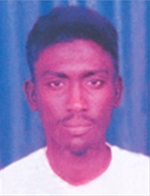
An even more clear death comes in the form of Faris Abdullah al-Harbi (D-21). Harbi is known to have carried out a suicide bombing in Iraq in November of 2004 [17,25]. As evidence, Harbi’s name appeared as the 61st in a compilation of suicide bombers from the Iraqi insurgency, gathered by journalists [26]. Specifically, his death was listed in the Dr. Mohamed Hafez work, Suicide Bombers in Iraq: The Strategy and Ideology of Martyrdom [27]. For the context of this writing, Dr. Hafez’s book is important because it showed that by its July 2007 publication, 53 of the 139 suicide bombers he named were Saudis [27]. Harbi’s death would have a profound impact on his brother Rayed, who followed in the jihadist’s footsteps [28]. Another pertinent example is Mohamed Abdulrahman al-Dhait (D-11), who is said to have fallen in battle in Baquba, Iraq, sometime prior to 2007; an assertion with enough confidence to also appear in Dr. Hafez’s publication [27]. This made sense as Al-Qaida in Iraq had elevated Baquba to the status of their self-styled capital in 2006 [29]. The Saudis however, cannot confirm the deaths as they have no physical evidence [17]. Due to the many press other reports though, we must consider both Musa and Osaimi possibly dead [17]. Harbi, due his inclusion on the aforementioned list of suicide bombers, and Dhait, also mentioned in the same book, must be concluded as certainly dead [27]. Another less clear case comes up in Khalid Mohamed Abbas al-Harbi (D-15). His family noted that Harbi had left to fight in Iraq in 2004 [1]. He was believed to have been wounded, and after recovering, to have rejoined ranks in the battlefield [1]. The family received unconfirmed news of Harbi’s death just two months prior to the wanted list being published [1]. It stated that Harbi had been killed fighting US forces in Fallujah during the autumn of 2004 which had seen the major US offensive in that city [1]. It should be noted that Harbi was not initially listed by the press as a member of List D believed to already be dead [17]. The unconfirmed report about Harbi would later be called into question due to more confusing issuances concerning the man [30].
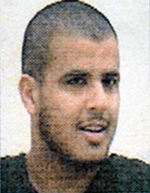

Shortly after this, the whereabouts of another List D member were ascertained. On July 9 an announcement was made stating that Zaid Hassan Mohamed Humaid (D-6), the lone Yemeni of the list, was discovered already imprisoned in another country [31,32]. Fittingly this country was Yemen, his homeland [31]. As it turns out, Humaid had been sentenced under a different name, being known as Zaid Hassan Omar al-Jeaidi [31]. Soon thereafter, the Yemenis, who had already held Humaid for an apparently lengthy amount of time, extradited the criminal to Saudi Arabia so that he could answer for his militancy therein [31,33].
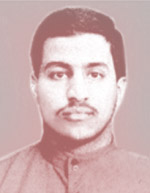
Dangers Persist
With the successes of the Saudi authorities against the group, it may have been easy for the populace to react with a certain amount of complacency, especially in the aftermath of the battle of al-Ras. Yet there were still dangerous elements of AQSA throughout the Kingdom and altercations had occurred in the time between the battle and the issuances of Lists C and D. The May 9 shootout that led to the arrest of Abdulaziz al-Tuwaili al-Anzi constituted one of these incidences [34,35]. Another had occurred on the day of Saudi Arabia’s limited municipal elections, April 21, when a car with four militants refused to stop at a checkpoint entering Mecca [36]. Although the driver was arrested, the remaining three men, all of which had been dressed as women, escaped [36]. They later ambushed the pursuing security forces, killing two of them and commencing a raging gun battle [36]. Two of the militants perished and the last was captured in this instance [36]. Mutlaq al-Juraisi al-Shammari, one of the deceased jihadists, was apparently part of a cell, a component of the network involved in garnering funds and recruits for their fellow al-Qaida affiliate in Iraq [37,38]. Shammari and his men appeared to be answering Awfi’s previous call to openly support Zarqawi in Iraq. The same day, another very similar battle with militants in Jeddah occurred, which resulted in two wounded and captured jihadists [36]. These examples show that the war against the militants was on-going, despite assertions that al-Ras had been the end of AQSA [39].
The organization was still very much a threat, and one that now, with so many of its leaders deceased, was hungry for revenge. This need for retribution became abundantly apparent in the time period discussed above, between al-Ras and the release of Lists C and D. Lt. Col. Mubarak al-Sawat, a high ranking Saudi official and one of the nation’s best interrogators, law enforcement members, and most effective men in dealing with the militant threat found himself on a list of AQSA targets for assassination [40]. Although Lt. Col. Sawat chose to continue with his quotidian routines despite the danger, the militants did not back down to his pride [40]. The militants of AQSA planned to abduct, torture, and murder Sawat while filming the process as a warning to other Saudi officials [40]. While AQSA had in the past hidden behind the label of the Haramain Brigades when attacking Saudi figures, and had done so with some degree of caution, their frustrations with the loss of their leadership began to spill forth in violence and blatant disregard to their so-called reputation [41]. The assassins, Mansur al-Thubaiti and Kamal al-Fawda, waited on the rooftop of Sawat’s Mecca house on the morning of June 19 and when Sawat exited to leave for work pounced upon their prey [40]. Even though they had the element of surprise and intent to abduct, the men were startled by Sawat’s ability to defend himself [40]. In abandoning their initial plans, Thubaiti and Fawda instead chose to shoot Sawat on the stairwell and make a hasty escape [40]. In addition to Sawat’s corpse, the men left their video camera and a large amount of additional evidence [40].
The assassins fled Mecca but were quickly discovered by security forces [42]. On June 21, the forces engaged the two men in a skirmish after a vehicle pursuit that ended in Jeddah [42]. Mansur Mustafa al-Thubaiti, a 23 year old college student who had originally studied science prior to his indoctrination into the religious radical circle, was left dead [40,42]. Kamal Sami Ahmed al-Fawda, a 45 year old veteran of the fighting in Afghanistan, also perished in the fight [42]. Fawda had been to Afghanistan to fight four times [42]. In his time in the Kingdom, Fawda had been convicted of robbery and had spent time in prison [42]. His case is unusual considering that the usual AQSA militants attempted to claim clean criminal records or to be free from petty criminal actions such as robbery and theft [43]. This is strange given that the group engaged in an abundance of serious crimes, although they could profess such crimes as justified by their religion. The Sawat murder showed that AQSA was keen on exacting revenge on the law enforcement officials and interrogators that they blamed for the torture, capture, and deaths of their colleagues. The Saudis were forced yet again to respond with their own operations.
In the next chapter we detail more of the remaining domestic network of AQSA, the complexities of their leadership, and the rarity of capturing the extremists alive. As we discussed in this chapter, it was a remarkable shift by the Saudis to finally acknowledge the lethal export of radical jihadists to other war theatres, particularly Iraq. This concern also highlights the relationship between entities such as AQSA and AQI. Yet even as they turned their attention to their wayward citizens abroad, the Kingdom could ill afford to lose focus on the violent threats at home.
CITATIONS and SUBSTANTIVE NOTES:
- [A] Please see the Chronicles In Zealotry profile of al-Qaida official Hamza al-Ghamdi for further explanation and profile of Saleh Said al-Bitaih al-Ghamdi (D-13) – https://chroniclesinzealotry.com/2024/06/14/hamza-al-ghamdi-us-state-department-announces-reward-for-veteran-yet-enigmatic-al-qaida-majlis-al-shura-councilor/
- [1] Young Militants not Battle-Hardened, by Rob L. Wagner, Maha Sami Aboulola and Shroog Talal Radain, The Saudi Gazette, June 30, 2005, https://sites.google.com/site/roblwagnerarchives/young-militants-not-battle-hardened
- [2] Asharq al-Awsat Exclusive: an insight into the al-Hayari myth, by Mishari al-Zayadi, Asharq al-Awsat, July 4, 2005, http://www.aawsat.net/2005/07/article55270913/asharq-al-awsat-exclusive-an-insight-into-the-al-hayari-myth
- [3] Al-Qaida’s in Saudi Arabia leader killed by Saudi forces in raid; three others arrested, by Abdullah al-Shihri, The Associated Press, July 3, 2005, http://www.freerepublic.com/focus/f-news/1435835/posts
- [4] Ain al-Yaqeen News Magazine, July 8, 2005, http://www.ainalyaqeen.com/issues/20050708/feat4en.htm
- [5] Wanted Terrorist surrenders, Arab News, September 3, 2004, http://www.arabnews.com/node/254748
- [6] Wanted: SR7M Bounty Hunt, by Rob L. Wagner, The Saudi Gazette, June 29, 2005, https://sites.google.com/site/roblwagnerarchives/wanted-sr7m-bounty-hunt
- [7] Ain al-Yaqeen, July 1,2005, http://www.ainalyaqeen.com/issues/20050701/feat4en.htm
- [8] Al-Qaida suspect killed in Riyadh, CNN News, July 3, 2005, http://www.cnn.com/2005/WORLD/meast/07/03/saudi.arrest/
- [9] Zarqawi says US bombing killed al-Rashoud, by Raid Qusti and Saad al-Matrafi, Arab News, June 24, 2005, http://www.arabnews.com/node/268961
- [10] All five terrorists killed were on the most wanted lists, by P.K. Abdul Ghafour, September 9, 2005, http://www.arabnews.com/node/272710
- [11] Wanted al Haseri killed with the leader of al Qaeda al Awfi in latest clashes in Saudi Arabia, by Omar El-Okaily, Asharq al-Awsat, August 20, 2005, http://www.aawsat.net/2005/08/article55270290/wanted-al-haseri-killed-with-the-leader-of-al-qaeda-al-awfi-in-latest-clashes-in-saudi-arabia
- [12] New terror “faces” emerge, The Kuwait Times, June 30, 2005, http://www.freerepublic.com/focus/news/1433659/posts
- [13] Al-Qaida member in Kuwait’s custody: Man confesses to planning attack on French tanker and car bombing in Yemen, New York Times, November 17, 2002, http://articles.baltimoresun.com/2002-11-17/news/0211170078_1_qaida-kuwait-saudi-arabia
- [14] United States Designation of Muhsin al-Fadhli as a Terrorist, February 15, 2005, http://iipdigital.usembassy.gov/st/english/texttrans/2005/02/20050215155659ndyblehs0.568722.html#axzz3aj9SQ9kL
- [15] Terror In The Holy City: Analyzing The Al-qaida Attacks In Mecca, by John C. K. Daly, Spotlight on Terror 1(1) from the Jamestown Foundation, November 26, 2003, http://www.jamestown.org/single/?no_cache=1&tx_ttnews%5Btt_news%5D=26223
- [16] AQSA Publication, Sawt al-Jihad, no. 4
- [17] Ain al-Yaqeen, July 8, 2005, http://www.ainalyaqeen.com/issues/20050708/feat4en.htm
- [18] Yusef Mubarak al-Shehri Guantanamo assessment file, ISN 114, http://wikileaks.org/gitmo/pdf/sa/us9sa-000114dp.pdf
- [19] Wanted Saudi killed in Afghan airstrike, by Abdul Nabi Shaheen, The Gulf News, October 5, 2010, http://gulfnews.com/news/gulf/saudi-arabia/wanted-saudi-killed-in-afghan-air-strike-1.691885
- [20] Saudis kill al-Qaida leader, by Brian Whitaker, The Guardian, August 18, 2005, http://www.guardian.co.uk/world/2005/aug/19/alqaida.saudiarabia
- [21] Saudi militant dies in Iraqi battle, by Rob L. Wagner and Shroog Talal Radain, The Saudi Gazette, June 24, 2005, https://sites.google.com/site/roblwagnerarchives/saudi-militant-dies-in-iraqi-battle
- [22] From Afghan caves to Kingdom’s streets, by Raid Qusti, Arab News, July 13, 2004, http://www.arabnews.com/node/252348
- [23] Terrorist Recruitment and Radicalization in Saudi Arabia, Thomas Hegghammer, http://www.thefreelibrary.com/Terrorist+recruitment+and+radicalization+in+Saudi+Arabia.-a0156581738
- [24] Al-Qaida chief of Saudi Arabia killed in clash, The Associated Press, July 3, 2005, http://www.foxnews.com/story/2005/07/03/al-qaeda-chief-saudi-arabia-killed-in-clash/
- [25] Wanted terrorist surrenders, by P.K. Abdul Ghafour, Arab News, July 2, 2005, http://www.arabnews.com/node/269376
- [26] Homicide bombers by name, by Aaron Peters, Anti-Mullah Blog, August 14, 2007, (Personal blog listing known suicide bombers in Iraq), http://noiri.blogspot.com/2007/08/homicide-bombers-by-name.html
- [27] Suicide bombers in Iraq: The Strategy and Ideology of Martyrdom, Mohammed M. Hafez, United States Institute of Peace Press, 2007, p. 252
- [28] Al-Qaida lied about funds, seeks recruitment of foreigners in the Kingdom, The Saudi Gazette, October 23, 2009, http://www.saudigazette.com.sa/index.cfm?method=home.regcon&contentID=2009102352344
- [29] Baqubah is still “a work in progress,” The Los Angeles Times, August 13, 2007, https://www.latimes.com/archives/la-xpm-2007-aug-13-fg-baqubah13-story.html
- [30] US drone strike kills key al-Qaida leader in Pakistan, DPA, October 9, 2010, http://www.sify.com/news/us-drone-strike-kills-key-al-qaeda-leader-in-pakistan-news-international-kkjtObcjeae.html
- [31] Ain al-Yaqeen, July 15, 2005, http://www.ainalyaqeen.com/issues/20050715/feat10en.htm
- [32] Saudi Arabia: National Security in a Troubled Region, Anthony Cordesman, Praeger, 2009, p. 58
- [33] Saudi Arabia: Al-Qaida member in custody, Asharq al-Awsat, November 9, 2005, http://www.aawsat.net/2005/11/article55269033
- [34] Ain al-Yaqeen, May 13, 2005, http://www.ainalyaqeen.com/issues/20050513/feat5en.htm
- [35] Saudi Arabia: National Security in a Troubled Region, Anthony Cordesman, Praeger, 2009 p. 57
- [36] Two militants, two Saudi police killed in clashes in Mecca, Jeddah, The Associated Press, USA Today, April 22, 2005, http://usatoday30.usatoday.com/news/world/2005-04-22-saudi-clashes_x.htm?csp=34
- [37] Personal Correspondence with Thomas Hegghammer, Stanford University, from his Thesis: Appendix 4: Biographies of militants in post-2001 Saudi Arabia (dataset used in Chapter 12), Extended Samples
- [38] Arar border attack carried out by Saudi ISIS members: sources, by Nasser al-Haqbani, Asharq al-Awsat, January 10, 2015, https://eng-archive.aawsat.com/n-alhaqbani/news-middle-east/arar-border-attack-carried-out-by-saudi-isis-members-sources
- [39] Is al-Rass the last stand of Al-Qaida?, by Saad B. al-Matrafi, Arab News, April 6, 2005, http://www.arabnews.com/node/264942
- [40] Terrorists wanted to film killing of al-Sawat, by Saad al-Matrafi, Arab News, June 30, 2005, http://www.arabnews.com/node/269243
- [41] Jihad in Saudi Arabia: Violence and Pan-Islamism since 1979, Thomas Hegghammer, Cambridge University Press, 2010, p. 206
- [42] Several arrested in al-Sawat murder case, by P.K. Abdul Ghafour, Arab News, June 23, 2005, http://www.arabnews.com/node/268908
- [43] Saudi Arabia Backgrounder: Who are the Islamists?, ICG Middle East Report No. 31, September 21, 2004, http://www.pbs.org/wgbh/pages/frontline/shows/saud/themes/backgrounder.pdf
© Copyright 2024 Nolan R Beasley
 Chronicles in Zealotry