
Segment IV – Violence Infinitum (Chapter 13 – Amnesty And Animosity)
For the entirety of the Series, please see – https://chroniclesinzealotry.com/fugitives-of-the-peninsula/
Segment IV explores AQSA from immediately after the death of Muqrin through to the destructive Battle of Al-Ras. For this specific chapter we focus on the continued efforts of the Saudis to disrupt the network, both conventionally via force and otherwise, in the form of an amnesty. Also, we see how the militant organization and the remainders of List B attempted to recover under a new leadership.
Uncertain Success of Amnesty
At the home of a scholar in Jeddah, Saudi Arabia, a Kingdom’s plans for peacefully ending a menacing insurrection were seemingly coming to fruition [1,2]. Police had surrounded the house of the esteemed intellect Safar al-Hawali after the arrival of a mysterious man, alone in his vehicle, to the home [1,2]. Othman Hadi al-Maqbul al-Amri (B-21) had spoken with the scholar for some time prior to this moment and Hawali had offered his assistance in mediation between the wanted militant and Saudi authorities [1,2]. The scholar, considered sagacious and righteous by the extremists, had with particular help from the newly announced Saudi amnesty offer, just secured the surrender of a man who factored into the Saudi most wanted Lists A and B [1,2]. On June 28, 2004, mere days after the killing of his leader Abdulaziz al-Muqrin, Amri was arrested and met with Deputy Interior Minister Prince Mohamed bin Naif, who was in charge of corralling the country’s most wanted terrorists [1,2]. Amri made reference to the Crown’s amnesty when he later stated “I surrendered of my own free will, having trusted the words of Crown Prince Abdullah [1,2].” The Saudi amnesty which had gone into effect just five days prior was showing results. The Saudi Crown Prince and his brother King Fahd hoped that the insurrection could be quashed by peace and promises, their magnanimous approach allowing leniency for those who surrendered [1,2]. Professing that jihadism was anathema to society, yet allowing perpetrators to surrender unscathed was contradictory at best, yet the Saudis were willing to attempt what turned out to be an ephemeral program. Despite the auspicious start to the amnesty, the Saudis soon learned that AQSA and movements like them were entrenched in a cycle of violence infinitum.

The problem was that AQSA and similar movements could select ripened, impressionable followers from the lower class of Saudi society, those easily susceptible to religious and fanatical influences. Amri for example never attended high school (he had only received elementary education), but had managed to become a sergeant for maintenance in the Saudi military [1-3]. With no education except formal military training, he was an easy convert. Amri was removed from military service due to corruption charges and was eventually dismissed yet again after being given another opportunity [1-3]. He opened his own vegetable stand while working as a court clerk in his home governorate of al-Namas in the Saudi south; an entrepreneurship venture which cost him his employment due to conflicts of interest [1-3]. One of his employees at the stand, Mohamed Othman Abdullah al-Walidi al-Shehri (A-8), a college dropout and returnee from Afghanistan, was also radicalized with ease, and became one of the Riyadh compound suicide assault squad. Although Amri was never particularly religious (one could look at his two divorces), his family believed he had been heavily influenced later in life by religious extremists [1-3]. Amri eventually fought in Afghanistan and disappeared from his family by late 2002 [1-3]. Although they believed he was fighting in Iraq, the man had actually joined with the cadre of Al-Qaida militants flooding into the country after the US invasion of Afghanistan [1-3]. The partial amnesty that Amri finally accepted from King Fahd allowed for the charges against the militant to be dropped except under Shariah law, where victims’ families could still press charges [1,2]. In return, the offender would recant militancy and swear never to rejoin the folds of the insurgency [1,2,4]. For an easily influenced logistics planner from al-Namas like Amri, who himself encouraged others to join the group, the amnesty fit well as he played little to no part in actually carrying out attacks [1,2]. By June 24, 2004, one day after King Fahd’s amnesty was announced, a close militant associate of Amri’s named Saaban Mohamed Abdullah al-Lailahi al-Shehri, another logistician, had already accepted the deal [1,4]. Along with the scholar’s urging, Amri’s associate’s surrender no doubt helped him to make his decision. The intensely violent members of AQSA would have a harder time accepting the King’s plan. Even so, the effort was deemed excellent and necessary by the Saudi authorities, even as Prince Naif and the Interior Ministry admitted the amnesty was only truly aimed at middle ranking AQSA fighters [4].
A New Era and the King Fahd Raid

Even though the Saudis claimed they would hit AQSA much harder after the month-long amnesty period concluded [1,2], they were forced to engage much sooner as mostly insignificant members of the group were surrendering, while the hierarchy continued to force the Kingdom’s hand. On June 20, 2004, merely two days after the death of AQSA leader Abdulaziz al-Muqrin, the organization named his successor [5]. Saleh al-Awfi (B-5) would now take command of the religious extremists [5]. Awfi was a trained former prison guard and thus had knowledge and connections pertaining to the Saudi security forces [3,6]. Perhaps his connections could be partly responsible for the easy access AQSA had had to security force uniforms, IDs, etc. The new emir of the group was a veteran of fighting in Afghanistan and had returned home with Muqrin and the others after the battle of Tora Bora [3]. Awfi’s ascension to leadership proved negative for the Saudis in months to come. Some good news however, was reported on June 30, 2004 when it was announced that a gun battle had killed Abdullah al-Rashoud (B-24) [7]. This gun battle occurred in the King Fahd and Al-Quds districts of Riyadh [8].
Bandar al-Dakheel (B-20) was hiding in a villa in the King Fahd district of Riyadh when Saudi security forces attempted to raid the house in order to flush out the militant [8,9]. He was joined by accomplices Fahd Ali al-Qahbalan, Awad al-Awad, Abdulrahman al-Abdulwahab, and the ideologue Hamad al-Humaidi amongst others [10]. The forces surrounded the two-story building, and cordoned off the area, but Bandar and his men fled the villa, engaged the security forces in a shootout, and attempted to drive away in a Corolla and Suburban [8,9]. The villa was set to explode and rigged with traps but the Saudi forces defused the explosives [8,9]. As expected from the traps, the villa was the location of a significant weapons cache [8,9]. The Saudis also determined that a large number of militants had been hiding there including the wife of the recently deceased Muqrin [8,9]. Meanwhile, the Suburban was heavily damaged in the ensuing chase and the militants were forced to hijack a Honda Civic in order to continue onward [8,9]. When a police cruiser attempted to block the Civic from continuing down the road in al-Quds district, Bandar and his men opened fire killing a policeman, Hamud Abdullah al-Harbi with a shot through the head [8,9]. Eventually the Civic was stopped and there was an intense exchange of gunfire. One of Bandar’s men was killed while wearing an explosive belt, but Bandar himself managed to hijack a Crown Victoria and successfully fled the scene [8,9]. There were several tense minutes while security forces defused the bomb attached to the dead man [8]. It is this man that police initially named as the ideologue and propagandist Abdullah al-Rashoud, of List B [7,9]. Saudi forces later recognized and corrected their misidentification. The dead militant was revealed to be Fahd Ali Dakheel Al-Qahbalan [11,12]. While not on List B, Qahbalan was an important target for the Saudi forces due to the fact that he was in charge of smuggling weapons and bomb making materials for AQSA, as well as providing important logistics [11,12].
Meanwhile, as the chase resumed, Bandar injured several security force members, which resulted in the eventual death of one, Bandar al-Qahtani [8,9]. Civilians were also among the wounded [8,9]. The younger brother of Faisal al-Dahkeel [13] had eluded police but his hideout was compromised and his men were forced to flee their haven. He had lost a man in the end, but he and the rest of his cohorts, including Humaidi, Awad, and Abdulwahab, had escaped. Bandar himself was aligned with two of Muqrin’s experienced captains: Khalid al-Sinan and Badr al-Subayi, who had been implicated in the Muhaya attacks [14]. Interestingly, the shootout occurred in the same neighborhood where Bandar had killed Jonathan Hermann Bengler, a German citizen, around a month before [8,9]. More violence followed on the heels of this instance. As evidenced by the shootout and the large supply of weapons and technical equipment recovered from the King Fahd villa, not everyone in AQSA under Awfi’s new leadership was willing to lay down arms and surrender.
While the above incidents continued to bring fear to the Saudi populace, they did diminish the number of AQSA soldiers and associates. However, they disappointingly did not allow the Saudis to reap the deaths of any AQSA members from List B. Almost immediately after though, the Saudis were actually able to mark off two names. The rendering of two additional militants as inconsequential would unexpectedly arrive to the Saudis in early July 2004.
The Fates of the Fayha Wounded


In the previous segment it was mentioned that following the al-Fayha shootout on April 12, 2004, both Rakan al-Saikhan (B-2) and Nasir al-Rashid (B-19) had been seriously wounded [15]. The militants with whom they fled rushed the men out of and around the capital, fighting at checkpoints along the way and attempted to get care for their two wounded comrades [16,17]. Saikhan, the son of an important member of the Saudi Trade Ministry, however proved to be mortally wounded and died the next day from gunshot wounds to the chest [18,15,17]. The militants had moved him to two different locations in Riyadh before he succumbed to his injuries [17]. Rashid was able to hold off the inevitable longer, but he had been shot in the leg and was in dire need of care [15,17]. The militants initially had a choice to make as to whether or not to seek professional help for Rashid. They, in the end, chose not to, and resorted to amputating Rashid’s leg with a power saw [15,17]. They had brought medical equipment for the operation but it was not enough [15,17]. The resulting infection and gangrene killed Rashid slowly over the next several days [15,17]. Both militants were secretly buried by their peers [15,17]. In the end, Saikhan’s associate Awad Mohamed Ali al-Awad who had been with him in battle, and transported him while wounded, was most likely involved in burying him as well [15,17]. Muqrin himself directly oversaw the obsequies of Saikhan [15,17]. As a college educated militant, veteran of the fighting in Afghanistan, and an original List A member, Saikhan’s significance to the movement was only exemplified further by Muqrin’s direct oversight of his burial [18]. The Saudis announced these deaths on July 4, 2004 without having actually procured the bodies of either man [15,17].
The fact that the Saudis knew of the deaths probably, though not certainly, related to their eventual altercation with the aforementioned Awad. In the same moments that forces were battling against Bandar al-Dakheel and Qahbalan, and amidst that backdrop of chaos and confusion following the June 30 raid, Awad and his accomplice Abdulrahman Mohamed al-Abdulwahab had managed to flee the security forces in Riyadh [8-10]. Awad was wanted for his role in the Fayha shootout while, Abdulwahab was being sought after in connection with the shooting death of Jonathan Hermann Bengler, the German citizen killed a month earlier in Riyadh [12,17]. The two men were on high alert after the previous day’s gun battles had left their associate Qahbalan dead and their hideout raided [8,11]. The security forces however, were one step ahead of the men [17]. During the ensuing exchange of gunfire in Riyadh, Musleh Saad al-Qarni, a security officer, perished [17]. However, this shootout would turn out to be the final for Awad al-Awad as well [12,17]. With his cohort dead, Abdulwahab was wounded and captured [12,17]. One must think that perhaps Abdulwahab had knowledge of the Saikhan’s and Rashid’s deaths that he shared with interrogators, or that the evidence gleaned from the raided hideout revealed the details to Saudi forces. Regardless of how the information was obtained, at least five people involved with helping Rashid and Saikhan in their final days were arrested [17]. Hideouts where the wounded men were kept were raided as well [15,17]. Even more arrests linked to the two deceased men were made during these raids [15,17]. More prominent figures related to the transport and burials of these men will appear later in the story of the war against AQSA.
The Command Center
The Saudis were being forced to maintain a constant pressure against AQSA, and with 13 members of List B remaining at large there was no time to relax. On July 20, 2004, just three days prior to the expiration of the King’s amnesty offer, security forces prepared to raid and attack a villa in the King Fahd district of Riyadh [19,20]. The Saudis believed the compound was a major logistics and planning center for AQSA and began the siege after 11 pm that evening [19]. The Saudis came in heavily armed, with large numbers of security forces and multifarious fire power [19,20]. They were engaged in a fierce battle with the occupants of the target compound before overtaking it [19,20]. Militants actually attacked the police and military cordon around the compound during the battle, in an attempt to distract those forces [20]. These attackers were driven off by fierce return fire [20].
Perhaps the building was where Paul Johnson had been decapitated. This was heavily implied by the fact that the severed head was found refrigerated there within [19,21,22]. The building was also heavily fortified as police recovered several assault rifles, machine guns, RPGs, rockets including a surface to air missile, grenades, plastic explosives, pipe bombs, communication devices, and technical equipment [19-21]. Many of these weapons were used by the militants in the battle, resulting in the wounding of three security force members [20]. Additional sites were raided afterwards in the night, resulting in two more arrests [20,22]. Interestingly, the family of the highest profile AQSA member left standing was residing in the initial compound [19,20].
Saleh al-Awfi’s wife and three children were captured in the operation, and AQSA ideologue Issa Saad Mohamed al-Aushan (B-15) was killed [19,20]. This provided the Saudis with yet another chance to remove a name from List B. Aushan had graduated from law school at Imam Mohamed Saud Islamic University and eventually was employed as a judge in Jizan, then an imam at a mosque, before abandoning his duties and joining AQSA [23]. Aushan lived with an opportunity for privilege as he was the son-in-law of Abdullah al-Jabran, a prominent Saudi religious scholar, yet he had chosen instead to use his abilities for the benefits of extremists [24]. Although he had been captivated by the fighting in Chechnya and had assisted the well-known fundraiser Khalid al-Subait in garnering attention for the subject, the 9/11 attacks helped to shift his attention towards jihad in Afghanistan [25]. Beforehand he had been the protégé and traveling partner to Subait in his efforts to raise awareness and money for the Chechen mujahidin [24,26].
Aushan had attempted to join the war in Afghanistan against the US forces therein and was eventually incarcerated in a Syrian prison before being extradited back home [27]. He had never made it into the fighting but his biological brothers had [28]. As such, he was the only member of al-Qaida’s Shariah committee or group of ideologues to have attempted to wage jihad abroad after 9/11 [27]. For example, another ideologue, Hamad al-Humaidi, had been to Afghanistan in the late 1980s/early 1990s to fight against the Soviets, yet none of them had been to Afghanistan in the late 1990s during al-Qaida’s supremacy therein [27]. Years later the Saudis tauted Aushan as irrefutable proof of al-Qaida conspiring with the Iranian regime, insinuating that his presence in Iran after 9/11 confirmed that he was in command of al-Qaida militants located therein with approval from the Iranians [29]. Their source was a eulogy authored by fellow militant Majid al-Qahtani, wherein Aushan is described as joining a contingent of aspiring belligerents in Zabol, Sistan and Baluchistan, Iran, in coordination with al-Qaida leaders in the Khorasan and Yusef al-Ayiri in the Peninsula [30]. However, Aushan and his comrades found their sojourn truncated by the security situation in Iran and they were prevented from entering Afghanistan by the very regime they were supposedly functioning alongside [30]. While in Zabol, Aushan was said to have supported in managing logistics and donations concerning both the fresh recruits and hardened militants fleeing Afghanistan [29,30]. While Aushan’s role was one of some importance, it must be noted that Saudi media used the story of an extremist in route to join al-Qaida at war in a way to further villify their Iranian nemeses. He appears to have been one of many militants in the region at the time, in various degrees of traveling to or absconding from the war theatre. His later notoriety and connections retroactively gave more importance to his status at the time.
Aushan was primarily responsible for AQSA propaganda and as such his writings were used to recruit young men to jihad and to influence them to do violence in the name of religion [28,31]. He was often quoted by the official AQSA web release, Sawt al-Jihad (Voice of Jihad). In fact, Aushan was the direct overseer and editor of the militant “magazine/newsletter [31].” Aushan had recently renounced clerics urging for militants to accept the King’s Amnesty [28]. He and Muqrin also helped to bring about a publication aimed at recruiting Arab women to jihad [32]. This fact is fitting perhaps since AQSA claimed Aushan’s death was due to his defense of a woman: Awfi’s wife [33]. He further narrated official as-Sahab al-Qaida video releases such as “Badr al-Riyadh,” which detailed the Riyadh compound bombings [29]. As for his family, his brother Abdulaziz al-Aushan (al-Khalidi) was captured by the Northern Alliance while fighting for Brigade 55 during the US invasion of Afghanistan and subsequently became a prisoner in Guantanamo Bay (ISN 112) [34]. His other brother Sulaiman, also a member of Brigade 55, became ISN 121 in Guantanamo and was listed by the Saudis as being a high priority militant [35]. It was eventually evidenced that Paul Johnson was not decapitated within the raided compound, as it was reported that Aushan’s militant cousin Naif Abdulaziz Mohamed al-Aushan al-Khalidi had delivered the severed head to the site [34].

Another AQSA militant, Mujab Abu Ras al-Dosari was also killed in the heavy exchange that night in Riyadh, although he was a mere foot soldier in the group, who acted as a deputy to Aushan [36,20,33]. As mentioned, three security forces were wounded and three militants were also wounded before being captured [20]. One of the wounded AQSA members, Mishaal Hamud al-Farraj was later reported to have succumbed to his wounds [33]. It was AQSA that acknowledged the three men’s deaths in a statement which claimed that the men died defending the family of Saleh al-Awfi [33]. In the end, Mishaal al-Farraj, (the brother of the imprisoned Khalid Hamud al-Farraj; and formerly trained as a suicide bomber [36]) had actually survived and was incarcerated; AQSA’s proclamation of his death was probably due to his wounding and lack of subsequent information on him [37]. Mishaal’s indignation at the death of his father sent him spiraling to AQSA, a depth from which he would never recover [38].
Awfi and several others are believed to have escaped the hideout, as implied by the AQSA statement [33]. For example, one AQSA militant named Yunis al-Hayari, a Moroccan deputy of Karim al-Majati (B-4), was later said to have fought his way out of the compound and to safety [39]. The statement which declared Aushan dead also said, “Al-Awfi insisted that the mujahidin should go out and leave her (al-Awfi’s wife), after they nearly killed themselves in her defense, the mujahidin decided to (pull out), and that happened with God’s grace and no one of the brothers were hurt during it [33].” Despite the statement to the contrary, Saleh al-Awfi seems to have been wounded during the fierce exchange [40]. In the days after the battle, it was believed that the man’s tenure over AQSA would indeed be very brief.
The Expiration and the Ideologue
The month long amnesty expired with only two big names having turned themselves in. Othman al-Amri and Sheikh Khalid Odeh Mohamed al-Harbi (the wheel-chair bound cleric who sat with bin Laden in his infamous post 9/11 video) had been taken off the playing board, but so few others would join them [1,41]. Amri had surrendered within the country while Harbi, the Afghan-Soviet war veteran and religious advisor, returned home from Iran to quite the welcome on July 13th [1,41]. At least 27 militants had been extradited back to Saudi Arabia in July of 2004, and there are reports that the Saudis used these numbers to inflate the overall Amnesty acceptance numbers [19,42]. The other militants, whether they took the amnesty or were merely extradited home, did however provide some intelligence that might have led to the series of raids and gun battles which perforated the month of July [19]. A spattering of other militants, who in fact surrendered for the amnesty, received some media attention. In addition to Saaban al-Shehri, who surrendered immediately after the amnesty period was enacted on June 23, Ibrahim Sadiq al-Qaidi surrendered on July 16 in Damascus after a career which saw him fighting the Russians in Afghanistan, the Serbians in Bosnia and the Americans in Afghanistan, to which he had traveled after 9/11 [4,43,44]. Finally, on July 22 as the clock prepared to cease to tick for the amnesty period, Fawzan Nasir Ahmed al-Fawzan arrived home from Damascus where he had surrendered, and Fayez Rashid Mohamed al-Khushman al-Dosari laid down arms in the Saudi city of Taif [44,45]. In the end the amnesty could be seen to have both pros and cons, but it has since been generally viewed as a failure [46]. Safar al-Hawali, the religious figure who had helped secure the surrender of Ali Abdulrahman al-Faqasi al-Ghamdi (of List A) and Othman al-Amri, pleaded for more time to convince other militants, but was denied by the monarchy [44]. The Saudis returned to using their intelligence gathered from other methods in order to track the men. Their reliance on the amnesty, whether significant or not, was now a thing of the past.
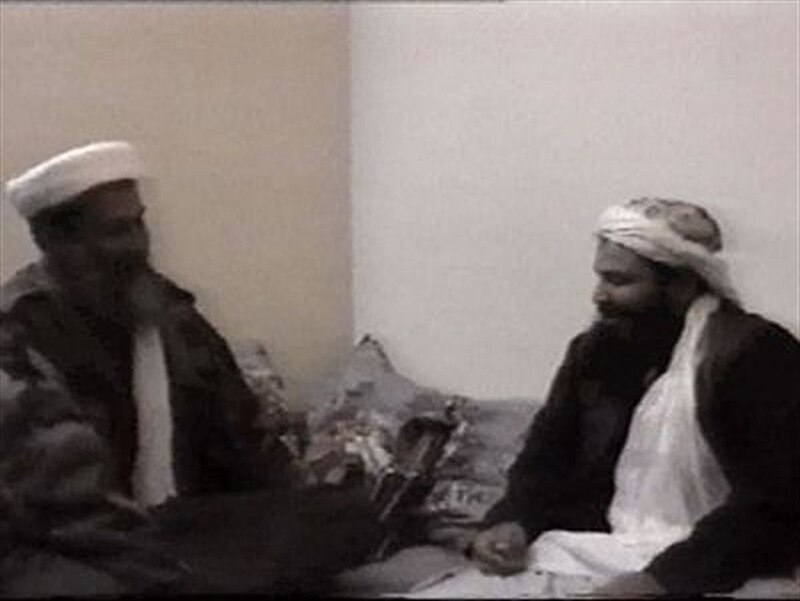
Intelligence the Saudis had thusly procured then led them to the mountainous province of Asir in early August, specifically to the town of Abha [47,48]. The militant they were seeking was on an escape path that would have eventually led him to Yemen [49]. They were targeting another List B member, AQSA ideologue Faris Ahmed Jamaan al-Showail al-Zahrani (B-12) [47,48,49]. While Zahrani was farther out from the action than his cohorts in Riyadh, he was described as a significant member of the group [47,48]. Zahrani was raised in the Saudi south and attended the Imam Mohamed Saud Islamic University [48,49]. His sanctimonious rants and speeches also appeared in the AQSA online magazine Sawt al-Jihad, a publication in which he held a major stake as one of the organization’s primary ideologues [47,48]. Zahrani had recently and publicly rejected the King’s Amnesty and decried the efforts of Safar al-Hawali, the scholar who stated he could bring several of the militants to surrender [47,48,49]. In a twist of irony, Zahrani had also with much bravado stated that he was successfully eluding the police dragnet: “I would like to reassure the people who love me. I am careful in my movements and contacts, and I take all necessary precautions [47,48].”

Zahrani no doubt came to rue those words on the morning of August 5, 2004 when he and an accomplice were swiftly and easily captured while eating at a café in Abha [47,48,49]. The security forces were able to raid the building and secure Zahrani and his man before either could fire the weapons in their possession [48]. Zahrani, in his pomposity was one of the most prominent ideologues of recent radical Islam, and was responsible for recruiting many young men to violence [49]. He held a master’s degree in Islamic Law from the aforementioned Imam Mohamed Saud Islamic University, and was a prolific writer and speaker [48,49]. His numerous papers and books were used by AQSA and AQAP for years to come [49]. He also held sway over many southern Saudis who joined the jihadists based on their fellow southerner’s words [49]. His kunya, Abu Jandal al-Azdi appeared on many an issue of Sawt al-Jihad during the early AQSA period [50,51]. By August 6 in fact, many supporters flooded the jihadist sites with statements of sadness at hearing the news of his capture [48]. The fact that Zahrani was captured is in itself very unique. The only other men to be taken off the list alive to this point were Mansur Faqih and Othman al-Amri who had surrendered themselves to authorities [1,52].
AQSA soon officially related the news that Zahrani had been captured sans a fight [53]. Not all AQSA members were lucky enough to survive the operation which targeted them. Around the same time that AQSA was announcing the Zahrani capture, on August 11, one of their veteran members was being hunted in the holy city of Mecca [54]. Abdulrahman Obaidallah al-Khalaf al-Harbi had opened fire on guards during the Muhaya attack, and was involved in the April car bombing attempts [55]. He was tracked down to the Khaldiyah apartment building in Mecca and gunned down during the resulting raid [54,55]. It should be noted that Harbi, the protégé of Ahmed al-Dakheel, was involved in the Mecca raid of June 2003 which also occurred at the Khalidiyah apartment building [56,57]. Harbi had escaped and went on to fight security forces in the Suwaidi district of Riyadh, fire upon guards during the Muhaya attack, and participate in the al-Fahya battle amongst other events [56]. It is also believed that Harbi was a prolific producer of explosives [54,55]. Harbi’s death was yet another blow to the number of AQSA veterans and thus the organization seemingly had been put on full retreat. Yet their signature murders soon resumed.
The era of Saleh al-Awfi began with the Saudis increasingly on the offensive to prevent further extreme acts of violence amongst the populace. We will next discuss the network in the later stages of 2004 as it was on endangered but not destroyed, struggling to conduct the massive attacks of before, but able to spread fear and terror nonetheless. The maintained Saudi and American efforts were effective, but the network was ever evolving.
CITATIONS:
- [1] Top terrorist surrenders under gov’t amnesty offer, by Raid Qusti, Arab News, June 29, 2004, http://arabnews.com/node/251753
- [2] Ain al-Yaqeen News Magazine, July 2, 2004, http://www.ainalyaqeen.com/issues/20040702/feat2en.htm
- [3] Background of the most wanted Terrorists Part 2, by Raid Qusti, Arab News, December 12, 2003, http://www.arabnews.com/node/241468
- [4] Foreigners could get guns: Naif, by Abdul Wahab Bashir, Arab News, June 24, 2004, http://www.arabnews.com/node/251569
- [5] Al-Qaida militants say they were helped by Saudi forces, CNN News, June 20, 2004, http://www.cnn.com/2004/WORLD/meast/06/20/saudi.militants/index.html
- [6] Profile: Saudi al-Qaida leader, BBC News, August 19, 2005, http://news.bbc.co.uk/2/hi/middle_east/4166612.stm
- [7] Radical Cleric killed in shootout in Saudi capital, by Abdullah al-Shihri, The Associated Press, July 1, 2004, http://www.freerepublic.com/focus/f-news/1163548/posts
- [8] Ain al-Yaqeen, July 2, 2004, http://www.ainalyaqeen.com/issues/20040702/feat4en.htm
- [9] Top Terrorist killed in shootout, by Raid Qusti, Arab News, July 1, 2004, http://www.arabnews.com/node/251864
- [10] AQSA Publication, Sawt al-Jihad, no. 29
- [11] Man killed in shootout wasn’t Rashoud, by Asma al-Muhammad of Asharq al-awsat, July 2, 2004, http://www.arabnews.com/node/251892
- [12] Terrorist killed in Riyadh gunbattle identified, by Munif al-Sufoki of Asharq al-Awsat, Arab News, July 3, 2004, http://www.arabnews.com/node/251944
- [13] Jihad in Saudi Arabia: Violence and Pan-Islamism since 1979, Thomas Hegghammer, Cambridge University Press, 2010, p. 192
- [14] 30th December 2004 – Interior Ministry issues detailed statement on recent incidents, Saudi Press Agency, December 30, 2004, http://www.saudinf.com/display_news.php?id=2443
- [15] Saudis: Two of most wanted died in battle, by Abdullah al-Shihri, The Associated Press, July 3, 2004, http://cjonline.com/stories/070404/pag_twokey.shtml
- [16] Saudi militants kill four police, BBC News, April 13, 2004, http://news.bbc.co.uk/2/hi/middle_east/3622995.stm
- [17] Ain al-Yaqeen, July 9, 2004, http://www.ainalyaqeen.com/issues/20040709/feat2en.htm
- [18] Sawt al-Jihad, no. 21
- [19] US hostage’s head found in freezer, CNN News, July 21, 2004, http://www.cnn.com/2004/WORLD/meast/07/21/saudi.johnson/
- [20] Ain al-Yaqeen, July 23, 2004, http://www.ainalyaqeen.com/issues/20040723/feat2en.htm
- [21] Saudis hit al-Qaida hub; US hostage’s head found during raid, by Dana Lewis, Fox News, July 21, 2004, http://www.foxnews.com/story/2004/07/21/saudis-hit-al-qaeda-hub-us-hostage-head-found-in-raid/
- [22] Saudi security forces find hostage’s head, by Brian Whitaker, The Guardian, July 21, 2004, http://www.guardian.co.uk/world/2004/jul/22/alqaida.saudiarabia
- [23] Background of the most wanted Terrorists, by Raid Qusti, Arab News, December 11, 2003, http://www.arabnews.com/node/241413
- [24] Terrorist Recruitment and Radicalization in Saudi Arabia, Thomas Hegghammer, Middle East Policy Council, 2006, http://www.thefreelibrary.com/Terrorist+recruitment+and+radicalization+in+Saudi+Arabia.-a0156581738
- [25] Jihad in Saudi Arabia: Violence and Pan-Islamism since 1979, Thomas Hegghammer, Cambridge University Press, 2010, p. 127-128
- [26] Sawt al-Jihad, no. 15
- [27] Jihad in Saudi Arabia: Violence and Pan-Islamism since 1979, Thomas Hegghammer, Cambridge University Press, 2010, p. 190-191
- [28] Brother of two Guantanamo detainees killed in Saudi raid, The Associated Press, July 23, 2004, http://old.cageprisoners.com/articles.php?id=2596
- [29] Revealing the relationship of al-Qaeda’s Minister of Information with Iran, Al-Arabiya News, September 21, 2017, https://english.alarabiya.net/features/2017/09/21/Revealing-the-relationship-of-al-Qaeda-s-Minister-of-Information-with-Iran
- [30] Sawt al-Jihad, no. 30
- [31] Sawt al-Jihad, no. 29
- [32] Female militants recruited via web, by Lloyd Vries, The Associated Press, August 27, 2004, http://www.cbsnews.com/news/female-militants-recruited-via-web/
- [33] Saudi Arabia Al-Qaida Cell Acknowledges Deaths of Three Members, Says Battle Was to Defend Leader’s Wife, by Sarah el Deeb, The Associated Press, July 26, 2004, http://www.freerepublic.com/focus/f-news/1179130/posts
- [34] Abdulaziz Saad Mohamed al-Aushan al-Khalidi Guantanamo Assessment File, ISN 112, http://wikileaks.org/gitmo/prisoner/112.html
- [35] Sulaiman Saad Mohamed al-Aushan al-Khalidi Guantanamo Assessment File, ISN 121, http://wikileaks.org/gitmo/prisoner/121.html
- [36] Path of Blood: The Story of Al-Qaeda’s War on the House of Saud, Thomas Small and Jonathan Hacker, Simon & Schuster UK, 2015
- [37] Saudi Arabia executes 47 for Insurgency, Al-Arabiya, January 2, 2016, https://english.alarabiya.net/en/News/middle-east/2016/01/02/Saudi-interior-ministry.html
- [38] REVEALED: Juvenile prisoners and mentally ill killed in Saudi executions, by Rori Donaghy, Middle East Eye, May 10, 2016, https://www.middleeasteye.net/news/revealed-juvenile-prisoners-and-mentally-ill-killed-saudi-executions
- [39] Young Militants not Battle-Hardened, by Rob L. Wagner, Maha Sami Aboulola and Shroog Talal Radain, The Saudi Gazette, June 30, 2005, https://sites.google.com/site/roblwagnerarchives/young-militants-not-battle-hardened
- [40] Al-Qaida in Saudi Arabia names new leader, by Raid Qusti, Arab News, November 4, 2004, http://www.arabnews.com/node/257575
- [41] Saudis: bin Laden associate surrenders, CNN News, July 14, 2004, http://www.cnn.com/2004/WORLD/meast/07/13/binladen.aide/
- [42] Saudi Arabia Backgrounder: Who are the Islamists?, ICG Middle East Report No. 31, September 21, 2004,
- http://www.pbs.org/wgbh/pages/frontline/shows/saud/themes/backgrounder.pdf
- [43] Report: Fourth militant surrenders to Saudis, The Associated Press, July 16, 2004, http://www.nbcnews.com/id/5430560/ns/us_news-security/t/report-fourth-militant-surrenders-saudis/#.UckAXPmTgrU
- [44] Global Jihadism: Theory and Practice, Jarret Brachman, Routledge, 2008, p. 155
- [45] Two more terrorists surrender as amnesty expires, Arab News, July 23, 2004, http://www.arabnews.com/node/252779
- [46] Hardcore militants disregard Saudi amnesty offer, USA Today, July 22, 2004, http://usatoday30.usatoday.com/news/world/2004-07-22-saudis-amnesty_x.htm
- [47] Saudi forces capture leading militant, The Guardian, August 6, 2004, http://www.guardian.co.uk/world/2004/aug/06/alqaida.saudiarabia
- [48] Saudis most wanted is captured, by Nadi Abou al-Magd, The Associated Press, August 6, 2004, http://www.cbsnews.com/2100-224_162-663581.html
- [49] From Saudi Arabia to Yemen: Faris al-Zahrani, the ideologue of jihadi operations in the gulf, by Murad Batal al-Shishani, The Jamestown Foundation, Terrorism Monitor, Volume 2, Issue 6, June 30, 2011, http://www.jamestown.org/single/?no_cache=1&tx_ttnews%5Bpointer%5D=6&tx_ttnews%5Btt_news%5D=38111&tx_ttnews%5BbackPid%5D=7&cHash=5d102e90630b0e9c287181f1ed1c8c4b#.UcoGE_mTgrU
- [50] Sawt al-Jihad, no. 10
- [51] Sawt al-Jihad, no. 11
- [52] Top wanted terrorist surrenders, by Raid Qusti, Arab News, December 31, 2003, http://www.arabnews.com/node/242409
- [53] Al-Qaida in Saudi acknowledges capture of fugitive al-Zahrani, August 12, 2004, Flashpoint Partners, https://flashpoint-intel.com/inteldocument/zahranicapture.pdf
- [54] Saudi Arabia: National Security in a Troubled Region, Anthony Cordesman, Praeger, 2009, p. 56
- [55] 13th August 2004-Interior Ministry identifies militant killed in Mecca, Saudi Press Agency, August 13, 2004, http://www.saudinf.com/display_news.php?id=2129
- [56] Sawt al-Jihad, no. 26
- [57] Sawt al-Jihad, no. 5
© Copyright 2024 Nolan R Beasley
 Chronicles in Zealotry