
Segment III – A War With The Angel Of Death (Chapter 12 – The Angel Descends)
For the entirety of the Series, please see – https://chroniclesinzealotry.com/fugitives-of-the-peninsula/
This chapter brings to a close the saga of Abdulaziz al-Muqrin, the veteran jihadist trusted by al-Qaida leadership to helm their efforts in the Peninsula. It also details the unfortunate circumstances that brought even more Americans under his wrath. We resume the story in the aftermath of the Khobar massacre and the strange occurance of the majority of the assailants actually surviving their mission.
After the Massacre
The surviving Khobar massacre perpetrators, having used and ditched hostages as cover, fled the scene of their crime, hijacked two vehicles, abandoned their wounded colleague Nimr al-Baqmi, and fled further in just one vehicle [1]. The three somehow eluded the Saudi forces and crossed a massive security force cordon in order to obtain their freedom [1,2]. The men abandoned their stolen vehicle, hijacked another and disappeared into the early morning darkness [1]. Security forces learned that the three may have sought refuge in a nearby mosque but by the time the area was surrounded the men had yet again escaped [1]. The assailants were engaged one last time by a small patrol near the SCECO Sub-Station, but they were able to fight their way through [1]. The sun arose on Khobar on May 30, 2004 to a scene of destruction and battle, an indelible scar now on the psyches of all expatriates in the Kingdom. Three of the four men claiming to be the Jerusalem Brigade of AQSA had left the scene successfully and many foreign workers in the Kingdom would never return home.
Later Turki al-Mutairi, calling himself Fawaz Mohamed al-Nashimi recounted the raid in extravagant detail [3,4]. Fawaz al-Nashimi was Mutairi’s alias and one that he often used when writing obituaries for his fallen comrades, such as Fahd al-Saidi and Khalid al-Baghdadi in the publication Sawt al-Jihad [5,6]. He spoke of the gun battles with Saudi forces, the murder of non-Muslims, and his escape [4]. He claimed and several sources corroborate that the militants were able to escape, very early in the morning, within the darkness well before the Saudi commandos raided the complex via their helicopters [1,3,7]. In fact, one of the carjacking victims stated that he was attacked at 3 am by the escaping militants, hours before the rescue raid [1]. This would explain how only Baqmi was captured and the others were able to flee so easily. The Saudis may have staged the daring morning helicopter raid to cover the fact that they had lost the militants during the night [3]. Mutairi’s (Nashimi’s) account may be full of bravado and false claims but there is some truth in it, as one matches his claims of murder with the actual killings and his timeline with that of the corresponding raids [4,8]. If nothing else, his account is harrowing and yet another example of Muqrin’s indifference towards human life [4].
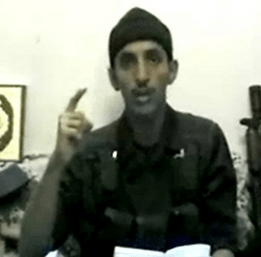
Mutairi’s account revels in the carnage, confirming in vivid detail the murders of their British, American, South African, Swedish, Italian, Filipino, and Indian victims [9]. Mutairi takes pride in recounting the butchery of their victims, consistently referencing the usage of knives to slash throats or decapitate innocents [9]. Of particular interest, Mutairi describes Nimr al-Baqmi’s “heroism,” during the event, followed by his subsequent “martyrdom [9].” Perhaps detailing Baqmi’s supposed death absolved the squad of abandoning their wounded comrade during their escape. Mutairi, referencing himself by an alias, only uses Nimr al-Baqmi’s actual name, assuredly due to his capture, or perhaps even due to a legitimate belief in his demise [9]. The other two perpetrators, Adel al-Dhubaiti and Abdullah al-Subayi, are referred to as Hussein and Nader throughout Mutairi’s account [9]. At one point in the escape, “Hussein” is believed to have been killed or injured when he jumps a supposed thirteen meters to the ground from the summit of an artificial waterfall at the final compound [9]. However, he survived unscathed, adding to the hyperbole of Mutairi’s narrative [9]. These references may very well explain why Hussein al-Hasaki (B-26) was initially believed by authorities to have been involved in the massacre.
In the aftermath of the Khobar massacre, two men who reportedly offered assistance to the attackers were stopped at a checkpoint in Taif [10]. Rather than give up or even show proper identification, the two militants opened fire on the security forces and fled by foot into the mountains of the desert region [10]. One of the militants was dressed as a woman while still in the vehicle in an apparent effort to hide his identity [10]. After twelve hours of chase, both militants were gunned down and killed [10,11]. They were later named as Abdulaziz al-Ghamdi and Abdulrahman al-Ghamdi [12]. While they were seemingly unimportant individuals in the overall AQSA organization, Abdulrahman al-Ghamdi’s wife would become someone of importance within the group [13,14]. Wafa al-Shehri was the sister of a militant in Guantanamo Bay and another militant fighting in Afghanistan [15]. With her husband killed in the mountains of Saudi Arabia she was available to become the wife of yet another jihadist as we will discuss much further into the story [15]. It should be mentioned that the Ghamdis’ attempt at hiding in the desert or mountains was not a unique occurrence among the extremists. It had been reported that Muqrin, after having his men hijack a truck of supplies, was living in deserted and cave-like hideouts, with little food and no money [7]. However, it seems unreasonable to think that he and his men could have put together such a series of attacks with such careful planning and heavy weaponry if this were the case.
Saga of Frank Gardner
Regardless of Muqrin’s hideout conditions, he was waging an effective war on foreigners within the Kingdom, causing a flood of fearful expatriates to exit the country, severe unease among the native population, a backlash against Muslims in other countries, and a rise in the price of oil due to the fact that his attacks were aimed at oil company offices and the residencies of oil facility employees [16,17]. In the immediate aftermath of the Khobar attacks, Muqrin had released a statement in which he vowed to bring misery to the Kingdom [18,19]. In addition, on June 2, two more Americans were fired upon in Riyadh, leading to the slight wounding one [10]. These events garnered the attention of the BBC’s Frank Gardner, a senior BBC reporter and leading expert on Al-Qaida [20]. Gardner and his Irish cameraman Simon Cumbers left the safety of Britain and came to Riyadh to report on AQSA in the aftermath of the Khobar attack [20]. In light of the fact that 15 of the 26 militants on List B were from the aforementioned al-Suwaidi neighborhood, the perspicacious Gardner decided that location would be prime for his reporting [20]. Gardner and Cumbers set up outside of the house of Ibrahim al-Rayes [21]. This location had been raided less than a year before after Rayes was shot and killed by security forces at a gas station [22]. On June 6, 2004 Frank Gardner, a well-known figure, was standing in AQSA home territory. This made him a prime target for Muqrin and Dakheel. The reporter and his cameraman probably never saw the gunmen approaching in their vehicle [23]. One of the Khobar attackers, Adel al-Dhubaiti, wantonly took aim at the duo [24]. As shots rang out, Cumbers was hit in the head and killed instantly, while Gardner took several bullets in the stomach and hit the ground, slowly bleeding out [20,21,23,25]. The gunmen fled while Gardner cried in pain trying to get someone to help him [25]. Cumbers, who had covered war stories in Northern Ireland and Iraq, had argued against journalists carrying weapons under any circumstances [26]. He was commended for defending journalistic integrity [26]. Gardner was known for his work in war zones and particularly his reports on Al-Qaida [20]. Gardner, a fluent Arabic speaker, always carried with him a copy of the Quran, which he used to convince bystanders in the slum that he was a Muslim and was in need of their assistance [25]. He cried out to them that he was a Muslim and was dying [25]. Gardner was eventually taken to King Faisal Hospital in Riyadh where he underwent surgery for the entire night on his bullet riddled abdomen and extremities [21]. He remained in a coma for some time but eventually recovered, and years later returned to the Kingdom [25,27].

Soon after the Gardner attack on June 7, Muqrin and his men released a statement which claimed that they would soon focus their attacks on US airliners as well as continuing to focus on foreigners within the Kingdom [28]. They also threatened any Saudis or Muslims who protected or assisted the “infidels [28].” This shift in focus could have been an effort to expand upon the fear already caused by the group’s actions thus far in the Kingdom against Westerners. With Turki al-Mutairi declaring to have trained as a hijacker, perhaps they felt they did have some credence in making such a claim. It did not however act as a portent that the days of attacking soft targets were ended.
Western Contractors Under Fire
The assaults on Westerners continued. On June 8, 2004 the next murder in Muqrin’s spree occurred. Robert Jacobs Jr. was a Virginian who lived outside of the protective compounds where Americans normally lived within the Kingdom [29]. Jacobs was an employee of Vinnel Corporation, a subsidiary of the sizable defense contractor Northrop Grumman Group [29,30]. Seven Vinnel employees had been killed in AQSA’s first major attack back in May the year before: the Riyadh compound bombings [30]. In fact, the two Americans fired upon on June 2 in Riyadh were reported as Vinnel employees [30], although other sources claimed they were actually US military officers, only one of them having been grazed by a bullet [31]. In an effort not to give into extreme fear in this environment Jacobs had not left the country or moved into one of Vinnel’s defended residences in Riyadh [29]. A video later appeared on the jihadists’ webpages showing the murder of Jacobs [32]. He appears to be chased into his garage by two armed men, one of whom was later identified as Faisal al-Dakheel [32,33]. Jacobs pleads for the men not to shoot him but Dakheel unleashes at least 10 bullets which strike Jacobs mostly in the head [32]. Dakheel then decapitates the body [32]. Jacobs was fond of Saudi society and came from a family where his father had been a State Department employee [29]. He and his family had lived in various locations across the world [29]. The man was a lover of different cultures and despite Muqrin and AQSA’s assertion that he was an infidel and enemy of Islam, he was in fact the opposite.
On Saturday June 12, 2004 AQSA committed its penultimate murder under Muqrin’s direction as they shot to death American Kenneth Scroggs while he parked his car in his home garage [34]. Scroggs, an employee of Advanced Electronics Company was shot in the back while on the same day another American, Paul Johnson, a Lockheed-Martin employee, was captured [34,35]. AQSA militants dressed as security forces and set up a fake checkpoint with which to abduct Johnson [36]. They used vehicles provided to them by sympathizers within the actual security forces [36]. Members of AQSA later boasted of this in an online statement [36]. The militants drugged Johnson and carried him to a different car for the escape, but stayed long enough to rig his own car as a trap [36]. Luckily, although the car caught fire, no one else was injured [36]. AQSA immediately claimed responsibility for the Scroggs murder and showed off Johnson’s identity card to prove they held him hostage [35].
An imperious Muqrin and his group later posted a video which displays Johnson blindfolded and repeating his name [37,38]. The lighting of the video is enhanced by night vision [37]. Muqrin and his men threaten to kill him in 72 hours and to treat him the same way that militants were treated in Abu Ghraib prison in Iraq [37,38]. ”If the tyrannical Saudi government wants their American master to be released, then they have to release our holy warriors that are held in Hair, Ruwais and Alisha prisons within 72 hours of this statement’s date,” Muqrin’s statement declares, ”Or else we will sacrifice his blood to God in revenge for our Muslim brothers who have been liberally killed everywhere [37].” Muqrin was identified on the tape wearing a mask and holding an assault rifle [38]. The detainees were to be released by Friday June 18, 2004 [37,38]. During his brief detention Johnson was interrogated by a young operative named Ismail al-Khuzaim, who could speak a reasonable amount of English [39]. Unfortunately for Johnson, neither the Saudis nor the Americans met Muqrin’s demands [40].
On June 18, 2004 Muqrin, Dakheel, Mutairi and their men made good on their threats [40]. Johnson was actually dead when he was beheaded, as after a brief struggle with Sultan Bajad al-Otaibi (B-9), he was gagged and subsequently suffocated as he fought for air [39]. Muqrin then ordered Abdulmajid Mohamed al-Muni (B-18) to decapitate the corpse [39]. Johnson, who worked on Apache helicopters for Lockheed was now dead, after which Muqrin stated, “Let him (Johnson) taste something of what Muslims have long tasted from Apache helicopter fire and missiles [40].” Muqrin also said that Johnson “works for military aviation and he belongs to the American army, which kills, tortures and harms Muslims everywhere, which supports enemies (of Islam) in Palestine, Philippines, Kashmir [41].” He continued his bilious rant in an attempt to justify the murder. Muqrin and AQSA posted images of Johnson’s decapitated body, having obdurately disregarded pleas from his wife for release earlier in the day [40].
The Descent

Inexplicably, it would appear that Muqrin engaged in the act of disposing of the remains in Riyadh with some of his most trusted men [33]. Muqrin and his driver Ibrahim Abdullah al-Draihem were joined by Dakheel and Mutairi (Nashimi) [33]. Draihem, who initially had a clean record, was used by Muqrin to procure safehouses in his name [42]. The quartet dumped the body and eventually, due to American and Saudi intelligence gathering methods, were located and tracked to a gas station in the al-Malaz district of Riyadh [33,43,44]. They visited the gas station for a vehicle they had stashed, and assumed the night would be clear due to security being diverted to the Kingdom’s most important soccer match, the final of the Saudi Premiere League, happening simultaneously [42]. It is there that Muqrin and Dakheel made a final stand against American interests and the Saudi Kingdom [33,44,45]. At around 9 pm, as the sun went down in Saudi Arabia, the night sky was alight with an immense battle in and around the gas station [33]. One security officer was killed, as well as Draihem, who was a suspect in the Muhaya attacks, and Mutairi, one of the surviving Khobar attackers [33,44]. Mutairi, who had been incredibly close to Muqrin, had also directly interacted with central al-Qaida leadership while in Afghanistan, including bin Laden and Saif al-Adel [46]. He had remained a vital figure for the organization after the Khobar massacre, obviously participating in the Johnson abduction, but also having been involved in shooting at the Americans on June 2 [46]. When the Saudis killed him, they removed a potential future leader of the organization. More importantly was the fact that both Muqrin and his trusted lieutenant Dakheel also perished [33,44,45]. From Muqrin, Dakheel and their men, a large store of weapons was recovered [33]. They included machine guns, pipe bombs, grenades, cash, computers, fake IDs, as well as a total of three cars, one of which was used to attack the BBC crew headed by Frank Gardner [33].
“On Friday, the leader Abdulaziz al-Muqrin was martyred along with three others…in an ambush carried out by the soldiers of the despot (in Saudi Arabia). They opened fire on them in a sudden way which led to their killing,” said a statement from AQSA [47]. “The Mujahidin are continuing the jihad that they have pledged to God and the killing of their brothers will not weaken their resolve but only increase their determination and commitment,” it continued [47]. AQSA was quick to acknowledge the death of its leader, and the Saudis were quick to flaunt it, as by the 19th they were showing his body on state television [47,48]. Muqrin had been affectively hunted by both Saudi forces and an FBI team sent to deal with the Johnson hostage situation [49]. No doubt other US forces were involved in the fight against Muqrin’s organization before this point as well. The intelligence provided by the Americans to the Saudis probably helped give the security forces the upper hand against the menace and his henchmen. An additional twelve militants were arrested in subsequent raids as the Saudis cordoned off areas in the Malaz district of Riyadh in order to try and apprehend the rest of Muqrin’s cohorts [33]. Meanwhile the US repeatedly pleaded with its citizens to leave the Kingdom if at all possible [50].

The al-Qaida central command, at the time located in the Shakai valley of South Waziristan, Pakistan, along the tribal border with Afghanistan, was in fact in direct communication with Muqrin. Abu Faraj al-Libi, coordinating al-Qaida managerial affairs and the efforts of its disparate and widespread subordinates, reported this to bin Laden in October 2004 [51]. However, the Libyan lieutenant admitted that after the death of Muqrin, communication was lost with the others of the AQSA contingent [51]. Thus, he dispatched an enigmatic operative, apparently known to bin Laden, an Emirati of Palestinian origin, called Abdullah al-Emirati [51]. According to the Libyan al-Qaida internal manager, Bin Laden previously deployed the Palestinian to Jordan in order to enact tasks against the Israelis [51]. Prior to the demise of Muqrin, Abu Faraj was actively preparing for the establishment of a courier route between him and the nascent al-Qaida franchise within Saudi Arabia [51]. Now though, Muqrin, a famed operative known and trusted by al-Qaida stalwarts Saif al-Adel, Khalid Shaikh Mohamed, and Abdulrahim al-Nashiri was neutralized, and the connection to the al-Qaida central command was severed.
American authorities originally knew Muqrin as Abu Hajir al-Najdi, a lieutenant of importance to Abdulrahim al-Nashiri [52,53]. He coordinated with Nashiri on militant projects, including the tentative plans for an attack on the US Embassy in Riyadh, while Nashiri himself focused on striking naval assets in Port Rashid, UAE [54]. In fact, even though Muqrin rejoined al-Qaida central leadership after the 9/11 attacks [43], he was entrusted by Khalid Sheikh Mohamed with managing hypothetical paramilitary, insurgent, and terror operations under Nashiri within the Saudi Kingdom [55]. These al-Qaida seniors would not have predicted that the losses of Nashiri, Yusef al-Ayiri, and Khalid al-Hajj, would ensure that Muqrin himself took the helm of the network in the Arabian Peninsula. However, while his ascension was assuredly welcomed, his time was brief and eventually resulted in his brutal descent from power and terror, stranding the nascent insurgency in a vulnerable position.
The loss was felt through the various iterations of al-Qaida central command for years to come. In a letter to bin Laden dated April 3, 2009, the developing jihadist idealogue Sultan Yusef Hassan al-Arif (known as Qattal al-Jadawi, Sultan al-Abdali, Qattal al-Najdi, etc [56]), lamented the martyrdom of Muqrin [57]. He declared that although he and his contemporaries fought in Pakistan and Afghanistan, their hearts and thoughts were in the Arabian Peninsula, and yearned to bring back their demented version of halcyon days; of Saudi Arabia under Muqrin and his terror [57].
Abdulaziz al-Muqrin, who at the age of 33 had fought in numerous religious war zones, been imprisoned, memorized the Quran, fought with Al-Qaida in Afghanistan post-9/11, had returned home to wreak havoc, had been put in charge of assassinating security officials, and eventually had taken over command of the AQSA organization, was finally dead [43]. He veiled his inherent violence and disregard for human life behind a facade constructed of his desire to protect Islam. In August 1996, as the Ethiopian military countered Islamic extremists, a captured Muqrin declared that he was in the region solely to shield Muslims from forced conversion to Christianity, attempting to paint himself as a paladin of his cause and faith [58]. While the intentions were ostensibly noble in his mind, his future actions were only represented by murder and wrath.
His reign may have indeed been ephemeral but it was exhausting and tragic for the many involved and for so many whose lives he touched in a most harmful manner. As of June 20, 2004, the Saudis and Americans were assured of the one surrender and nine assassinations of members of List B, leaving 16 men to be sought after. They hoped Muqrin’s death would create a power vacuum or struggle within the organization and that the hierarchy would fall apart. They hoped that the attacks on foreigners and American citizens would dwindle. They hoped that the remaining 16 names could be cleaned off the list with ease. The US wanted more deaths in order to render the list complete, but the Saudis would rely on a more controversial tactic: offering amnesty for those who would surrender in the summer of 2004 [59]. For those hardcore elements that had aligned themselves with Muqrin’s AQSA there was no power struggle and there was to be no acceptance of amnesty.
SEGMENT III Appendix (for List B Status as of June 2004):
- ABDULAZIZ ISSA ABDULMUHSIN AL-MUQRIN (REPEAT from LIST A)
- RAKAN MUHSIN MOHAMED AL-SAIKHAN (RE)
- KHALID ALI AL-HAJJ “ABU HAZIM AL-SHAIR” (RE) (YEMENI)
- KARIM AL-TOHANI IDRIS AL-MAJATI (MOROCCAN)
- SALEH MOHAMED AWADALLAH AL-ALAWI AL-AWFI (RE)
- IBRAHIM MOHAMED ABDULLAH AL-RAYES
- SAUD HAMUD OBAID AL-QOTAINI AL-OTAIBI
- AHMED ABDULRAHMAN SAQAR AL-FADHLI
- SULTAN BAJAD SAADUN AL-OTAIBI
- ABDULLAH SAUD ABUNAYAN AL-SUBAYI
- FAISAL ABDULRAHMAN ABDULLAH AL-DAKHEEL (RE)
- FARIS AHMED JAMAAN AL-SHOWEEL AL-ZAHRANI
- KHALID MUBARAK HABIBALLAH AL-QURASHI
- MANSUR MOHAMED AHMED FAQEEH
- ISSA SAAD MOHAMED AL-AUSHAN
- TALIB SAUD ABDULLAH AL-TALIB
- MUSTAFA IBRAHIM MOHAMED AL-MUBARAKI
- ABDULMAJID MOHAMED ABDULLAH AL-MUNI
- NASIR RASHID NASIR A-RASHID
- BANDAR ABDULRAHMAN ABDULLAH AL-DAKHEEL
- OTHMAN HADI MAQBUL AL-MARDI AL-AMRI (RE)
- TALAL ANBAR AHMED AL-ANBARI
- AMIR MUHSIN MARIF AL-ZAIDAN AL-SHEHRI
- ABDULLAH MOHAMED RASHID AL-RASHOUD
- ABDULRAHMAN MOHAMED MOHAMED AL-YAZJI
- HUSSEIN MOHAMED AL-HASAKI (MOROCCAN)
LIST H Removals (2002 FBI Alert):
- MUSTAFA ABDULQADIR ABED AL-ANSARI (killed in Yanbu attack)
LEGEND:
- KILLED IN EXCHANGE OR RAID
- PERISHED IN SUICIDE ATTACK
- CAPTURED
- FREE
CITATIONS:
- [1] Ain al-Yaqeen, June 4, 2003, *mistake in dating, should be 2004* http://www.ainalyaqeen.com/issues/20030604/feat3en.htm
- [2] Al-Qaida gunmen slip past ring of steel as toll hits 22, by Samia Nakhoul, Reuters, June 1, 2004, http://www.smh.com.au/articles/2004/05/31/1085855500205.html
- [3] Militants give blow by blow account of Saudi massacre, by Jason Burke of the Observer, The Guardian, June 5, 2004, http://www.guardian.co.uk/world/2004/jun/06/saudiarabia.jasonburke
- [4] Al-Qaida’s next action hero, by Daniel Kimmage, Slate Magazine, June 16, 2004, http://www.slate.com/articles/news_and_politics/foreigners/2004/06/alqaidas_next_action_hero.html
- [5] AQSA Publication, Sawt al-Jihad, no. 16
- [6] Sawt al-Jihad, no. 18
- [7] Midnight at the Oasis, by Michael Griffin, NTHPosition.com, http://www.nthposition.com/midnightat.php
- [8] Lessons from Al-Qaida’s attack on the Khobar compound, by Abdul Hameed Bakier, The Jamestown Foundation, The Terrorist Monitor, Volume 4, Issue 16, August 11, 2006, http://www.jamestown.org/programs/gta/single/?tx_ttnews%5Btt_news%5D=871&tx_ttnews%5BbackPid%5D=181&no_cache=1
- [9] In Their Own Words: Voices of Jihad – Compilation and Commentary, edited by David Aaron, Chapter: Life in Jihad – translation of Sawt al-Jihad Fawaz al-Nashimi Khobar Massacre account, RAND Corporation, 2008
- [10] Saudis kill militants allegedly tied to Khobar attack, The Associated Press, June 2, 2004, http://www.foxnews.com/story/0,2933,121516,00.html#ixzz2PEJYGdT6
- [11] Saudi Deaths deepen Khobar mystery, by Liz Blunt, BBC News, June 2, 2004, http://news.bbc.co.uk/2/hi/middle_east/3770731.stm
- [12] Sawt al-Jihad, no. 22
- [13] Saudi women played a marginal role in group’s activities, by Muhammad al-Sulami, Arab News, December 1, 2010, http://www.arabnews.com/node/361957
- [14] Wanted Saudi woman taken off Interpol list, by Muhammad al-Sulami, Arab News, January 30, 2013, http://www.arabnews.com/saudi-arabia/wanted-saudi-woman-taken-interpol-list
- [15] Al-Qaida lied about funds, seeks recruitment of foreigners in the Kingdom, The Saudi Gazette, October 23, 2009, http://www.saudigazette.com.sa/index.cfm?method=home.regcon&contentID=2009102352344
- [16] Expats fearful over Khobar raid, BBC News, June 2, 2004, http://news.bbc.co.uk/2/hi/middle_east/3760891.stm
- [17] Oil prices surge, by Rob McNeil, The London Evening Standard, June 1, 2004, http://www.thisislondon.co.uk/news/article-11070653-oil-price-surges.do
- [18] al-Qaida behind Saudi bloodbath, by Samia Nakhoul, Reuters, May31, 2004, http://www.theage.com.au/articles/2004/05/30/1085855437296.html
- [19]Saudi military storms complex to free hostages, by Neil MacFarquar, The New York Times, May 31, 2004, http://www.nytimes.com/2004/05/31/world/saudi-military-storms-complex-to-free-hostages.html?pagewanted=all&src=pm
- [20] Two BBC men shot in Saudi capital, BBC News, June 7, 2004, http://news.bbc.co.uk/2/hi/uk_news/3781803.stm
- [21] Police hunt killers of BBC cameraman, by Jason Deans, The Guardian, June 7, 2004, http://www.guardian.co.uk/media/2004/jun/07/bbc.saudiarabia1
- [22] Ain al-Yaqeen, December 12, 2003, http://www.ainalyaqeen.com/issues/20031212/feat7en.htm
- [23] Simon killed “by one shot,” The Mirror Reporter, June 18, 2004, http://www.thefreelibrary.com/SIMON+KILLED+’BY+ONE+SHOT’.-a0118314403
- [24] Simon Cumbers’s killer executed in Saudi Arabia, by Michael Jansen, The Irish Times, January 3, 2016, https://www.irishtimes.com/news/ireland/irish-news/simon-cumbers-s-killer-executed-in-saudi-arabia-1.2483590
- [25] Help me, I’m a Muslim, stricken BBC reporter cried, Agence France-Presse, June 8, 2004, http://www.smh.com.au/articles/2004/06/07/1086460241226.html
- [26] Obituary: Simon Cumbers, BBC News, June 7, 2004, http://news.bbc.co.uk/2/hi/uk_news/3782189.stm
- [27] They shot me six times and left me paralysed in a pool of blood – but I had to go back to al-Qaida country: Courageous pilgrimage by BBC’s Frank Gardner, by Frank Gardner, The Daily Mail, April 6, 2013, http://www.dailymail.co.uk/news/article-2305069/They-shot-times-left-paralysed-pool-blood–I-to-Al-Qaeda-country-Courageous-pilgrimage-BBCs-Frank-Gardner.html
- [28] Purported al-Qaida militants threaten airlines, CNN News, June 7, 2004, http://www.cnn.com/2004/WORLD/meast/06/07/saudi.threat/
- [29] Robert Jacobs loved going to camel races in Riyadh, by Barbara Ferguson, Arab News, June 10, 2004, http://www.arabnews.com/node/250882
- [30] US Military contract employee is shot dead in Saudi capital, by Neil MacFarquhar, The New York Times, June 9, 2004, http://www.nytimes.com/2004/06/09/world/us-military-contract-employee-is-shot-dead-in-saudi-capital.html
- [31] American military officers were shot at in Riyadh, US says, by James Cordahi, Bloomberg, June 2, 2004, http://www.bloomberg.com/apps/news?pid=newsarchive&sid=azV8UY_Pknkc
- [32] Website shows taped murder, The Australian, June 15, 2004, http://veracityvoice.com/?p=193
- [33] Ain al-Yaqeen, June 25, 2004, http://www.ainalyaqeen.com/issues/20040625/feat6en.htm
- [34] The Insider: Daily Terrorism Report, ABC News, June 14, 2004, http://abcnews.go.com/International/Investigation/story?id=79152&page=1#.UccRK_mTgrU
- [35] Al-Qaida linked to death of American in Riyadh, by Donna Abu Nasr, The Associated Press, June 13, 2004, http://amarillo.com/stories/061304/usn_alqaidalink.shtml
- [36] Al-Qaida site: Police helped in Johnson abduction, USA Today, June 20, 2004, http://www.usatoday.com/news/world/2004-06-20-saudi-message_x.htm
- [37] The Reach of War: Saudi hostage; Kidnappers of American threated to kill him in 3 days, by Neil MacFarquhar, The New York Times, June 16, 2004, http://www.nytimes.com/2004/06/16/world/reach-war-saudi-hostage-kidnappers-american-threaten-kill-him-3-days.html
- [38] Al-Qaida threatens to kill US hostage in Saudi, by Jasper Mortimer, The Independent, June 16, 2004, http://www.independent.co.uk/news/world/middle-east/alqaida-threatens-to-kill-us-hostage-in-saudi-6167416.html
- [39] Path of Blood: The Story of Al-Qaeda’s War on the House of Saud, Thomas Small and Jonathan Hacker, Simon & Schuster UK, 2015
- [40] Paul Johnson, US worker kidnapped in Saudi Arabia, beheaded, by Todd Zeranski, Bloomberg, June 18, 2004, http://www.bloomberg.com/apps/news?pid=newsarchive&sid=ag1Ch5Bq0RfY&refer=us
- [41] Terrorist Leader: Johnson was infidel, The Associated Press, June 20, 2004, http://www.foxnews.com/story/2004/06/20/terror-leader-johnson-was-infidel/
- [42] Path of Blood: The Story of Al-Qaeda’s War on the House of Saud, Thomas Small and Jonathan Hacker, Simon & Schuster UK, 2015
- [43] Abd al-Aziz al-Muqrin, by Lawrence Joffe, The Guardian, June 20, 2004, http://www.guardian.co.uk/news/2004/jun/21/guardianobituaries.alqaida
- [44] Al-Qaida admits killing of its Persian Gulf leader, The World Tribune, June 20, 2004, http://www.worldtribune.com/worldtribune/WTARC/2004/me_saudis_06_20.html
- [45] Saudi officials lauds major blow to al-Qaida, CNN News, June 20, 2004, http://www.cnn.com/2004/WORLD/meast/06/19/saudi.kidnap/
- [46] Sawt al-Jihad, no. 20
- [47] al-Qaida confirms Muqrin’s death, Reuters, June 20, 2004, http://www.abc.net.au/news/2004-06-20/al-qaeda-confirms-muqrins-death/1995668
- [48] Saudis air proof, show they killed al-Qaida kingpin, by Maggie Haberman, The New York Daily Times, June 20, 2004, http://www.nydailynews.com/archives/news/saudis-air-proof-show-killed-al-qaeda-kingpin-article-1.628600
- [49] Hostage beheaded in Saudi Arabia, CNN News, transcript, June 18, 2004, http://transcripts.cnn.com/TRANSCRIPTS/0406/18/bn.01.html
- [50] US asks all citizens in Saudi Arabia to leave, by Atul Aneja, The Hindu, May 2, 2004, http://www.hindu.com/2004/05/03/stories/2004050302351700.htm[172] Saudi Arabia offers amnesty to militants, USA Today, June 23, 2004, http://usatoday30.usatoday.com/news/world/2004-06-23-saudi-terrorism_x.htm
- [51] Letter from Abu Faraj al-Libi to Bin Laden, dated October 18, 2004
- [52] Adnan al-Sayegh Guantanamo Assessment File, ISN 105, https://wikileaks.org/gitmo/prisoner/105.html
- [53] Mohamed bin Moujan Guantanamo Assessment File, ISN 160, https://wikileaks.org/gitmo/prisoner/160.html
- [54] Abdulrahim al-Nashiri Guantanamo Assessment File, ISN 10015, http://wikileaks.org/gitmo/prisoner/10015.html
- [55] Path of Blood: The Story of Al-Qaeda’s War on the House of Saud, Thomas Small and Jonathan Hacker, Simon & Schuster UK, 2015
- [56] Specially Designated Nationals List Update, US Department of the Treasury, January 12, 2021, Sultan Yusef Hassan al-Arif, https://ofac.treasury.gov/recent-actions/20210112
- [57] Verbally Released Document for Naseer Trial, Letter from Qattal al-Jadawi to bin Laden, dated April 3, 2009, DNI Bin Laden Bookshelf, declassified May 20, 2015, https://www.dni.gov/files/documents/ubl/english/Verbally%20Released%20doc%20for%20Naseer%20trial.pdf
- [58] Shabaab al-Mujahideen: Migration and Jihad in the Horn of Africa, by Evan Kohlmann, NEFA Foundation, May 2009
- [59] Saudi Arabia offers amnesty to militants, USA Today, June 23, 2004, http://usatoday30.usatoday.com/news/world/2004-06-23-saudi-terrorism_x.htm
© Copyright 2024 Nolan R Beasley
 Chronicles in Zealotry