
Segment III – A War With The Angel Of Death (Chapter 11 – Havoc Across The Kingdom)
For the entirety of the Series, please see – https://chroniclesinzealotry.com/fugitives-of-the-peninsula/
In the wake of the Traffic Directorate explosion and the various failed vehicle-borne bombings of Operation Volcano, the standard al-Qaida crimes shifted from detonations to soft-target attacks utilizing dedicated and fanatical gunmen. As such, the Saudis raced to remove Muqrin’s established cells and influence. Yet these units proved to be spread throughout the Kingdom.
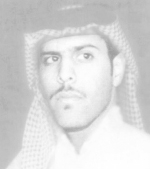
Battle in Jeddah
If there was a celebratory pause in the AQSA machine it was short lived after the Traffic Directorate attack. Security forces in Jeddah besieged six of Muqrin’s men on April 22, 2004, just one day after their first successful bombing of the post-Hajj era [1,2]. By default, the men were linked to the series of recent car bombings, but more specifically intelligence indicated that they were planning attacks against security forces within Jeddah [2]. The men were holed up in a building on Umm al-Qura Street in the al-Safa district of the city [1,2]. Security forces had to implement the tactics of SWAT teams, airborne attacks from helicopters, and eventually storming the building when the militants refused surrender and fought back voraciously [1,2]. Four of the men who refused to surrender were members of List B and had no intention of being captured [2]. The battle lasted through the night before the security forces stormed the building under cover of tear gas [1,2]. The siege ended there with the deaths of three militants and the capture of a fourth [1,2]. Only one security man was wounded in the entire exchange [1,2]. The battle left Mustafa Mubaraki (B-17) and Ahmed al-Fadhli (B-8) dead [1,2]. The third militant, who was unnamed, was reported to have been killed by his own men when he tried to surrender [1,2]. This was reported by the besieging security forces [1,2]. Interestingly, Fadhli who had been raised in Mecca had been a member of the Jeddah police [3]. He had also trained and fought within Afghanistan [3]. Due to his frequent absenteeism, Fadhli was in danger of losing his job prior to informing his family that he was going to travel to Iraq to obtain his martyrdom [3]. Instead, Fadhli deserted his wife, children, father and fourteen siblings and found his martyrdom within his own borders [3]. Mubaraki, who died beside Fadhli, had previously taught religion in a school, although he had not been known for extreme views. Nonetheless, the man would die for an aberrant form of Islam during that battle in Jeddah. Although his family had pleaded for his surrender, his close alliance with fellow militant Talal al-Anbari seems to have prevailed over blood ties, and he fought to the death for AQSA [4,5].

With three of their men dead and one captured, the two remaining militants, Talal al-Anbari (B-22) and Khalid al-Qurashi (B-13) fled the scene amidst the chaos of the siege. The two attempted to commandeer the vehicle of a fifteen year old boy and even shot him in the leg, but they were unable to secure the car [2]. However, they were able to fire upon security forces as well as eventually conduct a successful carjacking of a Saudi civilian and then flee in his vehicle [1,2]. The militants ended up at a hideout in the northern al-Naeem district of Jeddah but were quickly found by security forces [2]. Anbari and Qurashi escaped by crawling out of the air conditioning vents and driving away yet again [2]. However, this was not the end of the battle as they were successfully pursued by security forces to a building in the Nuzla Yamaniya neighborhood of Jeddah, after the Saudis were able to damage the vehicle [1,2]. The building was near the television station and was the scene of an early morning shootout with the two remaining militants [1,2]. Anbari and Qurashi attempted to flee to the upper floors of the building, firing upon their pursuers as they went [1,2].
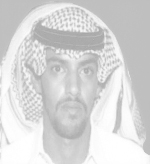
Qurashi had never been to the training camps of Afghanistan or gained jihadist experience in Iraq or elsewhere, yet had obtained military experience from his four years in the Saudi navy [6]. This experience he had thus far used to keep himself alive in the battle. Additional battle experience he had gained at the side of Abdulrahman Obaidallah al-Khalaf al-Harbi, as the two militants had engaged the security forces that raided their farm hideout in Muleda, Qassim Province on October 8, 2003 [7,8]. The men had escaped, though their cache of weapons and explosives had been confiscated, thus providing authorities with proof of Qurashi’s dedication to the extremist cause [7,8]. Qurashi was yet another to fall to the recruitment advances of those like Harbi and Anbari who had been to foreign theatres to fight [5,8]. Even his brother had been influenced enough by him to join the network, yet he had already been arrested back in 2003 [6]. Qurashi’s militant career culminated that April day in Jeddah, as he fled with Anbari, when the twelve hour firefight finally began to come to a conclusion. As the two men advanced up the stairs, Qurashi stopped to hold his ground while Anbari continued to the top [1,2]. The high school drop-out who had once destroyed his father’s TV, believing it was absolutely sinful to own one, was laying down covering fire for one of the men who had led him to a life of jihad [2,6]. Qurashi’s bewildered father had stated that his son carried a blind faith in the militant leaders [6]. In the end, Qurashi ran out of ammunition while still in the stairwell and was shot dead [1,2].
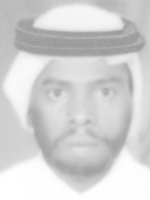
Meanwhile, Anbari made it to the top where he continued to fight. As mentioned, Anbari had fought in Afghanistan for Brigade 55 along the front lines after training at al-Faruq [5,9]. He was said to have joined the jihadists due to a religious epiphany and to have been introduced to the concept of radicalization via the internet [5,9]. The internet itself had not been introduced into Saudi society until 1999 [10]. Anbari fought against the US invasion and fled home through Iran [5,9]. Anbari was said to be affiliated directly with central al-Qaida leadership, in the person of Mohamed Atef [5]. Prior to leaving the battle grounds of Afghanistan, he vowed to wage jihad in order to protect the sacredness of the Arabian Peninsula [5]. The militant Mateb al-Mahyani, who had been killed back in November of 2003, joined Anbari in making this vow [5,11]. Anbari kept true to his promise and became the primary trainer at the Ayiri network’s secret training camps, preparing himself and the jihadists for war [5]. Thus Anbari, who had originally hailed from Taif, found himself in a fierce engagement that day in Jeddah, at one point pulling a grenade to throw at the Saudi forces [1,2,5]. Anbari had been firing from his rooftop position, holding the forces at bay, yet when he paused to throw the grenade his hand was struck by one of the countless bullets flying by him at the time [1,2]. The armed grenade fell into the rooftop room where Anbari had chosen to make his last stand, and the jihadist was killed in the following explosion [1,2]. In all the battle lasted over twelve hours and once done, the Saudi forces recovered a huge cache of weapons, disguises, and some wanted vehicles from the apartment building where the first battle started [2]. The vehicles had been hidden because they were linked to the deaths of two policemen, Ahmed al-Assaf and Ahmed al-Dhubaini, in Jeddah, earlier in the month [2]. Muqrin and his brutal second in command Faisal al-Dakheel had succeeded in bringing about fear to both Saudis and foreign nationals with their car bombing campaign but the government’s response had lost them four of their most loyal men.
Rampage in Yanbu
By the beginning of May 2004, it was apparent to the Saudis and Americans that Muqrin was raging an all-out war against them. The next escalation came in the form of an attack in Yanbu on May 1, 2004 [12]. It should be noted some believe that although he claimed the Yanbu incident, Muqrin may have just inspired the attacks [13,14]. The suggestion is that the attack may have not been Muqrin’s actual doing, as the cell was likely autonomous of the original Ayiri network structure. This theory goes on to state that regardless of Muqrin’s culpability in ordering the crime, the events were set off because of his previous actions [14]. This is much the same as Iraqi militant and terrorist instances that were not necessarily commanded by Zarqawi, but influenced by him. However, upon further analysis, the fact that Muqrin claimed the attack, and referred to the perpetrator by name, helps to prove that he did indeed have a hand in ordering the event [13]. In fact, the lead perpetrator actually contacted Muqrin with the request to achieve martyrdom through an attack on Westerners [15]. Thus, the Yanbu cell had been an autonomous entity, but in the end had been folded into Muqrin’s enterprise. Furthermore, it is fascinating to think that Muqrin was able to communicate with a cell across the Kingdom and send them to attack a specific target, despite the manhunt that should have hindered his communications. A more troubling revelation comes with the identity of the man who actually led the Yanbu attacks.
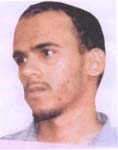
Mustafa Abdulqadir Abed al-Ansari (H-4) left the Saudi Kingdom in 1994 [16]. Having already fought in Afghanistan and Bosnia, he made his way to London [16]. There he joined briefly with the Committee for the Defense of the Legitimate Rights in the Kingdom which was a Saudi dissident group ran by Saad al-Faqih [16]. The leadership of the group split in 1996 and Ansari is suspected of breaking away from them then [16]. Faqih and another Saudi dissident leader, Mohamed al-Masaari, both described Ansari as uneducated, preoccupied with holy war, naïve, and unable to speak English well [16]. He was more interested in fighting than in politics [16]. While most Saudis obviously linked Ansari’s later actions to AQSA and al-Qaida in general, some in the government tried to link him back to the dissidents who had not heard from him since the 1990s [16]. In turn they tried to link the dissidents to Israel, never missing an opportunity to take a shot at that particular nation, or factions politically hostile to the monarchy [16]. If the name of Mustafa al-Ansari seems familiar it is because in Segment I of this book, he was listed as one of 17 men named by the FBI as imminent threats to Americans in February of 2002 [17]. These men were mostly poorly known, with little intelligence about most of them. Later the FBI claimed that the men were no longer posing a threat and removed them from its “Seeking Information” webpage [18]. These words and actions would no doubt later haunt officials after Mustafa Al-Ansari and three members of his family formed a terror cell and made themselves known to the world in Yanbu [16]. Ansari is believed to have covertly entered into the Kingdom via Yemen and set up a cell with his brother Ayman Abdulqadir Al-Ansari and two nephews Samir Suleiman al-Ansari and Sami Suleiman al-Ansari [16]. Mustafa al-Ansari was also a son in law of Ahmed al-Hada who ran al-Qaida’s communications center in Sanaa [19]. Once in Yanbu the Ansaris targeted Westerners at the offices of ABB Lummus Global Inc, an oil contractor [16,20].
Mustafa’s three relatives contracted for the petrochemical company which accounted for their ease in entering the offices [12,20]. Once inside they let Mustafa enter as well through an emergency gate and began to indiscriminately fire upon the employees [12,20]. Two American employees, two British, and one Australian were among the dead [12,20]. Additionally, at least one Saudi National Guardsman died in the forthcoming battle [12]. Once finished with their carnage the Ansari relatives fled the building, engaging security forces in an attempt to attack a residential compound. After being driven from this scene, the shootout moved down the street as the Ansaris dragged one of the dead Americans behind their stolen vehicle [12,20]. The car was reportedly carjacked at gunpoint and the naked corpse tied to the rear [12,20]. Witnesses reported that the Ansaris themselves were wearing the uniforms of Saudi security forces [20]. The travelling shootout ended with all of the Ansaris killed, one of whom was injured, captured, and died shortly later [12]. One assailant was shown dead, still in his vehicle [20]. As many as 50 were reported wounded, including a Canadian contractor who perished two weeks later from a bullet wound to the neck [20,21]. In the aftermath of the attack, all ABB Lummus Global Inc employees of European or North American origin were removed from Yanbu and returned to their native countries [16].
Initial reports claimed that Abdullah al-Subayi was one of the dead attackers, but this was refuted by the evidence that the assailants were actually Mustafa al-Ansari and his kin [16,20]. Interestingly, years later as the Saudis tried this case, 11 defendants were brought to trial, all of which were also related to the four men [22]. In May 2016, one of these men, reported to have assisted in the carnage, was sentenced to death by the Saudi government [23].
Shortly after the terrible crime, Muqrin on May 14, 2004 claimed responsibility for the attack, saying that “The Yanbu cell that carried out the successful, heroic operation this month is one of the most eloquent best examples (of what jihadists are required to be),” and also reiterating the fact that Ansari had fought with Al-Qaida militants within Afghanistan [12,24]. Muqrin stated that, “Our brother Abu Ammar Mustafa Al Ansari, God rest his soul, was from the cream of the mujahedeen, having waged jihad in Afghanistan and Somalia [24].” Clearly this is proof that Muqrin was directly responsible for the Ansaris’ carnage. The bloodbath on the Red Sea shocked Americans and other foreigners in the Kingdom and was a clear sign that AQSA had rallied their forces for a series of attacks. Next, Muqrin and his deputy Faisal al-Dakheel began targeting westerners in what could be a described as a serial killing spree.
The Khobar Massacre
By late May, Saudi forces increased their vigilance towards finding AQSA members. A May 20 raid in al-Khudairah, within the Qassim province, led to the deaths of four militants and the seizure of a weapons cache [25]. An additional militant was captured as well as a member of the security forces being killed [25]. Initially it was reported that among the dead was Bandar al-Dakheel, Faisal’s younger brother [26]. Bandar was not however, among the deceasad and it appears that they were merely AQSA foot soldiers [26]. Bandar had not participated in defending Afghanistan or anywhere else (except Saudi Arabia), yet he was to become an important member for the organization [27]. Bandar and some of his men appeared on May 22 in Riyadh where they pulled their car in a blocking maneuver in front of a man leaving a bank [28]. A German national, who worked as a chef for the Saudi national airline, had just conducted a transaction therein [26,28]. Dakheel and his men shot the German, Jonathan Hermann Bengler, in the head and fled the scene outside of the Arab National Bank [26,28,29]. Yet another Westerner was killed in Muqrin’s war.
This seemingly minor act of violence was followed by Muqrin’s most well-known militant escapade: the horrific and bloody al-Khobar attacks [30]. Muqrin had his cousin Abdullah Abdulaziz Ahmed al-Muqrin establish a cell in the Eastern Province in order to carry out operations [31,32]. The fact that the lesser Muqrin was not listed on List B did not detract from his importance to the AQSA network. His cell was equipped and manned by some of AQSA’s most dedicated soldiers. As such, four of Muqrin’s myrmidons carried out the Khobar attacks: Two veterans of the Muhaya attack, Nimr Sahaj al-Baqmi [33,34] and Adel Saad Jaza al-Dhubaiti [35] (also known as Adel Saad al-Mutairi [36]), a militant from List B, Abdullah al-Subayi (B-10) [36], and Muqrin’s apparent protégé, Turki Fuhaid al-Mutairi, a self-proclaimed militant hero who had trained to be a 9/11 hijacker [36,37]. Mutairi claimed to have trained for the operation and been a candidate for the mission [37]. His claims are unconfirmed yet it is known that he trained at al-Faruq at least and fought as a member of Brigade 55 [9,38]. Much the same as his superiors, Mutairi escaped through Iran and made his way home [38]. It is even believed that he intended on launching his own independent attacks prior to being brought into the AQSA fold [9,38]. Once he had been incorporated into the network, he was teamed up with Baqmi and the others for one of Muqrin’s defining strikes. As one of Muqrin’s most trusted men he had also participated in the Muhaya strike, and Faisal al-Dakheel’s assassination team, including murdering Saudi forces at the house of Khalid al-Farraj [39]. The Saudis also claimed that Hussein al-Hasaki (B-26) was directly involved with the planning and execution of the attack, although this remains unconfirmed [40]. The four man assault team attacked the Arab Petroleum Investment Corporation (APICORP) HQ in Khobar, after they killed two guards outside [30,41]. They were dressed in purloined military uniforms, and entered the compound killing at random [30]. Their bullets struck the gas tank of a GMC Suburban, catching it afire and killing a 10-year old Egyptian boy trapped inside [30]. The bloodshed began at around 7 am, and the APICORP attack eventually led to the death of a Filipino employee shot by the four [30]. Michael Hamilton, a British executive for APICORP also did not survive the morning, as he was shot down by the militants as he arrived for work [41]. The marauders drove two vehicles, including a large SUV, from the scene and dragged Hamilton behind them from a smaller car [30,41]. They eventually dumped his body by a bridge in disturbing fashion [30,41].
They attacked the Khobar Al-Rushaid Petroleum Center prior to 8 am killing an American, among others in the ambush [30,41,42]. The Center housed Resource Sciences Arabia, Ltd, which claimed to have lost personnel in the attack [41]. Frank Floyd, an employee of RSAL, was confirmed as the lone American killed on this horrendous day [43]. The Petroleum Center held offices of various companies including Shell [41,42,44]. When they were eventually engaged by security forces in the streets, they returned a heavy barrage of fire, killing an Indian citizen along the way [30]. Somewhere in the battle, the militants targeted and killed a South African citizen with their gun fire [42]. The militants left thirteen dead in their early morning shooting spree before moving on [30,45]. The sheer firepower used by the four allowed them to escape their armed Saudi pursuers and gave them time enough to raid the Oasis Residential Compound in Khobar [30]. The gunmen killed up to four security force members in taking the compound and were then able to procure nearly 50 hostages [30,46]. Originally the terrorists had planned to use their Nissan rigged with explosives as a suicide weapon but upon realization that they could easily enter the Compound, changed their objectives dramatically [47]. The terrorists systematically began to check the residents for proof of religion and nationality, separating Christians and Muslims [30,45]. Despite what appeared to be a nihilistic disregard for all life, the militants were cementing their cause as incendiary radical religion. In all, the militants butchered nine hostages by slitting their throats or shooting them in the head, including seven Asians, an Italian, and a Swede [30,45]. The bodies of the dead were mutilated and one thrown from the top floor of the compound where the militants had retreated with their hostages [41]. They were reportedly polite to the Muslim hostages but invariably cruel to others [41]. They shot to death the Swedish cook and actively persecuted Hindus [41,47]. They were able to eat and relax while holding the hostages, and were even able to take turns sleeping [48]. Perhaps one of the most incredibly disturbing moments of the incident saw the militants forcing Italian Antonio Amato (who had arrived in the Kingdom just weeks before) to plead for his life over the phone prior to Baqmi murdering him [41,49]. As the day progressed the militants even drove off a rescue attempt in a harsh gun battle which left a security officer dead [41,48].
On May 29, during the hostage crisis, the Saudis were able to rescue around 200 people from the Oasis Compound, while the core group of nearly 50 was being held by the four [45]. As mentioned, the militants allowed people to live based on the fact that they were Muslim [45]. Non-Muslims and Westerners were subjected to the wrath of Baqmi and the others. The four militants held the compound over night as Saudi forces prepared to storm the complex and kill the hostage takers.
“The heroic mujahedeen in the Jerusalem Squad were able, by the grace of God, to raid the locations of American companies … specializing in oil and exploration activities and which are plundering the Muslims’ resources, on Saturday morning,” said a subsequent statement by “the Al-Qaeda Organization in the Arabian Peninsula [44].” It continued, “They have so far managed to kill or wound a number of crusaders, God’s enemies. We will give details later, naming the heroes of our blessed squad.” The AQSA claim of responsibility came quickly and proved to initial observers that the three attacks were definitely linked. The statement was attributed to Muqrin [33]. In fact, just two days prior on May 27 Muqrin had issued a statement describing his upcoming tactics revolving around urban warfare techniques, commando raids, sabotage, bombings, assassinations, and abductions [7,33]. The men Muqrin referred to as the Jerusalem Squad or Brigade were carrying out his wishes with lethal precision [44,47].
The militants held the Compound into the early morning hours and eventually Saudi forces repelled from helicopters and raided the complex [33,45]. In the raid, 41 hostages were freed in addition to the over 200 freed the day before [33,45]. Earlier the militants used hostages as human shields and succeeded in escaping via stolen cars [30,45,50]. As mentioned, their initial car had been rigged to explode in the compound but the four had failed activate it [47]. Nimr al-Baqmi the leader of the excursion fired at Saudi forces while hanging out of the escape vehicle’s window [33,49,50]. He was hit by return fire and left by his compatriots to be captured by the Saudis [49,50]. Baqmi survived and was sent to prison [34]. Baqmi had also been one of the lead gunmen during the Muhaya attacks, battling security so the bombers could enter the complex [34]. In addition, he had conducted many missions for Muqrin in the past, including delivering over a ton of explosives to Mateb al-Mahyani’s Mecca cell, which was described in Segment II [51]. Baqmi also had joined Faisal al-Dakheel in his infamous ambuscade of security forces, which left the father of Khalid al-Farraj dead [51]. Furthering the proof that the al-Haramain Brigades were just a subset of AQSA, Baqmi was charged with participating in the April 21 bombing of the Traffic Directorate as well [51]. Baqmi was eventually tried for his crimes in October of 2012 along with 85 others linked to these attacks [34].
By the time the Khobar bloodbath was over seven Saudi security forces and compound guards lay dead, in addition to 22 civilians [30,33]. The nationalities of the 22 were an American, a Briton (who had been dragged behind a vehicle), a Swede, an Italian, a South African, the Egyptian boy, eight Indians, two Sri Lankans, three additional Saudis, and three Filipinos [33]. With the exception of Baqmi who was captured, Muqrin and AQSA suffered no casualties [50]. Subayi, Dhubaiti, and Mutairi had all escaped [50].
In the next chapter we discuss the aftermath and devastation of the Khobar massacre and the subsequent further attacks on Westerners conducting by Muqrin and his men. These included abductions and the replication of the newly pioneered Zarqawi-era tactic of using the internet to ransom hostages and ensure fear throughout the expat community in the Kingdom. We also examine the initial relationship of the now notorious Arabian franchise with their central al-Qaida cadre and leaders in the Khorasan.
CITATIONS:
- [1] More Terrorists killed, by Mahmoud Ahmad, Arab News, April 24, 2004, http://ourwarheroes.org/031903//arabnews/arabnews1488.htm
- [2] Ain al-Yaqeen News Magazine, April 30, 2004, http://www.ainalyaqeen.com/issues/20040430/feat7en.htm
- [3] Background of the most wanted Terrorists Part 3, by Raid Qusti, Arab News, December 13, 2003, http://www.arabnews.com/node/241498
- [4] Background of the most wanted Terrorists Part 4, by Raid Qusti, Arab News, December 14, 2003, http://www.arabnews.com/node/241540
- [5] AQSA Publication, Sawt al-Jihad, no. 17
- [6] Background of the most wanted Terrorists, by Raid Qusti, Arab News, December 11, 2003, http://www.arabnews.com/node/241413
- [7] Terrorism Timeline, Saudi-US Relations Information Service, May 14, 2013, http://www.susris.com/resources/timelines/terrorism-timeline/ and http://susris.com/timelines/terrorism-saudi-arabia/
- [8] AQSA Publication, Sawt al-Jihad, no. 26
- [9] Terrorist Recruitment and Radicalization in Saudi Arabia, Thomas Hegghammer, Middle East Policy Council, 2006, http://www.thefreelibrary.com/Terrorist+recruitment+and+radicalization+in+Saudi+Arabia.-a0156581738
- [10] Internet in Saudi Arabia, Communication and Information Technology Commission, http://www.internet.gov.sa/learn-the-web/guides/internet-in-saudi-arabia/view?set_language=en
- [11] Terror In The Holy City: Analyzing The Al-qaida Attacks In Mecca, by John C. K. Daly, The Jamestown Foundation, Spotlight on Terror, Volume 1, Issue 1, November 26, 2003, http://www.jamestown.org/single/?no_cache=1&tx_ttnews%5Btt_news%5D=26223
- [12] 1st May 2004 – Details of terrorist attack in Yanbu, Saudi Press Agency, May 1, 2004, http://www.saudinf.com/display_news.php?id=1882
- [13] Al-Qaida claims Yanbu attack, by P.K. Abdul Ghafour, Arab News, May 15, 2004, http://www.arabnews.com/node/249439
- [14] Jihad in Saudi Arabia: Violence and Pan-Islamism since 1979, Thomas Hegghammer, Cambridge University Press, 2010, p. 196
- [15] Global Jihadism: Theory and Practice, Jarrett Brachman, Routledge, 2008, p. 150
- [16] Saudis identify mastermind of Yanbu attack, The Associated Press, May 4, 2004, http://usatoday30.usatoday.com/news/world/2004-05-04-saudi-attack_x.htm
- [17] FBI Most Wanted, FBI Seeking Information Alert, February 11, 2002, http://web.archive.org/web/20020213124728/http://www.fbi.gov/mostwant/seekinfo/2-11-02.htm
- [18] FBI Seeking Terror Information, http://www.fbi.gov/wanted/terrorinfo
- [19] The Black Banners: The Inside Story of 911 and the War Against Al-Qaeda, Ali Soufan, W.W. Norton and Company, 2011, p. 348-351
- [20] Two Americans killed in Saudi terror attack, The Associated Press, May 2, 2004, http://www.foxnews.com/story/0,2933,118731,00.html
- [21] Canadian wounded in Saudi Arabia dies, CBC News, May 14, 2004, http://www.cbc.ca/news/world/story/2004/05/14/washburn_dead040514.html
- [22] All suspects in the Yanbu terrorist attack were from the same family, by Muhammad al-Sulami, Arab News, June 13, 2011, http://www.arabnews.com/node/380652
- [23] Man sentenced to death for role in 2004 Yanbu terror attack, Arab News, May 24, 2016, https://www.arabnews.com/node/929061/session_trace/page_action/session_trace/aggregate
- [24] Al-Qaida behind Yanbu – leader, Gulf News, May 15, 2004, http://m.gulfnews.com/al-qaida-behind-yanbu-leader-1.322345?utm_referrer=
- [25] Saudi security forces kill four suspected terrorists, Press release from Saudi Embassy in Washington, DC, May 20, 2004, http://www.saudiembassy.net/archive/2004/press/page43.aspx
- [26] German killed by a shot to the head on Saudi Street, The World Tribune, May 23, 2004, http://www.worldtribune.com/worldtribune/WTARC/2004/me_saudis_05_23.html
- [27] Jihad in Saudi Arabia: Violence and Pan-Islamism since 1979, Thomas Hegghammer, Cambridge University Press, 2010, p. 192
- [28] German killed in Saudi Arabia, USA Today, May 22, 2004, http://usatoday30.usatoday.com/news/world/2004-05-22-saudi-shooting_x.htm
- [29] German killed in drive-by shooting, by Raid Qusti, Arab News, May 23, 2004, http://www.arabnews.com/node/249902
- [30] Ain al-Yaqeen, June 4, 2003, *mistake in dating, should be 2004* http://www.ainalyaqeen.com/issues/20030604/feat3en.htm
- [31] Wanted Terrorist surrenders, Arab News, September 3, 2004, http://www.arabnews.com/node/254748
- [32] On 9/11 anniversary, Saudis recall terrorist attacks in Kingdom, by MD al-Sulami, Arab News, September 11, 2001, http://arabnews.com/node/390683
- [33] al-Qaida behind Saudi bloodbath, by Samia Nakhoul, Reuters, May31, 2004, http://www.theage.com.au/articles/2004/05/30/1085855437296.html
- [34] Gov’t denies unfair treatment of terror suspects, Arab News, October 12, 2012, http://www.arabnews.com/saudi-arabia/govt-denies-unfair-treatment-terror-suspects
- [35] The battle of al-Ras: The last stand of the who’s who of al-Qaida, by Sabria S. Jawhar and Rob L. Wagner, The Saudi Gazette, April 12, 2005, http://13martyrs.wordpress.com/saudi-gazette/
- [36] Sawt al-Jihad, no. 29
- [37] “20th” hijacker shown in web video, by CNN Senior Producer Henry Schuster, June 21, 2006, http://www.cnn.com/2006/WORLD/meast/06/21/saudi.hijacker/
- [38] Sawt al-Jihad, no. 20
- [39] Path of Blood: The Story of Al-Qaeda’s War on the House of Saud, Thomas Small and Jonathan Hacker, Simon & Schuster UK, 2015
- [40] Most wanted terrorist held, by Muneef al-Safouki, Arab News, October 27, 2004, http://www.arabnews.com/node/257189
- [41] “They killed two security guards then shot at a school van,” by Owen Bowcott, The Guardian, May 30, 2004, http://www.guardian.co.uk/world/2004/may/31/saudiarabia.oil2
- [42] Militants give blow by blow account of Saudi massacre, by Jason Burke of the Observer, The Guardian, June 5, 2004, http://www.guardian.co.uk/world/2004/jun/06/saudiarabia.jasonburke
- [43] Georgia man confirms his brother was American killed in terrorist attack, The Associated Press, June 1, 2004, http://new.accessnorthga.com/detail.php?n=167901
- [44] Westerners, Saudis, Egyptian killed in assaults on Saudi oil facilities, by Suleiman Nimr, Middle East Online, http://www.middle-east-online.com/english/?id=10094
- [45] Saudi military storms complex to free hostages, by Neil MacFarquar, The New York Times, May 31, 2004, http://www.nytimes.com/2004/05/31/world/saudi-military-storms-complex-to-free-hostages.html?pagewanted=all&src=pm
- [46] Saudis storm besieged compound, CNN News, May 30, 2004, http://articles.cnn.com/2004-05-29/world/saudi.shooting_1_saudi-security-forces-prince-bandar-saudi-officials?_s=PM:WORLD
- [47] Midnight at the Oasis, by Michael Griffin, NTHPosition.com, http://www.nthposition.com/midnightat.php
- [48] Lessons from Al-Qaida’s attack on the Khobar compound, by Abdul Hameed Bakier, The Jamestown Foundation, The Terrorist Monitor, Volume 4, Issue 16, August 11, 2006, http://www.jamestown.org/programs/gta/single/?tx_ttnews%5Btt_news%5D=871&tx_ttnews%5BbackPid%5D=181&no_cache=1
- [49] Al-Qaida’s next action hero, by Daniel Kimmage, Slate Magazine, June 16, 2004, http://www.slate.com/articles/news_and_politics/foreigners/2004/06/alqaidas_next_action_hero.html
- [50] Al-Qaida gunmen slip past ring of steel as toll hits 22, by Samia Nakhoul, Reuters, June 1, 2004, http://www.smh.com.au/articles/2004/05/31/1085855500205.html
- [51] Trial of Terror Mastermind begins in Riyadh, by Muhammad al-Sulami, Arab News, May 2, 2012, http://www.arabnews.com/%5Btermalias-raw%5D/trial-terror-mastermind-begins-riyadh
© Copyright 2024 Nolan R Beasley
 Chronicles in Zealotry