Segment III – A War With The Angel Of Death (Chapter 9 – Twenty Six Fugitives)
For the entirety of the Series, please see – https://chroniclesinzealotry.com/fugitives-of-the-peninsula/
In response to the brutality of Muhaya, the Saudis transitioned into another refined offensive. However, the al-Qaida belligerents pursued their own objectives with persistance. While the militants continued their violence during the month of Ramadan, the Saudis aimed to list and target specific individuals. Thus, yet another wanted roster was released, focusing on those responsible for the Muhaya terrorist attack. This chapter provides the introduction of those announced in the issuance (Referred to as List B), and commencement of the search for their whereabouts.
Ramadan Violence Continues
The first day of Eid al-Fitr signaled that the end of Ramadan had come to the Muslim world, and in Saudi Arabia the people were ready to celebrate. On the same day, two militants and their co-conspirators were preparing to execute a suicide attack in the capital of the Kingdom. Wearing military uniforms, their façade was completed with a sport vehicle rigged to explode and also painted to look like a military transport [1,2]. The militants were about the carry through with yet another blatant and unholy crime, continuing their supposedly religious war that would in the end ironically mainly affect Muslims. Abdulmuhsin Abdulaziz al-Shabanat was a militant who had been keen on joining the fighting in Afghanistan and had been sought after by the Saudi government though his name was not on the previously released official List A of 19 militants [3]. He had lost his brother Badr Abdulaziz al-Shabanat during the US invasion of Afghanistan in late 2001, a brother whom he had attempted to follow into the fray of warfare [3,4]. He had been induced to go to this theatre after deciding to defend the Taliban against what he saw as inevitable American aggression upon a proper Islamist state in the wake of the 9/11 attacks [5]. Upon his return to the Kingdom, he had decided to turn his ire upon his homeland and joined AQSA under the tutelage of Faisal al-Dakheel and Ahmed al-Dakheel [3]. Shabanat was one of the militants to escape the heavy gun battles in Riyadh during early August of 2003 [3]. He also even recruited others to this cause. One such man was Mosaed al-Subayi, a veteran of Afghanistan, who would join Shabanat for martyrdom on that first day of Eid al-Fitr [1,6]. Subayi, who had been radicalized by online jihadist publications prior to traveling to Afghanistan, had been recruited by Shabanat to fight in the Kingdom instead of going to join the insurgents of Iraq [5,6]. Subayi and two of his comrades, Abdullah Sultan al-Otaibi and Abdullah al-Subayi (who had also been planning on fighting in Iraq) had readily followed this veteran to the cause of AQSA [6,7]. Subayi had been wounded while training in Afghanistan (prior to 9/11) which had forced his return home and eventually led to brief imprisonment [7]. This premature return and detention could have ended the young man’s jihadist dreams yet Shabanat had provided for Subayi and his friends an avenue to express their extremism in their own Kingdom [7]. Shabanat was like several other Saudi and foreign fighters; on the forefront of an insurgency against the monarchy, but as of yet not publicly wanted. That was about to change for several jihadists. Shabanat however would not be one of them.
In the aftermath of the Muhaya attacks, where the precursor of Al-Qaida in the Arabian Peninsula managed only to kill other Muslims, (in the month of Ramadan no less), the terrorists were finding themselves in a precarious public position [8]. Their delusional idea that they were defenders of the Islamic religion is put fully into doubt by their disregard for the lives of even their fellow Muslims. The Saudi government meant to put an end to this debacle by using the mistakes of Al-Qaida in Saudi Arabia (AQSA) against the militants who made them. In the meantime, AQSA blindly pushed forward under the leadership of Khalid al-Hajj and the rising Abdulaziz al-Muqrin, who carried out the Muhaya attack, in order to perpetrate more bombings and brazen murder.
This bombing though, on November 25, 2003, at noontime in Riyadh was a failure. Security forces successfully thwarted Shabanat and his companions and rendered their explosives laden vehicle inoperable [1,2]. They recovered many of the militants’ weapons and supplies [1,2]. In the ensuing shootout, one militant in the detachment, the veteran Mosaed Mohamed Dheedan al-Subayi killed himself with a grenade [1,2]. Subayi, who upon his own unexpected return from Afghanistan had helped other militants reenter the Kingdom safely in the wake of the US invasion, and who had been eager and ecstatic to become a suicide bomber, only managed to die in vain [7]. Abdulmuhsin al-Shabanat joined him in death shortly thereafter when he was shot down by the security forces [1,2]. Another potential disaster orchestrated by Abdulaziz al-Muqrin had been averted.
Arabian Responses and List B
After the disastrous outcome of the Muhaya attacks, the Saudi government came to view their situation with the militants as advantageous. Feeling as if they had Al-Qaida on the run and in a not so favorable political and public position, in early December 2003 they released a second, more comprehensive most wanted list [9,10]. The hope was that with public sentiment turning fully against the insurgents, the populace would offer more information and lead to the frustration of more plots and the arrest of more suspects.
The Saudi southern neighbor of Yemen was also seeing the fruits of receiving tips that resulted in prominent al-Qaida arrests. Yemen had apprehended most of Nashiri’s network and incarcerated them for their crimes [11]. With Nashiri languishing in CIA custody and Abu Ali al-Harithi dead, the Yemeni franchise of al-Qaida was supposedly in the hands of Mohamed Hamdi al-Ahdal, who was seen as Harithi’s successor [12,13]. Ahdal had gained his jihadist experience fighting in Bosnia and Chechnya before coming to the forefront of al-Qaida’s presence in Yemen following the Harithi assassination [12]. It should be noted that this assertion of leadership was according to Yemeni and American intelligence sources [14], although Ahdal’s actual leadership capacity was questionable. Ahdal was definitely a money handler for the network, having moved thousands of dollars in order to procure weapons and supplies for Nashiri and Harithi, thus, helping to fund both the COLE and Limburg attacks [15]. That being said, his abilities in leading and restructuring the movement in their absence were seemingly nonexistent. Regardless, he was considered Harithi’s deputy and therefore was the most wanted al-Qaida militant in Yemen [12,14]. On November 25, 2003, on the same day as Shabanat’s failed bombing, Yemeni security forces acted on a tip and surrounded Ahdal west of Sanaa [12,16]. Harithi’s deputy surrendered and was taken into custody after being located at a wedding party [17]. The US would not be allowed to interrogate nor extradite Ahdal, therefore knowledge of his overall role still remains murky to this day [18]. The Saudis, meanwhile, took note of the fact that their much more unstable southern neighbor had seemingly reigned in control of al-Qaida within their borders, while in the Kingdom, a war was brewing. The failed Shabanat bombing and the news of the successful Yemeni operation to take down Ahdal (although the Yemeni counterterrorism efforts and their veracity will be discussed in later Segments), as well as the above listed factors, no doubt contributed to the Saudi Interior Ministry’s publication of the new wanted list.
This aforementioned list rolled over six of the names of List A, contained 20 new names of accomplices, and will here forth be referred to as List B. Paramount on the list were the List A survivors: Abdulaziz al-Muqrin, Rakan al-Saikhan, Faisal al-Dakheel, Othman al-Amri, Saleh al-Awfi, and Khalid al-Hajj [9,10]. Indeed, Hajj was the leader of the organization although it can be seen in retrospect that Muqrin was perhaps the far greater threat.
List B was constructed as follows:
- 1) Abdulaziz al-Muqrin;
- 2) Rakan al-Saikhan;
- 3) Khalid al-Hajj;
- 4) Karim Al-Tohani Idris Al-Majati;
- 5) Saleh al-Awfi;
- 6) Ibrahim Mohamed Abdullah al-Rayes;
- 7) Saud Hamud Obaid Al-Qotaini Al-Otaibi;
- 8) Ahmed Abdulrahman Saqar al-Fadhli;
- 9) Sultan Bajad Saadun Al-Otaibi;
- 10) Abdullah Saud Abunayan Al-Subayi;
- 11) Faisal Abdulrahman Abdullah Al-Dakheel;
- 12) Faris Ahmed Jamaan al-Showeel Al-Zahrani;
- 13) Khalid Mubarak Habiballah Al-Qurashi;
- 14) Mansur Mohamed Ahmed Faqih;
- 15) Issa Saad Mohamed Al-Aushan;
- 16) Talib Saud Abdullah al-Talib;
- 17) Mustafa Ibrahim Mohamed Mubaraki;
- 18) Abdulmajid Mohamed Abdullah Al-Muni;
- 19) Nasir Rashid Nasir Al-Rashid;
- 20) Bandar Abdullah Abdulrahman al-Dakheel;
- 21) Othman Hadi Maqbul Al-Mardi al-Amri;
- 22) Talal Anbar Ahmed al-Anbari;
- 23) Amir Muhsin Morif Al-Zaidan al-Shehri;
- 24) Abdullah Mohamed Rashid al-Rashoud;
- 25) Abdulrahman Mohamed Mohamed al-Yazji; and
- 26) Hussein Mohamed al-Hasaki [9,10].
- With the exception of Majati (B-4), Hajj (B-3), and Hasaki (B-26) all on the list are Saudi nationals [9,10]. Hajj is Yemeni while Majati and Hasaki are Moroccans [9,10].
Initial Yields And The Haramain Brigades

In certain validation of the idea that the public would lend information on the fugitives, almost immediately security forces did begin to receive tips as to potential whereabouts of the suspects. One early such alert concerned Ibrahim al-Rayes (B-6). Rayes was a veteran militant who had joined with the incoming younger generation of Al-Qaida fighters and offered his services to them [19]. While he had not taken part in the late 1990s or 2001 episodes of fighting within Afghanistan, he had fought in the country in the late 1980s against the Russians [20]. While back in Saudi Arabia he had been subject to arrests and prison terms, and attended gatherings of the precursors to the early 2000s jihadists in Riyadh [20]. His experience was valued by the younger jihadists and as such AQSA leadership impelled him not to join militants in Iraq but rather to stay at home and fight [20,21]. Rayes hailed from the violent Al-Suwaidi neighborhood in Riyadh which has served as a breeding ground for religious extremists [22]. Rayes was viewed as dangerous and this assertion soon showed itself to be true. Following the tips of the residents, Rayes was chased by Saudi forces until he was cornered at a gas station just outside of Riyadh [23]. The forces, upon attempting the arrest, were fired upon by Rayes, which subsequently led to him being killed in a return volley of fire [23,24]. In Rayes’ possession at the time of his death were false identity papers, a hand grenade, ammunition and handguns [23,24]. His residence was eventually searched revealing more weapons. The Saudi security forces had gone in with guns blazing, besieging a portion of the Al-Suwaidi neighborhood for some time and arresting other suspects [23]. The incident ended with one dead most wanted militant and was an auspicious start to the campaign being as it was only December 8, 2003 [24].

The next militant did not wait for death to find him in the form of Saudi security forces. He chose a much more prudent path and sought to turn himself in. Mansur Faqih (B-14) was a high school dropout and it can be inferred that the diffident youth was influenced into militancy by an older brother named Fahd. Fahd Faqih had chosen to join the ranks of militants in Afghanistan and via his pernicious example urged his brothers to follow along a similar path [25]. Unfortunately for Mansur, his involvement with jihadists was soon to be without any familial presence. Fahd was killed fighting in Afghanistan in 1998, and shortly after the Riyadh compound bombings in May, his younger brother Hassan was one of many suspected militants rounded up and arrested by authorities [25]. Reports state that Mansur went into hiding (and thus perhaps truly committed to the militant network) only after Hassan’s arrest [26]. Mansur had spent the subsequent months on the run with other AQSA militants. One can only assume that this was an exhausting and futile exercise and that he missed the remainder of his family who had implored him to surrender. Faqih was a part of a generation of fighters who had never left Saudi Arabia for the battle fields of jihad abroad, but who had instead been recruited by those who had [19]. On December 30, 2003, less than a month after his name and picture were published in List B, Faqih turned himself in to Saudi forces [25,26]. Faqih was immediately allowed to visit with family, including a father who had renounced the activities of his sons [25,26].
The surrender occurred one day after a bomb exploded in an empty car in Riyadh in what was later described as an attempt on the life of a Saudi security officer [26]. The car belonged to Major Ibrahim al-Dhali, of the Mabahith, or Saudi intelligence service [27]. Interestingly, Dhali had been one of the intelligence agents involved in torturing British citizen Sandy Mitchell (and other foreign workers in the Kingdom) into confessing to committing a bombing in 2000 which had left another British citizen dead [28]. Sandy Mitchell was eventually released, but this unfortunate episode served as an example of the Saudis attempting to protect their image by attributing Islamist violence to other sources [28]. The Al-Haramain Brigades, or Two Mosques Brigades, claimed the attack on Dhali and stated that it was a warning to officers about their pursuit of jihadists [26]. The Haramain Brigades was in fact just a name that AQSA would use when attacking controversial targets within the country such as Saudi police and military, as opposed to foreigners [27,29]. In fact, a December 4 assassination attempt in which gunmen shot and wounded Brigadier General Abdulaziz al-Huwairini a few days prior to the release of List B, was accounted for by the al-Haramain Brigades [30]. In their mendacious words which proved the above assertion, the group declared, “…since our brothers in al-Qaeda are busy fighting the crusaders, we took it upon ourselves to cleanse the land of the two holy mosques of the crusaders’ agents [30].”
The events after the Muhaya attack also coincided conveniently with the imprisoned militant Sheikhs and clerics, al-Khudair, al-Fahd and al-Khalidi, retracting their previous fatwas [25,31]. Khudair retracted on November 19, 2003, Fahd on the 22nd of that month, and Khalidi on December 13 [31]. The Saudis were attempting to use these men and their influence to bring about the repentance and surrender of the militants. Al-Khalidi specifically asked militants to lay down their arms, a conviction he had garnered after his “soul-searching” while incarcerated [25]. Khalidi also made reference to the fact that he was disturbed by the militants’ attack on the Muhaya compound [32]. To what affect these recantations by the Sheikhs had or did not have is relatively unknown. It was also believed that the sincerity of the retractions was suspect due to the fact that the men were in detention. In fact, only Khudair’s was believed to be well-meant and he was thusly heavily critiqued by Abdullah al-Rashoud (B-24) in an AQSA online release [31].
The Clinic and The Exhumation
After the auspicious start in December to the search for the 26 militants it would be a while before the Saudis could strike another blow or even remove another name from List B. From the previous Segment, the reader may find themselves reminded of a name briefly mentioned after the Nov. 6, 2003 shootout in the al-Suwaidi neighborhood of Riyadh. The saga of Amir Muhsin Marif al-Zaidan al-Shehri (B-23) began around eight months prior to the 9/11 attacks when the young man left home in Saudi Arabia for the militant al-Faruq training camp of Afghanistan [33,34]. He had been employed in Saudi Arabia by the group that oversaw the religious police (the Commission for the Promotion of Virtue and the Prevention of Vice), ever since he had dropped out of college prematurely [35]. Before his time in Afghanistan, he had been an imam in the city of his birth, Riyadh, as well as being a member of the Commission [35]. Upon arrival in Afghanistan, he trained with Al-Qaida, fought for Brigade 55, and was caught up along the front lines in the frenzy that was the 2001 war [34]. He combated against the Americans and became linked and entangled with Al-Qaida fighters there with whom he would eventually reconnoiter upon his return to his homeland. Amir’s cousin Abdulsalam Ghaythan Morif al-Zaidan al-Shehri and his own brother Zaidan Muhsin Morif al-Zaidan al-Shehri also joined him in Brigade 55 [36]. The men entrenched along the front lines in Kunduz, but Brigade 55 was forced to break and retreat under US bombardment and the advancing Northern Alliance [36]. Amir witnessed his brother’s death before fleeing the battle scene [36]. Demonstrating more interconnectedness among the militants, Amir and Zaidan had developed a companionship with Badr and Abdulmuhsin al-Shabanat; Badr also perished around the same time as Zaidan [37]. To further exemplify the relationship between the two sets of brothers, Amir joined Abdulmuhsin as one of the militants to participate in the Saudi gun battles of early August 2003 [37]. As for Amir and Zaidan’s cousin Abdulsalam, he was captured by the Northern Alliance and ended up eventually in Guantanamo Bay (ISN 132) [36]. With his brother dead and cousin captured, Amir al-Shehri fled from Afghanistan and entered Iran along a route that was to be taken by several Al-Qaida fighters and leaders [37,38]. Once in Iran he was held in captivity for a short period of time before being sent along his way via extradition to Saudi Arabia [37,38].
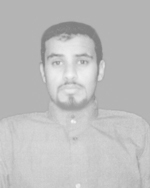
Prior to his name being added to List B, Shehri was released from custody, divorced his wife, remained in hiding along with his cohorts, and conceivably continued to plan attacks against Saudi and American interests [35]. It was in fact just days before the Muhaya attacks when at 4 am in the morning of November 6, 2003 Saudi forces surrounded a house in the turbulent neighborhood of al-Suwaidi [39,40]. The militants within came out firing and all except one escaped [39,40]. The forces responded with their own fire, leaving one dead militant, later identified as Abdullah Sultan al-Otaibi by an AQSA press release [33]. Otaibi was also a veteran of the fighting in Afghanistan, having answered the call for jihadists after the 9/11 attacks [34,41]. He trained at al-Faruq and fought along the front lines of the war [34]. Otaibi did not flee Afghanistan amidst the chaos of Tora Bora but remained in country and continued to contest the American occupation [41]. He fought in the battle of Shahi Kot (known as Operation Anaconda) in March 2002 and was eventually wounded in the shoulder, which forced his return home [41]. Like many others, Otaibi managed his way back through Iran [34]. Despite the fact that he was arrested upon return to Saudi Arabia and spent several months imprisoned, Otaibi was released in time to conspire with Mosaed al-Subayi and Abdullah al-Subayi (B-10) about waging jihad in Iraq [41,7]. As stated at the beginning of this Segment, Abdulmuhsin al-Shabanat convinced the trio to stay at home and fight. However, for Otaibi the fight was very brief. As the reader might remember from the previous Segment, it was mentioned that in addition to the dead militant Otaibi, at least one more was seriously wounded, as well as eight security forces having been injured [39,40]. The wounded militant was indeed Amir al-Shehri [33,37,42]. With Otaibi dead on the ground, Shehri was apparently shot in the chest and stomach while already in a car, which made his escape all the easier [29,42,43].
Upon realization of the seriousness of Al-Shehri’s wounds, the AQSA hierarchy had him transported to a place known as “the clinic.” Unfortunately, the clinic was only capable of handling small wounds and light trauma [29,42]. A trusted senior AQSA member, Khalid al-Farraj, later testified that Shehri remained in terrible pain for two months after the gun battle [29,42]. Farraj and Faisal al-Dakheel visited the wounded man at which point he pleaded with Dakheel to do something to render his condition better [29,42]. Dakheel refused directly to his follower’s pallid face and left Shehri to his demise. Once dead, Shehri was taken 30 km north of Riyadh, along the Riyadh-Kharj road and buried by Dakheel and a small party including Farraj in a desert area just south of Benban [29,33,42]. Abdullah al-Rashoud gave an intense sermon at the impromptu service [P-44]. Farraj claimed that the village was poor and held no advanced medical facilities and thus Shehri never had a chance of survival [29,43]. He claimed that Dakheel’s negligence towards his fallen militant brother was an example of AQSA’s disregard for human life and their selfishness [29,43]. It should be noted that Farraj’s statements were made while in custody of Saudi security forces.
AQSA was obligated to make an announcement about the death of Abdullah Sultan al-Otaibi in the November 6 gun battle and the subsequent death of Shehri two months later due to the Saudi security forces having found his makeshift tomb [33]. Shehri’s body was discovered and exhumed in February 2004 [33]. Later that month on the 22nd, after DNA testing, it was confirmed that the militant was indeed the exhumed corpse, and his name was removed from List B [42].
Swiss Cell and the Sacrificial Father
Meanwhile in the time period between the List B release and the Shehri exhumation, the Saudis assisted in helping another nation take down a terror cell, which itself had direct pertinence to the safety of the Kingdom. In the quiet Alps of Switzerland, the Swiss government came to the startling conclusion that they too were not free of jihadist influence. In fact, an investigation had been brewing for months after a phone had been discovered on one of the Riyadh compound suicide bombers back in May of 2003 [45]. The cell phone contained numerous contacts in Switzerland, who were suspected of providing logistics to the Saudi network of extremists [45]. By January 9, 2004 the Swiss had rounded up 10 suspects within a cell led by Yemeni Abdulhamid al-Fayek [45,46]. The cell consisted of Yemenis, Somalis and an Iraqi who were known to work in the smuggling of foreigners into Switzerland and in the forging of documents [45-47]. The cell leaders were directly connected to an al-Qaida operator and recruiter known as Abdullah al-Kini or Owais [45-47]. This man’s real identity was Abdullah Ahmed al-Rimi, an operative mentioned in Segment I [48]. Rimi was known as Abdullah al-Kini due to the fact that he had been born to Yemeni parents living in Kenya [48]. The man had traveled far and wide and developed a relationship with high level al-Qaida leaders including Saif al-Adel [45]. As Rimi was a part of the extensive network of jihadists coming out of Yemen, he had connections with Nashiri’s contingent of men who had perpetrated their now infamous maritime operations. Rimi was suspected of having a role in facilitating and financing the al-Qaida militants in Saudi Arabia [49]. Fayek’s direct connection to Rimi came through his phone, which was tapped by the Swiss after the Riyadh attacks [50]. Fayek, who had once merely sold books, had come to Switzerland seeking political asylum, having been previously imprisoned in Egypt and removed from Saudi Arabia due to his extremism [50]. Rimi contacted Fayek from Qatar after the bombings requesting forged documents that would allow him to safely enter Switzerland [50]. As such he had been arrested in Qatar in July of 2003, not long after the actual Riyadh compound bombings [46,50]. He was then extradited to Yemen and eventually convicted and sentenced there in 2004 for financing terror attacks [46]. As for the Swiss cell, they were never directly linked to the bombings, and as such, seven of them were acquitted [47]. The leaders of the cell remained imprisoned due to their connections with Rimi [47].
The abovementioned Khalid al-Farraj also came into play in the time between the List B release and the discovery of Shehri’s corpse. Khalid Hamud Juwair al-Farraj was a trusted lieutenant within the AQSA ranks and had a number of militants in his command [51]. In late January of 2004, Farraj’s father Hamud contacted security forces and acted as a cooperating witness to his son’s crimes [52]. He led a security team to his son’s residence in the Nasim district of Riyadh where weapons were immediately found and confiscated [52]. As the security team finished their search, they were ambushed by a team of AQSA militants [52]. Six security force members were murdered, five of whom died immediately and one who perished later: Major Khalid Abdulaziz Ibrahim Al-Humaidan, Staff Sergeant Abdullah Hussain Al-Baqmi, Staff Sergeant Naif Lafi Al-Mutairi, Sergeant Abdullah Sanat Al-Otaibi, Sergeant Yahya Awad Al-Qahtani and Corporal Abdullah Khaloufah Al-Amri [52]. In addition, Hamud al-Farraj was gunned down by his son’s own comrades [52,53]. This would horrify and anger Khalid [53]. It was Faisal al-Dakheel and his men who led the assault as an attempt to rescue Khalid al-Farraj, who himself had been arrested and transported to his own house to be questioned during the search [54]. Farraj had to deal with the realization that his father betrayed him, immediately followed by the pain of witnessing his father’s death. It was reported that Farraj’s wife notified the ambushing militants as to the presence of the security forces at the family home, initiating the brutality [53]. Follow up raids resulted from the massacre and another hideout was eventually raided in Silai district [52]. This occurred as security forces attempted to pursue the militant group responsible for the shootings. As a result, an entire weapons cache in the second raided compound was seized. This included guns, ammunition, explosives, a rigged car-bomb and at least 21 explosive belts [52]. Seven men were arrested including Khalid al-Farraj [52,53]. Farraj, himself a returnee from Afghanistan, turned into a valuable cooperating witness for the Kingdom’s efforts against AQSA [53]. This would not be the last time that members of this particular family would be involved in AQAP. Several family members had imbibed radical ideology. As an example, Farraj’s cousin Fahd Farraj al-Juwair would join the group as well, with his brother [19]. While Khalid al-Farraj was not a member of List B, he was considered an important member of the AQSA organization [53]. The Saudis next aimed higher in the ranks.
Having introduced List B, we now must delve into the brutal campaign waged by AQSA, with successes and failures, during the spring of 2004. The next chapter explores the ambitions of one of the most prominent extremists of the aughts.
CITATIONS:
- [1] Ain al-Yaqeen News Magazine, December 5, 2003, http://www.ainalyaqeen.com/issues/20031205/feat5en.htm
- [2] 27th November 2003- Statement of foiled car bomb attack, Saudi Press Agency, November 27, 2003, http://www.saudinf.com/display_news.php?id=1264
- [3] AQSA Publication, Sawt al-Jihad, no. 23 (by Turki al-Mutairi)
- [4] Jihad in Saudi Arabia: Violence and Pan-Islamism since 1979, Thomas Hegghammer, Cambridge University Press, 2010, p. 193
- [5] Terrorist Recruitment and Radicalization in Saudi Arabia, Thomas Hegghammer, Middle East Policy Council, 2006, http://www.thefreelibrary.com/Terrorist+recruitment+and+radicalization+in+Saudi+Arabia.-a0156581738
- [6] Jihad in Saudi Arabia: Violence and Pan-Islamism since 1979, Thomas Hegghammer, Cambridge University Press, 2010, p. 197
- [7] Sawt al-Jihad, no. 19 (by Abdullah al-Subayi)
- [8] Bombers lose hearts and minds in Muslim world, by Adel Darwish, Middle East News, November 9, 2003, http://www.mideastnews.com/riyadhattack091103.html
- [9] Interior Ministry publishes names of 26 wanted terrorist suspects, Saudi Interior Ministry, December 6, 2003, http://www.saudiembassy.net/archive/2003/news/page60.aspx
- [10] Ain al-Yaqeen, December 12, 2003, http://www.ainalyaqeen.com/issues/20031212/feat7en.htm
- [11] Fifteen Convicted in Yemeni Terror Trial, The Washington Times, August 28, 2004, http://www.washingtontimes.com/news/2004/aug/28/20040828-110857-1006r/
- [12] Yemen Arrests a leading member of al-Qaida, The New York Times, November 26, 2003, http://www.nytimes.com/2003/11/26/world/yemen-arrests-a-leading-member-of-al-qaeda.html
- [13] Yemen on the Brink, Christopher Boucek and Marina Ottaway, p. 34
- [14] The Last Refuge, Gregory Johnsen, p. 91
- [15] UN Security Committee Sanction on Mohamed al-Ahdal, October 17, 2001, http://www.un.org/sc/committees/1267/NSQI02001E.shtml
- [16] Yemen Arrests al-Qaida leader, CNN News, November 25, 2003, http://edition.cnn.com/2003/WORLD/meast/11/25/yemen.arrest/index.html
- [17] The Last Refuge, Gregory Johnsen, p. 132
- [18] Yemen, US Spar over al-Qaida leader, Al-Jazeera News, November 30, 2003, http://www.aljazeera.com/archive/2003/11/20084914203767650.html
- [19] Jihad in Saudi Arabia: Violence and Pan-Islamism since 1979, Thomas Hegghammer, Cambridge University Press, 2010, p. 192
- [20] Sawt al-Jihad, no. 9
- [21] Jihad in Saudi Arabia: Violence and Pan-Islamism since 1979, Thomas Hegghammer, Cambridge University Press, 2010, p.197
- [22] Al-Suwaidi district, hotbed of Islamist extremism, Middle East Online, June 7, 2004, http://www.middle-east-online.com/english/?id=10199
- [23] Ain al-Yaqeen, December 12, 2003, http://www.ainalyaqeen.com/issues/20031212/feat7en.htm
- [24] Police kill Saudi most wanted, BBC News, December 8, 2003, http://news.bbc.co.uk/2/hi/middle_east/3300397.stm
- [25] Top wanted terrorist surrenders, by Raid Qusti, Arab News, December 31, 2003, http://www.arabnews.com/node/242409
- [26] Saudi Terror suspect surrenders, BBC News, December 31, 2003, http://news.bbc.co.uk/2/hi/middle_east/3358269.stm
- [27] Jihad in Saudi Arabia: Violence and Pan-Islamism since 1979, Thomas Hegghammer, Cambridge University Press, 2010, p. 206
- [28] “They will burn in hell for what they have done to me,” by Alasdair Palmer, The Telegraph, May 15, 2005, http://www.telegraph.co.uk/news/uknews/4196147/They-will-burn-in-hell-for-what-they-have-done-to-me.html
- [29] Al-Qaida members are an ignorant lot, say former members, by Mahmoud Ahmad, Arab News, October 3, 2004, http://www.arabnews.com/node/256073
- [30] Terrorism Timeline, Saudi-US Relations Information Service, May 14, 2013, http://www.susris.com/resources/timelines/terrorism-timeline/ and http://susris.com/timelines/terrorism-saudi-arabia/
- [31] Saudi Arabia Backgrounder: Who are the Islamists?, ICG Middle East Report No. 31, September 21, 2004,
- http://www.pbs.org/wgbh/pages/frontline/shows/saud/themes/backgrounder.pdf
- [32] Ain al-Yaqeen, December 26, 2003, http://www.ainalyaqeen.com/issues/20031226/feat8en.htm
- [33] Two Al-Qaida suspects killed, Agence France-Presse, February 11, 2004, http://www.freerepublic.com/focus/f-news/1076044/posts
- [34] Terrorist Recruitment and Radicalization in Saudi Arabia, Thomas Hegghammer, Middle East Policy Council, 2006, http://www.thefreelibrary.com/Terrorist+recruitment+and+radicalization+in+Saudi+Arabia.-a0156581738
- [35] Background of the most wanted Terrorists Par 2, by Raid Qusti, Arab News, December 12, 2003, http://www.arabnews.com/node/241468
- [36] Abdulsalam Ghaythan Marif al-Zaidan al-Shehri Guantanamo Assessment File, ISN 132, http://wikileaks.org/gitmo/prisoner/132.html
- [37] Sawt al-Jihad, no. 12
- [38] Jihad in Saudi Arabia: Violence and Pan-Islamism since 1979, Thomas Hegghammer, Cambridge University Press, 2010, p. 190
- [39] Terrorist killed in al-Suwaidi quarter of Riyadh, Saudi Press Agency, November 6, 2003, http://www.saudinf.com/display_news.php?id=1182
- [40] Heavy Shootout in Riyadh, Middle East Online, November 6, 2003, http://www.middle-east-online.com/english/?id=7687
- [41] Sawt al-Jihad, no. 4
- [42] Saudi Arabia confirms wanted militant died, Reuters, February 22, 2004, http://www.washingtonpost.com/wp-dyn/articles/A61992-2004Feb22.html
- [43] Ain al-Yaqeen, October 15, 2004, http://www.ainalyaqeen.com/issues/20041015/feat3en.htm
- [44] Path of Blood: The Story of Al-Qaeda’s War on the House of Saud, Thomas Small and Jonathan Hacker, Simon & Schuster UK, 2015
- [45] Terror Watch: Like Clockwork: Swiss investigators have broken an Al Qaeda cell that proves the remarkable reach of the global-terror network, by Michael Isikoff, The Daily Beast, August 24, 2004, http://www.thedailybeast.com/newsweek/2004/08/24/terror-watch-like-clockwork.html
- [46] The Swiss Cell, Global Jihad Profile, http://www.globaljihad.net/view_page.asp?id=1730
- [47] Swiss Court acquits seven defendants, five from Yemen, by Thuria Ghaleb and Huda al-Kibsi, The Yemen Observer, March 3, 2007, http://www.yobserver.com/local-news/10011807.html
- [48] Al-Qaida in Yemen – Evolving Threats, by Danielle Sheldon, International Institute for Counter-Terrorism, March 5, 2010, http://www.ict.org.il/Articles/tabid/66/Articlsid/825/currentpage/6/Default.aspx
- [49] Swiss find terror detainee-al-Qaida links, The Associated Press, August 21, 2004, http://www.foxnews.com/story/2004/08/21/swiss-find-terror-detainee-al-qaeda-links/
- [50] Swiss Secrecy may be a lure for al-Qaida, by Sebastian Rotella, The Lost Angeles Times, September 17, 2004, http://articles.latimes.com/2004/sep/17/world/fg-swiss17
- [51] On 9/11 anniversary, Saudis recall terrorist attacks in Kingdom, by MD al-Sulami, Arab News, September 11, 2001, http://arabnews.com/node/390683
- [52] Ain al-Yaqeen, February 6, 2004, http://www.ainalyaqeen.com/issues/20040206/feat4en.htm
- [53] Saudi Arabia in the Balance: Political Economy, Society and Foreign Affairs, by Paul Aarts and Gerd Nonneman, p.284
- [54] Path of Blood: The Story of Al-Qaeda’s War on the House of Saud, Thomas Small and Jonathan Hacker, Simon & Schuster UK, 2015
© Copyright 2024 Nolan R Beasley
 Chronicles in Zealotry