SEGMENT II – Land of Peace, Children of War – CHAPTER 8 – The Mayhem of Muhaya
For the entirety of the Series, please see – https://chroniclesinzealotry.com/fugitives-of-the-peninsula/
In this Chapter, we discuss the Saudi insurgents conducting another major operation on the Kingdom’s soil. However, it is seemingly counterproductive as the attack manages to only harm other Muslims and not the Westerners that compose the militants’ primary targets. An examination of one of the wanted militants reveals the concern that this al-Qaida movement posed to the FBI and other American government agencies. Lastly, we observe the development of the extremist propaganda enterprise during this time.
The FBI Seeks Zubayr al-Rimi
September not only saw the removal of Bandar al-Ghamdi from List A but began the first active public search for a member of the list by the US. It has already been mentioned that on September 5, 2003, based on information from the incarcerated Ali al-Ghamdi, the Americans launched a manhunt for his accomplice named Zubayr al-Rimi [1]. Rimi was in fact Sultan Jabran al-Qahtani (A-16) [2]. Rimi was born in Asir in the south of the Kingdom [2]. He studied physical education at Abha before being radicalized [2]. Once this occurred, he went to Afghanistan to train with Al-Qaida and fought against US forces there prior to returning home [2]. During his time in Afghanistan he associated with a militant named Said Jabir al-Shehri who would later be captured and become a Guantanamo detainee [3]. He also became the deputy of the Ali al-Faqasi al-Ghamdi while there and stayed in a Karachi safe house with him on their way back to the Kingdom [2,4]. He assisted Ghamdi in setting up their militant cell under Ayiri’s supervision [2]. Rimi preferred the idea of viciously attacking Americans and their interests via soft target strikes [1,5]. Due to this philosophy, he was considered a very large threat by the Americans. Rimi also had a hand in a more grandiose scheme, as it was reported he had been assisting Ghamdi in preparing for an operation of hijacking and crashing planes into airports [3]. In addition, Rimi was also suspected of meeting with American Ahmed Omar Abu Ali, while the latter was studying Islam in Saudi Arabia [6]. Abu Ali reportedly volunteered himself to Rimi for a terrorist strike in the US. Rimi considered using the young man for an attempt on the life of US President George W. Bush [6]. The American remained in contact with his cell leaders Ghamid and Rimi, receiving orders and verifying his superiors’ safety as the insurgency began [7]. While an attack on the President may be seen as overly ambitious, Abu Ali was an intelligent operative who could easily have been utilized in a soft target attack within the US. To evidence this, Abu Ali was known to have been in contact with al-Qaida cell leader Mohamed Sadiq Khan, who eventually carried out the London transit bombings of July 2005 [8]. Abu Ali however was picked up in June of 2003 during the Saudi crackdown following the compound bombings and eventually extradited to the US [6]. The young man from Falls Church, Virginia was then sentenced to 30 years imprisonment in 2005 before being resentenced to life at the Supermax prison of Florence, Colorado in 2009 [9]. Abu Ali is destined to never see the outside of a prison due to his collusion with Zubayr al-Rimi and AQSA. In addition to the ambitious plots against the President and airports, Rimi’s frightening and more realistic soft target plans included attacking public spaces and nightclubs [9]. Rimi also attempted to set up an attack to target Westerners from a location that would shake confidence in the Saudi security and health systems [10].
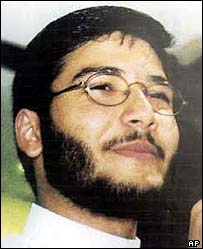

At King Fahd Hospital in Jizan, nearly 1000 km south of Riyadh, rather near where Rimi was born, around 3000 of the medical center’s staff lived in an adjacent residential complex [2,10]. Two hospital staff residing in the complex, a pharmacist and his physician wife, would unknowingly allow Rimi and four of his men to use their apartment as a residence and a base for an upcoming operation [2,10]. Rimi and his men labored to plan an attack at the hospital and stored supplies and weapons in the apartment [10]. Based on tips and investigative exercises by both the Americans and Saudis, the security forces were able to track down the extremists [10]. The housing complex, which housed mostly foreigners from India and Asia was to be completely cleared before Saudi forces engaged Rimi on September 23, 2003, the Saudi National Day [10,11]. Reports streamed out of the operation that the sought-after men had taken numerous hostages as an imminent gunbattle drew near, although this was later denied [10]. It is unknown if this was really the case as later reports failed to mention hostages. Regardless, once the Saudis went in, Rimi and his men fought back for hours with the usual cadre of automatic weapons and grenades [2,10,11]. They killed Sgt. Hussein Mufreh al-Hanthul of the security forces [10]. In the future, the Saudis and King Fahd Hospital reprimanded the independent security teams at the hospital and housing complex for allowing the five men in [12]. After the noises of explosions and gun fire died down at the apartment building, the Saudis were able to take stock of their situation. They had lost one man, but had captured two of the militants while killing three [10]. The dead were two of Rimi’s men, Turki Said al-Thakfan al-Qahtani, Khalid Mohamed Issa al-Shehri, plus Sultan Jabran Sultan al-Qahtani himself [10,12]. The FBI and US had one less terrorist suspect to worry about hunting. In the aftermath, Rimi’s father Jabran famously stated “My son is dead and it is all over [2].” This was just days after he realized his son’s life was in serious danger with both the Saudis and US searching for him. He had called in vain for his son’s surrender in hopes of seeing him again since he had not had the chance in over two years [11]. The Saudis were lauded however for preventing a bloodbath at the hospital. The apartment complex however, did have the feel of devastation with debris, glass, shells, bullet holes and blood all over the building’s insides and stairwells [13]. The Americans had listed Rimi along with Karim Majati, the al-Qaida operative linked to the Saudi insurgency and to the Casablanca bombings, as well as two long sought-after Al-Qaida operatives: Abderraouf Jdey “Faruq al-Tunisi” (the fifth man from Atef’s video tapes) and Adnan Gulshair El-Shukrijumah “Jafar the Pilot” [1]. The inclusion of Rimi with these men meant that he was high priority; thus, the Americans as well as the Saudis had scored a victory with his demise.
Media and Maintaining The Manhunt
This left Khalid al-Hajj and the AQSA with fewer capable commanders, but they would make fair use of the remainders. Abdulaziz al-Muqrin (A-5) who led a third massive cell along with his deputies Faisal al-Dakheel (A-15), the cousin of Ahmed, and Saleh al-Awfi (A-4) managed to step up and commence the fighting of the next phase of the insurgency [14,15]. This next campaign would also include an intensified media and propaganda effort. Beginning in October of 2003, the group published an online magazine called Sawt al-Jihad, or “Voices of Jihad” which was released every two weeks [16]. Sawt al-Jihad would in the months to come publish interviews with prominent militants, theocratic teachings, and biographies of important or slain AQSA members [16]. The media committee consisted primarily of vital ideologues to the group and thus the magazine was overseen by members Faris al-Zahrani, Abdullah al-Rashoud, Issa al-Aushan and Saud al-Otaibi, all men who will factor into the story of AQSA in Segments to come [17]. According to researcher Thomas Hegghammer in his work Jihad in Saudi Arabia, others of import who comprised the unit of AQSA that composed their ideology, theocracy, propaganda and recruitment methods were Sultan al-Otaibi, Abdulmajid al-Muni, Abdullatif al-Khudairi, Abdulaziz al-Anzi, and Hamad al-Humaidi [18]. Several of these men would pen articles for the AQSA magazine. In addition to “Voices of Jihad,” these militants produced a publication called Muaskar al-Battar or “Camp of the Sabre,” to focus specifically on military subjects and to encourage new jihadists to join the cause [19] – [A]. Abdullah al-Rashoud also took to “hosting” a radio broadcast called “And Incite the Believers,” on jihadist concerns [19]. Another member who would have many articles attributed to him was Abdulaziz al-Muqrin, who had intense plans for the campaign in the Kingdom [16]. Muqrin along with his wealth of fighters would attempt more bombings on foreign housing compounds, and against Saudi security forces.
On November 3, 2003 for example the Saudis were able to break up yet another plot aimed at bringing destruction to the holy city of Mecca [20]. More chilling was the fact that the militants attempted to perpetrate their attacks during Ramadan [20]. Early that morning, the Saudis surrounded two sites in the Al-Sharai district of the city and engaged in a gun battle [20]. Several suspects fled the scene firing onto the besieging forces. Two escaping vehicles were subsequently disabled and a militant driver in each was killed [20]. Following the battle, a large weapons cache of guns, ammunition and explosives was confiscated and eventually four Saudis, a Nigerian and a Pakistani were arrested [20,21]. The Saudis conducted a thorough manhunt for fellow conspirators in the days to come [21]. With Ramadan beginning, the fact that the militants were plotting in Mecca greatly scared the Saudis. Arguably the two most important members of the Mecca plot were surrounded in the al-Sharai district on November 6 [21,22]. Although the Saudis attempted negotiations, the scene ended in an engagement with the two suspects eventually committing suicide by detonating explosives in their possession. Mateb al-Mahyani and Sami al-Luhaibi were left dead in the holy city [21,22]. Mahyani had trained and fought in Kashmir before arriving in Afghanistan to train and fight on the front lines for Brigade 55 [23]. He had also sworn an oath to protect the Arabian Peninsula upon his return through Iran [23,24]. He fulfilled this goal by nearly bringing destruction upon Mecca in the name of the militants, and by playing a crucial role in providing weapons to his Saudi based cohorts [23]. Luhaibi upon his return had independently acted against Western interests prior to being recruited into the Ayiri network. In fact, Luhaibi had been the murderer of the American contractor at King Abdulaziz Naval base in Jubail [25]. Luhaibi subsequently joined Mahyani’s men in Mecca and became a part of AQSA [132-25]. As a side note pertaining to familial recruitment, Mahyani’s death would greatly affect and eventually radicalize his brother Fahd [26].
Also on November 6, 2003 the Saudi security forces hit close to home against Muqrin’s cell, when they attempted to raid a hideout in the Suwaidi district of Riyadh [27,28]. This district of Riyadh would prove to be the birthplace of many of the militants [29]. Once the hideout was compromised, many militants fled under cover of intense fire from their compatriots [27,28]. Muqrin and his men did not dally, or attempt a final stand, but rather had managed an improbable escape from the safehouse [30]. One militant was left dead on the streets, while the remainders were able to disappear, hauling with them an injured colleague named Amir Muhsin al-Shehri [31]. The early morning shootout left eight of the security forces lightly wounded and prompted the Muqrin cell to go ahead with their plans to stage another attack [27,28].
Muhaya Massacre
During the early portions of November, the US Embassy ordered its Consulates and missions shut down within the Kingdom and issued warnings to American citizens [32]. The fear was that an AQSA attack was imminent [32]. This fear would prove correct. Hoping to inflict casualties against foreigners, AQSA launched a raid against the Muhaya residential complex in Riyadh [33,34]. The complex housed around 200 villas, inhabited mostly by professionals from other Arab countries [33]. The choice seemed rather unusual as the primary targets of AQSA were Westerners. The Muhaya complex, housing mostly Muslims was a damaging choice for the group but it provided an easy target as the security there was lax due to the actual absence of Westerners [35,36]. The midnight attack began as November 8 turned to November 9 and AQSA militants sprayed the gates and guards with gunfire, paving the way for the vehicle borne explosives behind them [37,38]. One guard, from Sudan, was shot dead in the exchange [34]. Once inside the gates, two vehicles, one of which was an SUV painted by AQSA to mimic a Saudi security force jeep, detonated between two rows of villas within the compound [33,39]. Several villas were heavily damaged, some collapsed, and several people were killed. A crater was blasted into the road and a massive debris field of personal items, pulverized and triturated building materials, was spread through the compound from the impact zone [34]. Security forces and emergency services rushed to the scene, which was very close to some royal homes in this portion of Riyadh, while the surviving militants escaped [33].
Some analysts suggested that even though mostly Muslims were killed, the compound may have been chosen due to its close proximity to some of the Saudi royal family [33]. It also may have been chosen in a rush because of the ease of entry, during this Ramadan crackdown being performed by the Saudis [34,36]. The attack would backfire on AQSA and cause them to lose support amongst many heavily conservative Muslims within and outside of the Kingdom [35]. The victims were not only Muslim but predominantly women and children, as most of the men were out at the mosque for evening Ramadan prayers [34]. AQSA was, according to their own issuances, aiming to drive Western influence from their country, as well as striving to protect Islam [39]. Their unscrupulous actions at Muhaya seemed to greatly contradict these supposed efforts. Around 122 residents were wounded being of the following nationalities: Lebanese, Egyptian, Saudi, Jordanian, Eritrean, American (of Arab descent), Canadian (of Arab descent), Indian, Bangladeshi, Indonesian, Filipino, Ethiopian, Syrian, Palestinian, Pakistani, Turkish, Sri Lankan, Romanian, and Sudanese [38]. This further exemplifies that the casualties were not what many analysts would have expected the victims of an Al-Qaida operation to be. At least 17 were dead, including seven Lebanese, four Egyptians, a Saudi, and the Sudanese guardsman [38]. Five of the dead were children [38]. The AQSA suicide bombers sent by Muqrin were Ali Hamid al-Mabaadi al-Harbi and Nasir Abdullah Nasir al-Sayari al-Khalidi [39,40]. They were attired in security uniforms and entered the complex thusly, as they pretended to be responding to the AQSA gunmen firing on the guards’ position from the surrounding high grounds [38]. The suicide bombers were compatriots of Muqrin’s and other AQSA members from the fighting in Afghanistan [41,42]. Ali al-Harbi was a venerated veteran who had fought in Bosnia, but when he returned home to rejoin his life in the Kingdom he had been arrested [41]. While imprisoned he was held in solitary confinement and claimed to have been tortured [41]. His indignation at this treatment manifested into ardent extremism. After release in 1997, Harbi went to train and fight in Afghanistan [43]. In January 1997 he directly asked bin Laden about conducting operations in the Arabian Peninsula, to which the emir replied, “If we begin operations there, the first to stand in our way will be the men with beards,” presumably meaning that the Saudi establishment would be the first ones to be fought [44]. As a member of Brigade 55 he had battled against the US invasion before returning home via Iran [24,41]. His experiences in Saudi prison, coupled with his time fighting in Afghanistan after the invasion, helped to turn him to the Ayiri network [41]. Nasir al-Sayari al-Khalidi joined the fighting in Afghanistan after the 9/11 attacks and upon return to the Kingdom had also acted as a personal driver for the deceased ideologue Ahmed al-Dakheel during his tour of Riyadh on behalf of AQSA recruitment [42]. The bombers’ deaths, while hailed by AQSA as proper martyrdoms, would not in the end be remembered as a great victory for the group, but rather as the instance where they managed to alienate themselves from their countrymen, and elicit disapproval from their religious peers and even other radical conservatives [35,39].
As mentioned, eventually AQSA released propaganda as it related to the execrable Muhaya attack. The propaganda video entitled “Badr al-Riyadh” was not released until February 4, 2004, but it provided valuable insight to the mindset of the AQSA militants who perpetrated the attack [39]. The militants who carried out the operation called themselves the “Turki al-Dandani Martyr Unit” and thus, discussed the deceased Dandani as a preface to the rest of the video [39]. The martyrdom statements of both Ali al-Harbi and Nasir al-Sayari al-Khalidi followed, wherein Harbi attempted to justify suicide attacks as a viable and pertinent weapon of choice [39]. Ironically, Sayari attempted to dissuade the viewer from seeing AQSA actions as harmful to the general Saudi civilian populace. He claimed that it was much harder for the group to target Americans and that if they were truly following perverted Islam and meant harm to the public, they would find it considerably easier to attack civilians and civil services [39]. A militant named Sultan Bajad al-Otaibi speaks in the video and as he and the other militants proudly display the transformation of the vehicles having been painted to mimic those of the security forces [39]. There was also a statement by Muqrin on the video in which he claimed that AQSA was only attacking those considered “Crusaders.” This diction perhaps meant that AQSA viewed the foreigners in the compound as Christians, failed Muslims or supporters of the West, providing further, yet even more farfetched, justification for the attack [39]. Also, the video displayed AQSA militants painting and preparing the suicide vehicle used in the attack, showing that a large number of militants had been involved [39]. Perhaps the most interesting portion of the video centered on a location known as “al-Battar” camp, a training camp located within the Kingdom which the militants used to prepare for attacks. The video showed them training with weapons and explosives, providing insight as to how the militants were able to prepare for their violence openly despite, and inspite, of the security forces in the Kingdom [39]. This was not the only major video released for the group. As has been mentioned, the “Wills of the Heroes” video provided martyrdom statements from four of the Riyadh compound attackers, including two (Hazem al-Kashmiri and Mohamed al-Maqit) who directed some of their warnings to the West in English [45]. Furthermore, a December 3, 2003 video entitled “Martyrs of the Confrontations” listed AQSA leaders and fighters killed during the first few months of their campaign [46]. “Martyrs of the Confrontations” specifically focused on Yusef al-Ayiri, Turki al-Dandani, Ahmed al-Dakheel and Fahd al-Saidi, while making mentions of several other deceased members. These members included Sultan al-Qahtani, Abdulrahman al-Jabarah, Saud al-Qurashi, Rajeh al-Ajmi, Ibrahim al-Nafisa, Abdulhamid al-Trawari, Amash al-Subayi, Karim al-Harbi, Mohamed al-Harbi, Issa Khatir, and Mateb al-Mahyani amongst others [46]. These men had all played important roles in the infancy of the insurgency and had paid with their lives. It should be noted that the mentioned videos were all produced by al-Sahab Institute for Media Production, which was and continues to be the main outlet for overall al-Qaida propaganda [39]. As such, the videos show a certain sense of proper editing and sophistication, with surveillance of targets, clips of attacks, the aforementioned warnings in English, and a sense of unhindered communication amongst the militants in order to produce such media. The videos also include references and video clips of important central al-Qaida leaders including Osama bin Laden himself [39]. This further exemplified the ties between central al-Qaida leadership and this dangerous affiliate.
The Muhaya attack, while unpopular, did serve as the symbolic opening shot in another round of fighting between the Saudis and AQSA, as led by Hajj and Muqrin. An analysis during the ten year anniversary of the Riyadh compound bombings showed that along with Ayiri and others, Muqrin had been hesitant about commencing the insurgency while Hajj, along with Dandani, had been supportive of beginning the campaign [47]. Hajj, no doubt due to his relationship with Nashiri, had bin Laden’s backing as the leader of the Arabian organization [47], and with Ayiri dead, was the man most trusted in the region by central al-Qaida leadership [48]. Hajj was now in charge of a full response campaign against the Saudi government. By late 2003, despite whatever differences may have originally been had, it appeared the two men were on the same page, as Muqrin was seemingly fully committed to the insurgency, having gained much notoriety with the Muhaya attack.
Another Riyadh Bomber Revealed

Concerning the organization’s manpower left to Hajj, he still had a large number of devoted militants, but as for the original most wanted, List A was essentially devastated, with two of the men captured and eleven killed. All of these instances could initially be accounted for except for the death of Hamad Fahd Abdullah al-Aslami al-Shammari (A-14). Shammari was at this point in late 2003 listed by the Saudi Interior Ministry as having been killed, but it was not immediately clear how or when. He had been reported killed at the al-Qassim farm battle on July 28, 2003 but then immediately this claim was withdrawn [49,50]. It was possible to assume that sometime between that point and the Muhaya attacks, Shammari must have met his death. When looking for a militant death to fit this timeline, it may be theorized that Shammari was the unnamed militant killed in the August 13 shootout in west Riyadh. Eventually in 2004, the mystery was solved. The Saudis did not appear to announce Shammari’s death at all, however, the militants themselves did. As it turns out, Shammari was actually one of the unnamed suicide attackers from the group of 23 that perished in the initial Riyadh compound bombings [51]. As mentioned, the Saudis were oddly quiet on the identities of the attackers after initially naming twelve of them; therefore they listed Shammari as dead without explaining his demise. Shammari’s actions were revealed in Sawt al-Jihad, issue 22 [51]. It is most plausible that Shammari’s remains were not easily accessible after the explosions, and thus he was unable to be identified by DNA analysis right away.
In conclusion, six names still remained and the Saudis would have to regroup after the Muhaya bombings, engage the militants more ferociously, improve security for all potential targets, and work to reinvigorate the Saudi populace in the pursuit of these remaining wanted militants, plus their allies.
Having seen the destruction of Muhaya and the blatant disregard for life demonstrated by the AQSA militants, we shift to our next Segment, beginning with another Saudi wanted list, developed to pursue those directly responsible for the malicious incident. The Segment focuses on AQSA as a combatant entity under Abdulaziz al-Muqrin, and the ensuing chaos of his reign.
SEGMENT II Appendix (for List A Status as of November 2003):
- TURKI NASIR MISHAL AL-DANDANI
- ALI ABDULRAHMAN SAID AL-FAQASI AL-GHAMDI
- KHALID MOHAMED MUSALAM AL-JEHANI
- SALEH MOHAMED AWADALLAH AL-ALAWI AL-AWFI
- ABDULAZIZ ISSA ABDULMUHSIN AL-MUQRIN
- ABDULKARIM MOHAMED JABRAN AL-YAZJI
- HANI SAEED AHMED ABDULKARIM AL-GHAMDI
- MOHAMED OTHMAN ABDULLAH AL-WALEEDI AL-SHEHRI
- RAKAN MUHSIN MOHAMED AL-SAIKHAN
- YUSEF SALEH FAHD AL-AYIRI
- OTHMAN HADI MAQBUL AL-MARDI AL-AMRI
- BANDAR ABDULRAHMAN SALIM AL-GHAMDI
- AHMED NASSER ABDULLAH AL-DAKHEEL
- HAMAD FAHD ABDULLAH AL-ASLAMI AL-SHAMMARI
- FAISAL ABDULRAHMAN ABDULLAH AL-DAKHEEL
- SULTAN JABRAN SULTAN AL-QAHTANI “ZUBAYR AL-RIMI”
- JABRAN ALI AHMED AL-HAKAMI AL-KHABRANI
- ABDULRAHMAN MANSUR JABARAH (IRAQ)
- KHALID ALI AL-HAJJ “ABU HAZIM AL-SHAIR” (YEM)
LEGEND:
- KILLED IN EXCHANGE OR RAID
- PERISHED IN SUICIDE ATTACK
- CAPTURED
- FREE
CITATIONS and SUBSTANTIVE NOTES:
- [A] – Note that al-Battar was the chosen moniker of Yusef al-Ayiri; Sabre and swift sword being synonomous in the translation.
- [1] FBI Seeks 4 Suspected of Terrorist Activities, CNN News, September 5, 2003, http://www.cnn.com/2003/US/09/05/fbi.bolo/index.html?_s=PM:US
- [2] Terrorist Killed in Jizan was on FBI Wanted List, Arab News, September 25, 2003, http://www.arabnews.com/node/237866
- [3] Guantanamo Assessment File for Said Ali Jabir al-Shehri, ISN 372, http://wikileaks.org/gitmo/prisoner/372.html
- [4] Guantanamo Assessment File for Sultan Sari al-Anzi, ISN 507, http://wikileaks.org/gitmo/pdf/sa/us9sa-000507dp.pdf
- [5] Terror Watch: Abu Ali Tied to Riyadh Bombing Architect?, Michael Isikoff, Newsweek Magazine, March 1, 2005 http://www.thedailybeast.com/newsweek/2005/03/01/terror-watch-abu-ali-tied-to-riyadh-bombing-architect.html
- [6] Abu Ali linked to Saudi Arabia al-Qaida leader, The Washington Post, February 27, 2005, http://www.washingtontimes.com/news/2005/feb/27/20050227-114131-5195r/?page=2#ixzz2FvX02l8p
- [7] Path of Blood: The Story of Al-Qaeda’s War on the House of Saud, Thomas Small and Jonathan Hacker, Simon & Schuster UK, 2015
- [8] The One Percent Doctrine: Deep Inside America’s Pursuit of Its Enemies Since 9/11, Ron Suskind, Simon & Schuster, 2006
- [9] Va. Man’s Sentence Increased to Life in Terror Plot, by Jerry Markon, The Washington Post, July 28, 2009, http://www.washingtonpost.com/wp-dyn/content/article/2009/07/27/AR2009072701384.html
- [10] Ain al-Yaqeen News Magazine, October 3, 2003, http://www.ainalyaqeen.com/issues/20031003/feat7en.htm
- [11] Saudi Police Raid Kills al-Qaida Suspect, by Adnan Malik, The Associated Press, September 24, 2003, http://www.apnewsarchive.com/2003/Saudi-Police-Raid-Kills-al-Qaida-Suspect/id-10ced62d4d92ba04177878d31f31ecba
- [12] Terrorists Killed in Jizan Identified, by P.K. Abdul Ghaffour, Arab News, September 27, 2003, http://www.arabnews.com/node/237998
- [13] Al-Qaida Suspect Dies in Saudi Raid, by Brian Whitaker, The Guardian, September 24, 2003, http://www.guardian.co.uk/world/2003/sep/25/alqaida.saudiarabia
- [14] Al-Qaida in Saudi Arabia, Asymmetric Threats and Islamist Extremists, by Anthony Cordesman and Nawaf Obaid, CSIS, January 26, 2005, http://csis.org/files/media/csis/pubs/050106_al-qaedainsaudi.pdf
- [15] Ain al-Yaqeen, October 15, 2004, http://www.ainalyaqeen.com/issues/20041015/feat3en.htm
- [16] Sawt al-Jihad: Signs of a Saudi al-Qaida Resurgence?, by Fred Burton, February 2, 2007, http://www.islamdaily.org/en/saudi-arabia/5298.sawt-al-jihad-signs-of-a-saudi-al-qaeda-resurgence.htm
- [17] Saudi Arabia Backgrounder: Who are the Islamists?, ICG Middle East Report No. 31, September 21, 2004,
- http://www.pbs.org/wgbh/pages/frontline/shows/saud/themes/backgrounder.pdf
- [18] Jihad in Saudi Arabia: Violence and Pan-Islamism since 1979, Thomas Hegghammer, Cambridge University Press, 2010, p. 191
- [19] Path of Blood: The Story of Al-Qaeda’s War on the House of Saud, Thomas Small and Jonathan Hacker, Simon & Schuster UK, 2015
- [20] Ain al-Yaqeen, November 7, 2003, http://www.ainalyaqeen.com/issues/20031107/feat6en.htm
- [21] Terror In The Holy City: Analyzing The Al-qaida Attacks In Mecca, by John C. K. Daly, The Jamestown Foundation, Spotlight on Terror, Volume 1, Issue 1, November 26, 2003, http://www.jamestown.org/single/?no_cache=1&tx_ttnews%5Btt_news%5D=26223
- [22] Terrorists Blow Themselves Up, by Mohammed al-Khereiji and Essam al-Ghalib, Arab News, November 7, 2003, http://arabnews.com/node/239996
- [23] AQSA Publication, Sawt al-Jihad, no. 4
- [24] Terrorist Recruitment and Radicalization in Saudi Arabia, Thomas Hegghammer, Middle East Policy Council, 2006, http://www.thefreelibrary.com/Terrorist+recruitment+and+radicalization+in+Saudi+Arabia.-a0156581738
- [25] Sawt al-Jihad, no. 6
- [26] Young Militants not Battle-Hardened, by Rob L. Wagner, Maha Sami Aboulola and Shroog Talal Radain, The Saudi Gazette, June 30, 2005, https://sites.google.com/site/roblwagnerarchives/young-militants-not-battle-hardened
- [27] Terrorist killed in al-Suwaidi quarter of Riyadh, Saudi Press Agency, November 6, 2003, http://www.saudinf.com/display_news.php?id=1182
- [28] Heavy Shootout in Riyadh, Middle East Online, November 6, 2003, http://www.middle-east-online.com/english/?id=7687
- [29] Al-Suwaidi district, hotbed of Islamist extremism, Middle East Online, June 7, 2004, http://www.middle-east-online.com/english/?id=10199
- [30] Path of Blood: The Story of Al-Qaeda’s War on the House of Saud, Thomas Small and Jonathan Hacker, Simon & Schuster UK, 2015
- [31]Update on Saudi Arabia’s progress in the War on Terrorism, Public Statement from the Saudi Embassy to the US, June 2, 2004, http://www.saudiembassy.net/archive/2004/statements/page11.aspx
- [32] US Embassy warns of possible terror attacks in Saudi Arabia, by Teri Schultz and the Associated Press, Fox News and the Associated Press, November 8, 2003, http://www.foxnews.com/story/2003/11/08/us-embassy-warns-possible-terror-attacks-in-saudi-arabia/
- [33] Suicide Attack Kills Up to 30, injures about 100, in a Riyadh Residential Complex, by Dominic Evans, Reuters – Khaleej Times, November 9, 2003, http://www.aljazeerah.info/News%20archives/2003%20News%20archives/November/9%20n/Suicide%20Attack%20Kills%20Up%20to%2030,%20injures%20about%20100,%20in%20a%20Riyadh%20Residential%20Complex.htm
- [34] Suicide bomber kills at least five, wounds scores at Riyadh housing compound, AFP – Khaleej Times, November 9, 2003, http://www.freerepublic.com/focus/f-news/1017839/posts
- [35] Bombers lose hearts and minds in Muslim world, by Adel Darwish, Middle East News, November 9, 2003, http://www.mideastnews.com/riyadhattack091103.html
- [36] Bombed Riyadh compound seen as soft target, by Dominic Evans, Reuters, November 9, 2003, http://news.excite.com/world/article/id/365628%7Cworld%7C11-09-2003::02:03%7Creuters.html
- [37] Saudi official blames Riyadh attacks on al-Qaida, CNN News, November 8, 2003, http://articles.cnn.com/2003-11-08/us/saudi.explosion_1_riyadh-attacks-al-muhaya-qaeda?_s=PM:US
- [38] Ain al-Yaqeen, November 14, 2003, http://www.ainalyaqeen.com/issues/20031114/feat2en.htm
- [39] al-Qaida’s “Badr al-Riyadh” Video, translated by Ben Venzke, Intel Center, February 8, 2004, http://www.intelcenter.com/Badr-al-Riyadh-v1-1.pdf
- [40] US warns of more possible attacks in Saudi, by Suleiman Nimer, Middle East Online, December 2, 2003, http://www.middle-east-online.com/english/?id=8001
- [41] Sawt al-Jihad, no. 20
- [42] Sawt al-Jihad, no. 25
- [43] Jihad in Saudi Arabia: Violence and Pan-Islamism since 1979, Thomas Hegghammer, Cambridge University Press, 2010, p. 136 and 190
- [44] Letter from Abu al-Tayyib dated 29 February 2008, https://www.dni.gov/files/documents/ubl2016/english/Letter%20from%20Abu%20al-Tayyib%20dated%2029%20February%202008.pdf
- [45] Al-Qaida’s Riyadh Martyrdom Tapes “The Wills of the Heroes”, translated by Ben Venzke and Aimee Ibrahim, Intel Center,
- http://www.intelcenter.com/QRMT-v1-0.pdf
- [46] al-Qaida’s “Martyrs of the Confrontations” Video, translated by Ben Venzke and Aimee Ibrahim, Intel Center, December 8, 2003, http://www.intelcenter.com/QMC-v1-0.pdf
- [47] Islamist Sheds Light on Riyadh Compound Bombings, Asharq al-Awsat, May 14, 2013, http://www.aawsat.net/2013/05/article55301697
- [48] Jihad in Saudi Arabia: Violence and Pan-Islamism since 1979, Thomas Hegghammer, Cambridge University Press, 2010
- [49] Two Saudi Militants on Wanted List, by Faiza Saleh Ambah, The Associated Press, August 4, 2003, http://www.foxnews.com/story/2003/08/04/two-slain-saudi-militants-were-on-terrorist-list/print
- [50] Further Information on recent Shootout in Al-Qaseem, Saudi Press Agency, August 5, 2003, http://www.saudinf.com/display_news.php?id=866
- [51] Sawt al-Jihad, no. 22
© Copyright 2024 Nolan R Beasley
 Chronicles in Zealotry