SEGMENT II – Land Of Peace, Children Of War – CHAPTER 7 – Saudi Counteroffensive Summer 2003
For the entirety of the Series, please see – https://chroniclesinzealotry.com/fugitives-of-the-peninsula/
This chapter will examine the Saudi response in 2003 after being forced to acknowledge the extremist scourge within their own borders. The goal of the engagements included resprisals against those responsible for the May Riyadh attacks, but also were preventative attempts in order to preclude the jihadists the opportunity to strike again. As such, operational commanders and ideologues were targeted alike.
Siege At Khalidiya
By the middle of June, the Saudis engaged in the first of a series of intense gun battles in the years to come, fought with militants holed up in safe houses or hideouts. On June 14, at 9:30 pm, Saudi security forces besieged the al-Attas apartment building in the Khalidiya district of Mecca [1,2]. One of the two holiest cities in all of Islam had thus become a target for al-Qaida in Saudi Arabia, and a cell was preparing to strike soon. The Saudis intercepted the cell first and swiftly put an end to their designs. The Saudis found the apartment building to be housing multiple militants, a weapons cache, and for the apartment in question to actually be rigged to explode [1,2]. Fortunately for the Saudis the latter did not occur, although they engaged in a fierce battle with the jihadists inside. The Saudis entered the building after forcing all of the innocent residents out to safety, but even with such efforts the militants within fired upon security forces and civilians alike. Four civilians were wounded and five security members were as well, including Sharif Sultan al-Abdali who was shot through the liver [1]. In addition, Captain Yasir Hasabullah al-Mulad and one of his soldiers, Fahd Abdullah al-Wazna would fail to survive the battle [1], which had started when some of the suspects refused to stop at a security checkpoint and instead opened fire on the soldiers [2]. Thus, the forces were able to trace the vehicle to the complex and conduct the raid which in the end netted an impressive catch of 72 bombs, bomb making materials, several assault weapons and disturbingly, Qurans rigged to explode [1]. The raid also resulted in the arrest of twelve militants: Chadians Ahmed Abdulrahman Issa Harun, Khalid Ali Tahir Mohamed Ali, Bashir Mohamed Harun, Saudis Ahmed Khalid Mohamed al-Husan, Mosaed Ahmed Abdulrahman al-Khuraisi, Amin Mohamed Abdullah al-Aqala al-Ghamdi, Issam Khalaf Mohamed al-Ghamdi, Rashid Abdullah Rashid al-Khathlan, Majid Ibrahim al-Mughainim, Amir Abdulhamid Saud al-Saidi, Egyptian Mohamed Fathi Abdulati al-Said, and an individual of unknown nationality referred to as Ibrahim or Abu Thar [1]. This unidentified captive was later revealed as a Chadian named Mustafa Mohamed al-Taher Abkar, believed to have been only age 13 upon his arrest [3,4]. This may explain the hesitancy to initially announce him, but did not prevent Abkar from facing harsh imprisonment for years, for falling under the sway of the jihadists. Several of the occupants of the apartment were manipulated into believing they were studying the Quran before being indoctrinated by Ahmed al-Dakheel into radical and violent ideologies [3]. Amin al-Aqala al-Ghamdi was another of the apprehended who was only a minor [3]. The intent was obvious, the elder militants were radicalizing the youth. – [A]
As two security force members died in the battle, the militants left five of their own dead in the ruined apartment complex. One was unidentifiable while two others were only referred to as Khalid and Adnan. The last two were positively identified as Saudi Ibrahim Abdulwahab al-Nafisa and Malian Abdulhamid Trawari (also known as Abu Abdullah al-Makki) [1]. The Malian Trawari had worked for an AQSA leadership figure named Ahmed al-Dakheel, (A-13), who at the time was considered the most important ideologue of the group [5]. Trawari had obtained the apartment for Dakheel’s group and served as the ideologue’s point man and lieutenant for all circumstances [5]. Several militants were able to escape the Mecca raid by fighting their way out [5,6]. Dakheel, although suffering minor wounds, was able to escape with other militants including one of his recruits and protégés named Abdulrahman Obaidallah al-Khalaf al-Harbi [5,6,7]. In subsequent AQSA press releases, the battle was chronicled by an individual calling himself Abdulrahman al-Qasimi [6]. It can thus be theorized that Qasimi and Dakheel’s recruit Harbi are one in the same. Dakheel, Harbi and the other survivors fled to the mountains and regrouped, staging themselves for future fights [6,7].
The Saudis claimed that the Mecca raid had prevented an inevitable and prepared for attack within the holy city and robbed the Ayiri network of a viable cell [1,2]. More importantly than the arrested and killed militants, or the reclaimed weapons, was the intelligence garnered from the scene. The desecration of Qurans at the site would help to galvanize the security forces and their efforts at public relations, while at the same time delegitimizing the supposed religious fighters [1,8]. With the capture of Ali al-Ghamdi’s wife, and the intelligence from the Mecca raid, the Interior Ministry and security forces felt they were sure to reduce List A further.
The First Surrender
The lack of a List A arrest changed with an announcement on June 26, 2003. Apparently, shortly after dawn prayers on an earlier day that week, at the house of Prince Mohamed bin Naif in Jeddah, Ghamdi had chosen to give himself up [9-12]. As mentioned, Prince Mohamed was the son of Prince Naif, and the deputy Minister of the Interior. As such, his responsibility revolved around crushing the militant insurgency within his nation. Ali Abdulrahman al-Faqasi al-Ghamdi had apparently contacted the Saudi authorities and negotiated his own surrender, via his family and religious figures [9-12]. In fact, the capture of his wife had played an integral role in his decision as her release had been his only request prior to laying down arms, while the former jihadist cleric turned peacemaker, Safar al-Hawali, helped to negotiate the surrender [11]. Ghamdi’s father had stated in his earlier plea that the Saudis would make a deal and limit the punishment that his son would receive if only the young militant would surrender [10]. The surrender was quickly publicized by the Saudi media, but no mention of a deal was made [10].
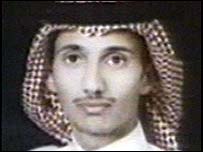
The Americans would get their chance to interrogate this high ranking AQSA figure as Ghamdi would eventually end up in their custody, at least briefly. This was revealed by multiple sources including the 9/11 Commission report of 2004 [13]. Ghamdi was years later listed as a “Ghost Detainee” by Amnesty International [14]. He is not known to have ever been incarcerated at Guantanamo Bay, Cuba. Most likely, Ghamdi was questioned at CIA black sites and then surreptitiously rendered back to his home country. This is purely speculation, however, but the fact remains that Ghamdi was reported to be held by the American government and his name was never revealed when several “Ghost Detainees” were eventually accounted for [14]. However, the Amnesty International report ignores the fact that after Ghamdi’s wife was released, she eventually revealed that by August of 2003 her husband was definitely in Saudi custody at a prison in Riyadh [15]. She made the announcement in order to refute the claims that Ghamdi had been transferred to Guantanamo Bay [15]. Ghamdi, while being interrogated by the US, revealed several plans of the militant outfit and also informed his interrogators on two individuals who would hold special significance for the Americans [16]. One was Sultan al-Qahtani, better known as Zubayr al-Rimi who was Ghamdi’s second in command of his now intercepted cell [11,16]. Rimi was ruthless and planned on several soft targets containing Americans to be attacked [16,17,18]. The other was an American named Ahmed Abu Ali who had conspired with Ghamdi and Rimi while in Saudi Arabia about attacking targets in the US [16,17]. While Abu Ali was quickly swept up by the Saudis in June 2003, Rimi remained at large [16,17]. Ghamdi may also have given information on the aforementioned Al-Qaida operative Karim al-Majati, considering that on September 5, 2003 both Majati and Rimi were added to a four man FBI bulletin seeking their whereabouts [18]. While in Afghanistan, Ghamdi had trained as a candidate hijacker for the 9/11 operation, and thus his interrogation also contributed to the insight into this preparation and into the organization of al-Qaida as seen in the 9/11 Commission Report [19]. With Ghamdi in custody the Americans and Saudis finally had their big capture, new vital intelligence on AQSA, and had marked yet another very important name from List A.
At this point in time, the Nashiri associate Khalid Ali al-Hajj became the leader of AQSA, succeeding the deceased Ayiri [20]. He may not have been the most important figure remaining on the List however. Turki al-Dandani, whose cell carried out the Riyadh operation, was still on the run. Also, Abdulaziz al-Muqrin and his men were still plotting additional attacks and more carnage. It would be up to Hajj to hide these men, deter the Saudi attention from them, and run an effective campaign with them. The Yemeni was now leading a prominent Al-Qaida subgroup well within the world spotlight.
Cornered in Al-Jawf

It was a week after the announcement of the Ghamdi arrest that the Saudis achieved their next major breakthrough in their fight against the perpetrators of the Riyadh bombings. In Zuhair within al-Jawf province in the northern part of the Kingdom, five militants were being hidden by the imam of a local mosque [21,22]. So, on the morning of July 3, 2003, Saudi security forces surrounded the home of Imam Musad Hamdan Faleh al-Ruweili and called for the surrender of the men he was harboring [21,22]. One of the men inside was Turki Nasir Mishal al-Dandani (A-1) [8,21,22]. The leader of the Riyadh compound bombings had been finally cornered, across the street from the local mosque [21,22]. It is believed a family member talked to authorities and revealed Dandani’s location and his plans to exit the Kingdom to preserve his safety [23]. Dandani had studied medicine prior to this radicalization but instead of following this path he chose a life of violence [24,25]. In fact, he had even been incarcerated during his time in school for militant behavior [25]. Afterwards, Dandani had traveled to Afghanistan prior to 9/11, trained at al-Faruq, and fought for Brigade 55 on the front lines [25]. Much like his compatriot Ali al-Ghamdi and several others, he had returned to Saudi Arabia via Iran [24,25]. His actions since return had led to his current precarious situation of being surrounded by Saudi security forces, in his home province of al-Jawf, eager to bring him to justice for his crimes [25]. Instead of surrendering, he and his men opened fire on the raiding Saudi security forces with machine guns and grenades [8,21,22]. Security forces were forced to storm the house and engage Dandani and his cohorts. In the resulting chaos, Dandani and three of his men were killed [8,21,22]. Killed along with the militant cell leader were Rajeh Hassan al-Ajmi of Kuwait, Amash Dakheel Saad al-Subayi a Saudi, and most importantly Abdulrahman Mansur al-Jabarah (A-18), the Kuwaiti national from Iraq, who also held Canadian citizenship [21,22]. The fifth militant Hassan Hadi al-Dosari was captured along with Ruweili the imam when they exited the home just prior to the battle [22]. From the aftermath of the raid, the home was revealed to house not only the militants but a large amount of weapons and supplies [22]. The intelligence garnered there led to an additional three Dandani associates being captured. They were involved in harboring and hiding Dandani and his men [22]. They were two Saudis, Nasir Farhan al-Ruweili and Mohamed Suleiman al-Saqabi as well as one Syrian national, Mohamed Badi Zahbar [21,22]. None of the security forces were killed in the battle, and while initial reports stated that Dandani killed himself with a hand grenade [8], later reports only stated that he had been shot down with his companions by the security forces [21,22]. This event marked another important occasion for the Saudis in that they were able to mark off two more names from the list. With the removal of Dandani from action, the pressure was put squarely on Hajj, Muqrin and others to continue the insurrection. AQSA had also clearly lost an asset in Jabarah.
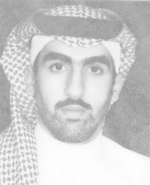
The militant youth Jabarah was born of an Iraqi mother and Kuwaiti father, and had immigrated to Ontario with his family in 1994 [26]. He became indoctrinated into western culture but quickly fell to militancy. During the 1990s he and his brother Mohamed made ventures into Pakistan and Afghanistan in order to train with jihadists and become soldiers for Al-Qaida [26]. Jabarah had studied engineering in school prior to radicalization, and originally had wished to travel to Chechnya to wage jihad along with his brother [24,27]. As such, despite their relative youth, they were considered assets because of their knowledge of the West, their passports, and their passion [26]. Their fluency in English was also valuable to the organization [26]. Jabarah was linked with Dandani for these reasons no doubt because of Dandani’s linkages with upper tier al-Qaida members. The 27 year old Dandani’s aforementioned history in Afghanistan and with al-Qaida leadership had afforded him a relationship with Khalid Sheikh Mohamed, the mastermind of the 9/11 attacks [26]. Mohamed, committed to attacking the West would no doubt have instilled the idea in Dandani to gather men who were capable of blending into western society prior to attacking it. Jabarah and his brother fit this role. In fact, Mohamed Mansur Jabarah would be linked to al-Qaida plots in Southeast Asia sponsored by Khalid Sheikh Mohamed [26,28]. He eventually ended up in Canadian custody after being arrested in Oman [28]. He then found himself in American custody, becoming an informant, before reneging on those responsibilities, threatening to attack his FBI handlers, and eventually being put on trial for terrorism [9]. Mohamed Mansur Jabarah will spend his remaining days in the Supermax Prison of Florence, Colorado [29]. His brother however, who associated directly with the perpetrators of the Riyadh compound attacks ended his life early in a firefight against the Kingdom [21,22]. While Mohamed had been sent to Southeast Asia, Abdulrahman had entered Saudi Arabia after fleeing the fighting in Afghanistan during 2002 and promptly joined Ayiri’s AQSA network [25]. Jabarah’s father Mansur explained that his sons were regular teenagers, with ambitions to better themselves and society [30]. The Jabarahs spent time in both Canada and Kuwait because of business purposes. Prior to going to college, Abdulrahman, a lover of sports, decided to attend a religious school in Kuwait [30]. It is there somehow, his father believes, that his sons fell to militancy. From Kuwait they were recruited into Al-Qaida and made their trips to Afghanistan and Pakistan [30]. Mansur believed his children were targeted and brainwashed into becoming religious zealots [30], a claim Mohamed would make during his own trial [28].

Regardless of how the transition occurred Mansur Jabarah lost both of his sons. Eida Raji Saleh al-Balhoud had also lost her son, Dandani, merely a week after she had publicly begged him to turn himself in just as Ghamdi had [22]. For Prince Mohamed bin Naif and General Turki Mansur of the Interior Ministry and Saudi Security Forces, the families’ losses were a great victory for the government. Prince Naif, his son, and the Saudi Interior Ministry had managed to clearly decapitate AQSA with their most wanted list campaign and the diligence of their forces. At least, this was the view they held in the wake of the deaths of Ayiri and Dandani. The Zuhair raid, coupled with the Mecca raid that led up to it, had removed several important players from AQSA and had prevented a major attack in Islam’s holiest city. Despite the setbacks caused by the Riyadh bombings themselves, the Saudis were beginning to show promise in their own “War on Terror.” AQSA and its leadership would work to respond to these actions.
Al-Qassim Farm Battle
Less than a month after the July 3 raid that left Dandani and Jabarah dead, the Saudis and AQSA engaged in a major gun battle on a farm in al-Qassim province [31-34]. The July 28 battle occured on the farm of individuals hiding wanted suspects in the town of Ghadhi [32]. Saudi security forces surrounded the premises and called for the surrender of all of the militants within. The individuals hiding at the farm had been tracked down due to leads obtained during the earlier Mecca raid as well [33]. Al-Qassim Province was also believed to harbor many militant sympathizers [34]. As the farm was 220 km away from Riyadh, the harbored militants may have felt that they were safe from the Kingdom’s reach [34]. They discovered on July 28, 2003 that they were not. The Saudis found that the farm was owned by four men of a family, with three women and six children also living there [31,32]. The Saudis quickly discovered that the family was hiding the militants in the farmhouse when they detected unaccounted for noises in the home [31,32]. The jihadists were then again ordered to surrender. The militants immediately answered the question of whether or not they would capitulate by heavily firing upon the Saudi forces and hurling hand grenades in their direction [31,32]. The Saudis had no choice but to storm the farm and farmhouse. Four suspects were arrested for sheltering the suspects within; they were Abdullah Hilal al-Harbi, Mohamed Hilal al-Harbi, Dhaifallah Hilal al-Harbi and Abdulelah Hilal al-Harbi [33,35]. Their women and children were removed from the scene safely [31,32]. The militants who were actually resisting arrest put up an intense fight with the raiders. The Saudis in the end had eight of their men wounded and two killed. The two Saudi security men killed were Lt. Satam Ghazi al-Mutairi and Sgt. Ali Ghazi al-Harbi of the Special Emergency Forces [31,32]. The Saudis prevailed in the gunbattle though, wounding and capturing one suspect, Ibrahim Obaidallah al-Harbi and killing the other six [31,32]. The six militants killed on the farm included Karim Olayan al-Ramthan al-Harbi, Saud Amir Sulaiman al-Qurashi, and Mohamed Ghazi Salim al-Harbi, all Saudis, and two Chadians, Issa Kamal Yusef Khater and Issa Saleh Ali Ahmed [33,35]. The last dead militant was Ahmed Nasir Abdullah al-Dakheel (A-13), the top ideologue for AQSA, who had earlier survived the Mecca raid [33,35-37]. In fact, at least one more of the dead, Saud al-Qurashi had also survived the Mecca raid and followed the ideologue Dakheel into the mountains and eventually to his death [38]. Earlier, one of their men was arrested distributing Dakheel’s literature and through interrogation gave authorities the needed clues to track the extremist to the farm [39].

Dakheel as a senior ideologue can be described as having a distorted view on the religion of Islam and can be accused of misquoting and misusing religious texts to justify the murder of innocents. He was the prototype of the AQSA ideologues who would for the months and years to come justify mass murder for their colleagues with little thought for innocent life. He had traveled throughout Riyadh with his driver Nasir al-Sayari al-Khalidi in 2002, speaking at a multitude of mosques and religious gatherings in an attempt to promote his radical views [36,40]. His efforts were important in the recruiting aspect of the al-Qaida brand in Saudi Arabia although he himself had never traveled much or fought abroad [36]. The sermons eventually ended in gunfire, as it had been one of Dakheel’s meetings in the al-Shifa district of Riyadh that had been raided by the Saudis on November 16, 2002, resulting in the injury and arrest of Mohamed al-Sahim [41,42]. Dakheel was also the first cousin of two brothers, Faisal and Bandar al-Dakheel who would factor prominently into the future of the organization [37]. The two, along with Sayari, had also been present at the 2002 raid and escaped [42]. The farmhouse where Dakheel died was also revealed to house yet another AQSA weapons cache with homemade explosives, machine guns, ammunition, disguises, communication equipment, etc [33].

Originally Dakheel was believed to have been killed alongside another of the List A occupants. Al-Watan, a reliable Saudi newspaper reported on August 4, 2003, that Hamad Fahd Abdullah al-Aslami al-Shammari (A-14) was killed along with Dakheel in the Al-Qassim farm battle [43]. Other press reports would pick up the story and state that Shammari was killed as well [43]. The Interior Ministry quickly quashed the idea and stated that there was no evidence that either of the two most wanted were killed [32]. However, DNA analysis eventually identified Dakheel and his five associates listed above as being the deceased militants [33,35]. Shammari’s fate remained a mystery and he would appear to still be at large after the Al-Qassim battle. Shammari, a Khafji native, had apparently been employed by Aramco prior to embarking on a journey to Afghanistan to partake in militant training [44]. After his arrival in the spring of 2001, Shammari trained at al-Faruq and eventually became part of al-Qaida media operations based in Kandahar [44]. After the US invasion he made his way back to the Kingdom and joined the Ayiri network. The al-Qassim raid in which Shammari did not die followed a week which saw the Saudis raid other farms and houses in Riyadh, al-Qassim, and in eastern parts of the Kingdom [32,34]. Those raids also revealed prodigious weapons caches throughout the Kingdom, with more guns and over 20 tons of explosives and chemicals used in making explosives, the excavation of which was televised [32,34]. These raids were a precursor to the July 28 raid on the al-Harbi homestead. The vicious battle on that farm may not have resulted in the deaths of two List A occupants, but it did take away one and deprived AQSA of their original ideologue and justifier of its crimes.
Further Fights and Trades
On August 12, 2003, Saudi security forces in the Shubra district of western Riyadh moved in to check a suspicious and illegally parked vehicle [45,46]. As they did so, nearby militants opened fire and in the resulting fierce battle three security men and one militant were killed [45-48]. The security forces that lost their lives were Muqbil al-Jehani, Sami al-Harbi and Ahmed al-Shammari [49]. As for the unnamed militant, he was originally listed as wounded and hospitalized, prior to perishing [45]. Forces, including commandos and helicopters, descended upon the Suwaidi neighborhood of Riyadh shortly after, engaging in fierce battle and arresting five suspects [47,48,50]. Just a couple of days prior, the Saudis had been involved in a gun battle in which ten suspects escaped their Riyadh hideout [35]. The previous shootout had set the stage for this engagement, as forces had begun searching for the militants involved immediately thereafter [47]. As can be seen, the militants choosing to remain in the Kingdom and wage war were taking a heavy toll.
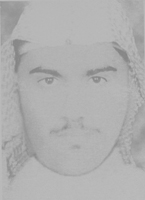
Not all of the wanted AQSA militants remained in the Kingdom. Much like Turki al-Dandani, who had intensely tried to flee the pursuit to another nation [51], some of the others also sought an escape route. One wanted List A member made it out and fled to Yemen. Bandar Abdulrahman Salim al-Ghamdi (A-12) managed to cross the border into Yemen, fleeing alongside his pregnant wife [52]. Bandar al-Ghamdi was wanted for the same crime as the rest of the List A members: belonging to Ayiri’s group and in some way participating in the preparations for the Riyadh bombings. Ghamdi was a part of a generation of fighters that had fought in Afghanistan in the late 1980s and early 1990s, but who returned to the Kingdom and mostly remained in dormancy until being recruited by AQSA for their campaign [53]. Ghamdi was unique in that he did not stay behind to hide in country or continue the fight against the Saudis after the Riyadh bombings. Ghamdi seemed to clearly have an advantage over the other suspects to possibly end up as one of the last standing List A members due to his escape. By September 10, 2003, Saudi newspapers reported the actual fate of Ghamdi. His father Abdulrahman Salim al-Ghamdi was interviewed and revealed that his son had indeed made it to Yemen but had subsequently been detained there [52,54], although he did not know when [52]. Ghamdi was there long enough for his pregnant wife to give birth to the child [52]. The newspapers cited the fact that the Yemeni government would extradite Ghamdi to Saudi Arabia to answer for his crimes on the basis of an extradition treaty between the two nations [55,56]. In fact, after a visit to Yemen by Saudi security forces, eight detained Saudis including Ghamdi were delivered back home [55,56]. Ghamdi’s wife and daughter were sent as well [56]. The following week, nine Yemenis were sent back to their country to face incarceration [55]. Some of those traded for Ghamdi included al-Qaida militants Hamza al-Quayti and the brothers Mansur and Zakariya al-Baihani, who would become incarcerated in Yemen and play roles in the story of the Arabian al-Qaida franchises at a later date [57]. The Saudis expressed great pleasure at the cooperation of the Yemenis although some sources cite that the Saudi security forces had to coerce the return of Ghamdi and the others [58]. Ghamdi’s wife and newborn daughter were released from Saudi custody by the end of September according again to Bandar’s father Abdulrahman [59]. Interestingly, this same report noted Abdulrahman admitting that his son had fought against the Soviets in Afghanistan, traveled the world, preached as an imam and had also fought against the Americans in Afghanistan [59].
In the next chapter, the conflict further evolves as the nascent al-Qaida franchise conducts another drastic, controversial, and lethal operation. This despite the intense Saudi summer campaign. We will also discuss the final target of the summer, a militant not just on the Kingdom’s wanted list, but one also pursued by the FBI.
CITATIONS and SUBSTANTIVE NOTES:
- [A] – From among those apprehended during the Khalidiya siege in Mecca, five (Amin Mohamed Abdullah al-Aqala al-Ghamdi, Issam Khalaf Mohamed al-Ghamdi, Majid Ibrahim al-Mughainim, Egyptian Mohamed Fathi Abdulati al-Said, Chadian Mustafa Mohamed al-Taher Abkar), were executed January 1, 2016 by the Saudi government for terrorism convictions. These occurred as components of a Saudi mass execution that day of 47 Sunni terrorists and Shia dissidents.
- [1] Ain al-Yaqeen News Magazine, June 20, 2003, http://www.ainalyaqeen.com/issues/20030620/feat4en.htm
- [2] After the War: Mecca; Saudis say raid prevented imminent terror attack, The New York Times, June 16, 2003, http://www.nytimes.com/2003/06/16/world/after-the-war-mecca-saudis-say-raid-prevented-an-imminent-terror-attack.html
- [3] These are the Juvenille “Offenders” Saudi Arabia executed in January, by Miriam Wells and Namir Shabibi, Vice News, April 26, 2016, https://www.vice.com/en/article/qv5nzx/these-are-the-juvenile-offenders-saudi-arabia-executed-in-january
- [4] Saudi Arabia executes 47 for Insurgency, Al-Arabiya, January 2, 2016, https://english.alarabiya.net/en/News/middle-east/2016/01/02/Saudi-interior-ministry.html
- [5] Global Jihadism: Theory and Practice, Jarrett Brachman, Routledge, 2008, p. 144
- [6] AQSA Publication, Sawt al-Jihad, nos. 5 and 6
- [7] Sawt al-Jihad, no. 26
- [8] Saudis: Key Riyadh Suspect Dead, CNN News, July 3, 2003, http://www.cnn.com/2003/WORLD/meast/07/03/riyadh.bombing.suspect/
- [9] Mastermind of Saudi Bombing Arrested, The Associated Press, June 27, 2003, http://usatoday30.usatoday.com/news/world/2003-06-26-saudi-arrest_x.htm
- [10] Custody Timeline of Ali al-Ghamdi, by Robert Stevens, June 27, 2003, http://www.freerepublic.com/focus/f-news/937049/posts
- [11] Global Jihadism: Theory and Practice, Jarrett Brachman, Routledge, 2008, p. 144-145
- [12] Saudi Suspect Surrenders, by Mahmoud Ahmad, Arab News, June 27, 2003, http://arabnews.com/node/233541
- [13] 9/11 Commission Report, p. 572
- [14] Off the Record U.S. Responsibility for Enforced Disappearances in the “War on Terror”, Amnesty International List of 39 Ghost Detainees, http://www.amnesty.org/en/library/asset/AMR51/093/2007/en/466435a8-d38b-11dd-a329-2f46302a8cc6/amr510932007en.pdf
- [15] Al-Faqasi Not Sent To Guantanamo Bay, Wife Says, by Badr al-Mutawaa, Asharq al-Awsat, August 4, 2003, http://www.arabnews.com/node/235224
- [16] Terror Watch: Abu Ali Tied to Riyadh Bombing Architect?, Michael Isikoff, Newsweek Magazine, March 1, 2005 http://www.thedailybeast.com/newsweek/2005/03/01/terror-watch-abu-ali-tied-to-riyadh-bombing-architect.html
- [17] Abu Ali Linked to Saudi Arabia Al-Qaida Leader, The Washington Times, February 27, 2005, http://www.washingtontimes.com/news/2005/feb/27/20050227-114131-5195r/?page=all
- [18] FBI Seeks 4 Suspected of Terrorist Activities, CNN News, September 5, 2003, http://www.cnn.com/2003/US/09/05/fbi.bolo/index.html?_s=PM:US
- [19] 9/11 Commission Report, p. 326
- [20] Global Jihadism: Theory and Practice, Jarrett Brachman, Routledge, 2008, p. 143
- [21] Top Saudi Bombing Suspect Killed in al-Jawf, by Mohammed al-Khereiji, Arab News, July 4, 2003, http://www.arabnews.com/node/233843
- [22] Ain al-Yaqeen, July 11, 2003, http://www.ainalyaqeen.com/issues/20030711/feat1en.htm
- [23] Path of Blood: The Story of Al-Qaeda’s War on the House of Saud, Thomas Small and Jonathan Hacker, Simon & Schuster UK, 2015
- [24] Terrorist Recruitment and Radicalization in Saudi Arabia, Thomas Hegghammer, Middle East Policy Council, 2006, http://www.thefreelibrary.com/Terrorist+recruitment+and+radicalization+in+Saudi+Arabia.-a0156581738
- [25] Sawt al-Jihad, no. 7
- [26] Al-Qaida Seeks Canadian Operatives, by Elaine Shannon, Time Magazine, July 8, 2003 http://www.time.com/time/nation/article/0,8599,463428,00.html#ixzz1bzzZeDV4
- [27] Sawt al-Jihad, no. 14
- [28] Terror Informant for FBI Allegedly Targeted Agents, by Josh White and Keith B. Richburg, The Washington Post, January 19, 2008, http://www.washingtonpost.com/wp-dyn/content/article/2008/01/18/AR2008011803766.html
- [29] Canadian Hunger Striker Being Force Fed in US Prison, by Stewart Bell, The National Post, June 9, 2009, http://www.nationalpost.com/news/story.html?id=1679303
- [30] Father of Canadian terror suspect killed in Saudi shootout speaks out, by Haley Mick, The Canadian Press, July 4, 2003, http://www.freerepublic.com/focus/f-news/940680/posts
- [31] Militants Gunned Down in Saudi Arabia, by Raid Qusti, Arab News, July 29, 2003, http://www.arabnews.com/node/234970
- [32] Ain al-Yaqeen, August 1, 2003, http://www.ainalyaqeen.com/issues/20030801/feat1en.htm
- [33] Further Information on recent Shootout in Al-Qaseem, Saudi Press Agency, August 5, 2003, http://www.saudinf.com/display_news.php?id=866
- [34] Saudi Shootout Kills 6 Suspected Militants, The Chicago Tribune, July 29, 2003, http://articles.chicagotribune.com/2003-07-29/news/0307290299_1_saudi-arabia-oil-rich-kingdom-saudi-police
- [35] Riyadh Checkpoint Shootout, by Riad Qusti, Arab News, August 12, 2003, http://www.arabnews.com/node/235630
- [36] Sawt al-Jihad, no. 5
- [37] Jihad in Saudi Arabia: Violence and Pan-Islamism since 1979, Thomas Hegghammer, Cambridge University Press, 2010, p. 191-192
- [38] Personal Correspondence with Thomas Hegghammer, Stanford University, from his Thesis: Appendix 4: Biographies of militants in post-2001 Saudi Arabia
- (dataset used in Chapter 12), Extended Samples
- [39] Path of Blood: The Story of Al-Qaeda’s War on the House of Saud, Thomas Small and Jonathan Hacker, Simon & Schuster UK, 2015
- [40] Sawt al-Jihad, no. 25
- [41] Saudis Say Terror Suspect Caught after Shootout in Riyadh, Islamweb.net, November 18, 2002, http://www.islamweb.net/emainpage/index.php?page=articles&id=33118
- [42] Jihad in Saudi Arabia: Violence and Pan-Islamism since 1979, Thomas Hegghammer, Cambridge University Press, 2010, p. 158
- [43] Two Saudi Militants on Wanted List, by Faiza Saleh Ambah, The Associated Press, August 4, 2003, http://www.foxnews.com/story/2003/08/04/two-slain-saudi-militants-were-on-terrorist-list/print
- [44] Personal Correspondence with Thomas Hegghammer, Stanford University, from his Thesis: Appendix 4: Biographies of militants in post-2001 Saudi Arabia
- (dataset used in Chapter 12), Core Samples
- [45] Saudi Interior Ministry issues statement on 12 Aug Riyadh shoot-out, BBC Monitoring, August 13, 2003, http://www.accessmylibrary.com/coms2/summary_0286-24093684_ITM
- [46] Four People Killed in Saudi Shootout, The Los Angeles Times, August 13, 2003, http://articles.latimes.com/2003/aug/13/world/fg-saudi13
- [47] Three Saudi Policemen Die in Riyadh Shootout, by Raid Qusti, Arab News, August 13, 2003, http://www.aljazeerah.info/News%20archives/2003%20News%20archives/August/13%20n/3%20Saudi%20Policemen%20Die%20in%20Riyadh%20Shootout.htm http://www.arabnews.com/node/235674
- [48] Four Saudi Police Officers and Suspected Militant Die in Raid, The New York Times, August 8, 2003, http://www.nytimes.com/2003/08/13/world/four-saudi-police-officers-and-suspected-militant-die-in-raid.html
- [49] Kingdom Worst Hit by Al-Qaida terrorists, by M.D. al-Sulami, Arab News, May 3, 2011, http://www.arabnews.com/node/376380
- [50] Saudi Official: Five Militants Arrested after Shootout, CNN news, August 13, 2003, http://edition.cnn.com/2003/WORLD/meast/08/13/saudi.arrests/
- [51] Specialized Criminal Courts Begin Hearings Against 85 People Accused of Terrorism, Saudi Press Agency, http://www.alriyadh.com/en/article/645551/trial-of-terrorist-cell-starts
- [52] Saudi Guards Shoot Dead Yemeni Smugglers, by Khaled al-Mahdi, Arab News, September 10, 2003, http://www.arabnews.com/node/237068
- [53] Jihad in Saudi Arabia: Violence and Pan-Islamism since 1979, Thomas Hegghammer, Cambridge University Press, 2010, p. 192
- [54] Yemen Detains Riyadh Bomb Suspect, BBC News, September 9, 2003, http://news.bbc.co.uk/2/hi/middle_east/3095242.stm
- [55] Saudis Hand Over Yemeni Suspects, BBC News, September 24, 2003, http://news.bbc.co.uk/2/hi/middle_east/3136148.stm
- [56] Ain al-Yaqeen, October 3, 2003, http://www.ainalyaqeen.com/issues/20031003/feat7en.htm
- [57] Guantanamo Assessment File for Ghalib al-Baihani ISN 128 http://wikileaks.org/gitmo/prisoner/128.html
- [58] Yemen Embassy Amnesty International Report for 2003, http://www.yemenembassy.org/economic/Reports/Amnesty/Amnesty%20International.pdf
- [59] Saudis Release Militants Wife, Daughter, The Associated Press, September 29, 2003, http://www.apnewsarchive.com/2003/Saudis-Release-Militant-s-Wife-Daughter/id-6f9c5627bdbaf1c1ecb2969e7f4564dc
© Copyright 2024 Nolan R Beasley
 Chronicles in Zealotry
One thought on “SERIES: Fugitives Of The Peninsula – (Chapter 7 – Saudi Counteroffensive Summer 2003)”