
SEGMENT II – Land Of Peace, Children Of War – CHAPTER 5 – Opening Salvo: The Riyadh Compound Bombings
For the entirety of the Series, please see – https://chroniclesinzealotry.com/fugitives-of-the-peninsula/
Segment II explores the initial acts of the Ayiri Nexus and the controversial decision by al-Qaida leadership to engage in an attempted insurgency within the Kingdom of Saudi Arabia. This Chapter specifically focuses on the major al-Qaida perpetrated terrorist action affecting Americans in 2003: the Riyadh Compound Bombings. The Chapter also introduces the first of the Saudi Most Wanted Lists of the aughts, which this Series will examine and follow in order to track the militants that comprised the al-Qaida franchise in the Arabian Peninsula.
Saudi Denialism
Acrid smoke, sundered debris, shrapnel and bullets filled the air as Khalid Mohamed Musalam al-Jehani prepared to meet his long desired destiny. The young man had been skyrocketed into notoriety due to his appearance on one of the five videos found in the Kabul rubble of the home where Al-Qaida military commander Mohamed Atef had perished at the hands of the American military and CIA [1,2,3]. Jehani had vowed to Al-Qaida that he would kill Westerners and Americans. He had jovially kissed his weapon and threatened the lives of those who believed differently from him and his leaders [3]. Jehani, who had been known as Muawiya al-Madani [4], who had been one of bin Laden’s trusted bodyguards [5], who had assisted Abdulrahim al-Nashiri in his maritime bombing operations [6], and who had actually been selected by bin Laden to bomb the US destroyer in the port of Aden [7], was a wanted man. Despite being sought after, Jehani was in his moment of glory on May 12, 2003, having eluded capture and successfully prepared for a suicide mission. Perhaps his status as being known in the intelligence community forced Jehani into the position of giving his life for the cause instead of remaining a potential leader. He was a lightning rod for his organization and they were in the end better off sans his infamy, but the young man’s fervor was most likely what drove him, along with a sizeable suicide squad to attack American interests in Riyadh that night. As Jehani met his death, alongside many of his cohorts and many innocents, he was no longer just wanted by the American government but had officially become wanted by his own Saudi government as well. The Saudi government was in desperate need of a victory; they badly needed to show allies and enemies alike that they could stand up to militancy within their country. Perhaps the Saudis had been too lenient, but now they worked to curb the spread of young jihadists returning from the mountains of Afghanistan as well as their influence, before it suffused the Kingdom. In doing so they had begun a campaign centered on wanted lists, in which they intended on tracking down some of the most prominent and dangerous militants within their borders. This action would please the Americans, please the west, please their own populace and perhaps most importantly please their economic and business partners. They created the list, even as Jehani, his superiors and colleagues were developing their own strategy to humiliate the Saudi government even more, and to attempt to push the Americans out of their holy land; to cleanse what they saw as a Crusader defilement and sacrilege condoned by a tyrannical monarchy.
The Saudi Arabian government had been lambasted in the media to no end, due to their supposed leniency on terrorists [8]. The Saudis intended on altering public perception both at home and abroad [9]. They had to somehow determine who they needed to target. The first big step for the Saudis was admitting that within their Kingdom they had the makings for an insurgency. Little did they know that Yusef al-Ayiri and his men had received orders from Saif al-Adel himself to conduct an insurgency against the royal family and its government [10,11]. Based in Iran, Adel was said to be part of the “Tehran Trio,” consisting of himself, Saad bin Laden and Turki al-Dandani’s unnamed cousin [12]. The trio was said to be overseeing terror attacks including the 2002 bombing of a synagogue in Djerba, Tunisia and the eventual Saudi campaign [13]. The unnamed Dandani cousin remains unknown as of this writing. It is also fair to question the validity of Saad bin Laden’s role in the terror attacks. While this bin Laden offspring had been placed in charge of bin Laden family members escaping to Iran, he was autistic and often required assistance from his mother in his daily life [14]. That being said, Saad being in Iran was in close proximity to Saif al-Adel and may have assisted him in managerial matters over al-Qaida forces. Saad was years later competent enough to formulate an escape from his Iranian captors and was able to make it to Pakistan in an attempt to join with al-Qaida forces therein [14]. The principal member of the so called ‘trio’ would necessarily be seen as Saif al-Adel. Despite his objections to further external operations, Adel seems to have pushed forward with the insurgency in the Peninsula, especially in light of KSM and Walid bin Attash’s eventual arrests in March and April 2003 respectively. Furthermore, according to CIA Director George Tenet, with bin Laden’s overruling of Adel’s objections in 2002, the emir was willing to directly give orders to Nashiri’s man and his bodyguard, the Yemeni Khalid al-Hajj [15].
Saif al-Adel (Sword of Justice [16]) had actually originally intended to lead the Saudi militants himself, but was withheld in Iran due to his status as a major al-Qaida figure [17]. Even though he never made it to the Kingdom, it should be noted that some of his personal items came ahead with returning militants who were anticipating his arrival [17]. Adel’s detention seems to have allowed KSM to take the reigns more completely of Al-Qaida operations until his own aforementioned arrest landed him in the hands of the CIA [18]. It is interesting to note that the Saudis could have had an Egyptian leading the campaign to usurp the monarchy in their own homeland. There was a tension between the Arabs and Egyptians within al-Qaida due to the Egyptians’ roles as senior officers [19]. Perhaps Saif al-Adel thought his presence would galvanize his soldiers and take the Saudis and Americans off guard. The Americans however, knew that Al-Qaida would target the Saudis in a bloody campaign [20]. So, the Kingdom had a choice to make. They could choose to ignore the problem, or to address it by naming those whom they sought. They could then use their own intelligence means, coupled with the Americans to fight against this very hazardous threat. The Saudis had thus far shoved certain incidents under the metaphorical rug, or allowed suspects to come in and out of custody. Now though, they realized they had to take the threat increasingly seriously. The charge was led by the Saudi Interior Ministry, headed by the conservative Prince Naif bin Abdulaziz, brother to King Fahd [21]. Specifically, the onerous management of the wanted lists and the battles associated with them would be conducted by Prince Naif’s son, Prince Mohamed, the deputy Interior Minister [22]. The Ministry of the Interior is estimated to have had 150,000 men at their disposal spread amongst numerous agencies under their command. The forces to be used to combat the coming insurgency and returning militants were primarily of the Emergency Forces and Special Forces [23]. The number also included the regular police. For ease of understanding, this author will refer to the Ministry of Interior forces primarily as security forces throughout unless otherwise noted.
Prince Naif had been leading a successful underground campaign of arrests throughout the winter months of 2002-2003 and into the spring where his efforts coincided with the US invasion of Iraq [24]. He however wished to keep the presence of so many al-Qaida militants in his Kingdom out of public view [25]. One embarrassing circumstance occurred when the Prince stated that, “There are no Al-Qaeda sleeping cells and no Saudi was arrested in recent days for links to the network [25].” Prince Naif was referring to an incident which had occurred on November 16, 2002 and would be labeled in the future as the first battle between the Saudis and al-Qaida militants [24]. While meeting with a radical ideologue, the Saudis had attempted to arrest multiple malcontents, fifteen of which were believed to be returnees from Afghanistan [26]. Instead, a gun battle broke out in which one Mohamed al-Sahim was shot in his leg and apprehended [24,25,26 ]. The Saudis claimed no casualties on their side, yet sources divulged that eight Saudi security forces were seriously injured [26]. Sahim (known in jihadist circles as Abu Riha [27]), had specifically been tracked by the Saudis and was meeting with several militants who would spread fear and death through the Kingdom in the future [24]. The Saudi Interior Ministry refuted the idea that there were many militants returning from Afghanistan, instead claiming with condescension that Sahim was the only one [26]. This was perhaps because he had been the only one captured. Perhaps the Saudis would rue this choice of words, but while they would not deign to admit it, secretly they were continuing their efforts to control the militancy [24]. Sahim was known to the Saudis as another coconspirator of Nashiri, set up in the Kingdom as a fundraiser and facilitator due to his experience [27]. The successful tracking and capture of a Nashiri associate were important for the Saudis, but they needed to hunt for and find the wave of returning militants before they could cause any trouble or devastation.
An additional instance of concern occurred in late January 2003 when Saudi forces engaged with members of an armed cell in Riyadh while attempting to make arrests [28,29]. The Saudi forces were startled and thus all suspects escaped, except for one who fell in the surprisingly vigorous exchange of fire [28]. The deceased was a Kuwaiti soldier named Fayez Abdullah Rashid al-Zobi, who appears to have traveled to the Kingdom two months prior to join the Saudi militants [29]. While the rest of the suspects were eventually rounded up and apprehended, the Saudi security apparatus desperately sought to determine the locations of the various militant cells before they coalesced into an effective unit, if they had not already [28].
An Explosion To Herald The Fugitives
Their break came on March 18, 2003 when an apartment exploded in the al-Jazira district of Riyadh [30]. Fahd Samram al-Saidi, an al-Qaida militant who carried orders from bin Laden to orchestrate a rebellion within the Kingdom alongside of Ayiri, had been occupying the apartment. Prior to 2001, Saidi had traveled to Afghanistan and received training from al-Qaida’s infamous al-Faruq camp [31,32]. The camp had been moved to the Kandahar area from Khost in 1999 and had seen a huge influx of Saudi recruits like Saidi since that time [31,33]. Next, Saidi fought for bin Laden’s all Arab contingent of the Taliban’s military, the unit known as Brigade 55, along the front lines against the Northern Alliance. Months prior to the US invasion, Saidi found his way out of Afghanistan and returned to his home country with his orders [31,32]. He had personally written to bin Laden to receive these orders and was commissioned by Khalid Sheikh Mohamed to carry out attacks upon his return [32,34]. Once linked with Ayiri and the evolving network in his care, Saidi began to construct explosives for the coming campaign [32]. Upon investigating the March 18 explosion, Saudi security forces discovered that Saidi’s career had been prematurely ended when his explosives had detonated accidently and left the man dead [30]. However, his apartment held a wealth of intelligence that steered investigators in the direction of the Ayiri network [35]. The Medina native, who had roomed with 9/11 hijacker Abdulaziz al-Omari in Afghanistan, was later eulogized by a fellow militant who called himself Fawaz al-Nashimi [32]. Altercations would follow the explosion as the Saudis conducted a raid on March 23 in Riyadh and participated in a gun battle on April 22 in Wadi Laban [24]. However, no casualties were reported on either side besides some minor arrests [24].
While investigating this previous bombing incident, the Saudis came upon a cache of intelligence and weapons being stored for the upcoming insurgency [36]. At approximately 1700 on May 6, 2003, Saudi security forces engaged with militants at their hideout/weapons depot in eastern Riyadh [36]. The suspects successfully fought off the Saudis and fled by hijacking a civilian vehicle. They abandoned the vehicle and melted into the populace of Riyadh [36]. However, with their weapons and documents seized, the Saudis and Americans were able to build a very decent picture of the men for whom they were looking. From this May 6 raid, was born the first Saudi Most Wanted, hereafter referred to as List A [36].
Saudi most wanted List A was comprised of some already notorious names within the Saudi ranks of al-Qaida as well as some fighters who would later become infamous.
They were:
- 1) Turki Nasir Mishal al-Dandani,
- 2) Ali Abdulrahman Said al-Faqasi al-Ghamdi,
- 3) Khalid Mohamed Musalam al-Jehani “Muawiya al-Madani”,
- 4) Saleh Mohamed Awadallah al-Alawi al-Awfi,
- 5) Abdulaziz Issa Abdulmuhsin al-Muqrin “Abu Hajir”,
- 6) Abdulkarim Mohamed Jabran al-Yazji,
- 7) Hani Said Ahmed Abdulkarim al-Ghamdi,
- 8) Mohamed Othman Abdullah al-Walidi al-Shehri,
- 9) Rakan Mohamed Mushin al-Saikhan,
- 10) Yusef Saleh Fahd al-Ayiri “Al-Battar”,
- 11) Othman Hadi Maqbul al-Mardi al-Amri,
- 12) Bandar Abdulrahman Salim al-Ghamdi,
- 13) Ahmed Nasir Abdullah al-Dakheel,
- 14) Hamad Fahd Abdullah al-Aslami al-Shammari,
- 15) Faisal Abdulrahman Abdullah al-Dakheel,
- 16) Sultan Jabran Sultan al-Qahtani “Zubayr al-Rimi”,
- 17) Jabran Ali Ahmed al-Hakami al-Khabrani,
- 18) Abdulrahman Mansur al-Jabarah, and
- 19) Khalid Ali al-Hajj “Abu Hizam al-Shair.”
Of the 19, a total of 17 were Saudis. The exceptions were Jabarah who was an Iraqi-Canadian and Hajj who was Yemeni [36]. The necessity of the List was exemplified by the fact that some of the documents recovered from the raided safe house, which was actually owned by Dandani, were the last wills of pending suicide bombers [37]. Al-Qaida was preparing for something major.
With the publication of List A, coupled with Yusef al-Ayiri’s orders to commence the insurgency within the Kingdom, Al-Qaida in Saudi Arabia (the name used by this Series to identify the precursor of AQAP) had their hand forced into an early move. This was despite the sincere hesitancy of Ayiri due to his feelings of unpreparedness [38]. In a February 2008 letter to bin Laden from one of his men in Saudi Arabia, named Abu al-Tayyib [A], it is said that Ayiri was adamant that starting the campaign in Saudi Arabia would ruin their supply line and funding sources for jihad elsewhere [39]. In addition, Ayiri felt his command of the organization slipping with bin Laden’s connection with the more willing Hajj. The letter implies Hajj had his own concerns but pushed ahead with the mission [39]. To this point, Ayiri’s compatriots Muqrin, Saikhan, and Ghamdi pushed to remove Hajj’s influence over the organization and as mentioned felt that the rush to commence the insurgency was premature [40]. This was at some point in late 2002 to early 2003 and as Ayiri preferred his role as a fundraiser, he presented Ghamdi to bin Laden as a reasonable choice to run the network [39,40]. Much the same as bin Laden overruled Saif al-Adel, he overruled his man Ayiri in the Kingdom. Dandani joined Hajj in supporting the assaults and thus Ayiri and his entire network appears to have fallen in line [40].
Marauders Of Riyadh
The May 12, 2003 Riyadh compound attacks represented AQSA’s opening salvo in this insurgency and was essentially a declaration of war made by the men on List A against their own government. Ayiri’s lieutenant Turki al-Dandani (A-1) commanded the operation and used veteran jihadists to carry out his orders [12,41]. Years later it was claimed that Dandani had received personal instructions over the telephone from Saif al-Adel concerning the bombings [35]. While the aforementioned Khalid al-Jehani may have been the best known of the attackers, he led but one of the three squads sent out by Dandani. The other commando squads were led by militants named Mohamed Shadhaf Ali al-Mazhoum al-Shehri and Hazem Mohamed Said al-Kashmiri [41]. Shehri, Kashmiri, and Jehani led their men in the simultaneous strikes against compounds housing Westerners working in the Kingdom. As such, numerous Westerners and Saudis were left dead in the aftermath [42].
At the Oasis village in al-Hamra two vehicles approached the security gate very late into the night. A Toyota Sedan and a GMC Suburban spilled forth gunmen who fired their way into the village. The Suburban was driven to the most populated portion of the village where many Americans were housed before being detonated as a suicide car bomb [38,42]. It is believed the explosion of the Suburban was so massive that it actually killed the supplementary gunmen, who had intended to continue fighting [43]. Meanwhile at the Cordoval Compound which housed Vinnell Corporation employees, two additional vehicles engaged in a firefight with the Saudi National Guard. The National Guard in fact, was in charge of security for the complex. A Crown Victoria sedan rammed the gate while gunmen in a Dodge Ram truck neutralized the guards. Once the vehicles were inside, the truck was driven to a housing compound and detonated [42]. Finally, the Jedawal compound which housed members of Lucent Technologies was also attacked [42]. The compound was actually very close to the safe house/weapons cache that had been raided the week before by the Saudis and had given rise to List A [42]. The gunmen killed a guard at a rear security gate and penetrated into the security perimeter. They did not penetrate into the compound itself and detonated an explosive device in response. Three people were killed in this bombing [42]. In a related incident, the Saudi Maintenance Company (Siyanco) was attacked with a bomb early the next morning, but no one was killed in this attack [42]. Overall, at least 34 people were dead when the gunfire and explosions ceased and the fuliginous smoke cleared to reveal the macabre locales [42].
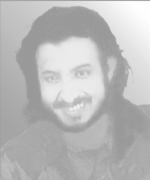
The dead included eight Americans [42]. A ninth would succumb to wounds by June [44]. In addition, initial reports of the dead included two Australians, a British citizen, Irish citizen, Swiss citizen and three Filipinos [42]. Of the commando raiders and suicide bombers, AQSA sacrificed a large number of their marauders for this mission [45]. Khalid al-Jehani (A-3) met his end during this attack [45,46]. The Saudis would have to cross his name off of their List A, knowing they unsuccessfully prevented him from causing carnage. DNA analysis eventually identified twelve of the raiders, including Jehani. They included a militant known to have been incarcerated in Pakistan [31,47], Khalid Ibrahim Mahmud al-Baghdadi [45,46]. As an anomaly for militants, Baghdadi had been raised by an affluent family although he initially led the life of a minor criminal [31]. He had trained in Afghanistan at al-Faruq and fought for al-Qaida’s Brigade 55 on the front lines before fleeing the US invasion through Iran and returning home [31,47]. He had been briefly imprisoned by the Iranians and later by the Saudis for less than a year on his return [31,47]. While in Saudi custody he claimed to have been tortured [31,47]. This led to a resentment against his own government which no doubt made attacking the Kingdom all the easier [31,47]. Later, the jihadist Fawaz al-Nashimi also eulogized him [47]. Baghdadi was joined in his wrath and death by many others who fought for a variety of reasons. They included Mehmas Mohamed Mehmas al-Hawashleh al-Dosari, Majid Abdullah Saad bin Okail, Bandar Abdulrahman Menawar al-Rahimi al-Mutairi, Abdullah Faris Jafari al-Rahimi al-Mutairi and the two other commanders of the raid, Hazem Mohamed Said al-Kashmiri and Mohamed Shadhaf Ali al-Mazhoum al-Shehri [45,46]. Perhaps more importantly for the Saudis, their fears were confirmed, when the DNA analysis revealed that the final four initially identified attackers were also from List A. They were Mohamed Othman Abdullah al-Walidi al-Shehri (A-8), Hani Said Abdulkarim al-Ghamdi (A-7), Abdulkarim Mohamed Jabran al-Yazji (A-6), and Jabran Ali Ahmed al-Hakami al-Khabrani (A-17) [45,46].
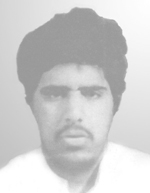

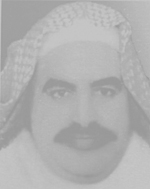

It has been stated that fourteen perpetrators participated in the attacks and comprised the three groupings [41]. In 2012 it was revealed by the Saudis that an individual named Fahd Ali al-Qahtani had participated in the al-Hamra attack but had survived and been captured [48]. He was put on trial for this crime. Upon further examination, the theory of only fourteen attackers begins to fall apart. The Saudis themselves had alluded to the possibility of at least sixteen attackers in a previous release [46]. While the Saudis did not officially announce the actual number of attackers or their identities, over time the answer became obvious. Al-Qaida later released the video last wills of Kashmiri and Shehri (named as Abu Omar al-Taifi and Abu Tariq al-Aswad respectively) [49], two of the commanders of the raid, in October 2003 [50]. Released with these two wills were statements from other attackers named as Mohamed Abdulwahab al-Maqit and Ashraf Ibrahim al-Said, who cannot be accounted for amongst the dead initially identified by the Saudis [45,50]. It appears that Maqit or Said were not aliases for two of the identified deceased militants but rather were additional perpetrators of the carnage. The question of how many men participated in the bombings, was finally answered by the Saudi newspaper Asharq al-Awsat in 2010, when it was revealed in an article that claimed upon further examination there had actually been twenty-four attackers involved with only one survivor [35]. The article claimed that the surviving attacker made his way out of the scene of violence at the al-Hamra compound and was captured in Jeddah sometime later [35]. Thus, as there were in fact twenty-three dead militants, the aforementioned Maqit and Said could easily be among the eleven who have not been publicly identified by the Saudis. The surviving militant was then indeed Fahd Ali al-Qahtani. Al-Qaida had used an unusually large number of operatives for the operation which had initiated their war.
The aforementioned video wills from the perpetrators were not released until late 2003, but startlingly contained both Hazem al-Kashmiri and Mohamed Shadhaf al-Shehri detailing their threats in English, aimed at an American audience, in order to amplify the resulting terror [50,51]. Further, the video was produced by as-Sahab, the overall official al-Qaida media outlet, proving that bin Laden’s lieutenants in the Khorasan were able to coordinate with their offshoot Arabian branch to some degree [50,51]. While Kashmiri directly threatened American soldiers in the region, and promised further destruction [51], it was noticeably a civilian populace that felt the wrath of al-Qaida during the bombings. The video included the first footage of an al-Qaida attack in motion, as the assailants prepared to raid and commence the carnage [51].

In truth, the body count was much lower than what could have been expected for such a brazen attempt at mass murder with so many perpetrators. The gunmen having been unexpectedly killed by the concussion wave of their own bomb allowed for a lessening of the massacre. This of course mattered not to the families of the victims. It also mattered not to the now humiliated Saudi government as well as a US government feeling the pressure of yet another theatre opening in the war on Al-Qaida. The Saudis now especially felt that they had something to prove to the world in terms of security, protecting their interests, and protecting their reputation. The damage had been done however for the hundreds of thousands of expatriates in the country who now felt as if they were targets for violence in what had been a relatively peaceful environment. AQSA, while not achieving massive carnage, had in fact instilled a great deal of fear and worry in governments and civilians alike. They continued with planning operations which would attempt to drive foreign companies and their workers from the Kingdom, helping to eventually topple the Saudi economic machine. It was of course a very ambitious goal but the militants realized they could deter a lot of resources at the Saudis’ disposal towards fighting them. This would in itself weaken the economy and give them the prominence that they so badly desired. At the helm of this fight was the mysterious Swift Sword, Yusef al-Ayiri, the bin Laden confidant. As the leader of this newly established insurgency, it would be his job to carry out these attacks effectively, and thus he built a thriving network and infrastructure for just such a task [52]. He would not aim to become in his country what Abu Musab al-Zarqawi would eventually become in Iraq, although some of his men took on this goal, as Ayiri himself was focused on preserving the integrity of the money flow and supply chain he had created for jihadists abroad [39]. That being said, he still diverted a portion of that large sum of money, gathered from wealthy Saudis, directly to preparation for the coming campaign [52]. Although in reality the insurgency was rushed in order to coincide with a growing rebellion in Iraq against the American invasion, it had already been invested in, thus Ayiri would have to fight amid the current political conditions in his country regardless of how inhospitable they were to his cause.
In the next Chapter, we take an even closer look into the life of Yusef al-Ayiri, and a particularly disturbing al-Qaida plot. Plus, we will discuss the initial Saudi responses to the Riyadh Compound bombings and the Kingdom’s increasing dilemma in facing returning militants from Afghanistan.
CITATIONS and SUBSTANTIVE NOTES:
- [A] Abu al-Tayyib was Mohamed Abdullah Abdan al-Ghamdi, a Saudi facilitator [53], who was himself originally assigned to Nashiri by KSM to select dedicated suicide operatives for Arabian operations, before being captured in the Saudi dragnet [54].
- [1] Taliban confirms death of Osama bin Laden’s military chief in U.S. strike, The Associated Press, November 17, 2001, http://www.chron.com/news/article/Taliban-confirms-death-of-Osama-bin-Laden-s-2035185.php
- [2] Armed Drones and the Hunt for bin Laden, by Micah Zenko, August 20, 2012, http://blogs.cfr.org/zenko/2012/08/20/armed-drones-and-the-hunt-for-bin-laden/
- [3] Hunt for bin Laden ‘martyrs’, By Ben Fenton, The Telegraph, January 18, 2002, http://www.telegraph.co.uk/news/worldnews/asia/afghanistan/1381948/Hunt-for-bin-Laden-martyrs.html
- [4] Abdulrahim al-Nashiri Charge Sheet, September 28, 2011, http://media.miamiherald.com/smedia/2011/09/28/15/44/13SzlK.So.56.pdf
- [5] Guantanamo Assessment File, Salim Ahmed Hamdan, ISN 149, http://wikileaks.org/gitmo/pdf/ym/us9ym-000149dp.pdf
- [6] Ahmed al-Darbi Charge Sheet, December 16, 2013, https://www.mc.mil/Portals/0/pdfs/alDarbi2/Al%20Darbi%20II%20Referred%20Charge%20Sheet.pdf
- [7] The Black Banners: The Inside Story of 911 and the War Against Al-Qaeda, Ali Soufan, W.W. Norton and Company, 2011, p. 278
- [8] Why Can’t Saudis Do More About Terrorism?, by Martha Raddatz, ABC News, May 13, 2003, http://abcnews.go.com/WNT/story?id=129704&page=1#.UVtMYxyTgrU
- [9] Saudis Nab 16 Terror Suspects, Associated Press, July 21, 2003, http://www.foxnews.com/story/0,2933,92478,00.html
- [10] Egyptian Saif al-Adel now acting leader of al Qaeda, ex-militant says, by Peter Bergen, CNN News, May 17, 2011, http://articles.cnn.com/2011-05-17/world/mideast.al.qaeda.appointee_1_al-adel-al-qaeda-libyan-islamic-fighting-group?_s=PM:WORLD
- [11] Riyadh Attack: al-Adel in Iran Ordered It, al-Ghamdi in Saudi Arabia Oversaw It, ICT.org,The Age, Guardian, Straits Times, Charlotte Observer, May 29, 2003, http://www.freerepublic.com/focus/f-news/919401/posts
- [12] Why Iran Protects Al-Qaida, by Nawaf Obaid, WorldSecurityNetwork.com, August 30, 2003, http://www.worldsecuritynetwork.com/Iran-Broader-Middle-East-Terrorism-Asia/Obaid-Nawaf/Why-Iran-protects-Al-Qaeda
- [13] Bin Laden’s Son Seen Stepping Up, CBS News, February 11, 2009, http://www.cbsnews.com/2100-500164_162-577914.html
- [14] Osama bin Laden’s family on the run: ‘I never stopped praying our lives might return to normal,’ by Cathy Scott-Clark and Adrian Levy, The Guardian, May 6, 2017, https://www.theguardian.com/world/2017/may/06/osama-bin-laden-family-on-the-run-after-9-11
- [15] At the Center of the Storm: My Years at the CIA, George Tenet, Harper Collins, 2007
- [16] Profile: Al-Qaida’s Saif al-Adel, By Daniel Fisher, The Telegraph, February 29, 2012, http://www.telegraph.co.uk/news/worldnews/al-qaeda/9113446/Profile-al-Qaedas-Seif-al-Adel.html
- [17] Jihad in Saudi Arabia: Violence and Pan-Islamism since 1979, Thomas Hegghammer, Cambridge University Press, 2010, p. 165
- [18] Path of Blood: The Story of Al-Qaeda’s War on the House of Saud, Thomas Small and Jonathan Hacker, Simon & Schuster UK, 2015
- [19] The Black Banners, Ali Soufan, p. 87 and 166
- [20] The One Percent Doctrine: Deep Inside America’s Pursuit of Its Enemies Since 9/11, Ron Suskind, Simon & Schuster, 2006, p. 234
- [21] Biography of Prince Naif bin Abdulaziz, Saudi Embassy, http://www.saudiembassy.net/about/country-information/government/Nayef.aspx
- [22] Profile: Saudi Interior Minister Mohamed bin Naif, by Badr al-Qahtani, Asharq al-Awsat, June 6, 2012, http://www.asharq-e.com/news.asp?section=3&id=31710
- [23] Path of Blood: The Story of Al-Qaeda’s War on the House of Saud, Thomas Small and Jonathan Hacker, Simon & Schuster UK, 2015
- [24] Jihad in Saudi Arabia, Thomas Hegghammer, p. 158-159
- [25] No ‘sleeping cells’ of Al-Qaeda in Kingdom, says Prince Naif, Arab News, November 24, 2002, http://test.arabnews.com/node/226171
- [26] Saudis Say Terror Suspect Caught after Shootout in Riyadh, Islamweb.net, November 18, 2002, http://www.islamweb.net/emainpage/index.php?page=articles&id=33118
- [27] Path of Blood: The Story of Al-Qaeda’s War on the House of Saud, Thomas Small and Jonathan Hacker, Simon & Schuster UK, 2015
- [28] Path of Blood: The Story of Al-Qaeda’s War on the House of Saud, Thomas Small and Jonathan Hacker, Simon & Schuster UK, 2015
- [29] Kuwaiti killed in shootout was a soldier, by Dr. Khaled M. Al-Batrafi, Arab News, January 27, 2003, https://www.arabnews.com/node/227833
- [30] Al-Qaida’s Angel of Death by Mishari Zaydi, Asharq al-Awsat, June 20, 2005, http://www.asharq-e.com/print.asp?artid=id511
- [31] Terrorist Recruitment and Radicalization in Saudi Arabia, Thomas Hegghammer, Middle East Policy Council, 2006, http://www.thefreelibrary.com/Terrorist+recruitment+and+radicalization+in+Saudi+Arabia.-a0156581738
- [32] AQSA Publication, Sawt al-Jihad, no. 16
- [33] 9/11 Commission Report, p. 157
- [34] Saudi Arabia Backgrounder: Who are the Islamists?, ICG Middle East Report No. 31, September 21, 2004,
- http://www.pbs.org/wgbh/pages/frontline/shows/saud/themes/backgrounder.pdf
- [35] Al Qaeda Sought to Replicate 9/11 Attack in 2003 Riyadh Bombings, by Turki al-Saheil, Asharq al-Awsat, June 21, 2010
- http://www.asharq-e.com/news.asp?section=1&id=21375
- [36] Ain al-Yaqeen News Magazine, May 9, 2003, http://www.ainalyaqeen.com/issues/20030509/feat5en.htm
- [37] Jihad in Saudi Arabia, Thomas Hegghammer, p. 160
- [38] Global Jihadism: Theory and Practice, Jarrett Brachman, Routledge, 2008, p. 141
- [39] Letter from Abu al-Tayyib to bin Laden, dated February 29, 2008, https://www.dni.gov/files/documents/ubl2016/english/Letter%20from%20Abu%20al-Tayyib%20dated%2029%20February%202008.pdf
- [40] Path of Blood: The Story of Al-Qaeda’s War on the House of Saud, Thomas Small and Jonathan Hacker, Simon & Schuster UK, 2015
- [41] Jihad in Saudi Arabia, Thomas Hegghammer, p. 185
- [42] Saudi Compound Bombings, by Ben Venzke, Intel Center, May 16, 2003, http://www.intelcenter.com/SCB-v1-4.pdf
- [43] Path of Blood: The Story of Al-Qaeda’s War on the House of Saud, Thomas Small and Jonathan Hacker, Simon & Schuster UK, 2015
- [44] Riyadh bombings claim 9th American, CNN News, June 1, 2003, http://articles.cnn.com/2003-06-01/world/saudi.blast_1_interior-minister-prince-nayef-suicide-bombings-al-qaeda-terror-network?_s=PM:WORLD
- [45] 12 Suicide bombers Behind Riyadh Blasts Identified, by Raid Qusti, Arab News, June 8, 2003, http://www.arabnews.com/node/232618
- [46] Ain al-Yaqeen News Magazine, June 13, 2003, http://www.ainalyaqeen.com/issues/20030613/feat4en.htm
- [47] Sawt al-Jihad, no. 18
- [48] Saudi Interior Ministry Clarifies Facts About Detainees, al-Arabiya News, October 12, 2012, http://english.alarabiya.net/articles/2012/10/12/243390.html
- [49] Terror on the Internet: The New Arena, The New Challenges, Gabriel Weimann, USIP Press, 2006, p. 62-64
- [50] Al-Qaida’s Riyadh Martyrdom Tapes “The Wills of the Heroes”, translated by Ben Venzke and Aimee Ibrahim, Intel Center
- http://www.intelcenter.com/QRMT-v1-0.pdf
- [51] New Videotape from al-Qaida Threatens U.S., by Lisa Myers, NBC News, December 5, 2003, https://www.nbcnews.com/id/wbna3225942
- [52] Jihad in Saudi Arabia: Violence and Pan-Islamism Since 1979, Thomas Hegghammer
- [53] Guantanamo Assessment File, Sabri Mohamed Ibrahim al-Qurashi, ISN 570, https://wikileaks.org/gitmo/prisoner/570.html
- [54] Path of Blood: The Story of Al-Qaeda’s War on the House of Saud, Thomas Small and Jonathan Hacker, Simon & Schuster UK, 2015
© Copyright 2024 Nolan R Beasley
 Chronicles in Zealotry