
SEGMENT I – Foundations In A Franchise Of Fear – CHAPTER 4 – Establishment Of The Ayiri Nexus
For the entirety of the Series, please see – https://chroniclesinzealotry.com/fugitives-of-the-peninsula/
This final Chapter of Segment I offers an introduction to another al-Qaida devotee entrenched in the Arabian Peninsula, known as Swift Sword, or Al-Battar. We will also explore a brief history of Sunni jihadist violence in the Kingdom of Saudi Arabia. The culmination of Segment I also sets the stage for future Segments and Chapters and how the myriad militants will be tracked in the Series. Thus a recap of Segment I personalities is provided in an concluding appendix. We resume with discussion of Nashiri and his Arabian plotters.
The Final Throes Of The Nashiri Contingent
Nashiri began to have Rubayi and the others plot against the US Ambassador to Yemen, Edmund Hull, as a retaliatory statement and also continued to plan for more vessel-borne bombings [1]. Rubayi had Huwaidi, Hababi, and Qasim al-Rimi develop and plan when and how to attack Amb. Hull [2]. While in the UAE hwoever in November 2002, Nashiri was arrested and handed over to the CIA [3]. The press meanwhile was informed of his arrest on November 21 [3]. While in CIA custody he was vetted for information before eventually being sent to Guantanamo. It was in these interrogations that the US was able to piece together the puzzle that was the COLE bombing and directly link it to bin Laden. Nashiri, the man who had terrorized the sea around Yemen was finally out of commission, and his ending seemed anti-climactic when compared to the death of Harithi, perhaps further fueling the idea that Harithi was of higher importance.
It appears that Nashiri was used to coax some of his affiliates into a trap. One was the Yemeni Sanad Ali Yislam al-Kazimi [4]. Abdullah al-Rimi, known as Owais, the facilitator of young Yemenis attempting to travel to Afghanistan for paramilitary training, recruited and funded Kazimi’s journey to the camps in 2000 [4]. Kazimi found the training at al-Faruq lacking in challenge and desired more due to his previous experience in the Yemeni military [4]. As a result he requested from bin Laden’s own personal secretary, the Yemeni Abu Basir al-Yemeni, the right to participate in advanced tactics instruction [4]. Abu Basir saw an opportunity and offered Kazimi the position he yearned for in return for his pledge of allegiance to bin Laden [4]. Kazimi readily accepted, swore his oath, and later became a bodyguard to bin Laden and fully indoctrinated to his dogma [4]. After the invasion, Kazimi was deployed back to Yemen in October 2001, where he eventually linked with Nashiri and participated in the latter’s maritime plots [4]. Of note, for the planned Port Rashid attack, Kazimi was tasked with acquiring explosives and casing the roads from Yemen through Oman onward to the UAE, in order to facilitate smuggling the explosives needed into Dubai [4]. He also accompanied Nashiri to an aviation club in the UAE, observing his commander receive a flight lesson for the purposes of the plot [4]. After Nashiri’s arrest, authorities forced captured al-Qaida (assumed to include Nashiri) to request Kazimi’s presence in Dubai, where he too was promptly apprehended [4]. Given that Nashiri was his superior and that Kazimi was transferred to Guantanamo, it seems most likely that it was Nashiri that was used to entrap the experienced Kazimi.
Nashiri became an interesting lesson in the saga of CIA secret detentions and the torture of al-Qaida detainees. He was initially transported to a less than desirable facility in Thailand, but on December 5, 2002, flown to a villa in Poland [5]. The Polish location was known as CIA Detention Site Quartz and was where Nashiri was subjected to brutal interrogations [5]. Prior to January 2003, Nashiri faced a mock execution and even had a drill put to his head [5]. CIA officials even disagreed on his importance, with one noting that Nashiri appeared simplistic and referred to him as an imbecile [5]. It stands to reason that Nashiri’s supposed lack of intelligence was a result of the intense torture he endured during his initial weeks in custody. This is supported by a Naval Reserve officer and doctor who reported to the Senate that Nashiri appeared to be extraordinarily traumatized by his experiences with the enhanced interrogation techniques [6].
Nashiri’s close contact and friend Walid bin Attash lasted only until April 29, 2003 when a sting operation in Karachi, Pakistan captured he and KSM’s nephew Ali Abdulaziz Ali (Ammar al-Baluchi) while planning attacks against the US Consulate in the port city [7]. Bin Attash had been appointed as Nashiri’s successor to Arabian operations but as he would not have long to operate, it is unlikely he had much coordination with Hajj and the remaining others in Nashiri’s network [8]. Plus, his aims at the time of arrest were towards a distinctly Pakistani operation with Baluchi [8]. Both of these men would join Nashiri in CIA custody and then in Guantanamo [7]. Their men on the ground in theatre however, like Jehani and Rubayi, were left leaderless. With Harithi’s death and Nashiri’s arrest in the span of a month, the idea of al-Qaida in the Arabian Peninsula looked to have seen its last days. Both of its cells were quickly dismantled and several of Harithi and Nashiri’s men were rounded up by the Yemenis for trials [9,10]. Hadi Dulqum was arrested in March 2003, providing his testimony to the story of the COLE Bombing [11]. Even Rubayi was eventually apprehended by the Yemenis alongside most of his cohorts and Nashiri’s compatriots; although Jehani, Hajj, and few others escaped the dragnet in order to fight another day [9,10]. Bin Laden’s influence and his cells in the region appeared to have been removed, yet it would be revealed that there was yet another cell. In fact, there was more than another cell: there was an entirely separate network of men dedicated to bin Laden’s cause that had established themselves within the Kingdom of Saudi Arabia, fomenting their anger, training and waiting for their call to arms.
Swift Sword And The Returnees
A bin Laden confidant, former bodyguard and propagandist who called himself Swift Sword was the leader of this contingent [12]. His name was Yusef Saleh al-Ayiri and his ties to bin Laden ran deep. For instance, he was one of only five men allowed to fly with bin Laden when the al-Qaida leader was transplanted from Saudi Arabia to Sudan [13]. To further exemplify the significance of this, one of the other four men was Mohamed Atef [13]. Ayiri joined Atef when bin Laden sent a small number of fighters from his base in Sudan into Somalia in order to train militants there in guerilla warfare to be used against US forces conducting Operation Restore Hope [14]. A roster of al-Qaida members from the late 1990s was discovered in the ruins of Atef’s residence in Kabul after the paramilitary commander’s assassination; Ayiri, under the appellation al-Battar, appeared on the list as number 100 [15].

Upon fleeing the wartorn country that was Afghanistan in late 2001, especially from the battle of Tora Bora, many militants were facilitated by al-Qaida in their journey home [3]. They had specific instructions to carry out attacks against Western interests within their homelands and to further the cause of Al-Qaida [16]. Ayiri gathered and recruited these men who returned to Saudi Arabia from the fighting in Afghanistan and immediately began building a network consisting of returnees, veteran jihadists, radical ideologues, and new fervent recruits [16,17]. Some of these men were turned against their homeland due to their radicalization abroad, while some developed enmity towards the Kingdom due to imprisonments upon their return [16]. In fact, Ayiri had spent time in Saudi prisons where he claimed to have been tortured [16,18]. This included being arrested in the wake of the Khobar bombing of 1996 which had left 19 US Airmen dead (this bombing was not conducted by al-Qaida despite numerous attempts by Western media to attribute it to the group, but was rather carried out by an extremist Shiite group, Saudi Hezbollah, which was itself linked to Iran [19]). Jihadists were picked up in the aftermath of the attack including Ayiri but he was released from prison in Dammam in 1998 [16]. His myriad connections to various provinces, prominent clerics and tribes gave bin Laden access to portions of the Saudi population that he otherwise might not have connected with [18]. By 2000 Ayiri had refocused his efforts from the issue of Chechnya to Afghanistan. A visit to that nation in July 2000 in which he met again with bin Laden and also with Taliban government members helped to persuade him. Upon his return the Kingdom his literature reflected the change, as did his overall recruitment efforts [18]. Thus, bin Laden had gained a foothold in Saudi Arabia that Nashiri could not provide. In doing so, Ayiri began to build al-Qaida’s other network in a clandestine manner within the Kingdom [18]. As mentioned, Ayiri was joined by many jihadists fleeing the turmoil of the US invasion of Afghanistan.
One of Ayiri’s top men was Ali Abdulrahman al-Faqasi al-Ghamdi [20]. While fleeing from Tora Bora, Ghamdi and his lieutenant Sultan Jabran al-Qahtani, known as Abu Zubayr al-Rimi, had stayed briefly with Ramzi Binalshibh in a safehouse in Karachi, Pakistan [21]. Next the pair had entered Iran with Saif al-Adel and several other al-Qaida leaders [22]. Here Ghamdi was influenced by Adel to stage an insurgency against the Saudi monarchy, and to help the militants and religious radicals take the Kingdom for themselves [23]. It was under Ayiri’s leadership that Ghamdi after returning home helped build their network and eventually staged such an insurgency.
Several other men would fight along the frontlines of Afghanistan against the US and Northern Alliance, and eventually find themselves back in their home countries. Abdulaziz al-Muqrin, a veteran jihadist already, was one of these men. He escaped the fighting at Tora Bora and returned home to Saudi Arabia to eventually become a key lieutenant to Ayiri [24]. Firstly though, he had been a tenebrous fellow to Nashiri. He represented a contingent of Nashiri’s remaining men, linked to higher al-Qaida officials, who were forced to enmesh with Ayiri’s developing network. In leaked Guantanamo assessments, Muqrin is referred to by his nom de guere Abu Hajir, and is said to have worked with Nashiri after the invasion and their subsequent escape from the warzone [3,25,26]. Having arrived in Afghanistan after the 9/11 attacks Muqrin had little time to coordinate with leadership, but apparently did make quite an impression [24,27]. Muqrin was appointed to helm military operations within the Kingdom by KSM, under Nashiri’s overall control [27]. Once Nashiri had arrived in the region alongside Hajj to plan and facilitate their desired attacks, he had aimed for Saudi attacks in coordination with Muqrin, to include the Port Rashid plot [3,25-27]. Having been such an associate, the leaked assessments describe Muqrin as one of the most volatile and dangerous remaining militants in the Arabian Peninsula after Nashiri’s capture [3,25,26]. His brief appearance in Nashiri’s story seems to have allowed him to escape unscathed to be able to fold his operation effectively into Ayiri’s network with several other returning jihadists.
One such was Turki Nasir al-Dandani who would command yet another portion of Ayiri’s network [20]. Another returnee came back home via extradition and was a close confidant of the al-Qaida emir; he was bin Laden’s personal secretary while in Afghanistan, known as Abu Bashir al-Yemeni [28,29]. The secretary was sought after in several lists released by the US detailing Al-Qaida officials and those who were wanted for questioning [30]. Abu Bashir would also survive the fighting in Afghanistan and enter Iran [29]. He was arrested by the Iranians and extradited back home to Yemen in what would be a rather convenient method to return him to his native land [29].
Another returnee was identified as Abu Huzaifa, a Sudanese man who led perhaps another independent al-Qaida cell within Saudi Arabia [31]. By June of 2002, the Saudi Interior Ministry was forced to admit that it had arrested Abu Huzaifa and six Saudis for attempting to launch a shoulder fired Surface-to-Air missile, or SAM, at an American plane as it left Prince Sultan Air Force Base [31]. The attack was a failure and an Iraqi and five additional Saudis had helped Abu Huzaifa flee to his native Sudan. The investigation led to the arrests of all 13 men including Abu Huzaifa after he was extradited back to the Kingdom [31]. Abu Huzaifa, whose real name was Hisham Makawi, was returned to the Saudis after the Americans pressured Sudan [32]. Interestingly, his cell’s ties to al-Qaida were solidified by the realization that the missiles used were of the same batch utilized by al-Qaida in its November 2002 Mombasa attacks later that year, implicating al-Qaida’s main East African operative Harun Fazul (also a key figure in the 1998 Embassy attacks) for the Saudi crime as he had been the one responsible for the Mombasa attacks [33]. The Abu Huzaifa arrests were the first admission of the Saudis that they may have a problem with al-Qaida militants [31]. Unfortunately for the Kingdom, it was merely the beginning of a long road of battles ahead as Ayiri was just beginning to prepare his men for war.
1995 And A Portent Of The Coming Onslaught
Yet the Saudis were no strangers to the threat of religious radicals, beginning with the seizure of the grand mosque in Mecca during 1979, and the subsequent beheadings of 68 captured perpetrators. However, it was easy for the government to support the export of such jihadists to Afghanistan, Bosnia, and other theatres of war during the 1980s and 1990s, as opposed to allowing them to idle in the Kingdom. The potential repercussions from these radicals, now veterans with militant experience, were eventually flirted with in 1995. Prior to this, groups of anti-government religious radicals, acting as vigilantes had sprung up around Riyadh and elsewhere in the Kingdom [34]. By September 1994 several of these activists were subjected to arrest and supposed torture [34]. An enraged associate named Abdullah Abdulrahman al-Hudhaif escalated the situation by throwing acid in the face of a notorious interrogator at al-Hair prison in November 1994 [34]. His subsequent arrest led to a sentence that was eventually altered to include his execution [34]. His beheading occurred on August 12, 1995 much to the dismay of his associates, and represented the first Sunni dissident executed by the Kingdom since the immediate aftermath of the 1979 debacle [34]. A particular group of dangerous dissidents coalesced in Riyadh during 1994 [34]. Among them was the previously discussed Abdulaziz al-Muqrin, and along with some of his cohorts, Saud al-Otaibi, Ibrahim al-Rayes, and Abdulaziz al-Muathim, became a rough template for future Saudi jihadist networks [34]. After Hudhaif’s death, some were willing to resort to drastic measures.
Following this incident, dedicated and experienced militants decided to violently exact vengeance. The specific gathered militants readied to take action were comprised of Abdulaziz Fahd Nasir al-Muathim, Khalid Ahmed Ibrahim al-Said, Riyadh Sulaiman Ishaq al-Hajiri, and Musleh Ali Ayedh al-Shamrani [35]. They entertained several plots that were beyond their capabilities before settling on attacking an American asset due to the ease of parking a vehicle in front of an inadequately secured building [34]. Further, these radicals, particularly Shamrani, were convinced that murdering Americans would be an appropriate response [36]. The American military presence in the Arabian Peninsula had long been a contentious subject, especially for the zealous religious observants.
Beginning in October 1995, Said and Hajiri acquired a vehicle while Muathim and Shamrani smuggled advanced explosives from Yemen into the Kingdom [34]. Next, Said, using experience from training camps in Afghanistan, manufactured the bomb [34]. While disguised, Said and Hajiri drove the now bomb laden vehicle to the target [34].
The Office of the Program Manager – Saudi Arabian National Guard mondernization program, known as OMP-SANG, was established after an agreement in 1974 and allowed US Army assets to train, assist, and modernize the Saudi National Guard [37]. On Novemer 13, 1995, the cell situated the vehicular bomb near the OMP-SANG headquarters in central Riyadh and detonated [37]. The immediate and subsequent deaths were comprised of six Americacns (one US Army soldier and five civilian Department of the Army personnel) as well as two Indian nationals who worked in the cafeteria [37]. US Ambassador Raymond Mabus confirmed the explosion demolished a portion of the building and attributed the damage to an act of terrorism on the same day [38]. Calling themselves the Islamic Movement for Change, the cell claimed the attack, and was the first major Sunni jihadist attack against Americans in Saudi Arabia [38]. Witnesses described the seismic explosion and resulting carnage [38]. It was an unexpected and shocking sight in the midst of Riyadh [37,38]. While the four men were trained at al-Qaida associated camps, they were not sworn members, and held no direction from bin Laden to conduct strikes; rather they were inspired by his words and actions [34]. Their connections to al-Qaida stemmed from their experiences in Afghanistan, including training [34]. All but Muathim had specifically fought abroad [34].
Their time on the lam was short and they were arrested at least by April 1996, after which they were paraded on Saudi television and gave public confessions to their crimes on April 22 [34,35]. This undoubtedly was meant to offer some sense of solace and comfort to the incensed Americans. However, the Americans never received an opportunity to interrogate the cell or take them into custody, as the Saudis rapidly sentenced the men to executions [35]. Their beheadings occurred on May 31, 1996, ending their stints as militant Sunni terrorists and preventing any infiltrations into their network and further potential arrests [35].
The Saudis were quick to respond to this bombing and the following 1996 Khobar Towers bombing with mass detentions of the returning jihadists. However, by 2001 and 2002, these actions were not continued. The Saudis appeared to be blatantly ignoring the growing cancer in their midst. Despite the portents of the Muathim cell, the Saudis were willingly oblivious to the dangers of similar cells coalescing together into a formal network, comprised of new and old generations with veteran experience in Afghanistan against both the Soviets and Americans, as well as in other jihadist global theatres. Bin Laden and Ayiri were poised to take advantage of this very volatile situation.
The Order To Strike Arrives
The following story will specifically detail the network built by Ayiri and its eventual evolution into the AQAP of today, which at one point constituted the gravest threat to US interests abroad and perhaps at home as well. These chapters will follow specifically each Wanted List published by the Saudi Arabian government from 2003 forward in relation to Al-Qaida linked terrorists. These wanted lists provide valuable insight into the leadership of AQAP and provide an easy way to track the rise and fall of its operatives and fighters. The major lists will be labeled from A to F, with supplementary lists following as G and H. For instance, the February 11, 2002 FBI alert will be considered List H as the least intelligence can be garnered from it and it is not an official Saudi wanted list or any official wanted list for that matter. Each segment of the project will be followed by an appendix with whatever list or lists are valid for the period of time each segment covers. The names of the lists will be color coded by status. For example, those individuals who have been killed by security actions will be red, those who have been captured or have surrendered will be blue, those who have been wounded will be purple, those of an undetermined status will be yellow, those who have died in suicide operations, causes of their own doing or natural causes, will be orange, and finally those who remain at large will be green. Some men will remain green even though they are reported to be in custody in a foreign nation, merely because the reliability of that nation to retain a suspect is very low.
The Saudis themselves have been seen in the past as too lenient on terrorists, religious extremists, militants, and fundraisers for terror attacks. The relationship between US investigators and the Saudis was already strained and the general public view from the US was that the Saudis were lax and likely to allow militants to act freely within its borders. In truth, the Saudis were likely to pander to the needs of the religious radicals but were also highly frightened by the prospect of a revolution spurred on by al-Qaida militants. The Saudi monarchy knew that they were targets of al-Qaida for their western behaviors and their relationship with the US and Europe. The following story details the monarchy’s unprecedented war with the extremists, and their intelligence gathering relationship with the US.
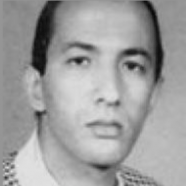
By the end of 2002 it became apparent to Al-Qaida leadership that Ayiri and his network would have to be activated and used to conduct attacks, as Nashiri and his network had been dismantled. Ayiri, Ghamdi, and Dandani were all in contact with Saif al-Adel in Iran [22,23,39]. Saif al-Adel (Sword of Justice), as mentioned, was one of the highest-ranking al-Qaida officials that the men could possibly be in touch with. Adel while based in Iran was eventually placed under house arrest by the Revolutionary Guard [40]. Even if he was held in the early months of 2003, this fact did not prevent him from openly communicating with his subordinates and giving orders for terrorist actions [22]. As such, he asked the Saudi militant leaders if they and their men were ready to begin the attacks in Saudi Arabia [20]. Ayiri is believed to have responded very negatively, but was willing to follow orders regardless [20]. In the end, Saif al-Adel was impatient and ordered Ayiri, Ghamdi, and Dandani to commence [22,23,39]. The resulting chaos, the battles, the intrigue, and politics will be chronicled here within.
SEGMENT I Appendix – The following is an appendix detailing the Nashiri Nexus in the Arabian Peninsula and does not reflect any specific wanted lists:
ARABIAN OPERATIONS COMMANDERS:
- ABDULRAHIM HUSSAIN MOHAMED ABDAH AL-NASHIRI (GUANTANAMO)
- WALID MOHAMED SALEH BIN ATTASH (GUANTANAMO)
STRAIT OF HORMUZ AND PORT RASHID OPERATIVES:
- AHMED MOHAMED HAZA AL-DARBI (GUANTANAMO)
- SANAD ALI YISLAM AL-KAZIMI (GUANTANAMO)
LEADERSHIP OF MERGING YEMENI CELL:
- QAED SINAN SALIM AL-HARITHI (SLAIN IN DRONE STRIKE)
-KAMAL DERWISH (SLAIN IN DRONE STRIKE)
2. MOHAMED HAMDI AL-AHDAL (CLAIMED CREDIT FOR LIMBURG ATTACK)
IMPORTANT NASHIRI/HARITHI SUBORDINATES APPREHENDED IN YEMEN:
- FAWAZ YAHYA HASSAN AL-RUBAYI (AL-QAIDA CONFIDANT)
- ABU BAKR YAHYA HASSAN AL-RUBAYI (BROTHER TO FAWAZ)
- HIZAM SALEH AL-MUJALI (RUBAYI GUNMAN)
- ARIF SALEH AL-MUJALI (RUBAYI GUNMAN)
- FAWZI YAHYA QASIM AL-HABABI (BIN LADEN BODYGUARD)
- OMAR SAID HASSAN JARALLAH (BIN LADEN BODYGUARD)
- MOHAMED SAID ALI HASSAN AL-UMDAH (BIN LADEN BODYGUARD)
- FAWZI MOHAMED ABDULQAWI AL-WAJEH (BIN LADEN BODYGUARD)
- IBRAHIM MOHAMED ABDULJABAR AL-HUWAIDI (RUBAYI GUNMAN)
- MOHAMED AHMED ABDULLAH AL-DAILAMI (RUBAYI DRIVER)
- QASIM MOHAMED MAHDI AL-RIMI (AL-FARUQ INSTRUCTOR)
IMPORTANT NASHIRI/HARITHI CREW STILL AT LARGE:
- KHALID MOHAMED MUSLIM AL-JEHANI (BIN LADEN BODYGUARD)
- KHALID ALI AL-HAJJ (BIN LADEN BODYGUARD / ATTACK FINANCIER)
- ABDULAZIZ ISSA ABDULMUHSIN AL-MUQRIN “ABU HAJIR” (NASHIRI’S PARAMILITARY APPOINTEE)
COLE CONSPIRATORS IMPRISONED IN YEMEN:
- JAMAL MOHAMED AHMED ALI AL-BADAWI (COLE CONSPIRATOR)
- FAHD MOHAMED AHMED AL-QUSO (COLE CONSPIRATOR)
COLE BOMBERS:
- HASSAN SAID AWAD AL-KHAMRI
- IBRAHIM AL-THAWAR (NIBRAS)
LIMBURG BOMBERS:
- NASIR AWAD NASIR FARAJ DUMAN AL-KINDI (FORMER YEM ARMY LT)
- HUSSEIN MOHAMED AHMED ALI AL-BADAWI (BROTHER TO JAMAL)
FAILED SULLIVANS BOMBERS:
- SALMAN AL-ADANI (DROWNED IN YEMEN)
- TAHA IBRAHIM HUSSEIN AL-AHDAL (KILLED BY NORTHERN ALLIANCE IN AFGHANISTAN)
FAILED EMBASSY PLOT:
- BASHIR NUMAN SAID AL-SAFARI (SALMAN AL-TAIZI – KILLED IN MUNITIONS ACCIDENT)
- ABDULRAZAQ MOHAMED NASIR AL-OTHMALI (WALID AL-SHIBH – KILLED IN MUNITIONS ACCIDENT)
COMMUNICATIONS CENTER:
- AHMED AL-HADA (APPREHENDED BUT WHEREABOUTS UNK)
- SAMIR AHMED AL-HADA (SON OF AHMED – KILLED DURING RAID)
CITATIONS:
- [1] The Black Banners: The Inside Story of 911 and the War Against Al-Qaeda, Ali Soufan, W.W. Norton and Company, 2011,p. 495-499
- [2] High Value Target: Countering Al-Qaeda in Yemen, Ambassador Edmund Hull (ret), Potomac Books, 2011
- [3] Abdulrahim al-Nashiri Guantanamo Assessment File, ISN 10015, http://wikileaks.org/gitmo/prisoner/10015.html
- [4] Sanad Ali Yislam al-Kazimi, Guantanamo Assessment File, ISN 1453, http://wikileaks.org/gitmo/pdf/ym/us9ym-001453dp.pdf
- [5] The hidden history of the CIA’s prison in Poland, by Adam Goldman, The Washington Post, January 23, 2014, https://www.washingtonpost.com/world/national-security/the-hidden-history-of-the-cias-prison-in-poland/2014/01/23/b77f6ea2-7c6f-11e3-95c6-0a7aa80874bc_story.html
- [6] U.S. Navy Reserve Doctor on Torture Victim: “One of the most severely traumatized individuals I have ever seen,”by Jeremy Scahill, The Intercept, May 17, 2018, https://theintercept.com/2018/05/17/gina-haspel-cia-director-torture/
- [7] Walid Mohamed Saleh bin Attash Guantanamo Assessment File, ISN 10014, http://wikileaks.org/gitmo/prisoner/10014.html
- [8] The Black Banners: The Inside Story of 911 and the War Against Al-Qaeda, Ali Soufan, W.W. Norton and Company, 2011
- [9] Timeline of Yemen Arrests, 2002-2009, by Jane Novak, Armies of Liberation, http://armiesofliberation.com/archives/2009/06/12/al-qaeda-in-yemen-arrests-2002-2009/
- [10] Fifteen Convicted in Yemeni Terror Trial, The Washington Times, August 28, 2004, http://www.washingtontimes.com/news/2004/aug/28/20040828-110857-1006r/
- [11] High Value Target: Countering Al-Qaeda in Yemen, Ambassador Edmund Hull (ret), Potomac Books, 2011
- [12] Yusef al-Ayiri, Global Jihad Profile, http://www.globaljihad.net/view_page.asp?id=1595
- [13] Fundamentalists: Al-Ayiri Was in Charge of ‘Alneda’ Internet Website, al-Qa’ida’s Mouthpiece, by Muhammad al-Shafii, Asharq al-Awsat News, June 4, 2003, http://www.freerepublic.com/focus/f-news/924769/posts
- [14] Jihad in Saudi Arabia: Violence and Pan-Islamism since 1979, Thomas Hegghammer, Cambridge University Press, 2010, p. 53
- [15] Evidence Collection, List of 170 Al-Qaida Members, recovered 2001 from home of Mohamed Atef
- [16] Terrorist Recruitment and Radicalization in Saudi Arabia, Thomas Hegghammer, http://www.thefreelibrary.com/Terrorist+recruitment+and+radicalization+in+Saudi+Arabia.-a0156581738
- [17] Jihad in Saudi Arabia, Thomas Hegghammer, p. 14
- [18] Jihad in Saudi Arabia, Thomas Hegghammer, p. 119-121
- [19] Jihad in Saudi Arabia, Thomas Hegghammer, p. 73
- [20] Al-Qaida in Saudi Arabia, Asymmetric Threats and Islamist Extremists, Anthony Cordesman and Nawaf Obaid, CSIS, http://csis.org/files/media/csis/pubs/050106_al-qaedainsaudi.pdf
- [21] Sultan Sari al-Anzi, Guantanamo Assessment File, ISN 507, http://wikileaks.org/gitmo/pdf/sa/us9sa-000507dp.pdf
- [22] Riyadh Attack: al-Adel in Iran Ordered It, al-Ghamdi in Saudi Arabia Oversaw It, ICT.org,The Age, Guardian, Straits Times, Charlotte Observer, May 29, 2003, http://www.freerepublic.com/focus/f-news/919401/posts
- [23] Why does Iran Protect Al-Qaida?, by Nawaf Obaid, Iran Press Service, http://www.iran-press-service.com/articles_2003/Sept-2003/iran_alqaeda_11003.htm
- [24] Profile: Abdul Aziz al-Muqrin, BBC, June 19, 2004, http://news.bbc.co.uk/2/hi/middle_east/3821237.stm
- [25] Adnan Mohamed Ali al-Sayegh Guantanamo Assessment File, ISN 105, https://wikileaks.org/gitmo/prisoner/105.html
- [26] Mohamed Bin Moujan Guantanamo Assessment File, ISN 160, https://wikileaks.org/gitmo/prisoner/160.html
- [27] Path of Blood: The Story of Al Qaeda’s War on the House of Saud, by Thomas Small and Jonathan Hacker, Simon & Schuster UK, 2015
- [28] The Last Refuge: Yemen, Al-Qaeda, and America’s War in Arabia. By Gregory Johnsen. W. W. Norton & Company, New York, 2012, p. 52-53
- [29] Is Yemen the new Afghanistan?, by Robert F. Worth, New York Times, July 6, 2010, http://www.nytimes.com/2010/07/11/magazine/11Yemen-t.html?pagewanted=all&_r=0
- [30] Who’s dead, who’s captured and who’s still on the loose in the war on al-Qaida, by John J. Lumpkin, The Associated Press, January 9, 2002, http://lang.sbsun.com/socal/terrorist/0102/09/terror05.asp
- [31] Saudi Arabia Arrests 13 Men Tied to Attack on a U.S. Base, by Neil MacFarquhar, The New York Times, June 19, 2002, http://www.nytimes.com/2002/06/19/world/saudi-arabia-arrests-13-men-tied-to-attack-on-a-us-base.html
- [32] Path of Blood: The Story of Al Qaeda’s War on the House of Saud, by Thomas Small and Jonathan Hacker, Simon & Schuster UK, 2015
- [33] Jihad in Saudi Arabia, Thomas Hegghammer, p. 166
- [34] Violent Islamism in Saudi Arabia, 1979-2006, The Power and Perils of Pan-Islamic Nationalism, by Thomas Hegghammer, Thesis in Political Science, Institut dʹEtudes Politiques de Paris, November 2007
- [35] Saudi Arabia Beheads 4 In Riyadh Bombing, Deseret News via Reuters, May 31, 1996, https://www.deseret.com/1996/5/31/19245890/saudi-arabia-beheads-4-in-riyadh-bombing/
- [36] In Bomberʹs Life, Glimpse of Saudi Dissent, by Ethan Bronner, Boston Globe, 7 July 1996
- [37] Security enterprise marks 25th anniversary of Riyadh bombing, by Richard Bumgardner, Army.mil, December 1, 2020, https://www.army.mil/article/241288/security_enterprise_marks_25th_anniversary_of_riyadh_bombing
- [38] Ambassador: Car Bomb Destroyed Military Building, CNN, November 13, 1995, http://www.cnn.com/WORLD/9511/saudi_blast/11am/
- [39] Al-Qaida’s New Leadership: Saif al-Adel Profile, by Craig Whitlock and Munir Ladaa, The Washington Post, 2006, http://www.washingtonpost.com/wp-srv/world/specials/terror/adel.html
© Copyright 2024 Nolan R Beasley
 Chronicles in Zealotry