
SEGMENT I – Foundations In A Franchise of Fear – CHAPTER 3 – The Impending Arabian Insurgency
For the entirety of the Series, please see – https://chroniclesinzealotry.com/fugitives-of-the-peninsula/
This Chapter will focus on the Nashiri Nexus and the potential for extremist operations in Yemen during late 2002, pivoting to yet another invaluable militant in the broad Arabian network. It will also address the inaugural Predator drone strike against al-Qaida officials in an early attempt to dismantle the Arabian terror franchise. We begin though with the unique January 2002 FBI alert for al-Qaida terrorists including 9/11 conspirator Ramzi Binalshibh. The alert included two individuals of importance in the story of AQAP.
The Five ‘Martyrs’
The Binalshibh alert stemmed from five purported martyrdom videos found in the rubble of Mohamed Atef’s safehouse in Kabul [1]. The military chief of al-Qaida was killed there by US forces in November 2001 [2]. There was a veritable treasure trove of information within the compound, including the minatory videos. On January 17, 2002, the US Department of Justice released their names and pictures to the public [1]. They were: one unidentified man, as well as Ramzi Binalshibh, Mohamed Said Ali Hassan, Abdulrahim al-Janko, and Khalid al-Jehani (Muawiya al-Madani) [1]. The fifth man would a week later be identified as Tunisian-Canadian Abderraouf Jdey [3]. The men were considered incredibly dangerous. However, Janko’s tape was revealed to be a confession to espionage and not a martyrdom statement [4]. The Syrian had traveled to Afghanistan to receive training and was sent to the front lines to fight with Brigade 55 [4]. However, the Taliban suspected him of being a spy and he was apprehended, interrogated and tortured by them. This process was even overseen by Mohamed Atef and Saif al-Adel [4]. This explains why Atef was in possession of the confession video. Janko was placed in a Taliban prison and was handed over the US forces upon the facility’s liberation [4]. Janko, despite having been seen as an enemy to the Taliban, ended up in Guantanamo Bay and was finally later released from there as he had not conducted any terror plots, attacks, or even fought against US forces [4]. Binalshibh was eventually captured on September 11, 2002 in a raid on an al-Qaida Karachi safehouse and transferred to CIA custody before ending up in Guantanamo Bay [5]. The men of most interest here to the topic of AQAP are Mohamed Said Ali Hassan and Khalid al-Jehani. Mohamed Said Ali Hassan al-Umdah (sometimes reported as the tribal surname al-Amri, and also known as Abu Gharib al-Taizi), was a former bin Laden bodyguard who became a part of Nashiri’s network in Yemen [6,7]. Khalid al-Jehani was of course the man that bin Laden had slated to be the actual suicide bomber to hit a US destroyer in Aden, who had continued to work for Nashiri’s maritime operations, and was intent on becoming a martyr while killing as many Americans as he could along the way [8,9]. As has been mentioned, Jehani had joined bin Laden’s bodyguard contingent along with Abu Jandal al-Jadawi very early on in Afghanistan [10]. This explained how Jehani gained the trust and support of the emir. Together with men such as Umdah, Abdulrazzaq Mohamed Nasir al-Othmali (aka Walid al-Shiba), Fawzi Yahya Qasim al-Hababi, Khalid Ali al-Hajj, Bashir Numan Said al-Safari (aka Salman al-Taizi), Qasim al-Rimi, Omar Said Hassan Jarallah, and others, Jehani formed the upper echelon of Nashiri’s Arabian Peninsula network [6,11,12,13]. This group was primarily comprised of former bin Laden guards and training camp instructors.


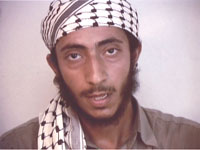

That being said, there were still other militants involved in creating the jihadist infrastructure in both Yemen and Saudi Arabia. Dr. Ayman al-Zawahiri’s Egyptian Islamic Jihad used Yemen as a staging ground for training and harboring militants in the 1980s and 1990s [14]. Zawahiri’s brother Mohamed was one of the first to go to Yemen and set up camp [14]. Another was Abdulaziz al-Jamal, a veteran EIJ fighter [14]. Jamal would be on several US lists of Al-Qaida leaders released to the press after the invasion of Afghanistan [15,16]. He was wanted for his connections with EIJ and al-Qaida. The US never placed hands on him however as he was extradited from Yemen to Egypt in 2002 and eventually released in that country [14]. Egyptian jihadists in fact fled to Yemen in the 1990s and set up operations after Egypt cracked down upon them. Among their number were Ibrahim Mohamed Saleh al-Bannah (Abu Ayman al-Masri) and Abdulmunim Izzaldin al-Badawi (Abu Ayub al-Masri/Abu Hamza al-Muhajir) [14]. These two men were in charge of intelligence matters for the group [14]. Upon the merger of al-Qaida and EIJ, these Egyptian leaders fell under the control of localized Arabian al-Qaida leaders [14]. Badawi eventually fought in Afghanistan and was sent to Iraq to fight US forces there as well. He waged jihad under Abu Musab al-Zarqawi and subsequently took over command of Al-Qaida in Iraq after Zarqawi’s death at the hands of US Special Forces in 2006 [14]. Bannah meanwhile would remain in Yemen.
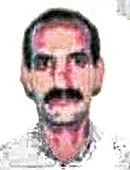
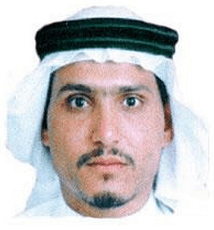
Harithi And Ahdal
Arguably one of the most important militants involved in forging Al-Qaida’s Arabian franchise was Qaed Sinan Salim al-Harithi [13,17]. The Yemeni was better known as Abu Ali al-Harithi and had been a bodyguard of bin Laden’s and an al-Qaida member in the days when the organization called the Sudan its home [17]. After fighting the Soviets in Afghanistan, Harithi returned to his native Yemen and built a militant infrastructure within, before joining bin Laden in Africa [18]. In one notable episode in Sudan, Harithi had taken a bullet in the leg for bin Laden, during a botched assassination attempt by a former associate [19]. After his eventual return to Yemen, Harithi maintained strong connections and allegiances within the tribal areas of Yemen and thus was an important ally for the terror group to have when operating within the country [13].
By 2002, as al-Qaida fighters were fleeing from Tora Bora and attempting to make their way to their home countries, bin Laden tapped Harithi as the man who could help al-Qaida’s presence in Yemen sufficiently rebuild [13]. As such, Nashiri took Harithi and his men into account and used the figure to help acquire explosives and supplies [13]. Nashiri, chief of Al-Qaida’s plots in the Arabian Peninsula, and his crew of deputies meanwhile continued to actively pursue the bombing of sea going vessels. As such it needs to be noted that while Abu Ali al-Harithi is consistently represented by the media as the “mastermind of the COLE attack”, he was in fact not [20]. This assertion would cause much confusion in the years to come [20]. Harithi had been activated as al-Qaida’s point man in Yemen after the 9/11 attacks and had fallen under Nashiri’s leadership as the latter was overall head of operations in the Arabian Peninsula [13]. In fact, the group led by Nashiri can be seen as originally separate from the Yemeni contingent led by Harithi to some degree in organization [21]. That being said, the two groups did merge together under Nashiri’s leadership [13]. Bin Attash, Nashiri, and Harithi are most commonly heralded by the press as the masterminds of the COLE attack but it seems more than obvious now that while bin Laden conceived the attack, and both Nashiri and bin Attash planned for and prepared for it, it was actually Nashiri who commanded and was responsible for the bombing [22].

As mentioned, one of Harithi’s top men was Fawaz al-Rubayi, and he together with several other members of the Yemeni crew would actively seek to bomb Embassies in the Arabian Peninsula, plot to murder Americans on a helicopter, and conduct other attacks [23,24]. Nashiri and his men, with assistance from this crew perpetrated the October 2002 M/V Limburg bombing [13]. Nashiri employed two of his men as suicide bombers against the oil tanker in a similar fashion to his method against the destroyers. They were Nasir Awadh Nasir Faraj Douman al-Kindi (known as Abu Khaithama al-Hadhrami) and Hussein Mohamed Ahmed Ali al-Badawi (known as Abu Hareth al-Badawi) [6,25]. Kindi had been a lieutenant in the Yemeni military and a veteran of jihad in Afghanistan, being sent home by al-Qaida in September 2001 to fulfill his destiny as a martyr [25]. Nashiri made effective usage of one of bin Attash’s original henchmen by sending Hussein al-Badawi, the brother of Jamal, to his martyrdom in this operation. If there was any additional evidence needed of Jamal al-Badawi’s role in Nashiri’s network, the sacrifice of his own brother would seemingly be sufficient. Nashiri had utilized multiple of his other operatives for the attack, having Walid al-Shiba and Salman al-Taizi purchase and move the boat to Mukallah, while having Hababi, Umdah and Omar Said Jarallah (himself also a former bin Laden bodyguard) rig the vessel with explosives [26]. While Nashiri was in Dubai, Walid al-Shiba communicated with him via bin Attash, requesting assistance in placing the explosives [11]. At the time these men that Nashiri entrusted with his operations were relatively unknown, but others could not keep out of the spotlight.

As such, another important man often mentioned with Al-Qaida in Yemen at this time was Mohamed Hamdi al-Ahdal. It has been asserted that Ahdal was responsible for assisting in financing both of the maritime bombings [27]. In fact, in late 2001 the US asked Yemen to capture both Harithi and Ahdal in order to destabilize the apparent al-Qaida structure therein [28,29]. Ahdal it seems, in addition to Harithi, had actually not directly participated in the COLE attack. Ahdal had fought in Bosnia, Chechnya, and trained in Afghanistan [27]. He was arrested in Saudi Arabia in 1999 and extradited to Yemen [30]. There he was released and quickly joined up with Harithi. The two of them moved to be with tribal allies in the lawless Marib province of Yemen [17]. After the US asked the Yemenis to locate the men, special security forces were sent to Marib to detain them [28]. Harithi was with an Egyptian ally, Bakr Said Mohamed Numaan, yet another jihadist of EIJ origins, also known as Abu Ayman al-Masri (not to be confused with Ibrahim al-Bannah), and together the two easily avoided the coming onslaught [31,32]. The security forces subsequently raided the village of al-Hasun, but were repelled by the tribal fighters [28,33]. This was not a standoff with Al-Qaida forces, but rather started as a negotiation between the Yemeni forces and a tribal militia very distrustful of their government. It ended with the tribesmen opening fire [32]. Harithi and Ahdal escaped, and Harithi expanded upon his role as the al-Qaida point man in Yemen. In his wake at Hasun he left dead 19 security forces and 6 of the tribal fighters [27,28,32,33]. Ahdal, while acting under the alias Abu Asim al-Makki, claimed responsibility for the Al-Qaida attack on the Limburg [34]. Abu Jandal al-Jadawi asserted that Ahdal was not an integral part of the al-Qaida network in Yemen at the time, although the US, Western media, and intelligence sources claimed that Ahdal was Harithi’s deputy within the organization he had built in the 1990s in Yemen [28,30,35]. Former Ambassador to Yemen Edmund Hull stated that Ahdal was primarily a fundraiser [32]. While agreeing with this assessment, Ahdal’s close proximity to Harithi as well as his multiple contacts within jihadist ranks disputed the assertion that he was not at least minimally involved in militant operations. Harithi and his network would after all join with Nashiri, and Ahdal as mentioned, would claim responsibility for one maritime attack. In addition, Ahdal called another important al-Qaida operative named Muhsin Ayed al-Fadhli to inform him of the success of the Limburg operation [36]. Fadhli was the cornerstone of the al-Qaida network in Kuwait, and a dangerous man [36]. He was arrested by the Kuwaitis for funneling funds to Ahdal in order to perpetrate attacks in Yemen, supposedly for the Limburg attack [37]. Ahdal was also reportedly linked to a man known as Rakan al-Saikhan who would become an important al-Qaida operative in his own right [38]. These connections support the theory that Ahdal was in fact an important piece of the network. These circumstances would only add to the confusion which reigned in the media and caused reports to randomly name different men (Harithi, Nashiri, Ahdal, bin Attash) as the mastermind of these maritime attacks.
Last Attempts Of The Nashiri Nexus
Nashiri and Harithi’s men had successfully continued the fight in Yemen with the Limburg bombing. However, their plans to bomb the various (but primarily the US) Embassies had already fallen apart due to a premature explosion which killed two operatives: Abdulrazzaq Mohamed Nasir al-Othmali (Walid al-Shiba) and Bashir Numan Said al-Safari (Salman al-Taizi) [6,24]. With the attacks on course for an August 13 launch, the cell was completely derailed by the accident on August 9 [39]. Several in the cell, including Hababi, Rubayi’s brother Abu Bakr, a militant named Ibrahim Huwaidi, and former bin Laden bodyguard Fawzi al-Wajeh, performed reconnaissance on the Embassy [39]. Harithi meanwhile had obtained the weaponry for the plot. The explosion that ruined their plans occurred in an apartment complex in Sanaa being used to plan the attacks [24]. Shiba was described as one of Nashiri’s most capable men, and together with Safari planned to use a missile launcher to attack the US Embassy [39]. It was ironic then that his ineptitude with that very launcher brought about his own demise. When it misfired just days prior to the August 13, 2002 date set for the Embassy attacks, its projectile impaled Safari, while the concussion mortally wounded Shiba [39]. Next door to the inadvertent victims, Rubayi and his brother Abu Bakr were able to escape. The failed attack was an example of Nashiri and Harithi’s men working in conjunction with each other after their merger [39].
Prior to these joint operations, Harithi had instructed Rubayi to attempt bombings on government officials [24,40,41]. The bombs were placed in March and April throughout Sanaa by Abu Bakr al-Rubayi, and while they detonated, they did not cause extensive damage or death [41]. Harithi’s men did take credit for these bombings, aimed at government and PSO officials, with an issuance on April 10, which led to them demanding the release of political prisoners, including Ahmed al-Hada [41].
The press for this cell to succeed continued after the ventures of the failed Embassy and successful tanker attacks. Eventually, Harithi’s men attacked a Hunt Oil Company helicopter in early November 2002 [24,40]. Rubayi deployed Ibrahim al-Huwaidi to perform reconnaissance on the helicopter, and thus informed the rest of the cell upon it’s launch [41]. Rubayi fired a missile at the aircraft but missed, while two of his men, the brothers Hizam and Arif Mujali, fired machine guns into the air towards it [40]. Rubayi’s elder brother Abu Bakr al-Rubayi was prepped to video the event, but found nothing of any worth to record [40]. The men fled with another militant, Mohamed al-Dailami at the wheel of their vehicle [40]. The Mujalis were hungry for revenge as in September of 2002 a Yemeni raid had left their older brother Yahya Mujali dead [40]. Interestingly, the elder Mujali was known as Abu Saif and was also the uncle of Nibras [42,43]. It is unknown what role in the network the man played, and it does not seem to have been significant, but according to former Amb. Edmund Hull, he was well connected to the terrorists (familial ties are obvious), and thus fought fiercely during the raid, leaving one Yemeni soldier seriously wounded [44]. Yahya Mujali’s death had been the impetus for Nashiri to allow the Limburg attack, which could be seen as a way to satiate the restless crew’s expanding need for action [35]. Especially in light of the August failure. Meanwhile, the helicopter in question was hit twice by the machine gun fire but sustained no heavy damage [40]. Rubayi and his men escaped but their time on the run was coming to an end. Arif Mujali had actually injured himself during the debacle, and his subsequent hospital visit helped authorities track down the crew [24]. Others would not be as fortunate to be merely arrested.
The First Drone Strike And The Lackawanna Six
On November 5, 2002 the CIA targeted Harithi in his vehicle in Marib province [17]. Intelligence gathered from the series of attacks occurring in Yemen made it obvious that Al-Qaida was potentially turning Yemen into a new base from which to launch operations. Intercepted phone calls led to Harithi’s location [24]. A former Yemeni intelligence officer turned militant named Abdulrauf Nassib (reportedly he was also Ahdal’s bodyguard) survived the strike [45]. The Americans had initially been confident that he would perish in the desert alone [46]. Killed along with Harithi in the drone strike were four of his body guards: Saleh Hussein Ali al-Zono, Awsan Ahmed al-Tarihi, Munir Ahmed Abdullah al-Saudi, and Adel Nasir al-Saudi [47]. The last person killed was Abu Ahmed al-Hijazi: Kamal Derwish [47]. As Derwish was the only American citizen killed in the strike, it was important for the CIA to play up the role of Harithi and may account for why he was originally reported to have such a strong connection to the COLE plot (as far up as commanding it). The killing of Derwish was bound to be controversial, but as he was an American al-Qaida recruiter his death was no doubt a relief to government agencies all around. Derwish was directly linked to the famous case of the Lackawanna Six which helps to show why his death was something that the CIA would not regret [48].
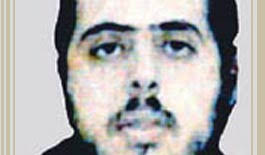
Derwish, although born in Buffalo, was raised in Saudi Arabia and exposed to religious fanaticism from an early age [48]. He trained at Al-Qaida camps in Afghanistan and eventually fought in Bosnia [48]. Although he was apprehended by the Saudis for his militancy, he was still allowed to return to the US and spread his radical views. Derwish set up in the town of Lackawanna, NY, very near to Buffalo, which has a large Yemeni-American population [48,49]. He attempted to recruit youths and men to his cause in order to send them to Afghanistan to train for jihad. His efforts were aided by another al-Qaida recruiter, a Saudi named Juma al-Dosari who had been recently living in the US [49]. Dosari was not particularly welcomed into the community due to his militant stance. Under the cover of going to work for a religious organization in Pakistan, Derwish successfully recruited seven men for training at Al-Qaida camps: Yasein Taher, Faysal Galab, Shafal Mosed (who traveled to Pakistan in April 2001), Salim Alwan, Jabir al-Bannah, Mukhtar al-Bakri and Yahya Goba (who traveled in May 2001 to Pakistan) [49]. Through June it became apparent that the men were mostly not dedicated recruits to the cause. Alwan was the first to exit the camp while faking an injury [49]. He was compelled to deliver propaganda tapes of the COLE bombings, foisted upon him by bin Laden, to Pakistan before returning home [49]. Taher, Galab and Mosed also left the camp early [49]. Barki and Goba completed the training, traveled for a while and then returned home [49]. Bannah stayed with Derwish and stated that he wished to become a martyr, providing the recruiter with only one solid success [49]. Derwish and Bannah escaped Afghanistan and made their way back to Yemen. Juma al-Dosari meanwhile left the US after a call for fighters in the post 9/11 world to join the war in Afghanistan against the coming US invasion [49]. He did so, was captured fighting in Afghanistan and eventually ended up in Guantanamo Bay [49]. The six Yemeni-Americans upon return maintained their cover story of working for a religious organization [49]. Unbeknownst to them however, they had been betrayed by a source within their community who had written to the FBI about their trip to the training camps [49].

While being interrogated in Guantanamo, Dosari revealed how Derwish had recruited the men from New York and sent them to al-Faruq training camp, information which greatly alarmed the US government [49,50]. The US monitored the men over the course of 2002 and built them up to be the most dangerous threat to US national security, mainly because of their connection to Derwish who was in turn connected to many upper echelon al-Qaida leaders including bin Attash [49]. The “cell” however did not really exist and was comprised of failed al-Qaida prospects. Finally, after intercepting suspicious emails, the US had Bakri arrested in Bahrain and the rest of the men rounded up in Lackawanna in September of 2002 [49]. They were dubbed the Lackawanna Six and their capture was heralded as the break-up of an al-Qaida cell planning attacks on US soil [49]. While this is certainly not the case, it is easy to see, based on the information available, why US law enforcement would have believed this. The greatest threats however were none of the actual Lackawanna Six but rather their recruiters and Bannah, their compatriot who had actually been radicalized. Dosari would inexplicably be released from Guantanamo and handed over to the Saudis in 2007, but the threat Derwish posed to the US was removed entirely on November 5, 2002 [49]. All of this taken into context, it has been theorized that perhaps Derwish and not Harithi was the primary target of that CIA strike [51]. The agency had ample opportunity to attack other Al-Qaida fighters before and after the strike, but it would be years before the CIA conducted another drone strike in Yemen. Harithi was not the mastermind behind Al-Qaida in the Arabian Peninsula as he was being portrayed and Derwish probably posed the most significant and immediate threat in the eyes of the intelligence community. Regardless of the reasoning, both Derwish and Harithi were eliminated, leaving Rubayi and the other cell members astray and Nashiri without a key component of his organization.
The final Chapter of Segment I will conclude the saga of the Nashiri nexus, and shift the focus of the Series towards happenings in Saudi Arabia. This includes a brief introduction to previous Sunni jihadism within the Kingdom during the 1990s. Lastly, we examine the established bin Laden lieutenant named Yusef al-Ayiri, his fundraising network, and the collection of militants returning to the Kingdom from Afghanistan in 2002, posing a direct threat to regional stability.
CITATIONS:
- [1] Hunt For bin Laden Martyrs, by Ben Fenton, The Guardian, January 18, 2002, http://www.telegraph.co.uk/news/worldnews/asia/afghanistan/1381948/Hunt-for-bin-Laden-martyrs.html
- [2] Obituary of Mohamed Atef, The Guardian, November 18, 2001, http://www.guardian.co.uk/news/2001/nov/19/guardianobituaries.afghanistan
- [3] Authorities Name 5th Suicide Terrorist, CNN News, January 25, 2002, http://articles.cnn.com/2002-01-25/justice/inv.fifth.suspect_1_abderraouf-jdey-martyrdom-messages-khalid-ibn-muhammad-al-juhani?_s=PM:LAW
- [4] Abdulrahim al-Janko Guantanamo Assessment File, ISN 489, http://wikileaks.org/gitmo/prisoner/489.html
- [5] Ramzi Binalshibh Guantanamo Assessment File, ISN 10013, http://www.wikileaks.org/gitmo/prisoner/10013.html
- [6] Abdulrahim al-Nashiri charge sheet, September 28, 2011, http://media.miamiherald.com/smedia/2011/09/28/15/44/13SzlK.So.56.pdf
- [7] AQAP Mourns Death of Commander Killed in Drone Strike in Yemen, Translated by Flashpoint Partners, April 29, 2012, https://flashpoint-intel.com/inteldocument/flashpoint_aqap042912-1.pdf
- [8] The Black Banners: The Inside Story of 911 and the War Against Al-Qaeda, Ali Soufan, W.W. Norton and Company, 2011, p. 277-279
- [9] Ahmed al-Darbi Charge Sheet, December 16, 2013, https://www.mc.mil/Portals/0/pdfs/alDarbi2/Al%20Darbi%20II%20Referred%20Charge%20Sheet.pdf
- [10] The Black Banners, Ali Soufan, p. 344-346
- [11] Abdulrahim al-Nashiri Guantanamo Assessment File, ISN 10015, http://wikileaks.org/gitmo/prisoner/10015.html
- [12] Ahmed al-Darbi, Guantanamo File, ISN 768, http://wikileaks.org/gitmo/prisoner/768.html
- [13] The Black Banners, Ali Soufan, p. 359
- [14] The Role of Egyptian Militants in Developing Al-Qaida in the Arabian Peninsula, by Hani Nasira, The Jamestown Foundation, Terrorism Monitor, Volume 9, Issue 1, http://www.jamestown.org/single/?no_cache=1&tx_ttnews%5Btt_news%5D=37328
- [15] Many senior al-Qaida leaders believed dead, but terror group still dangerous, by John J. Lumpkin, The Associated Press, November 29, 2001,
- http://www.capecodonline.com/apps/pbcs.dll/article?AID=/20011129/NEWS01/311299968&template=printart
- [16] Who’s dead, who’s captured and who’s still on the loose in the war on al-Qaida, by John J. Lumpkin, The Associated Press, January 9, 2002, http://lang.sbsun.com/socal/terrorist/0102/09/terror05.asp
- [17] US Kills Al-Qaida suspects in Yemen, The Associated Press, November 5, 2002, http://usatoday30.usatoday.com/news/world/2002-11-04-yemen-explosion_x.htm
- [18] The Last Refuge: Yemen, Al-Qaeda, and America’s War in Arabia. By Gregory Johnsen. W. W. Norton & Company, New York, 2012, p. 34-35
- [19] The Last Refuge: Yemen, Al-Qaeda, and America’s War in Arabia. By Gregory Johnsen. W. W. Norton & Company, New York, 2012
- [20] Accused USS Cole bomber complains of mistreatment, by Carol Rosenberg, The Miami Herald, October, 24, 2012, http://www.miamiherald.com/2012/10/24/3064729/accused-uss-cole-bomber-ordered.html
- [21] The Black Banners, Ali Soufan, p. 496
- [22] Suspected Mastermind of Cole Bombing Held, by Josh Mayer, The Los Angeles Times, May 1, 2003, http://articles.latimes.com/2003/may/01/world/fg-qaeda1
- [23] The Last Refuge, Gregory Johnsen, p. 91-92
- [24] The Black Banners, Ali Soufan, p. 495-499
- [25] “Martyrs of the Peninsula no. 3, Nasir Awad Nasir Faraj al-Kindi,”, Translated by Flashpoint Partners, https://flashpoint-intel.com/inteldocument/flashpoint_limburgbio1110.pdf
- [26] High Value Target: Countering Al-Qaeda in Yemen, Ambassador Edmund Hull (ret), Potomac Books, 2011
- [27] UN Security Committee Sanction on Mohamed al-Ahdal, October 17, 2001, http://www.un.org/sc/committees/1267/NSQI02001E.shtml
- [28] The Last Refuge, Gregory Johnsen, p. 78-83
- [29] Yemen: Two Al-Qaida Suspects Found, CBS News, January 29, 2002, http://www.cbsnews.com/2100-500164_162-326099.html
- [30] Yemen arrests a leading member of al Qaeda, The New York Times via The Associated Press, November 26, 2003, https://www.nytimes.com/2003/11/26/world/yemen-arrests-a-leading-member-of-al-qaeda.html
- [31] AQAP Inspire Magazine, Issue 8, Fall 2011, released May 2012
- [32] High Value Target: Countering Al-Qaeda in Yemen, Ambassador Edmund Hull (ret), Potomac Books, 2011
- [33] A NATION CHALLENGED: PURSUING AL QAEDA; Yemen Troops Shoot It Out With Tribes, The New York Times via The Associated Press, December 19, 2001, https://www.nytimes.com/2001/12/19/world/a-nation-challenged-pursuing-al-qaeda-yemen-troops-shoot-it-out-with-tribes.html
- [34] Mohamed al-Ahdal, Global Jihad Profile, http://www.globaljihad.net/view_page.asp?id=310
- [35] Al-Quds interview with Abu
Jandal, Al-Quds Al-Arabi headline: “Abu-Jandal, Former Personal Bodyguard
of Usama Bin Ladin and Leading Al-Qa’ida Element in Yemen Reveals to Al-Quds
Al-Arabi his Intercession in Bin Ladin’s Marriage to a Yemeni Girl. He Used to
Meet With Al-Zarqawi, but Says he is not a Leader. The United States Moves
Toward its Demise. Saudi Bombings Are the Natural Outcome of the Regim’s Policy
and They Will Continue” , Al-Quds al-Arabi News, August 3, 2004, http://cryptome.org/alqaeda-plans.htm - [36] United States Designation of Muhsin al-Fadhli as a Terrorist, February 15, 2005, http://preprod.iipdigital.getusinfo.com/st/english/texttrans/2005/02/20050215155659ndyblehs0.568722.html#axzz2HVKYcM2R
- [37] Al-Qaida member in Kuwait’s custody: Man confesses to planning attack on French tanker and car bombing in Yemen, New York Times, November 17, 2002, http://articles.baltimoresun.com/2002-11-17/news/0211170078_1_qaida-kuwait-saudi-arabia
- [38] Kingdom of Saudi Arabia’s 26 Most Wanted, Free Republic, http://www.freerepublic.com/focus/f-news/1164174/replies?c=1
- [39] High Value Target: Countering Al-Qaeda in Yemen, Ambassador Edmund Hull (ret), Potomac Books, 2011
- [40] The Last Refuge, Gregory Johnsen, p. 100-101
- [41] High Value Target: Countering Al-Qaeda in Yemen, Ambassador Edmund Hull (ret), Potomac Books, 2011
- [42] Timeline of Yemen Arrests, 2002-2009, by Jane Novak, Armies of Liberation, http://armiesofliberation.com/archives/2009/06/12/al-qaeda-in-yemen-arrests-2002-2009/
- [43] The Black Banners, Ali Soufan, p. 254
- [44] High Value Target: Countering Al-Qaeda in Yemen, Ambassador Edmund Hull (ret), Potomac Books, 2011
- [45] Yemen Captures Al-Qaida Members, BBC News, March 4, 2004, http://news.bbc.co.uk/2/hi/middle_east/3531657.stm
- [46] High Value Target: Countering Al-Qaeda in Yemen, Ambassador Edmund Hull (ret), Potomac Books, 2011
- [47] Yemen Admits Cooperating with US in Missile Attack, Middle East Online, November 20, 2002, http://www.middle-east-online.com/english/?id=3328
- [48] Inside the Sleeper Cell, Kamal Derwish: The Life and Death of an American Terrorist, by James Sandler, PBS Frontline, http://www.pbs.org/wgbh/pages/frontline/shows/sleeper/inside/derwish.html
- [49] Inside the Sleeper Cell, Chronology: The Lackawanna Investigation, PBS Frontline, October 16, 2003, http://www.pbs.org/wgbh/pages/frontline/shows/sleeper/inside/cron.html
- [50] Juma Mohamed Abdullatif al-Dosari Guantanamo Assessment File, ISN 261, http://wikileaks.org/gitmo/prisoner/261.html
- [51] Revisiting the Harithi/Derwish Assassination, Emptywheel Blog, January 31, 2012, http://emptywheel.firedoglake.com/2010/01/31/revisiting-the-al-harithiderwish-assassination/
© Copyright 2024 Nolan R Beasley
 Chronicles in Zealotry
One thought on “SERIES: Fugitives Of The Peninsula – (Chapter 3 – The Impending Arabian Insurgency)”