
SEGMENT I – Foundations In A Franchise of Fear – CHAPTER 2 – The Yemeni Nexus
For the entirety of the Series, please see – https://chroniclesinzealotry.com/fugitives-of-the-peninsula/
In this Chapter we focus on the nexus of interconnected militants and jihadists within Yemen. We will also delve into the plots coordinated by Abdulrahim al-Nashiri and some of these militants in the aftermath of the 9/11 attacks. We resume from Chapter 1 with the saga of the USS COLE conspirators Badawi and Quso as components of this violent contingent.
Read more: SERIES: Fugitives Of The Peninsula – (Chapter 2 – The Yemeni Nexus)The Facilitation Array
In the overarching story of Al-Qaida in Yemen, both Badawi and Quso were tried and jailed [1]. However, in April 2003 the two were part of a ten man group that suspiciously escaped from their prison in Aden and regained their freedom [2,3]. It was immediately asserted that the Political Security Organization had to have been involved in the escape. In fact, Col. Hussein al-Anzi of the PSO had been particularly difficult with FBI team members trying to interrogate Quso and Badawi, seemingly being on friendly terms with the suspects [4]. Anzi was subsequently fired from his job after the escape [5]. However, accusations that the PSO was in line with helping jihadists escape prison would continue to linger and eventually come to head much later on. Eight members of the group were recaptured after negotiations between tribal leaders and the government in March 2004 [6,7]. Sources also claimed that Quso and Badawi were the final members of the group to be recaptured and were taken into custody in Abyan province only after a firefight [8,9]. Quso was sentenced to 10 years in prison and Badawi to death in September 2004 [10]. Neither sentence would be carried through with. In fact, perhaps none of the 10 recaptured escapees would remain in prison. Two of them, Saleh Mana and Khaldun al-Hukaimi allegedly ended their lives as suicide bombers in Baghdad; incidents reported to their families on July 18 and 19, 2005 respectively [11,12][A]. The men had been held in connection with the COLE bombing along with Quso and Badawi. Another man sentenced along with Badawi and Quso in 2004 was Mamun al-Musawa, a Yemeni policeman who had traveled to Afghanistan with Quso and met bin Laden [10,13]. Musawa received an eight year sentence for allegedly handling money in the plot and providing false documents for the bombers [10]. Insignificant individuals named Ali Mohamed Saleh and Murad al-Sirouri were given five year sentences for forging identification for Khamri [10]. Not sentenced, but also part of the 10 escapees was Yasir Ahmed Qasim, known as Abu Muslim al-Adani (or Yemeni), whose brother Khalid (Abu Osama al-Adani) was held at Guantanamo as ISN 242, for being a sub-commander at the battle of Tora Bora [14]. Khalid’s assessment reveals Yasir’s association with the COLE bombers, his escape, and recapture [14]. Although these additional names were not directly linked to Nashiri’s crew, it was and is still possible that perhaps a large group of the Yemeni jihadist community in and around Aden knew of the pending attack. Most of the additional arrests though revolved around the individuals providing the logistics necessary to carry out such an ambitious operation.
One such man was Abdullah al-Rimi, a known al-Qaida recruiter and facilitator known locally as Owais [15,16]. Rimi attended a lunch the day before the attacks with Quso, Khamri and others in the jihadist spectrum. Rimi was believed to merely be attempting to obtain forged passports on his passing through Aden, although the US would continue to try to track down and question the man in the future [15,16].
This warrants further discussion and delving into the al-Qaida nexus throughout Yemen. The extensive presence was primarily focused on acquiring candidates for training and fighting in Afghanistan. As such, a network of recruiters was utilized in order to select and vet the incoming new militants [17]. For Yemen, it was postulated that only four individuals could give approval for the recruits’ subsequent training [17]. However, the facilitators received significant support and assistance from their peers. The names of the four are not confirmed, but several educated estimates can be concluded. Among them Abu Khulud al-Yemeni, the alias of Ibrahim Mohamed Abdulrazzaq al-Balawi [18]. Abu Khulud gained experience and credit in Bosnia and Afghanistan. He later ran the Hajji Habash Guesthouse in Kandahar, and collected passports and documents of new recruits in preparation for their training regimen [19].
Next was Abu Ali al-Yifai, known to assist with passports of Yemenis and facilitate their connections to the Taliban once in Pakistan [20]. Yifai was the kunya of Marwan Qasim Jawan, a known former bin Laden bodyguard and confidant, who ensured a flow of Yemenis to al-Faruq training camp [20]. In addition, he contributed to finances and was efficient and persuasive at recruiting due to his status as a veteran of jihad in Chechnya [21,22]. Viewings of videos and recountings of his exploits in Afghanistan and Chechnya were utilized to sway his prospects [23]. He raised his funds and attracted young Yemenis at the al-Hindi and al-Rahman mosques in Taiz [24]. Local merchants in Taiz knowingly contributed to fill his coffers and he was able to illegally obtain visas for his charges [25]. In some cases, he groomed children for recruitment into jihad [26]. Yifai sometimes traveled to Pakistan and Afghanistan with his inductees, thus placing himself in theatre [14]. He was known to the Yemeni Political Security Organization as Marwan Ahmed Muqbil Saleh, and by late 2001 was operating within Afghanistan [25].
Another was Abu Saleh al-Yemeni, the alias of Abdulrazzaq Mohamed Saleh al-Najjar, known for facililating the movement of Yemenis to Afghanistan [27]. Najjar was a veteran of jihad in Bosnia during the mid-1990s [28]. Further, Najjar was described as linked to the network of COLE attackers in Yemen [29]. This appears to be because of his deep connections with the Yemeni infrastructure of jihadists, and not because of a direct connection to the actual plotting. In fact, he was described as the primary recruiter in Hudaidah, Yemen [19]. However, by 2001 he was described as an integral part of al-Qaida operations [29]. Again, this seems exaggerated, yet his ability to recruit new militants for the cause, and his connections to various extremists in the region were concerning. These facilitators worked in conjunction with one another, at times vouching for each others’ recruits in order to successfully ensure the travel of a candidate [18]. For example, Abu Khulud was known to have written a letter of recommendation to Abu Saleh concerning a candidate, precipitating the recruit’s journey [18]. Also, by 2001 Abu Saleh al-Yemeni had relocated into Afghanistan, directly assisting in the travel of candidates [27].
Abu Saleh utilized a friend from the Bosnian jihad, named Abdu Ali al-Hajj al-Sharqawi in order to facilitate jihadists from Taiz, Yemen [28]. Sharqawi, known as Riyadh al-Sharqawi became known simply as Riyadh the Facilitator within al-Qaida [28]. After his Bosnian experience, Sharqawi attempted to join the resistance in Chechnya but was unable to do so. After other failed ventures, he began assisting Abu Saleh in Taiz during 1998 [28]. He specialized in illegal documents, visas, passports, and travel expenses for those volunteering for training in Afghanistan [28]. In the summer of 2000, both Abu Saleh and Sharqawi departed themselves for Afghanistan [28].
Described as an additional vital Yemeni facilitator, Muammar Said Abed Dayan, better known as a Abdulsalam al-Hadhrami, doubled as a senior paramilitary official of the organization in Afghanistan [30]. In 1999 he was providing airfare funding for recruits traveling to Afghanistan for training [31]. By 2001 he was commanding the Arabs on the Taliban’s northern front lines for bin Laden’s Brigade 55, being very close to primary al-Qaida paramilitary leadership [32,33].
Others included Abu Suhaib, who covered recruiting in Mukallah in Hadramout province Yemen [34]. He was Shakir bin Hamil, and he worked closely with a Saudi, Ahmed Ibrahim Abu Hasana, known as Abu Moaz al-Jadawi who handled documents for travel [34]. Abu Suhaib was known to have sworn bayat to bin Laden in 1997 before being dispatched home as a recruiter [34]. The Saudi meanwhile, was vital in obtaining the necessities for reaching the camps, and worked throughout Saudi Arabia as well as Yemen [25]. Bashir Ali Nasir al-Shadadi was closely associated with the network responsible for the COLE bombing, and acted as an al-Qaida facilitator and recruiter [33,35]. Shadadi was a also veteran of jihad in Bosnia [33]. Abu Fayruz, or Ibrahim Abdu Said al-Muqtari, was a recognized jihadist and also recruited out of Hudaidah [36].
Of the principle individuals described in this facilitation array, Abu Khulud and Abu Saleh al-Yemeni, Abu Ali al-Yifai, and Abdulsalam al-Hadhrami were all killed during the initial phase of the US invasion of Afghanistan during 2001 [37-40].
Nashiri Plots In 2002
Despite the majority of personnel and infrastructure being dedicated to recruitment, operationally Abdulrahim al-Nashiri did in fact have quite the network established in the Arabian Peninsula, especially post-9/11. An influx of fighters also arrived after the fall of the Taliban in Afghanistan as Arab fighters fled the country in attempts to return to their native lands. Nashiri meanwhile continued his pattern of using boats laden with explosives to attack important water borne targets. While in Afghanistan Nashiri became very proud of his accomplishment with the COLE bombing. Bin Laden and his command structure were overjoyed and anticipated a US attack in response [41]. Much the same as he would do after the 9/11 attacks, bin Laden had himself, Mohamed Atef and Dr. Ayman Zawahiri (the top echelon of Al-Qaida consisted of these three) placed in different locations so that they would not all be killed in a single strike [41]. Incidentally no response came. Therefore, bin Laden would order more attacks. He also ordered Ali Hamza Ahmed Sulaiman al-Bahlul, a Yemeni, to produce a propaganda video of the attack [18,42]. The video was used to recruit more fighters and to shine the light on their twisted cause. Bin Laden ironically celebrated the two suicide attackers, naming guesthouses after them, despite the fact that he initially did not want them to conduct the mission [42]. Bin Laden then dispatched Nashiri to attack more maritime targets.
Nashiri was sent to Karachi with bin Attash’s brother Hassan bin Attash (Omayr) as his assistant among his entourage [43,44]. There he was tasked with purchasing a boat to be used as a suicide weapon against US naval vessels and/or oil tankers in the Strait of Hormuz [43,44]. Nashiri recruited as his primary operative for this mission a Saudi named Ahmed Mohamed Haza al-Darbi [45,46]. Nashiri met Darbi while in Afghanistan when Darbi was working as an instructor at al-Qaida’s al-Faruq training camp [45,46]. While al-Qaida and its allies ran a number of training camps in Afghanistan, al-Faruq was the primary camp for basic training and some former graduates like Darbi eventually became instructors [47]. With his employment as such an instructor, Darbi was already a battle-hardened al-Qaida fighter at this point and was ordered to join Nashiri’s group in Karachi [45,46]. Darbi was sent to Qatar and the UAE in order to obtain intelligence for the operation, purchase a boat, GPS, and other equipment [45,46]. Darbi made multiple trips and with him Nashiri sent his operative Khalid al-Jehani (Muawiya al-Madani) [45,46]. Darbi eventually purchased a ship in the UAE and begin dealing with registration and acquiring explosives [45,46]. In addition, Nashiri sent a crew for the ship to act as bombers and logisticians [45] [B]. He also had one of his operatives, a Yemeni named Khalid Ali al-Hajj supervise finances for the operation [45]. Darbi and his crew took the ship to Yemen and then Somalia to obtain the explosives, and with his vessel in port, Darbi flew back to the UAE ahead of the group [45,48]. His forged passport and counterfeit money attracted suspicion and led to his arrest in Azerbaijan, a country he was surreptitiously visiting in order to see a mistress [45,46]. The operative ended his terrorist career with being transferred to US custody at Guantanamo Bay, Cuba [45].
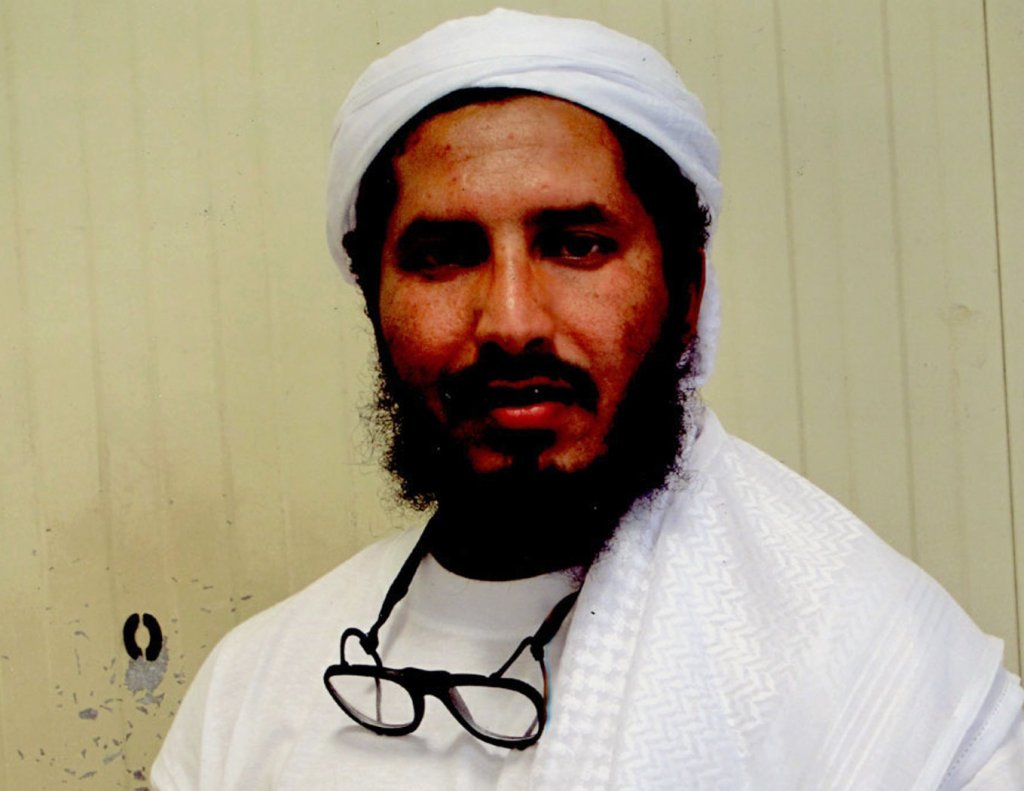
Nashiri had been hurrying to complete the mission. After the 9/11 attacks occurred, he rushed back to Afghanistan from Karachi, met with bin Laden and then al-Qaida external operations commander Khalid Sheikh Mohamed (KSM) to discuss his Strait of Hormuz operation [43]. In Zormat, Paktia province, Afghanistan, he joined senior al-Qaida leadership coordinating the retreat of al-Qaida operatives from the fight along the front lines, before being smuggled out of the country to Bannu, Pakistan where he continued his position of planning attacks [43]. He joined bin Attash, KSM, and other Al-Qaida commanders and operatives hiding in safehouses in Pakistan before being sent off with numerous others to conduct small scale attacks against US interests [43]. Nashiri made his way home to the Arabian Peninsula, setting up yet another operation [43]. Nashiri had operatives in Morocco as well who were planning to attack Navy vessels in the Strait of Gibraltar using bomb laden Zodiacs [43,49,50]. He had been approached by these Saudi fighters and their idea in December 2001 while still fighting in Afghanistan against the US presence [43,49]. These men were eventually arrested in Morocco based on information gleaned from prisoners at Guantanamo Bay and the plan to attack the UK and US Navy in Gibraltar was dismantled [49,50]. The three operatives, Zuhair Hilal al-Thubaiti, Hilal Jabir al-Assiri and Abdullah Misfir al-Ghamdi would be traded to Saudi Arabian custody for two Moroccan militants in January 2004 [49,51]. Thubaiti had also been a candidate to become a 9/11 hijacker while training in Afghanistan [52]. Interestingly, KSM had not signed off on this Strait of Gibraltar plan and thus was upset with Nashiri for acting out of orders [43]. In turn, Saif al-Adel, the successor of Mohamed Atef, chief of Al-Qaida military affairs, was upset with KSM for not being apprised of the project (Atef was killed by US airstrikes on his Kabul residence in November 2001) [43,53].
Yet Adel’s role was not without its own perils and frustrations. As the Strait of Gibraltar plot fell apart, Adel wrote a commanding letter to KSM on June 13, 2002 [54]. He reprimanded the External Operations commander for his actions, stating that since he was the leader of the 9/11 attacks and multiple failed operations in the months there since, he was culpable for the waning faith in the organization amongst extremists worldwide [54]. The trenchant criticism blamed bin Laden for not listening to proper advice and implored KSM to halt all external operations until the terror outfit could properly regroup [54]. In his opinion, Adel was concerned that years of work in building the network from their base in Afghanistan had been squandered, and now they were continuing to waste men and resources on unfulfilled missions overseen by KSM [54]. Adel states that he will write to bin Laden with his request and anxieties [54]. This appears to have been in vain, with bin Laden seeming to overrule Adel and push for further actions, including operations within the Arabian Peninsula [55,56]. Adel was to comply with future external operations approved by bin Laden and KSM, and to be carried out by their forces worldwide, Nashiri’s included. Thus, KSM continued to task multiple militants for operations upon return to their nations of origin from the theatre in Afghanistan.
Nashiri meanwhile, had received approval to attack the US Embassy in Yemen, a plan for which Mohamed Atef had previously been making arrangements for, and to crash a plane full of explosives into a Navy vessel in Port Rashid, UAE [43]. Nashiri was also involved in smuggling weapons and explosives from Oman into Yemen for these attacks [43]. He was in intermittent communication with bin Attash during this time in terms of relaying his progress to KSM and Adel [43]. One of Nashiri’s men, Qasim Mohamed Mahdi al-Rimi (Abu Hurayrah) who had been an instructor at Al-Faruq in Afghanistan [57] suggested that they use Surface to Air missiles in Oman to shoot down US aircraft. Rimi was sent on this mission but could not procure the equipment needed [43].
Although multiple plots were disrupted, Al-Qaida’s Arabian branch would eventually strike an oil tanker off the cost of Aden, Yemen on October 6, 2002 [58,59]. The M/V Limburg was impacted by a small explosive laden vessel which gauged a hole into the tanker’s side and killed one Bulgarian crew member, Atanas Atanasov [58]. The ponderous single-shafted vessel had no chance to avoid the agile attack craft. Nashiri was the overall commander for this particular strike and had acquired the explosives and built the team with the assistance of local Yemeni al-Qaida fighters working for the man known as Abu Ali al-Harithi [60,61]. One such, whose name in the future would be often repeated, was Fawaz Yahya Hassan al-Rubayi [62,63].
The February 2002 Alert
This al-Qaida fighter had trained and fought in Afghanistan, and returned to his home country prepared to follow orders directly from al-Qaida leadership. Rubayi had not come home after the 9/11 attacks, but rather had been dispatched back to Yemen the month before [62]. Rubayi had already had an eventful 2002, beginning with his name being at the head of a list of wanted terrorists published by the FBI on February 11, 2002 [63,64]. The alert warned that the US homeland could be attacked the next day, February 12 or that US interests in Yemen could be targeted [63,64]. The wording of the alert made an incident seem imminent. The reasoning for the urgency of the alert may come from the statements of Rubayi’s brother Salman, who had trained and fought in Afghanistan himself. Salman had been captured after the battle of Tora Bora in December 2001 and handed over to US custody [65]. Once in Guantanamo, Salman (ISN 508) made statements that his brother Fawaz was to conduct a strike on US interests on or around February 12, 2002 [65].
An attack did not occur, but Fawaz al-Rubayi and 16 other men were listed on the alert by the FBI, as the organization was actively seeking information on them. They were:
- 1) Fawaz Yahya Hassan al-Rubayi,
- 2) Alyan Mohamed Ali al-Waeli,
- 3) Assam Abdullah Bushar al-Nahdi,
- 4) Mustafa Abdulqadir Abed al-Ansari,
- 5) Omar Ahmed Omar al-Hubishi,
- 6) Ammar Abadah Nasir al-Waeli,
- 7) Samir Abdu Said al-Maktawi,
- 8) Abdulrab Mohamed Mohamed Ali al-Sayfi,
- 9) Abu Nasir al-Tunisi,
- 10) Abu Moaz al-Jedawi,
- 11) Amin Saad Mohamed al-Zamari,
- 12) Issam Ahmed Dibwan al-Makhlafi,
- 13) Ahmed al-Akhader Nasir al-Badawi,
- 14) Bashir Ali Nasir al-Shadadi,
- 15) Abdulaziz Mohamed Saleh bin Attash,
- 16) Shuhour Abdullah Muqbil al-Sabri, and
- 17) Abdu Ali al-Haji al-Sharqawi (Riyadh the Facilitator) [64,28].
This list will be discussed in depth in Segment IX of this Series. It was originally stated that not much about these men was known. As for those who were known, Fawaz al-Rubayi was an al-Qaida operative and fighter who went by the alias Furqan al-Tajiki and would be responsible for participating in upcoming attacks in Yemen throughout 2002 [64]. Ammar al-Waeli was a known arms dealer with deep ties to al-Qaida [66]. Both Bashir al-Shadadi and Issam al-Makhlafi were stated to have ties to the COLE bombers [45,67,68]. Shadadi was a known top recruiter and facilitator of travel for young Yemeni jihadists, and Makhlafi, known as Akrama, was also a facilitator [45,69]. Ahmed al-Darbi mentioned in Guantanamo interrogations that he became associated with these men and that they had connections to the bombing of the destroyer [45]. Abdulaziz bin Attash was Walid’s younger brother who had been with him in Afghanistan for quite a while [70]. Abdulaziz was better known as Abdulbarah, (often refered to as just al-Bara) [71,44]. He had followed in his brother’s footsteps of becoming a viable al-Qaida fighter. Finally, Sharqawi, who was known as Riyadh the Facilitator, was instrumental in facilitating the movements of jihadists and funds to and from Afghanistan via Pakistan [28]. In the aftermath of the US invasion of Afghanistan, many operatives, fighters and leaders stayed at his guesthouse in Karachi. This residence was originally the home of Nashiri and his base of operations in country [28]. Sharqawi had escaped the fighting at Tora Bora and used his new domicile in Karachi to help well over 100 fighters escape Pakistan and make it home to their native lands [28]. Sharqawi was arrested in Karachi during a February 7, 2002 raid by the Pakistanis. He was handed over to the US sometime thereafter [28]. Thus, he was actually already in custody when his name was published on the FBI list. Meanwhile, the US asked the Yemenis for assistance in capturing Rubayi [72]. The man was nearly caught after being traced to the house owned by al-Qaida member Ahmed al-Hada in mid-February 2002 [72].
Within Yemen, al-Qaida maintained a communications center in the form of a residence owned by Ahmed Mohamed al-Hada [23,73]. It was through this location that many al-Qaida operatives communicated, met, traveled through, and rested in. The CIA actually learned of this location after the Embassy bombings and was monitoring it even before the COLE bombing [73]. The communications center was of vital importance to al-Qaida; and Hada and his family actually lived there [73]. Ahmed al-Hada’s son Jafar al-Hada or “Abu Jafar al-Yemeni” was an Al-Qaida fighter, originally a member of the Northern Group, and was killed in a fishing accident in which he was electrocuted in 1997 in Afghanistan [74]. Ahmed al-Hada traveled to Afghanistan, visited his son’s grave, joined al-Qaida, and underwent training with other recruits despite his age [74]. He was also allowed to sit at bin Laden’s right hand at a dinner thereafter. His son Samir al-Hada was also an al-Qaida fighter who trained in Afghanistan along with his father and made important contacts therein [74]. Before and after joining al-Qaida officially, Hada maintained the guesthouse and communication center as his family was heavily involved in the group [73]. As mentioned, Mohamed Rashid al-Owhali, one of the Embassy attackers, stayed there and was facilitated in his ventures from within [73]. After the Embassy bombings, the US learned of the center from Owhali and eventually began intercepting phone calls, taking note of visitors and even bugged the interior [73]. Despite this, they were unable to gather enough intelligence to prevent the 9/11 attacks or the COLE bombing. This was despite the fact that one of the hijackers, Khalid Mohamed Abdullah al-Mihdhar, often stayed in the domicile, called the house, and was even married into the family. Mihdhar and his associate Nawaf Mohamed Salim al-Hazmi were al-Qaida operatives who were chosen by bin Laden to participate in the developing operation being designed by Khalid Sheikh Mohamed, that would eventually become the 9/11 attacks [75]. Despite the fact that the two never became suicide pilots as was initially intended, they provided logistics for the attacks, became hijackers, and culminated their al-Qaida careers when Flight 77 plummeted into the Pentagon [76].

Mihdhar had been monitored at the communications center and it was noted that he made phone calls around the time of the Embassy bombings [73]. Mihdhar had decided to marry his friend Samir’s sister, Hoda [77]. In a double wedding, two of Ahmed al-Hada’s daughters were married off: Hoda to Mihdhar and another to Ahmed al-Darbi, the Strait of Hormuz operative [74]. Another of Hada’s daughters married a dangerous extremist named Mustafa Abdulqadir al-Ansari who factored into the FBI alert on February 11, 2002 along with Rubayi, as number four on the list [74,64]. As if it were not enough for Hada to have so many sons in law operatives, he also had a nephew who would gain infamy in the al-Qaida ranks: Ramzi Binalshibh [73]. Binalshibh was part of the Hamburg Cell, recruited to al-Qaida in the late 1990s and used to become the pilots and leaders of the 9/11 attacks [78]. Three of the Hamburg cell: Mohamed Atta, Marwan al-Shehhi (the jihadist assisted by Abu Jandal at his guesthouse during Ramadan), and Ziad Jarrah would become pilots while Binalshibh, having been denied a visa to the US, helped to provide logistics and coordinate the attacks from abroad with KSM [78]. Binalshibh was in fact in Sanaa prior to the COLE bombing and left just before it was conducted [73,78].
Mihdhar, as mentioned, had been involved in an al-Qaida summit in Kuala Lumpur, Malaysia attended by himself, Nawaf al-Hazmi, Walid bin Attash and others (including al-Qaida’s top operative in the region, Hambali, also known as Nurjaman Riduan Isamuddin) [77,79]. This summit occurred in January 2000 and it is believed that the groundwork of the upcoming attacks was laid out here. It was during this time that bin Attash had Quso and Nibras deliver him money. Frighteningly enough, the CIA monitored the meeting and gained pictures of bin Attash, Mihdhar and Hazmi [77,80]. It is believed that the money Quso and Nibras delivered was used by Mihdhar and Hazmi to fly to the US and settle into American society [80]. Also, Mihdhar was known to have been at the Sanaa guesthouse and his relationships with al-Qaida militants were being hashed out by the CIA [73]. Despite this he was still allowed to enter the US to perpetrate his attacks without the FBI being properly informed of his existence, status, or importance [81].
While the US intelligence community had this much knowledge on the Hada residence, al-Qaida continued to use it. This ended on February 13, 2002 just after the FBI issued their alert for Rubayi. The Yemenis attempted to raid the center, and Rubayi barely escaped in the ensuing gunbattle [72,73]. Samir Ahmed Mohamed al-Hada however, was cornered by the Yemenis and perished when a hand grenade went off prematurely in his possession during the engagement [82,83]. Rubayi, as mentioned moved on from his time at the communications center and linked back up with Nashiri and his men in order to perpetrate the attacks later in the year. Ahmed al-Hada was eventually arrested in Yemen under unknown circumstances [73,84]. He has since disappeared from the spotlight and may remain in Yemeni custody, although this is doubtful. His nephew Ramzi Binalshibh went on to assist in the 9/11 attacks, become a deputy to KSM, and even had his own FBI alert issued for him in early 2002 [78].
In our next chapter, we will examine the Binalshibh FBI alert and the final attempts of the Nashiri Nexus to wage jihad in Yemen. We will also further explore the existing Yemeni militant infrastructure that merged with Nashiri and his men. Finally, the dynamics of the first lethal US drone strike assassination will be presented.
CITATIONS and SUBSTANTIVE NOTES:
- [A] Yemen expert and blogger Jane Novak originally reported these deaths on her personal blog Armies of Liberation, citing a source of RayNews, and stating that the bombings occurred in Baghdad during July 2005. At least one major bombing did occur in the city on July 13, claiming 27 lives at a minimum, when a vehicle was driven towards a US convoy and detonated, killing civilians. It is worth noting that one of the COLE conspirators who surrendered after tribal negotiations in Abyan province was named as Khaldun Mohamed Nashir. He was apprehended with another escaped conspirator named as Mohamed Abdullah Dahmane [7].
- [B] Darbi’s coconspirators and crew consisted of Khalid al-Haj (known as Minwar Khaladi or Abu Hzim al-Shair) handling finances, Bashir al-Safari (known as Munir Sharadi and Salman al-Taizi), Fawzi Mohamed Abdulqawi al-Wajeh (known as Bassam Wajeh), and Fawzi Yahya Qasim al-Hababi (known as Fayez al-Najjar) [46].
- [1] Probe of the USS Cole unravels, by Craig Whitlock, The Washington Post, May 4, 2008, http://www.washingtonpost.com/wp-dyn/content/article/2008/05/03/AR2008050302047.html
- [2] Main Suspects in USS Cole Bombing Escape from Yemeni Prison, The Associated Press, April 11, 2003, http://www.foxnews.com/story/0,2933,83890,00.html
- [3] Cole bomb suspects in Jailbreak, CNN News, April 11, 2003, http://www.cnn.com/2003/WORLD/meast/04/11/cole.escapes/
- [4] The Black Banners: The Inside Story of 911 and the War Against Al-Qaeda, Ali Soufan, W.W. Norton and Company, 2011, p. 250
- [5] The Black Banners, Ali Soufan, p. 265
- [6] Suspected USS Cole Bombers Recaptured, The Associated Press, March 17, 2004, http://cjonline.com/stories/031704/pag_usscole.shtml
- [7] USS Cole Bombing Suspect Arrested; Two Surrender, by Khalid Mahdi, Arab News, March 17, 2004, http://www.arabnews.com/node/246007
- [8] USS Cole bomb Suspects Recaptured, BBC News, March 19, 2004, http://news.bbc.co.uk/2/hi/middle_east/3550311.stm
- [9] Yemen recaptures USS Cole bombing suspects, UPI, March 19, 2004, http://www.upi.com/Top_News/2004/03/19/Yemen-recaptures-USS-Cole-bombing-suspects/UPI-73621079719803/
- [10] Two Sentenced to Death for USS Cole bombing, The Associated Press, September 29, 2004, http://www.msnbc.msn.com/id/6127941/ns/world_news/t/two-sentenced-death-uss-cole-bombing/
- [11] The Cole Bombing in Yemen: A Seven Year Perspective, by Jane Novak, Armies of Liberation, October 12, 2007, http://www.globalpolitician.com/default.asp?23607-terror-yemen
- [12] The Cole Bombers: Dead or Alive, Armies of Liberation, July 30, 2005, http://armiesofliberation.com/archives/2005/07/30/the-cole-bombers/ via http://www.yobserver.com/news_7674.php
- [13] The Black Banners, Ali Soufan, p. 246
- [14] Khalid Ahmed Qasim Guantanamo Assessment File, ISN 242, https://wikileaks.org/gitmo/prisoner/242.html
- [15] FBI Most Wanted, FBI Seeking Information, Abdullah al-Rimi, http://www.fbi.gov/wanted/terrorinfo/abdullah-al-rimi
- [16] The Black Banners, Ali Soufan, p. 252-253
- [17] Memo Statement from FBI Special Agent Ali Soufan regarding Al-Qaida, dated November 12, 2002
- [18] Ali al-Bahlul Guantanamo Assessment File, ISN 39, http://wikileaks.org/gitmo/prisoner/39.html
- [19] Ayub Murshid Ali Saleh Guantanamo Assessment File, ISN 836, https://wikileaks.org/gitmo/prisoner/836.html
- [20] Ahmed Yaslam Said Kuman Guantanamo Assessment File, ISN 321, https://wikileaks.org/gitmo/prisoner/321.html
- [21] Abdul Mohamed Ahmed Nasir al-Muhajari Guantanamo Assessment File, ISN 728, https://wikileaks.org/gitmo/prisoner/728.html
- [22] Abdullah Yahya Yusef al-Shibli Guantanamo Assessment File, ISN 240, https://wikileaks.org/gitmo/prisoner/240.html
- [23] Khalid Mohamed Saleh al-Dhabi Guantanamo Assessment File, ISN 506, https://wikileaks.org/gitmo/prisoner/242.html
- [24] Riyadh Atiq Abdah al-Haj al-Radayi Guantanamo Assessment File, ISN 256, https://wikileaks.org/gitmo/prisoner/256.html
- [25] Said Saleh Said Nashir Guantanamo Assessment File, ISN 841, https://wikileaks.org/gitmo/prisoner/841.html
- [26] Samir Naji al-Hassan Muqbil Guantanamo Assessment File, ISN 43, https://wikileaks.org/gitmo/prisoner/43.html
- [27] Idris Ahmed Abdah Qadir Idris Guantanamo Assessment File, ISN 35, https://wikileaks.org/gitmo/prisoner/35.html
- [28] Abdah Ali al-Haji al-Sharqawi Guantanamo Assessment File, ISN 1457, http://www.wikileaks.org/gitmo/prisoner/1457.html
- [29] Ahmed Zayid Salim al-Zuhairi Guantanamo Assessment File, ISN 669, https://wikileaks.org/gitmo/prisoner/669.html
- [30] Ahmed Abdulqadir Ahmed Hassan Abu Bakr Guantanamo Assessment File, ISN 690, https://wikileaks.org/gitmo/prisoner/690.html
- [31] Zahar Omar Hamis bin Hamdun Guantanamo Assessment File, ISN 576, https://wikileaks.org/gitmo/prisoner/576.html
- [32] Said Ibrahim Ramzi al-Zahrani Guantanamo Assessment File, ISN 204, https://wikileaks.org/gitmo/prisoner/204.html
- [33] Bashir Nasir Ali al-Marwalah Guantanamo Assessment File, ISN 837, https://wikileaks.org/gitmo/prisoner/837.html
- [34] Shawqi Awad Balzuhair Guantanamo Assessment File, ISN 838, https://wikileaks.org/gitmo/prisoner/838.html
- [35] Hail Aziz Ahmed al-Maythali Guantanamo Assessment File, ISN 840, https://wikileaks.org/gitmo/prisoner/840.html
- [36] Musab Omar Ali al-Mudwani Guantanamo Assessment File, ISN 839, https://wikileaks.org/gitmo/prisoner/839.html
- [37] Abu Khulood al-Yemeni martyrdom announcement, Caravan of Martyrs, Azzam Publications, http://www.caravansofmartyrs.atspace.com/html/Abu_Khulood_Al-Yemani.htm
- [38] Confusing Data, by B Raman, Outlook India, January 1, 2002, http://www.outlookindia.com/making-a-difference/confusing-data-news-214198
- [39] Al-Qa’ida Member Recalls US Bombardment, Accuses Taliban of Betrayal, Asharq al-Awsat, October 29, 2003, http://www.web.archive.org/web/20040610170428/http:/www.why-war.com/news/2003/10/29/alqaidam.html
- [40] Abdulrahman Mohamed Saleh Nasir Guantanamo Assessment File, ISN 115, http://wikileaks.org/gitmo/prisoner/115.html
- [41] The Black Banners, Ali Soufan, p. 277-280
- [42] The Black Banners, Ali Soufan, p. 280-281
- [43] Abdulrahman Hussain Mohamed al-Nashiri Guantanamo Assessment, ISN 10015, https://wikileaks.org/gitmo/prisoner/10015.html
- [44] Hassan bin Attash Guantanamo Assessment File, ISN 1456, http://wikileaks.org/gitmo/prisoner/1456.html
- [45] Ahmed al-Darbi, Guantanamo Assessment File, ISN 768, http://wikileaks.org/gitmo/prisoner/768.html
- [46] Ahmed al-Darbi Charge Sheet, December 16, 2013, https://www.mc.mil/Portals/0/pdfs/alDarbi2/Al%20Darbi%20II%20Referred%20Charge%20Sheet.pdf
- [47] 9/11 Commission Report, p. 325
- [48] The Black Banners, Ali Soufan, p. 352
- [49] Connecting the Dots – Operation Gibraltar: A Foiled Al Qaeda Plot against NATO Ships, By The NEFA FOUNDATION, Family Security Matters, April 30, 2010, http://www.familysecuritymatters.org/publications/id.6107/pub_detail.asp#ixzz2HMESLeJG
- [50] Al-Qaida cell planned Gibraltar attacks : MI6 hunts terror plot network, by Richard Norton-Taylor, Giles Tremlett in Madrid and Julian Borger in Washington, The Guardian, June 11, 2002, http://www.guardian.co.uk/uk/2002/jun/12/september11.world
- [51] Riyadh Swaps Militants with Rabat, Middle East Online, January 12, 2004, http://www.middle-east-online.com/english/?id=8462
- [52] 9/11 Commission Report, p. 235
- [53] Mohamed Atef Obituary, by Khaled Dawoud, BBC News, November 18, 2001, http://www.guardian.co.uk/news/2001/nov/19/guardianobituaries.afghanistan
- [54] Saif al-Adel Letter to Khalid Sheikh Mohamed, dated June 13, 2002
- [55] At the Center of the Storm: My Years at the CIA, George Tenet, Harper Collins, 2007
- [56] Path of Blood: The Story of Al-Qaeda’s War on the House of Saud, by Thomas Small and Jonathan Hacker, Simon and Schuster UK, 2014
- [57] Mahmud Omar Mohamed bin Atef, Guantanamo Assessment File, ISN 202, http://wikileaks.org/gitmo/pdf/ym/us9ym-000202dp.pdf
- [58] Abdulrahim al-Nashiri Charge Sheet, September 15, 2011, https://www.mc.mil/Portals/0/pdfs/alNashiri2/Al%20Nashiri%20II%20(Referred%20Charges).pdf
- [59] Tanker Blast Likely a Terror Attack, French Say, by Sebastian Rotella and Esther Schrader, The Lost Angeles Times, http://articles.latimes.com/2002/oct/11/world/fg-tanker11
- [60] The Black Banners, Ali Soufan, p. 504
- [61] The Black Banners, Ali Soufan, p. 277
- [62]The Last Refuge: Yemen, Al-Qaeda, and America’s War in Arabia. By Gregory Johnsen. W. W. Norton & Company, New York, 2012, p. 70
- [63] FBI Warns of New Terror Attack, BBC News, February 12, 2002, http://news.bbc.co.uk/2/hi/americas/1815360.stm
- [64] FBI Most Wanted, FBI Seeking Information Alert, February 11, 2002, http://web.archive.org/web/20020213124728/http://www.fbi.gov/mostwant/seekinfo/2-11-02.htm
- [65] Salman al-Rubayi Guantanamo Assessment File, ISN 508, http://wikileaks.org/gitmo/prisoner/508.html
- [66] Wanted al-Qaida Terrorist Ammar al-Waeli in Saada recruiting, by Jane Novak, Armies of Liberation, April 2, 2010, http://armiesofliberation.com/archives/2010/04/02/wanted-al-qaeda-terrorist-ammar-al-waeli-in-saada-recruiting/
- [67] Mohamed Abu Ghanim Guantanamo Assessment File, ISN 44, https://wikileaks.org/gitmo/prisoner/44.html
- [68] Yemen releases accused in USS Cole attack, by Nasser Arrabyee, Gulf News, September 3, 2002, http://gulfnews.com/news/gulf/uae/general/yemen-releases-accused-in-uss-cole-attack-1.116162
- [69] The Black Banners, Ali Soufan, p. 349
- [70] The Black Banners, Ali Soufan, p. 269-270
- [71] Walid bin Attash Guantanamo Assessment File, ISN 10014, https://wikileaks.org/gitmo/prisoner/10014.html
- [72] Tracking Yemen’s 23 Escaped Jihadi Operatives, by Gregory Johnsen, The Jamestown Foundation, Terrorism Monitor, Volume 5, Issues 18 and 19, September 27, 2007 and October 24, 2007, http://www.jamestown.org/single/?no_cache=1&tx_ttnews%5Btt_news%5D=4437
- [73] Ahmed al-Hada Profile on History Commons, http://www.historycommons.org/entity.jsp?entity=ahmed_al-hada
- [74] The Black Banners, Ali Soufan, p. 348-351
- [75] 9/11 Commission Report, p. 232
- [76] 9/11 Commission Report, p. 221-222
- [77] The Hijackers we let Escape, by Michael Isikoff, Newsweek Magazine, June 9, 2002, http://www.thedailybeast.com/newsweek/2002/06/10/the-hijackers-we-let-escape.html
- [78] Ramzi Binalshibh Guantanamo Assessment File, ISN 10013, http://www.wikileaks.org/gitmo/prisoner/10013.html
- [79] 9/11 Commission Report, p. 158-159
- [80] The Black Banners, Ali Soufan, p. 300-306
- [81] 9/11 Commission Report, p. 355
- [82] Al-Qaida Suspect Dies in Yemen Blast, BBC News, February 13, 2002, http://news.bbc.co.uk/2/hi/middle_east/1819380.stm
- [83] Dead Yemeni Related to US Hijacker, by Ahmed al-Haj, The Guardian, February 14, 2002, http://www.guardian.co.uk/world/2002/feb/15/afghanistan1
- [84] The Looming Tower: Al-Qaeda and the Road to 9/11, Lawrence Wright, Knopf, p. 378
© Copyright 2024 Nolan R Beasley
 Chronicles in Zealotry